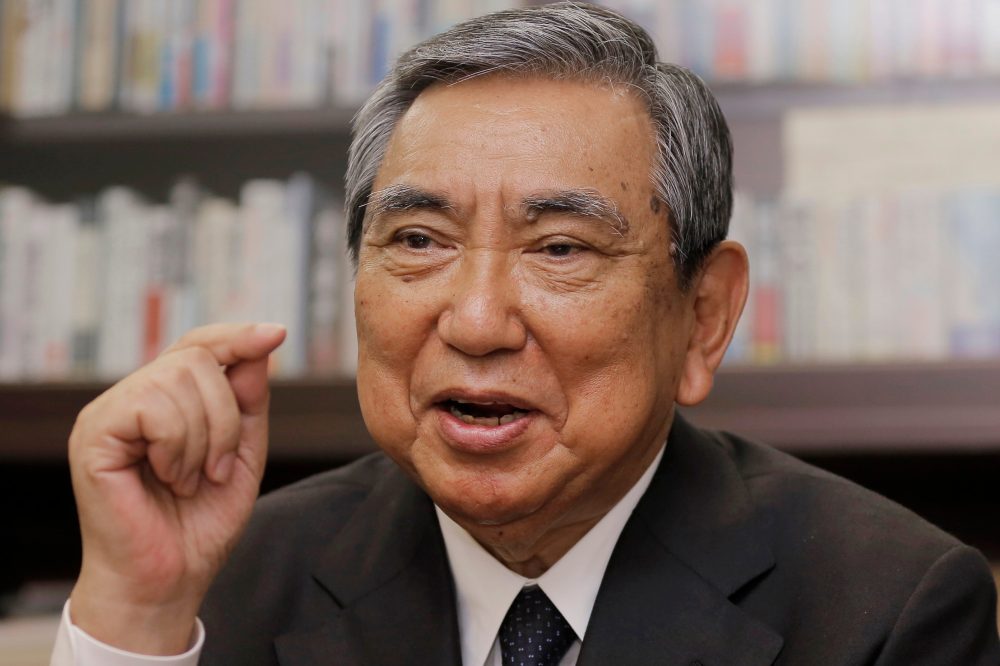

TOKYO (AP) — A longtime Japanese political figure who delivered a groundbreaking apology regarding his nation’s wartime sexual exploitation of women has passed away, according to officials. Yohei Kono was 89 years old.
The veteran politician had emphasized building positive relationships with China, South Korea and other Asian nations that endured Japanese brutalities before and throughout World War II. According to his son’s office, former Foreign Minister Taro Kono, he passed away from natural causes on Monday.
While serving as chief Cabinet secretary in 1993, Yohei Kono issued an apology to tens of thousands of women known as “comfort women,” recognizing the Japanese military’s role in coercing them into service at military brothels. His remarks came after an official government review.
This declaration paved the way for Japan’s more comprehensive apology regarding its wartime crimes in a 1995 statement delivered by then-Prime Minister Tomiichi Murayama.
The international community viewed both declarations as evidence that Japan had acknowledged its wartime history, leading to improved relationships with neighboring Asian countries. However, these statements have lost favor among Japanese conservatives who believe Japan should move away from dwelling on dark historical chapters to rebuild national pride.
Kono encountered increasing opposition and efforts to undermine his 1993 apology, particularly during the tenure of nationalist former Prime Minister Shinzo Abe.
Kono cautioned that any efforts to sanitize historical truths “hurts the Japanese people’s reputation.”
Born in January 1937, Kono began his political career in 1967 following the death of his father, Ichiro Kono, who was also a notable lawmaker with the ruling Liberal Democratic Party. Yohei Kono held important political positions including speaker of the lower house, the more influential chamber of Japan’s bicameral parliament, and LDP president before stepping down in 2009.
Even in his later years, Kono stayed engaged in political affairs and made nearly annual visits to China leading political and business delegations, contributing to the stabilization of delicate relations between the two nations.
As recently as this year, he was still planning a China visit when Tokyo’s relationship with Beijing deteriorated to its worst point in years after Prime Minister Sanae Takaichi angered Beijing in November by stating that a hypothetical Chinese military action against Taiwan would warrant Japanese military involvement.