
In Latvia’s peaceful woodland region near the Russian border, a tourism crisis is unfolding as visitors abandon their vacation plans due to concerns about wayward Ukrainian military drones.
Martins Kiscenko, who operates Birdwhistles Guesthouse in a rustic wooden structure located 50 kilometers from Russia, reports that all eight of his rooms sit empty during what should be peak season. Two wedding celebrations scheduled to take place at his facility were called off by couples worried their guests might need to seek emergency shelter during drone alerts.
The affected area, known as the Land of Blue Lakes, typically attracts summer visitors seeking tranquility in its pristine forests and clear waters. Tourists usually come for fishing, bird observation, forest walks among towering birch trees, and evening folk singing in intimate cabins.
However, the possibility of interruptions from errant Ukrainian attack drones has driven tourists elsewhere, putting approximately 500 small tourism-dependent enterprises at risk of financial hardship, according to Jelena Kijasko from the regional tourism industry association.
After a two-week period without drone incidents in late May raised hopes for improvement, a French NATO aircraft was compelled to destroy another drone on Monday. “Now we know it will not be so easy,” Kijasko told Reuters following that event.
Since March, Ukrainian military drones have been straying into Latvian and neighboring Baltic nations’ airspace. Both Ukrainian officials and NATO countries attribute these diversions to Russian electronic interference that redirects the weapons from their intended Russian targets.
While no injuries have occurred, these intrusions have prompted repeated shelter orders for residents. Kiscenko’s wooden lodge offers no basement or reinforced walls for protection. “That was not a requirement when I built it,” he noted.
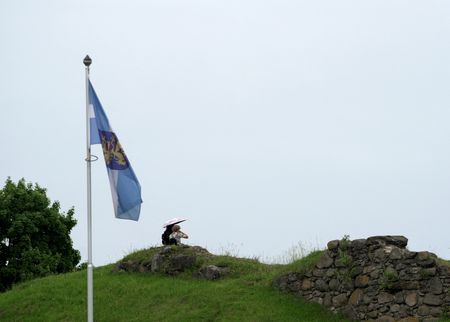
During the previous month, two drones detonated within the town of Rezekne, where visitors typically come to see ancient castle ruins on a hilltop. Two additional drones struck a nearby oil storage facility, sparking a fire.
Government officials are working to convince Latvians that the region remains safe for normal vacation activities. Prime Minister Andris Kulbergs plans to spend his summer holiday in the area, his spokesperson confirmed to Reuters.
The reassurance efforts may be insufficient. Kijasko reported that her association’s survey of tourism operators revealed 85% experienced cancellations related to drone concerns, with some losing more than half their future bookings.
Kijasko argued that tourist fears are unreasonable. “We live here and we don’t feel ourselves particularly endangered,” she explained. “The probability of being in a road accident in Riga is much, much higher than having a drone fall on your head in the forest.”