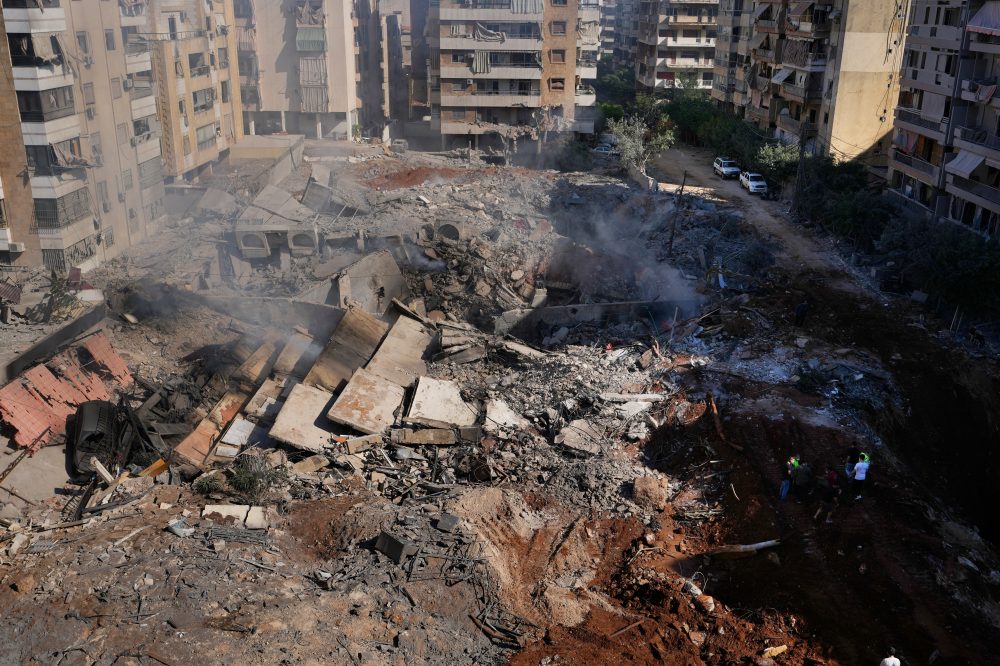

During Israeli aircraft strikes on Beirut’s southern neighborhoods last March, a detained man seized his chance to flee. While residents evacuated in terror, he broke free from a Hezbollah detention facility and headed toward the hills above Lebanon’s capital city.
He vanished into the Ukrainian Embassy compound located in Baabda’s upscale diplomatic district.
His current whereabouts remain unknown, caught in an intelligence operation as Hezbollah works to expose Israeli operatives who have penetrated the organization.
Lebanese authorities identify the individual as Khaled al-Aydi, described as a Palestinian refugee from Syria who also possesses Ukrainian citizenship. Hezbollah had been holding him in Beirut’s suburbs, with Lebanese officials claiming he participated in a failed Israeli intelligence scheme involving planned bombings and targeted killings.
Information about al-Aydi’s escape and the Lebanese military court proceedings came from three judicial officials and two senior security officials in Lebanon who requested anonymity since they lacked authorization for public statements. A senior political official within Hezbollah also shared details.
Al-Aydi’s vanishing act may create political complications for Lebanon’s government, which has stayed largely quiet regarding this matter.
Should proof surface that al-Aydi fled Lebanon with government assistance, it might anger Hezbollah’s predominantly Shiite Muslim supporters. The government already faces criticism for conducting direct negotiations with Israel, which has maintained intense combat with Hezbollah since the Iran war’s beginning.
According to a Lebanese government document acquired by The Associated Press, the Ukrainian embassy requested Lebanese officials in March to help al-Aydi leave the country following his escape from Hezbollah custody. However, Lebanon’s General Security agency denied the request, citing a judicial arrest warrant issued in September 2025, the document shows.
Israel’s Mossad intelligence service refused to provide comments. Ukraine’s Foreign Ministry similarly declined to respond.
A Ukrainian official familiar with the situation stated that al-Aydi is neither in the Ukrainian Embassy nor its compound in Lebanon. The official, speaking anonymously due to the matter’s sensitivity, wouldn’t reveal al-Aydi’s location and declined to confirm whether he was ever at the embassy or if Ukraine assisted his escape, citing security concerns for the embassy and staff.
Through human assets and advanced surveillance technology, Israel has developed extensive intelligence operations in Lebanon. This network has enabled dramatic strikes against Hezbollah.
In the most sophisticated operation, Israel penetrated Hezbollah’s supply network and provided the Iran-supported militant organization with thousands of explosive-rigged pagers and walkie-talkies. Israel triggered the devices remotely in September 2024, resulting in at least 37 deaths. Shortly afterward, Israeli air attacks eliminated Hezbollah’s long-serving leader, Hassan Nasrallah, while he hid in a heavily protected underground facility.
Prior to that operation, Israel’s intelligence penetration of Hezbollah enabled strikes against the group’s top leadership and field commanders “with relative ease,” according to Nicholas Blanford, an expert on the militant organization at the Atlantic Council.
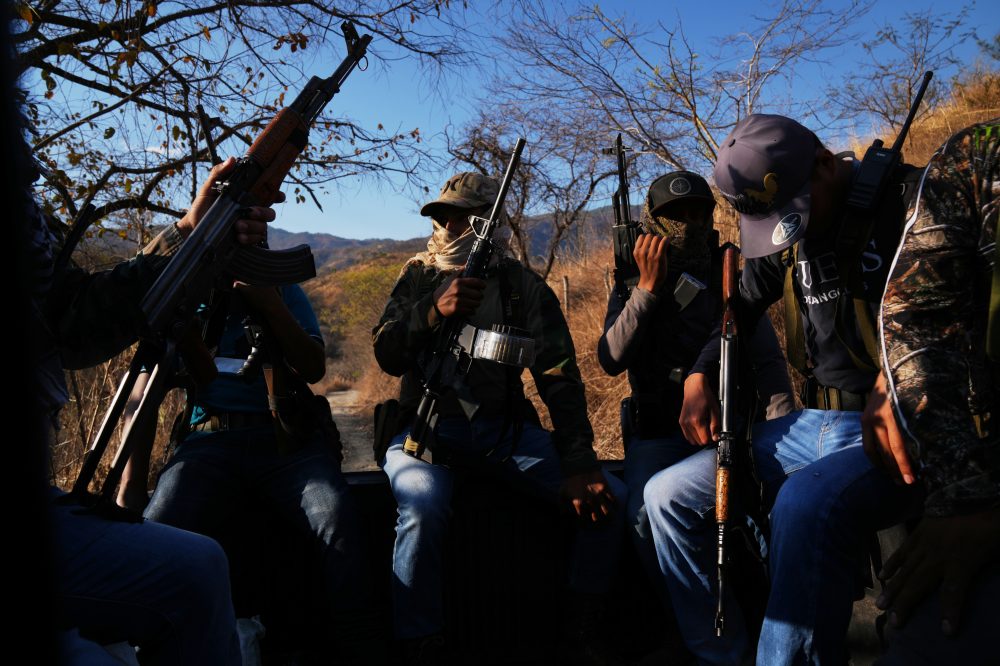
Following the 2024 Israel-Hezbollah conflict, Hezbollah and Lebanese officials have intensified efforts against suspected intelligence networks. Approximately 50 individuals have received convictions and are serving prison terms, while others face ongoing investigations, judicial officials reported.
“We were successful in detecting many spy networks, and the state was also successful in this matter,” said Hezbollah political official Wafiq Safa. However, “the Israelis are always working to recruit young Lebanese people from all communities.”
Numerous suspected intelligence operations have included current or former Hezbollah members or people with family connections to the organization.
Al-Aydi, by contrast, was an outsider. He obtained Ukrainian citizenship through his mother, the Lebanese government document AP reviewed shows. The method of his alleged Israeli recruitment remains unknown.
Hundreds of thousands of Syrians sought refuge in Lebanon during Syria’s 14-year civil conflict. However, Al-Aydi arrived in the country in August 2025 on a flight from Ethiopia, according to one Lebanese security official.
Although Hezbollah started in the 1980s as a small guerrilla force opposing Israel’s occupation of southern Lebanon, it expanded significantly after its 2006 conflict with Israel, making it “easier for the Israelis to penetrate,” Blanford explained. The group’s involvement in Syria’s civil war created additional vulnerabilities as recruitment standards dropped, he noted.
Lebanon’s economic difficulties also helped Israel’s recruitment activities, Blanford said.
Court filings in Lebanon’s military court show operatives receiving payments between $2,500 and $20,000 for intelligence on Hezbollah weapons storage sites and political headquarters. Many suspected agents were contacted by Israeli handlers via social media platforms, judicial officials stated.
One notable case involved Mohammad Hadi Saleh, a singer and well-known religious performer in circles linked to Hezbollah. Authorities arrested him in May 2025 and charged him with supplying the Mossad with maps and coordinates of important Hezbollah locations later targeted in Israeli operations. He remains imprisoned awaiting trial.
“It’s ironic that they (Hezbollah) were spending a lot of time accusing their opponents of being Israeli spies, and it turns out that the spies were actually from within the organization and its support base,” explained Mohanad Hage Ali, a senior fellow at the Malcolm H. Kerr Carnegie Middle East Center in Beirut.
Recruitment activities persist. During the recent war, Israel distributed leaflets over Lebanon containing QR codes that, according to the Lebanese army, connect people to an Israeli military unit responsible for recruiting agents.
Lebanon’s General Security announced in October it had dismantled a network planning bombings and assassinations in Lebanon, including an operation targeting events for the one-year anniversary of Nasrallah’s death. Officials found a motorcycle equipped with explosives and a car modified to carry explosives, security and judicial officials reported.
Al-Aydi and six others, all Lebanese, face charges. One of the six also escaped, while the others remain in a Lebanese prison awaiting trial, judicial officials said. Only al-Aydi was held by Hezbollah, probably because he was considered a valuable prisoner.
The military court claims the operation was directed by a Mossad handler residing in Germany who contacted others through encrypted messaging applications. The court issued a summons to the Ukrainian embassy that received no response.
Safa mentioned there was a failed attempt to smuggle al-Aydi out of Lebanon to Syria. He provided no additional details.
The two senior Lebanese security officials believe al-Aydi has departed the country. Whether he crossed into Syria remains unclear, as officials there reported having no information about him.
Relations between Lebanon’s government and Hezbollah have reached a low point. The government was upset by the militant group’s independent decision to engage in another conflict with Israel, while Hezbollah is angry the government chose to negotiate a ceasefire and potentially broader security and political agreements directly with Israel.
Al-Aydi’s escape might worsen tensions and create difficulties for the Lebanese state.
If Lebanese authorities denied al-Aydi permission to leave the country, the U.S. and Ukraine were “well-positioned to exert significant pressure” to secure his release, Hage Ali said. Conversely, if the state appears to have allowed al-Aydi’s escape, it would face “public anger, predominantly among Lebanese Shia” sympathetic to Hezbollah, which could use that sentiment to increase internal tensions, he said.