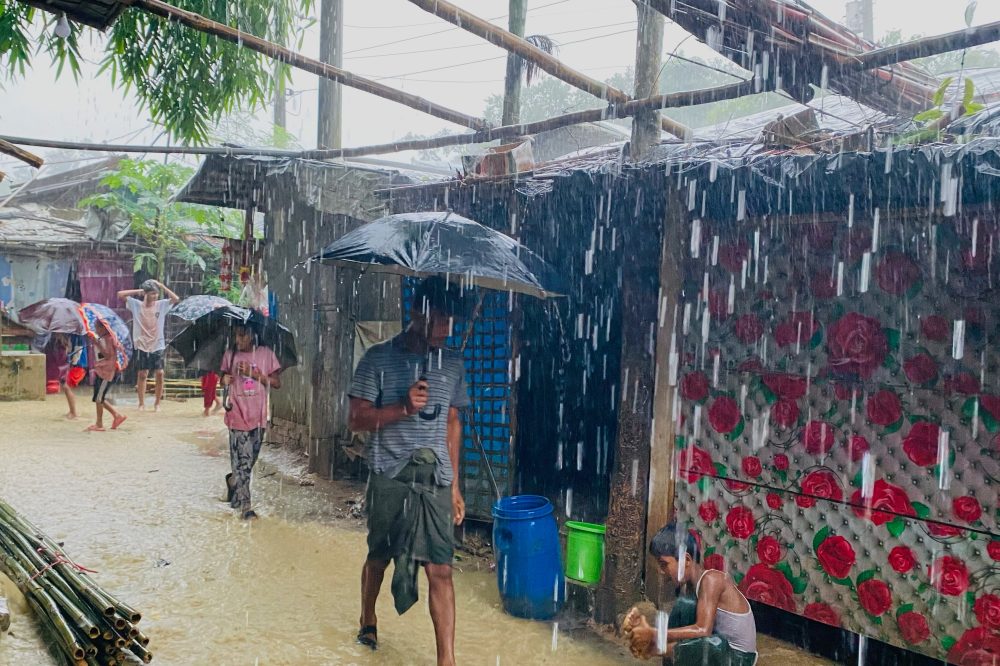

DHAKA, Bangladesh — Heavy monsoon rains set off a series of deadly landslides in southeastern Bangladesh, claiming the lives of at least eight Rohingya refugees, five of them children, while the same seasonal weather system unleashed destruction across neighboring India, where 13 people have died in recent days.
Dollar Tripura, a Fire Service and Civil Defense official in Cox’s Bazar district, told the Associated Press that rescue teams pulled seven bodies from the debris, while an eighth victim was discovered by fellow refugees after multiple hillsides gave way between late Sunday night and Monday morning. All of the bodies have since been returned to their families, he said. Two additional children survived but sustained injuries.
Tripura said the slides struck at least four separate locations throughout the camps, burying makeshift shelters under mud and rubble while residents were sleeping.
Officials reported that persistent rainfall and water rushing down hillsides loosened the soil on the slopes, causing the temporary structures to collapse. Authorities have begun moving refugees away from high-risk hillside zones, and roughly 1,000 people have already been transferred to safer locations.
The weather office in the Bangladeshi capital of Dhaka has predicted additional rainfall in the days to come.
According to the United Nations refugee agency UNHCR, 36 refugees have died and at least 86 others were hurt in comparable landslide events at the refugee camps between 2021 and 2026.
More than one million Rohingya refugees who escaped from neighboring Myanmar currently live in camps throughout Bangladesh. Renewed clashes in Myanmar’s Rakhine state between the country’s military government and the Arakan Army have raised fears that another wave of refugees could soon cross the border.
Meanwhile, in India’s western Maharashtra state — which includes the city of Mumbai — at least 13 people have lost their lives in rain-related incidents over the past several days as monsoon conditions grew more severe. In Pune district, landslides forced officials to temporarily shut down portions of the Mumbai-Pune Expressway, snarling traffic between the two major cities.
India’s Meteorological Department has forecast continued heavy rainfall across Maharashtra in the coming days and cautioned that low-lying areas face ongoing flood risks.
In the northern Himalayan regions of Jammu and Kashmir and Himachal Pradesh, powerful rains set off flash floods and landslides that damaged roads, disrupted transportation, and left several villages cut off. Emergency response teams were sent in to evacuate residents who were stranded.
India’s annual southwest monsoon season, which spans from June through September, plays a vital role in supporting agriculture and refilling water supplies. However, it also brings widespread flooding and landslides each year, especially in the Himalayan region and in heavily populated cities where drainage systems struggle to keep up.