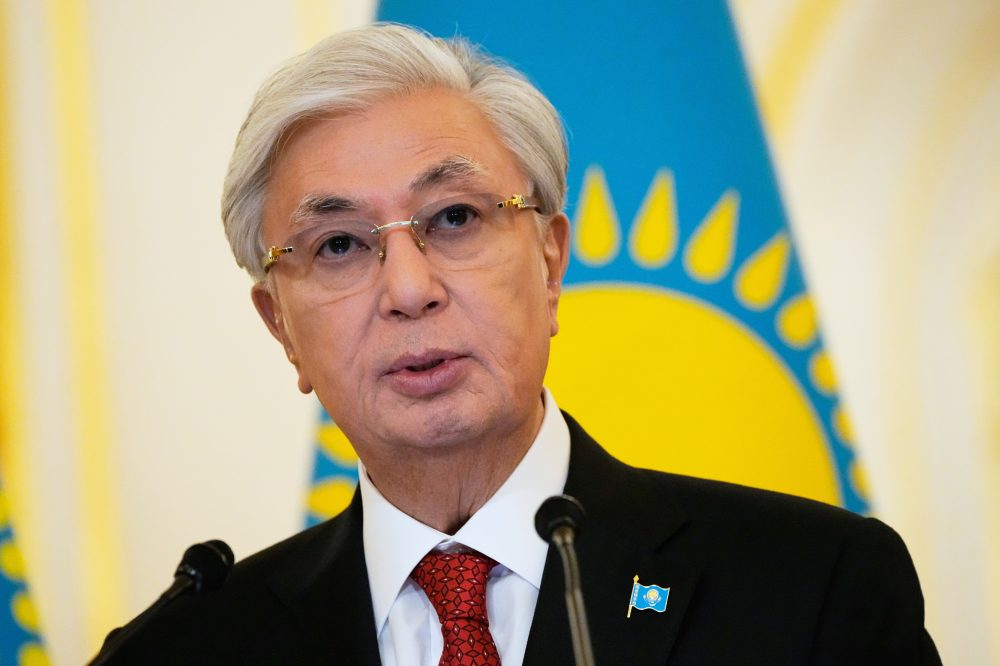

Kazakhstan’s highest court issued a ruling Tuesday clearing the way for President Kassym-Jomart Tokayev to remain in power for another seven years beyond his current term, which ends in 2029.
The Constitutional Court determined that Tokayev’s existing time in office does not count toward term limits under newly approved changes to the country’s constitution. Those amendments were passed by voters in a nationwide referendum held in March and officially took effect this month.
Kazakhstan joins a growing list of former Soviet republics — including Russia, Belarus, Uzbekistan, and Tajikistan — whose leaders have rewritten or replaced their constitutions in ways that bolster executive authority and allow them to hold onto power longer.
Tokayev, who is 73 years old, has governed the oil-rich Central Asian nation of 20 million people since 2019. Before becoming president, he served as a Soviet official, diplomat, and worked at the United Nations.
The constitutional amendments received overwhelming support in the March referendum and have further solidified Tokayev’s hold on the country. Tokayev has argued the changes were necessary to allow for faster decision-making in an increasingly unpredictable global environment.
The revisions also restructured Kazakhstan’s parliament by combining its two chambers into a single body and granted the president authority to appoint key government officials — with legislative approval — including restoring the position of vice president.
Additionally, the amendments established a new body called the People’s Council, which operates alongside parliament and has the ability to introduce legislation and call for referendums. The president appoints the members of this council.
Political opposition in Kazakhstan holds no seats in government and has had little success in shaping public opinion within the country.
Tokayev first assumed the presidency in 2019 following the resignation of Nursultan Nazarbayev, who had ruled Kazakhstan for nearly 30 years and guided the country through its transition to independence after the Soviet Union dissolved in 1991. Tokayev was widely regarded as Nazarbayev’s chosen successor.
In 2022, Tokayev ordered a crackdown on nationwide protests that resulted in 238 deaths and thousands of injuries — a period that some Kazakhs have called “Bloody January.” Following the unrest, he sought to reposition himself as a reformer and called a snap presidential election, which he won by a wide margin later that same year.