
CARABALLEDA, Venezuela — Along Venezuela’s Caribbean coastline, the community of Caraballeda was once a place where wealthy and working-class residents lived remarkably close together. Marina-access apartments sat near towering public housing blocks on the same curved road, with both sets of residents enjoying the same stunning views of white sand beaches and clear blue water.
Yacht owners and everyday commuters alike called this stretch of coast home. Many of them were relaxing or celebrating on June 24 when a violent earthquake reduced their homes to rubble within seconds.
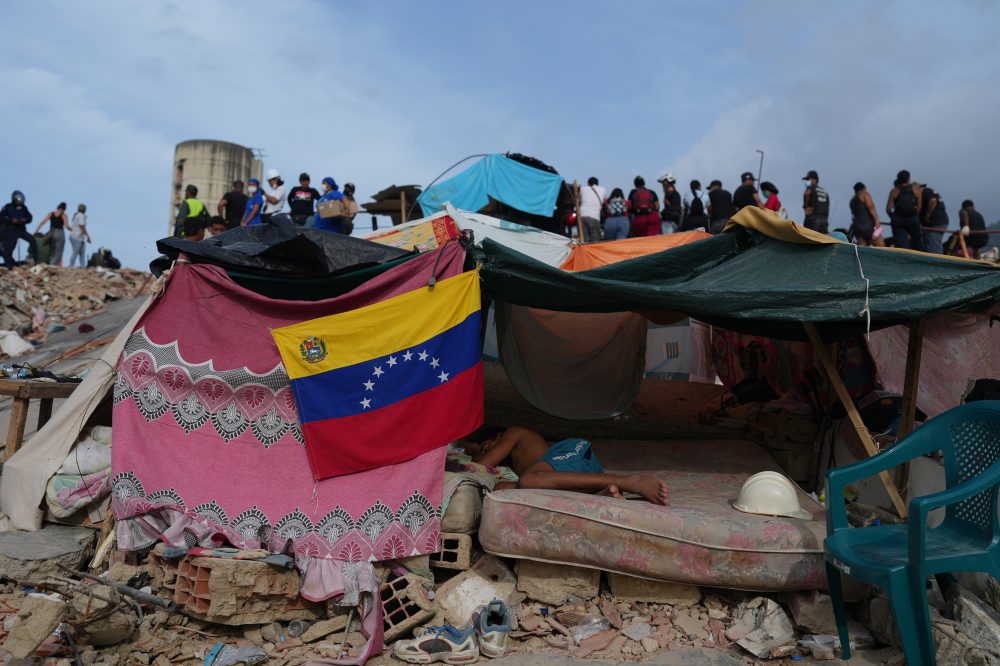
Now, approximately 17,000 survivors share an unusual and tragic circumstance — they are homeless in Venezuela. With the official death toll surpassing 3,500, many of those who made it out alive must now depend on a government that has been widely criticized for its handling of the disaster and has a history of using housing as a political tool.
For generations of Venezuelans, owning or securing a home has been a central life goal. During the country’s oil boom in the latter half of the 20th century, the government funded large housing developments, lower-income families built informal concrete and brick homes known locally as “ranchos,” and wealthier citizens purchased multiple properties.
Even as Venezuela’s economy collapsed in 2013, most residents managed to keep a roof over their heads — whether through government-provided housing, buying deeply discounted homes from people fleeing the country, stacking new ranchos on top of old ones, or occupying abandoned properties.
Those who received homes through the ruling party — which has been in power for 27 years and is currently led by acting President Delcy Rodríguez — never received legal ownership documents. Even so, those homes gave families stability and kept them off the streets.
“It was their home, their house. It was an immense joy when they were assigned these houses here,” said Carlos Ortega, whose relatives were given 12 apartments in Caraballeda more than a decade ago after losing nearly everything in a mudslide.
“Imagine, they were given a home after losing everything, but now they’ve lost everything, even their lives,” he added.
Only one of Ortega’s siblings survived when the public housing towers collapsed. His son, who lived on the ninth floor but happened to be working at a nearby convenience store when the earthquakes hit, has been missing for more than a week. Ortega said he was holding out hope of finding him at a hospital, a shelter, or one of the tent encampments that have sprung up in public spaces and private parking areas.
Not far from where Ortega paused from digging through rubble that buried his family, others were surveying the destruction near a yacht club, with some Jet Skis being towed away. Rescuers working through the debris were being handed food on plastic trays as the wife of a military general waited nearby, hoping her husband and children would be found.
Ronal Rodríguez, a researcher at the Venezuela Observatory at Colombia’s Universidad del Rosario, noted that Venezuelan governments — even before Hugo Chávez took office in 1999 — had made efforts to prevent the wealthy and poor from living in entirely separate neighborhoods by placing public housing near more exclusive areas. He said this approach also served a political purpose, helping to diversify the voter base in wealthier districts that typically lean toward the opposition.
However, homes constructed under Chávez’s “Grand Housing Mission” — a program his successor, Nicolás Maduro, continued until the U.S. military removed him from power in January — came with a significant catch: residents never received property deeds.
“What Chavismo tries to do is maintain political dependence,” Rodríguez said of Chávez’s political movement. “That is, if at any point you turn against me and stop supporting me, then I’ll take away the roof I’ve given you.”
That dynamic leaves earthquake survivors especially vulnerable, particularly as many have spoken out publicly about the government’s inadequate search and rescue response. The government of acting President Rodríguez, whose handling of the disaster has drawn sharp criticism from residents, has not provided any timeline for long-term housing recovery.
The full scope of the destruction is still being assessed, but satellite imagery analyzed by Microsoft’s AI for Good Lab indicates that at least 10,000 structures — roughly one-third of all buildings — were damaged in Catia La Mar, a city just west of Caraballeda in La Guaira state. Aging buildings, poor construction standards, and the region’s geography made many neighborhoods especially susceptible to the powerful tremors.
Benito Mantilla, 68, is now living in a tent in a pharmacy parking lot in Catia La Mar after his privately owned home was damaged. His wife traveled to the Dominican Republic last week, but Mantilla chose to stay and search for work about 40 minutes away in Caracas, as the earthquakes also destroyed the auto repair shop he runs with his brother.
Another woman sheltering in the same parking lot said she was still counting on the government to provide her with a new home. She mentioned that her daughter holds a local organizing role within the ruling party.
Caryudedi González, 44, who purchased her own home at age 21, was holding onto hope that her working-class house — half of which slid into a ravine — might somehow be salvageable.
“In many countries, it’s very difficult to own a home, and here, we work so hard to have what’s ours,” González said.