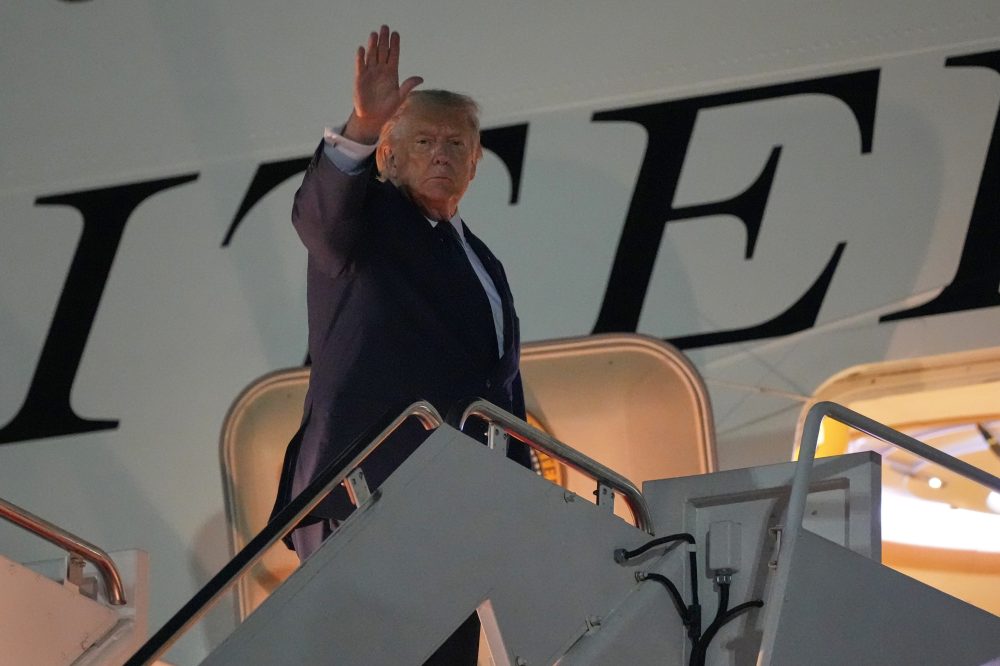

President Donald Trump arrived in Ankara, Turkey on Tuesday to join fellow NATO leaders at a high-stakes summit, where the alliance is working to convince him that member countries are genuinely stepping up their military capabilities — even as American attention increasingly shifts away from Europe and toward Asia.
Trump has been openly critical of NATO’s ability to operate without American leadership, has moved to pull U.S. troops out of Europe, and has raised questions about whether the United States would actually defend an ally if attacked. He has also expressed frustration that some NATO members refused to participate in the Iran war, which he launched alongside Israel without consulting the alliance, and have not helped to reopen the Strait of Hormuz.
The two-day gathering in Ankara is being built around the theme of a stronger Europe within a stronger NATO, featuring a showcase of military projects valued at billions of dollars designed to demonstrate that allies are turning their increased defense budgets into real military capability.
NATO Secretary-General Mark Rutte spoke with energy at a defense industry forum on the sidelines of the summit, calling the spending “money well spent.” The event, billed as NATO’s “big reveal,” featured a slick video presentation and techno music as officials made the case to government ministers and defense industry representatives.
Trump, who has called NATO a “paper tiger” that would fall apart without American arms and leadership, was scheduled to first meet with Turkish leader Recep Tayyip Erdoğan at the presidential compound. Erdoğan, a close ally of Trump, is hosting this year’s summit.
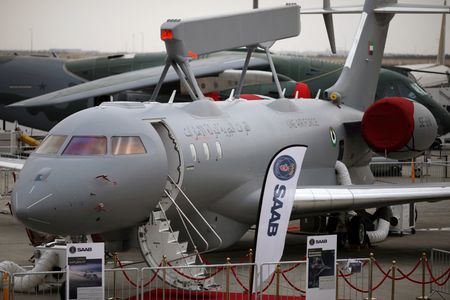
One major announcement came from Sweden, where Prime Minister Ulf Kristersson revealed that Swedish manufacturer Saab will supply up to 10 new GlobalEye surveillance aircraft to a ten-nation consortium. The deal replaces NATO’s fleet of 14 AWACS radar planes, which are roughly 50 years old. NATO itself does not own weapons — those belong to the 32 member nations — but it does operate that aging surveillance fleet along with some newer drones.
The Netherlands also announced new defense investments on the summit’s opening day. The Dutch defense ministry said it is partnering with the United Kingdom to purchase new amphibious transport vessels and working with other NATO allies to replace the old AWACS planes. The Netherlands is also taking a leading role in a European effort to jointly produce and maintain American-made weapons, including Stinger, Amraam, and PAC-3 missiles.
Dutch Defense Minister Dilan Yesilgöz-Zegerius said the Netherlands and its European partners “are investing much more in strengthening European defense” with additional funding “but also by working together smarter.”
German Chancellor Friedrich Merz emphasized before departing Berlin that his country has doubled its defense spending since 2022. He said the effort is not being made “to do anyone a favor” but because it is “necessary for our defense, for our security.” Merz described Russia as “a serious threat” that is “testing our determination every day,” and said the Ankara summit “should send the message that we are building a more European NATO so that NATO can remain trans-Atlantic.”
When asked last month what allies could do to get back in his good graces, Trump gave a simple answer: “Just be loyal.”
From Moscow, Kremlin spokesman Dmitry Peskov said Russia would be watching the NATO summit closely. He dismissed Ukraine’s calls for more air defense weapons, saying additional arms deliveries would not stop Russia from achieving what the Kremlin calls the goals of its “special military operation.” On the subject of a peace settlement, Peskov said Russia “maintains contact with the Americans via working-level channels” and expressed hope that American efforts to move toward peace “will ultimately succeed.” He added that hostilities could end once Kyiv “demonstrates goodwill and shows a readiness to make those important decisions that need to be made.”
In a sign of political tensions within some alliance members, the leaders of the Czech Republic traveled to Turkey separately. Prime Minister Andrej Babiš flew with his foreign and defense ministers, while President Petr Pavel departed on his own later. Babiš, whose ANO movement won big in an October election, leads a governing coalition that has moved away from strong support for Ukraine. The Czech defense budget currently falls below NATO’s target, coming in at under 1.8% of GDP. Babiš said Tuesday that the government plans to meet the minimum 2% target next year but does not plan to go beyond that.
President Pavel, a retired army general, is a strong supporter of Ukraine’s fight against the Russian invasion — a position at odds with his government. The government initially refused to include Pavel in the summit delegation, only relenting after the country’s Constitutional Court stepped in.
Turkish police detained more than 20 protesters near a demonstration in central Ankara against the NATO summit. Officers used riot shields to block journalists from filming and photographing the protest, which was organized by supporters of left-wing political parties. A legal association reported that 22 students affiliated with the Turkish Workers’ Party and three lawyers were taken into custody.
Turkish Foreign Minister Hakan Fidan used the summit’s opening day to warn against restrictions on defense industry cooperation among NATO members. In a social media post, he said trade barriers “undermine efficiency and slow response” and have become “strategic liabilities.” The United States and several European nations have imposed limits in recent years on selling military and dual-use goods to Turkey. “European defense initiatives must remain fully inclusive of all NATO Allies,” Fidan stated.