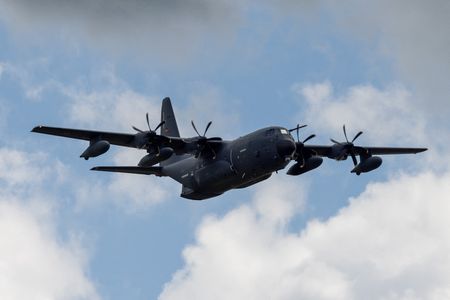

ANKARA — NATO will establish a shared fleet of Airbus A400M military transport planes and expand its existing tanker aircraft program, Secretary General Mark Rutte announced Tuesday on the sidelines of a NATO summit in Ankara.
Rutte made the announcement at a defense industry event where allied nations unveiled arms agreements worth billions of dollars — a show of force meant to demonstrate that European members are taking seriously U.S. calls to increase defense spending ahead of the summit, which began Tuesday evening with President Donald Trump in attendance.
“It is about air power, which is essential to strengthen our deterrence and defence,” Rutte said.
The existing tanker program, known as the MRTT project, currently operates nine A330 aircraft — planes that can also serve as troop or passenger transports — based out of Eindhoven in the Netherlands. Adding a tenth aircraft moves the alliance closer to filling gaps created after the United States reduced its contributions to NATO. The alliance is working toward eventually growing that fleet to 12 aircraft. Belgium, Czechia, Denmark, Finland, Germany, Luxembourg, the Netherlands, Norway, and Sweden all take part in the program.
While the U.S. has not publicly detailed the extent of its cutbacks, a military source indicated the reductions span refueling planes, fighter jets, drones, and naval vessels. Trump has repeatedly criticized European nations for depending too heavily on American military support through NATO.
Airbus, the manufacturer behind both the A400M airlifter and the A330 jet that serves as the basis for the tanker, said the new shared A400M fleet would include Belgium, Britain, France, Spain, Turkey, Croatia, and Poland.
The news is a welcome development for the A400M program, which was originally designed to address Europe’s shortfall in military cargo and troop transport capabilities to difficult terrain. The aircraft has struggled to attract export customers, raising questions about its long-term viability. Airbus had previously issued warnings to investors about the program’s future, though the company softened that language earlier this year.
According to a spokesperson, the new shared pool would initially draw from aircraft already in service, followed by planes currently in production. The spokesperson added that the arrangement could eventually lead to new aircraft orders, though it was too early to predict how many planes might be ordered or when.