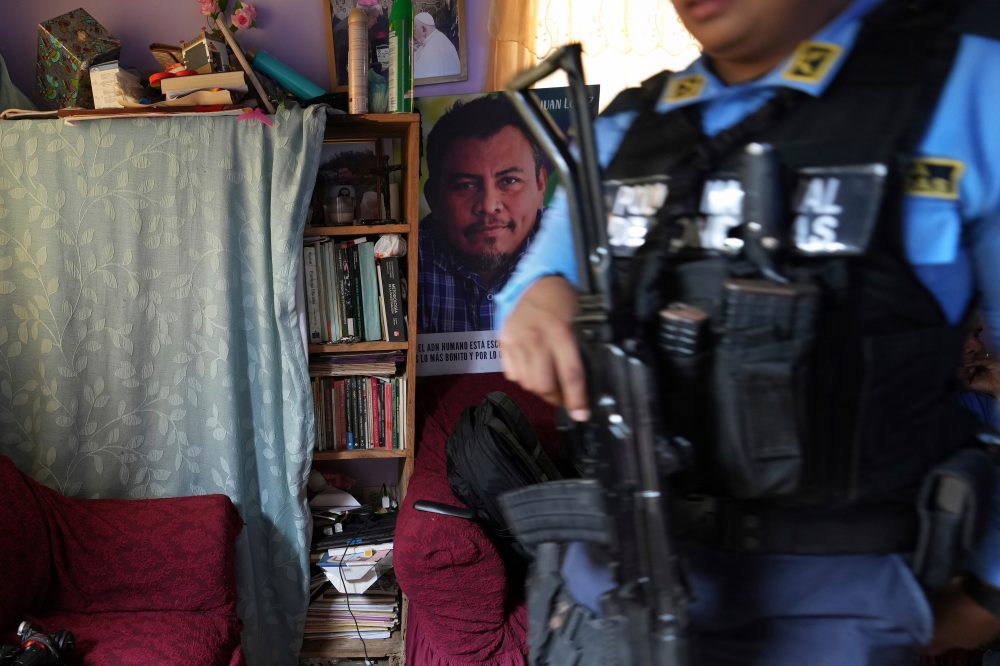

TEGUCIGALPA, Honduras — Law enforcement officials in Honduras detained three individuals Tuesday, including a former high-ranking politician, in connection with planning the 2024 murder of an environmental activist that highlighted government corruption and the dangers faced by those defending natural resources in Central America.
Former Tocoa mayor Adán Fúnez was taken into custody at his residence Tuesday as the suspected mastermind behind the killing, after years of allegations from religious and environmental groups.
The victim, Juan López, fought against corruption and spearheaded community opposition to an iron oxide mining operation in Colon, a remote area in northwestern Honduras. Activists argued the project threatened the region’s pristine forests and clear waterways, including protected conservation zones. López frequently criticized Fúnez, who backed the mining venture and maintained close ties to former Honduran President Xiomara Castro.
López demanded Fúnez’s resignation in September 2024 over corruption allegations.
Shortly afterward, a masked shooter killed the environmental and human rights advocate with six gunshots to the chest and one to the head, prompting calls for accountability from the Biden administration, Pope Francis and the United Nations. The killing also brought accusations against Fúnez, an influential figure in the region’s long-running violent land disputes. The murder recalled international outrage over the 2016 assassination of Honduran environmentalist Berta Cáceres.
More than a year after the killing, authorities arrested Fúnez alongside businessman Héctor Eduardo Méndez and Juan Ángel Ramos Gallegos. Prosecutors charged them with criminal conspiracy that violated fundamental rights.
“These three individuals are believed to be the intellectual authors of the environmentalist Juan López’s death,” Public Prosecutor’s Office spokesperson Yuri Mora told The Associated Press.
The arrests follow several other detentions made months earlier, though environmental and religious leaders had long identified Fúnez as the assassination’s orchestrator. The public trial for all three defendants is scheduled to start in June.
Environmental advocacy carries significant risks in Honduras. Activists like López frequently serve as unwelcome watchdogs in resource-abundant regions of Latin America, which ranks as the world’s most dangerous area for environmentalists, according to advocacy group Global Witness.
Global Witness recorded 117 defender deaths in 2024, with 82% occurring in Latin America. Five activists died in the small Central American country, compared to 18 the previous year, based on their latest findings. In López’s hometown of Tocoa, environmental advocates opposing the mining project have faced systematic targeting for years, with eight activists jailed for over two years in what attorneys described as retribution for their activism.
Dalila Santiago, López’s close associate and fellow movement leader, expressed surprise at Fúnez’s arrest given Honduras’ widespread culture of impunity. Santiago described the detentions as validation that their struggle for justice and land protection justified the violent consequences they endured. She emphasized that Honduran officials must pursue other responsible parties and business executives connected to the mining operation.
The Honduran mining companies — Inversiones Los Pinares, Inversiones Ecotek and their parent organization — face environmental destruction charges filed by Honduras’ Public Prosecutor’s Office following López’s murder. The companies have highlighted the hundreds of employment opportunities the mine generated and their regional economic contributions.
“We’ve been calling for justice for so long,” Santiago said. “And we need the masterminds behind this to be caught and punished.”