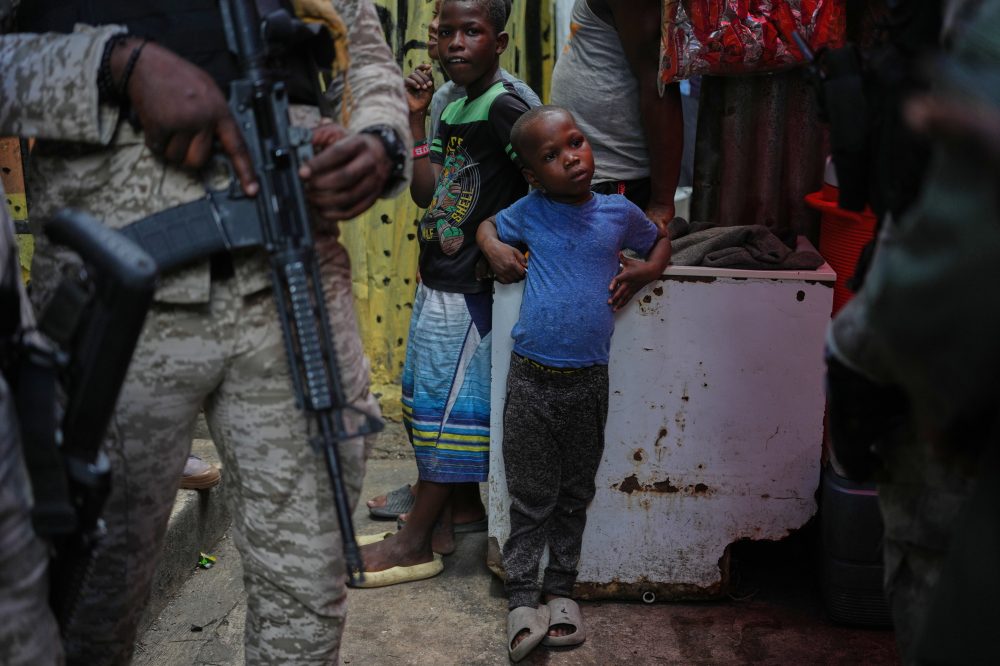

Hundreds of displaced Haitians found themselves sleeping on streets near the capital’s main airport Monday after weekend gang battles forced them from their homes in Port-au-Prince.
Among those seeking refuge along the highway was 56-year-old Monique Verdieux, who escaped after witnessing armed groups setting fire to homes in her community. Her family members fled in separate directions, leaving her uncertain of their whereabouts.
“I am now sleeping in the street,” Verdieux explained, emphasizing that returning home remained too dangerous.
The violent confrontations between rival gangs broke out during the weekend throughout multiple northern districts of Haiti’s capital, forcing displaced residents onto the roadway that connects to Toussaint Louverture International Airport.
Criminal organizations have seized control of over 90% of Port-au-Prince following President Jovenal Moïse’s murder at his residence in July 2021. Law enforcement officials report these groups have broadened their criminal operations beyond the capital, engaging in theft, abductions, and sexual violence throughout rural areas. The country has remained without a president since the killing occurred.
During the past two weeks, Haiti’s Barbancourt rum company along with two major beverage bottling firms have raised alarms about worsening security near the Port-au-Prince airport, where flight operations face significant limitations.
The businesses issued a joint declaration Sunday criticizing the government’s crisis response as “largely insufficient,” while highlighting how deteriorated road conditions around the airport hinder Haitian security personnel from effectively patrolling the vicinity.
“You cannot secure an airport if you allow the roads around it to degrade,” their statement declared.
Initial international military personnel connected to a United Nations anti-gang mission reached Haiti in April to assist in combating persistent violence.
The U.N. Security Council granted approval in late September for deploying a 5,550-member peacekeeping force, though the complete contingent has yet to arrive on the Caribbean island.
Research published this year by the International Organization for Migration revealed that gang-related violence has uprooted more than 1.4 million Haitians, with roughly 200,000 currently residing in overcrowded and underfunded displacement camps throughout the nation’s capital.