
BRUSSELS — Foreign ministers from the European Union’s 27 member nations broke through years of political stalemate Monday, unanimously approving fresh sanctions targeting both Hamas leadership and Israeli settler groups operating in the West Bank.
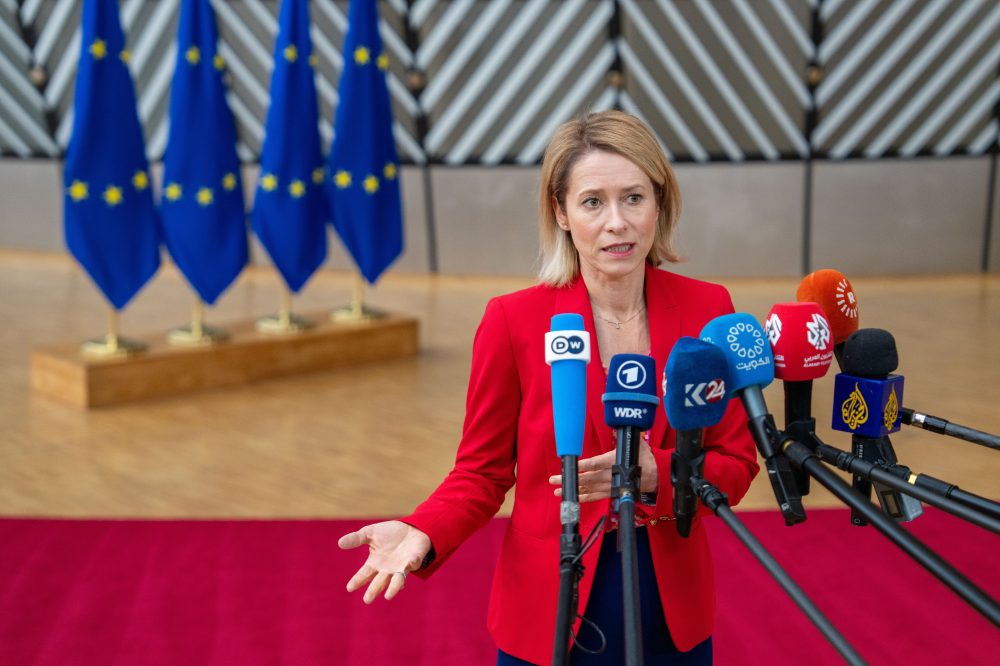
Following the Brussels meeting, EU foreign policy chief Kaja Kallas announced on social media that violence and extremism must face repercussions. “It was high time we move from deadlock to delivery,” she stated.
While ministers stopped short of implementing more aggressive economic measures advocated by certain European nations and withheld immediate specifics about the new restrictions, French Foreign Minister Jean-Noël Barrot confirmed the decision encompasses sanctions against Hamas leaders plus key figures and organizations within Israel’s West Bank settler movement.
“The European Union is sanctioning today the main Israeli organizations guilty of supporting the extremist and violent colonization of the West Bank, as well as their leaders. These most serious and intolerable acts must cease without delay,” Barrot wrote on social media Monday.
“It is sanctioning the main leaders of Hamas, responsible for the worst antisemitic massacre in our history since the Shoah during which 51 French people lost their lives, a terrorist movement that must imperatively be disarmed and excluded from any participation in the future of Palestine,” Barrot added.
International observers, Palestinian officials, and human rights organizations have increasingly sounded alarms about escalating violence throughout the West Bank, where young Palestinian men face mounting casualties amid widespread arson, property destruction, and forced displacement of agricultural communities near settlement areas in the occupied territory.
United Nations Office for the Coordination of Humanitarian Affairs data shows at least 40 Palestinians have died since January began, with a record 11 killed by settlers — exceeding the total settler-related deaths for all of 2025 by two.
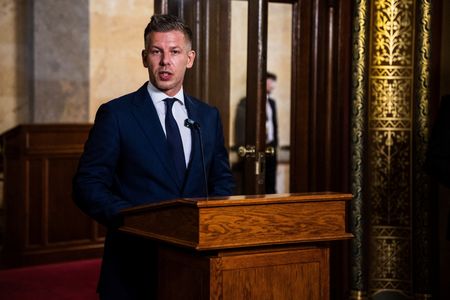
The unified EU decision reflects new political dynamics following Hungarian Prime Minister Viktor Orbán’s removal from office last month after governing Budapest for 16 years. Orbán, a vocal ally of Israeli Prime Minister Benjamin Netanyahu, had consistently blocked previous attempts to sanction Israeli settlers for West Bank activities.
Orbán’s April electoral defeat to Péter Magyar enabled Monday’s sanctions approval, “validates the notion that Orbán was blocking them single-handedly,” according to Martin Konečný, who leads the Brussels-based European Middle East Project.
These sanctions may represent a pivotal shift in EU-Israel relations. Growing criticism of Netanyahu’s government regarding its operations in Gaza, the West Bank, Lebanon, Syria and Iran had driven multiple European governments — particularly Spain, Ireland and the Netherlands — to pursue such penalties.
“You can’t just turn a blind eye,” Luxembourg Foreign Minister Xavier Bettel commented before the meeting.
Nevertheless, EU diplomats could not reach consensus on more forceful measures to pressure Israel, such as prohibiting West Bank settlement products or suspending crucial trade agreements.
“There’s so much that you can and should be doing, and so to get stuck in this question of adding a few more settlers is missing the big picture,” said Hugh Lovatt, a fellow at the European Council on Foreign Relations. “The EU’s narrowed the scope of action now to individuals and to a few entities, and in doing that it’s ignoring the far more systemic issues at play.”
Claudio Francavilla, Human Rights Watch associate EU director, called the sanctions “a step in the right direction, but so many more needed for the EU to comply with international law.”
Italian Foreign Minister Antonio Tajani indicated before the Brussels gathering that his government required additional time to examine a French-Swedish proposal for cutting West Bank settlers off from EU markets, essentially withholding Italian backing for the initiative despite rising domestic political pressure.
Dutch Foreign Minister Tom Berendsen noted that individual countries could independently ban settlement products should the Brussels process remain stalled.
The EU’s upcoming Foreign Affairs Council meeting later in May will concentrate on trade matters.
“We have been talking about measures for too long,” Spanish Foreign Minister José Manuel Albares Bueno said in Brussels. “Let’s move on to a vote and stop saying that there is no qualified majority for it. Let’s see how many of us are in agreement and who is not.”