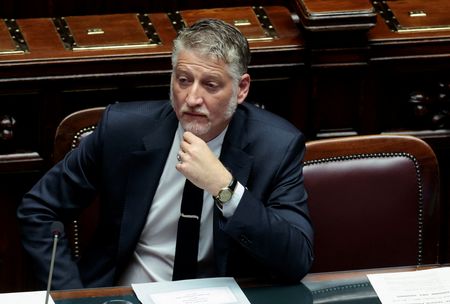

Political chaos continues to engulf Italy’s Culture Ministry as Minister Alessandro Giuli terminated two top officials following public backlash over the rejection of funding for a documentary project.
The dismissals represent the most recent upheaval in a department that has experienced significant instability under Prime Minister Giorgia Meloni’s conservative administration, which has been working to transform Italy’s traditionally left-leaning cultural establishment.
According to Italian news outlets, Giuli removed Emanuele Merlino, who directed the ministry’s technical secretariat, along with Elena Proietti, who managed the minister’s private office. While no formal announcement was made, high-ranking government officials verified the terminations on Monday.
The controversy erupted after the ministry rejected financial support for a film documenting the story of Giulio Regeni, an Italian university student who was abducted, tortured and murdered in Cairo during early 2016. Italian authorities have accused Egyptian security personnel of responsibility for his death.
Giuli characterized the funding rejection as “unacceptable” and claimed he was unaware the decision had been made.
Sources indicate Merlino lost his position due to his role in the funding controversy, while Proietti was reportedly dismissed for missing a scheduled departure for an official trip to New York last month.
Both dismissed officials have remained silent about their terminations, and the Culture Ministry has refused to provide statements.
The two figures held significant positions within right-wing political circles, prompting opposition leaders to characterize their removals as evidence of increasing discord within Meloni’s governing coalition, particularly following their loss in a justice reform referendum in March.
“This is the sign of a coalition riven by internal wars, score-settling, clashes between factions and competing leaderships,” said Sandro Ruotolo, the culture spokesman for the centre-left Democratic Party.
The current crisis represents just the latest disruption to plague the Culture Ministry during Meloni’s tenure, including the 2024 resignation of Giuli’s predecessor, Gennaro Sangiuliano, followed by a series of sudden dismissals and departures.
Since assuming power in 2022, Meloni has worked to expand conservative influence throughout Italy’s major cultural organizations, including theaters and museums.
The transformation has encountered significant obstacles. Last month, conductor Beatrice Venezi, who maintains close ties to Meloni’s Brothers of Italy party, was removed from her role as musical director at Venice’s La Fenice opera house after publicly criticizing the orchestra for nepotism.
Meanwhile, the renowned Venice Biennale art exhibition has become embroiled in scandal after a government appointee permitted Russia’s return to the event, sparking anger from both Giuli and Meloni, who viewed the decision as a betrayal of Ukraine during the ongoing conflict.