
BOGOTA, Colombia — Native organizations throughout the Amazon basin and Latin America plan to deliver a message Monday to the United Nations, calling attention to how organized criminal activity is fueling violence and environmental harm in rainforest communities. The groups are asking governments to tackle illegal mining, drug trafficking, and logging operations without deploying heavy military presence in Indigenous territories.
The correspondence, directed to U.N. member nations and departments including the U.N. Office on Drugs and Crime and the U.N. Permanent Forum on Indigenous Issues, describes how criminal operations are spreading throughout Amazon regions and other Indigenous lands in Latin America, putting communities, natural ecosystems, and local leadership at risk.
Those signing the correspondence say criminal expansion is damaging Indigenous leadership structures and endangering communities that have historically protected some of Earth’s most biologically diverse ecosystems.
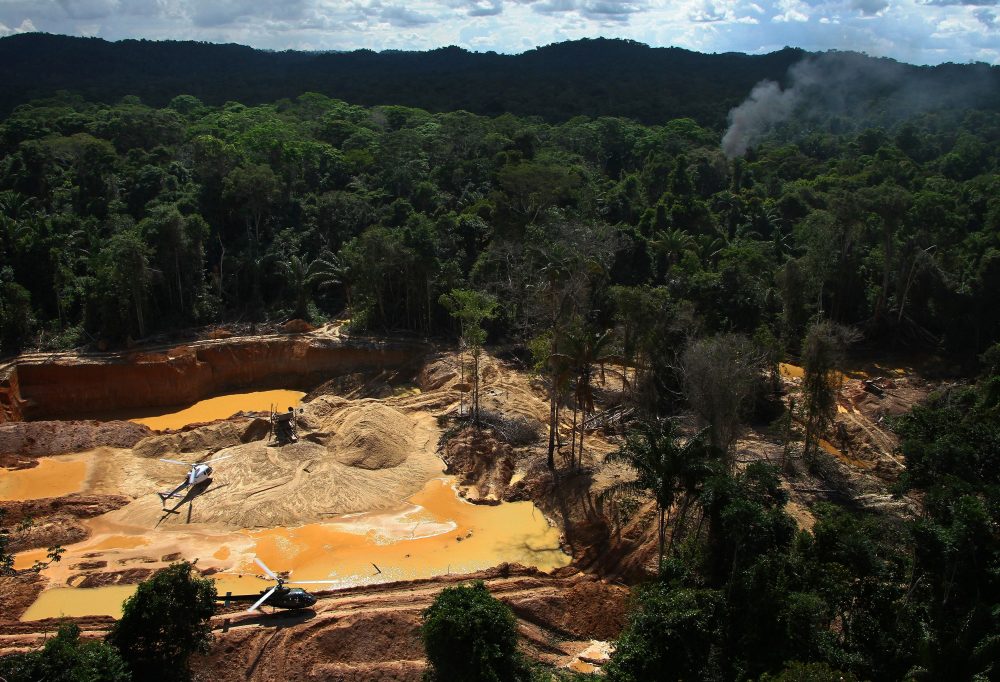
The request comes as Indigenous communities throughout the Amazon basin face increasing pressure from both growing criminal operations and government security responses. Over recent years, unlawful gold extraction, timber harvesting, and narcotics trafficking have penetrated further into isolated rainforest areas in nations like Brazil, Peru, Colombia, and Ecuador, introducing violence, mercury pollution, and forest destruction.
International human rights organizations and U.N. specialists have expressed alarm about increasing attacks on Indigenous leaders and environmental activists connected to conflicts over territory, natural resources, and criminal enterprises throughout the Amazon. Global Witness reports that no fewer than 2,253 land and environmental advocates have been murdered or vanished worldwide from 2012 to 2024, with Latin America representing the majority of incidents.
In Peru, five individuals face trial for the 2023 murder of Indigenous advocate Quinto Inuma Alvarado, who had consistently exposed illegal timber operations and drug trafficking in his territory. Human rights organizations say most comparable murders in the region remain unprosecuted.
Raphael Hoetmer, Western Amazon Program Director at Amazon Watch, an environmental and Indigenous rights advocacy organization, said the correspondence demonstrates increasing concern among Indigenous organizations as these dangers grow.
“More and more Indigenous Peoples are experiencing the violence and impacts of illicit economies in their territories, so it is higher on the agenda,” he told The Associated Press in written comments. “Even four years ago this was not a central topic for most of our partners, but now it is one of the central topics for the wide majority.”
Hoetmer said criminal expansion is increasingly influencing daily life throughout large Amazon areas.
“The expansion and control of organized crime and violent conflict is taking over more and more of the Amazon, becoming a risk to their ways of living and to the global climate,” he said.
The correspondence warns that these situations are not only causing environmental harm but also undermining Indigenous leadership and territorial authority.
Unlawful gold extraction specifically has emerged as a significant cause of forest loss and mercury pollution throughout Amazon regions, while armed organizations and trafficking operations have attempted to control important river passages and Indigenous territories.
“Drug trafficking in the Amazon often connects with illegal mining, logging and land grabbing — a criminal ecosystem where environmental degradation disproportionately impacts local populations and Indigenous people,” said United Nations Office on Drugs and Crime Deputy Director of Operations Jeremy Douglas in written statements to AP.
“Pushing back requires territorial protection, prioritizing environmental crimes, and cooperation against transnational organized crime networks active across the Amazon,” he added.
When providing the statements, the U.N. agency noted it had not yet reviewed the Indigenous organizations’ correspondence and that the response should not be considered an endorsement of its contents. UNODC said its Latin American offices are collaborating with Indigenous communities and national authorities to strengthen territorial protection and fight environmental crimes connected to organized criminal operations.
The AP also reached out to the U.N. Permanent Forum on Indigenous Issues for comment, but did not receive a response by publication time.
The document received signatures from major Indigenous organizations including the Coordinator of Indigenous Organizations of the Amazon River Basin, known as COICA, Brazil’s Indigenous umbrella organization APIB, Peru’s AIDESEP and Ecuador’s CONAIE, along with dozens of regional Indigenous federations and international advocacy organizations.
Ercilia Castañeda, vice president of Ecuador’s largest Indigenous organization, the Confederation of Indigenous Nationalities of Ecuador, or CONAIE, said governments have increasingly addressed organized crime and illegal mining through militarization that has failed to solve the crisis in many Indigenous territories.
“Militarization has not provided answers,” she said.
Rather, she said, some communities have experienced displacement, fear, and psychological damage.
“It has affected their relationship with the land, with the water, with sacred sites, with their spiritual life,” she said. “We are talking about a deterioration of the identity and life of Indigenous peoples.”
Herlín Odicio, vice president of Organización Regional AIDESEP Ucayali, or ORAU, an Indigenous organization representing communities in Peru’s Amazon region of Ucayali, said organized crime organizations have increasingly modified their operations in Indigenous territories.
“Organized crime in Indigenous territories has changed its strategies significantly,” he said in a call with AP. “They no longer make direct threats. Now they use other strategies.”
Odicio said criminal organizations are increasingly integrating themselves into local political frameworks and campaigns to maintain control and continue operations in Indigenous territories.
He said criminal expansion has severely impacted Indigenous communities, where poverty and lack of government services leave many susceptible to recruitment into illegal operations.
“They recruit young people to work as ‘mochileros,’” he said, referring to people used to transport drugs or supplies through remote areas. “Then, in the end, when they no longer want them or do not want to pay them, they kill them.”
Odicio also warned of increasing sexual exploitation of Indigenous girls in communities and border regions affected by criminal organizations, some as young as 13 and 14, he said.
In the correspondence, organizations say government responses focused mainly on military force risk worsening conditions for Indigenous communities if they fail to acknowledge Indigenous territorial rights and self-governance systems.
“In light of this situation, it is essential that responses to organized crime and illicit economies do not translate into new processes of militarization, criminalization, or the subordination of Indigenous governance systems,” the letter says.
The correspondence asks the U.N. Permanent Forum on Indigenous Issues to conduct a dedicated study on organized crime and illicit economies in Indigenous territories and urged U.N. agencies to include Indigenous perspectives in anti-crime and anti-corruption policies.
“We are talking about a deterioration of the identity and life of Indigenous peoples,” Castañeda said.