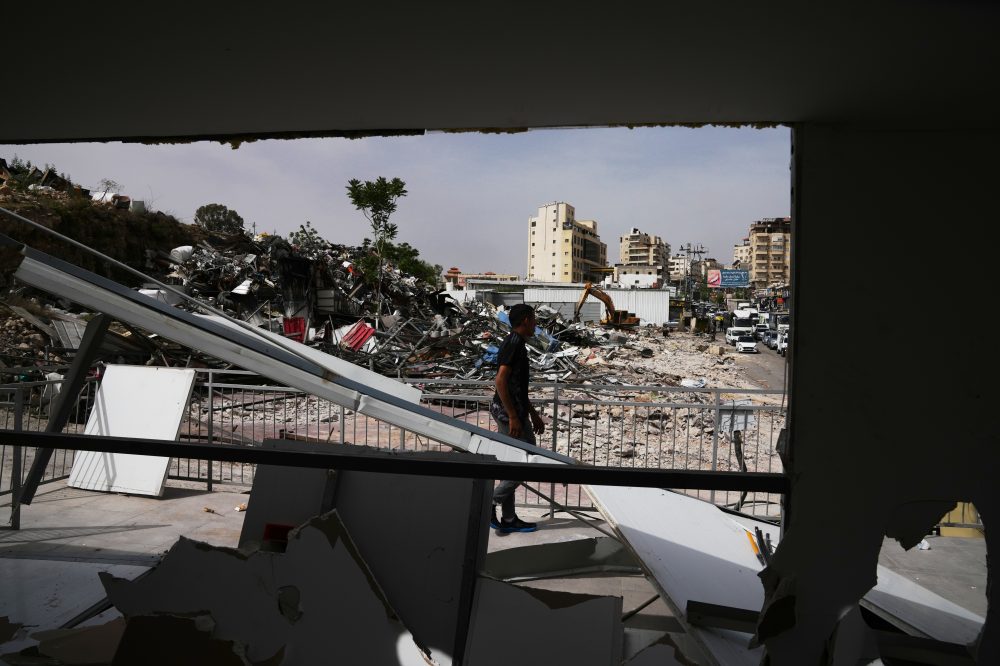

Israeli construction crews demolished approximately 50 Palestinian businesses this week in al-Eizariya, a town located southeast of Jerusalem, as part of preparations for a disputed road construction project in the occupied West Bank.
Israeli officials maintain the demolitions are necessary to construct a roadway that will benefit Palestinian communities. However, Palestinian leaders contend the road represents part of a larger strategy to redirect Palestinian vehicles away from a new highway designed to connect Israeli settlements in the region.
The construction falls within the E1 corridor, a strategically important West Bank area that Israel is developing in ways that Palestinian officials say would block the creation of a future Palestinian state.
“The shops that were demolished are where Israel is planning to build a new road that will divert all Palestinian traffic to that road so that they can close down the whole area of E1 for Palestinians,” explained Hagit Ofran, who leads the anti-settlement organization Peace Now.
The destruction occurred on Tuesday in al-Eizariya, coming less than one week after some business owners received evacuation orders for structures built without official permits. Legal representatives filed appeals reaching Israel’s Supreme Court, but the demolitions proceeded regardless.
Israeli officials stated the demolished structures, which included automotive service centers, metal recycling facilities, and produce vendors, were constructed illegally and that property owners had received warnings for “several years” about potential enforcement action.
COGAT, the Israeli military agency responsible for civilian matters in the West Bank, announced the buildings were blocking the planned roadway intended to link Palestinian communities.
Israeli authorities describe the new transportation network as a solution to traffic problems that will enhance living conditions for Palestinian residents in the region.
Human rights organizations and the internationally recognized Palestinian Authority argue the demolitions connect to Israel’s broader plans to restructure transportation infrastructure and establish separate roadway systems based on Israeli versus Palestinian identification. They claim Israel’s proposed tunnel-and-bypass system will force Palestinian drivers off a main Israeli highway connecting West Bank settlements to Jerusalem, effectively blocking access to significant portions of the territory.
Several of the destroyed businesses had partially obstructed walkways and access routes into the community. Palestinians maintain that obtaining legitimate building permits from Israeli authorities is virtually impossible, even while Israeli settlement construction continues expanding rapidly.
Mohammad Abu Ghalieh, a 48-year-old business owner, expressed shock at having to rebuild following the demolitions.
“Forty-eight years of night and day to build something for his children and himself, and in one day and one night, everything was gone,” he stated.
Daoud al-Jahalin, who leads a nearby village council, reported that over 200 families would lose their sources of income.
The E1 development generates particular controversy because it extends from Jerusalem’s outskirts far into the occupied West Bank, separating the cities of Ramallah and Bethlehem while restricting Palestinian movement between northern and southern areas.
Israeli leadership and settlement critics alike acknowledge the E1 initiative would create obstacles for establishing a connected Palestinian state throughout the West Bank. Israel plans to construct approximately 3,500 residential units adjacent to the current Maale Adumim settlement.
Israel took control of the West Bank during the 1967 Middle East conflict. The global community largely views Israeli settlement development in occupied territories as violations of international law and barriers to peace.