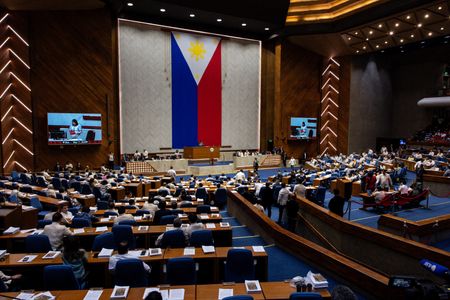

MANILA – The Philippine House of Representatives has launched a second impeachment effort against Vice President Sara Duterte, just over a year after the first attempt was dismissed due to constitutional issues.
The renewed charges target Duterte, who is the daughter of former President Rodrigo Duterte, for allegedly misappropriating government money, acquiring wealth without explanation, and making threats against President Ferdinand Marcos Jr., his wife, and a previous House Speaker.
Duterte has rejected all charges against her. Her legal team has called the accusations “defective” and labeled the impeachment process a “fishing expedition.”
Senate Trial Process
According to Philippine law, after the House approves impeachment charges, the matter goes to the Senate, where senators act as jurors in a trial overseen by the Senate president. However, the path forward may face complications.
In 2025, senators took the rare action of sending a Duterte impeachment case back to the House over constitutional questions. Previous impeachment efforts have also stalled when officials stepped down before completion, including the 2001 trial of then-President Joseph Estrada, which ended when prosecutors abandoned the proceedings.
Changed Political Dynamics
Legislators proceeded with the new complaint only after waiting for a mandatory one-year pause on filing similar charges to expire, removing a key legal barrier that blocked the previous case. This timing has increased the likelihood of a complete Senate trial.
However, the political environment has transformed significantly.
Before the House vote, Duterte supporters in the Senate orchestrated a leadership change that placed Alan Peter Cayetano, a strong Duterte family supporter, in the Senate president role. This means he will oversee any impeachment trial.
The political maneuvering was highlighted by Senator Ronald dela Rosa’s unexpected return to Senate sessions after months of absence, arriving specifically to cast the crucial vote supporting Cayetano, who previously ran alongside Duterte’s father.
Dela Rosa, another close Duterte associate, had been absent from public duties since November while facing legal challenges connected to an International Criminal Court probe into the anti-drug campaign he led as police chief.
University of the Philippines political science professor Jean Encinas-Franco explained that Senate leadership could significantly impact the proceedings’ direction.
“If you are the Senate President or a senator belonging to the majority, you will have the political space to manoeuvre the proceedings of impeachment in a way that will favour whoever your patron is,” she stated.
Conviction Prospects Uncertain
Whether Duterte’s critics can secure enough votes for conviction remains unknown.
Impeachment supporters claim the evidence is substantial and could lead to a guilty finding. However, recent changes in Senate leadership and political alliances have created uncertainty, with Duterte supporters appearing to wield considerable power in the chamber.
Political experts note that loyalties in Philippine politics shift frequently, and senators may adjust their stances considering the 2028 presidential race, which Sara Duterte has announced she will enter.
President’s Response
President Marcos has maintained distance from the impeachment initiative, stating that the process falls under Congressional authority, though the case has developed amid growing tensions between him and Duterte.
A Marcos administration communications official on Tuesday avoided directly supporting an impeachment trial but indicated that accusations should undergo proper legal review.
The official emphasized that accountability applies to everyone, and hearings are necessary to determine the facts.
Impeachment History
Duterte joins a small group of high-level Philippine officials who have faced impeachment, including former President Joseph Estrada, an ombudsman, former Supreme Court Chief Justice Renato Corona, and a former elections commission chairman.
Corona was the only official successfully convicted. The ombudsman and elections chief resigned following their impeachments, while Estrada’s 2001 trial collapsed when prosecutors withdrew.
Conviction Requirements
Removing an impeached official requires approval from two-thirds of the Senate, meaning at least 16 of the 24 senators must vote to convict.
A conviction would force Duterte from office and could bar her from future public positions, potentially derailing any presidential ambitions.
Should the vice president be removed, the president would nominate a replacement from Congress members, requiring majority approval from both legislative chambers voting independently.