
BEIRUT (AP) — Lebanon’s Hezbollah leader is pushing his country’s government to abandon upcoming face-to-face negotiations with Israel, arguing such meetings favor the enemy and demanding a return to indirect diplomacy.
The two nations are set to begin two days of Washington-hosted discussions this Thursday, aiming to halt the current conflict that erupted two months ago after the Iran war and address the broader relationship between these longtime enemies who have been fighting since Israel’s establishment in 1948.
In a letter to his organization’s leadership, Naim Kassem argued that face-to-face negotiations serve Israel’s interests and represent “concessions by Lebanese authorities.” He insisted Lebanon’s leadership should return to indirect diplomacy with Israel, similar to previous approaches that led to the November 2024 ceasefire agreement.
Third-party mediators typically facilitate indirect negotiations.
Kassem also declared that disputes over Hezbollah’s weapons stockpile remain a domestic Lebanese matter and should not be included in discussions with Israel. Lebanon’s government has pushed for the militant organization’s disarmament following the latest fighting that began in early March, declaring all military operations by the group unlawful.
Lebanese officials have also called for an end to hostilities, Israeli forces leaving Lebanon, Lebanese military deployment south of the Litani river, freedom for Lebanese prisoners in Israeli custody, and the return of displaced civilians to their communities.
Kassem announced Tuesday that his organization stands ready to work toward achieving these five government objectives.
Even with the U.S.-mediated ceasefire that took effect April 17, both Israel and Hezbollah continue launching daily strikes against each other.
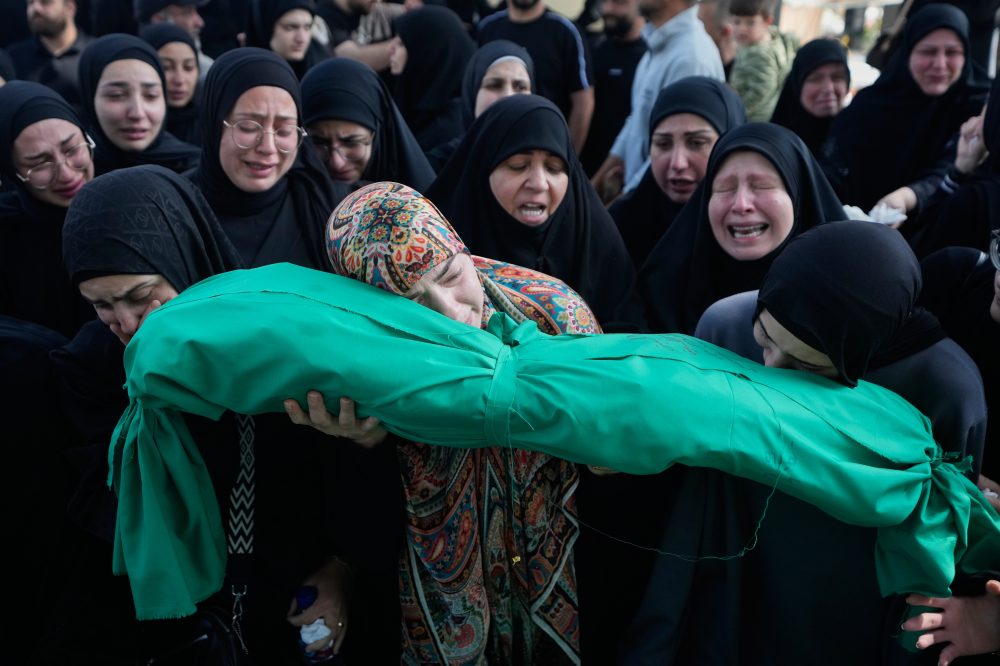
Lebanese Health Minister Rakan Nassereddine reported Tuesday that 380 people have died and 1,122 have been injured since the ceasefire began.
He noted that since the current war started March 2, when Hezbollah launched rockets into northern Israel two days after U.S. and Israeli strikes on Iran, Lebanon’s casualties have reached 2,882 killed and 8,786 wounded.
Starting early Tuesday, Israeli warplanes conducted strikes across southern Lebanon and hit the village of Sohmor in the eastern Bekaa Valley, according to the state-run National News Agency. The agency reported that airstrikes on Jibchit village resulted in three deaths and four injuries Tuesday.
Israeli forces had previously warned residents of Sohmor and four southern Lebanese villages to evacuate.
The National News Agency also reported that Israeli troops entered portions of the southern village of Deir Mimas along the Litani River and destroyed a solar-powered water pumping station serving the community. The agency said the 5 a.m. (0200 GMT) explosion caused extensive damage.
Israeli military officials shared images of soldiers positioned along the Litani River but did not specify exact locations.
Hezbollah released a statement claiming its fighters targeted Israeli forces Tuesday morning near the Litani River in Deir Seryan village using rockets, though no additional information was provided.
Also Tuesday, Hezbollah acknowledged that one of its military leaders died in an airstrike near Beirut last week. The organization published a photograph of Ahmed Ghaleb Balout, describing him as a commander who dedicated most of his life to combat.
Balout died May 6 during an airstrike on a Beirut suburb.
This marked the first airstrike near Beirut since the ceasefire took effect.
Israeli military officials announced Thursday they had eliminated Balout, whom they identified as a leader in Hezbollah’s elite Radwan Force, along with two additional militants.