
Crude oil markets experienced upward movement during Tuesday’s early Asian trading session as diplomatic efforts between Washington and Tehran continue to face significant obstacles, maintaining concerns about global energy supply chains.
Brent crude futures climbed 30 cents to reach $104.51 per barrel, representing a 0.29% increase, while U.S. West Texas Intermediate rose 31 cents to $98.38, marking a 0.32% gain by 0002 GMT. Both oil benchmarks had already posted substantial gains of nearly 2.8% during Monday’s session.
President Donald Trump characterized the current ceasefire arrangements with Iran as being “on life support” during Monday remarks, citing fundamental disagreements on multiple critical issues including ending military operations across all theaters, lifting U.S. naval restrictions, allowing Iranian petroleum exports to resume, and providing financial restitution for conflict-related damages.
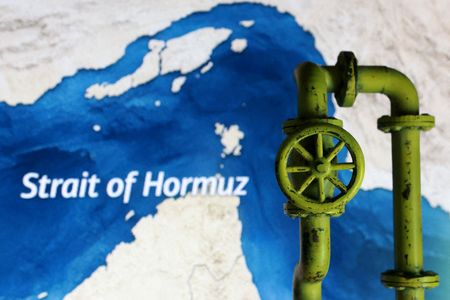
Iranian officials have also stressed their authority over the Strait of Hormuz, a crucial waterway that facilitates approximately one-fifth of worldwide oil and liquefied natural gas transportation.
Tim Waterer, chief market analyst at KCM Trade, explained in an email statement: “As long as the US-Iran negotiations remain inconclusive and physical flows through the Strait of Hormuz stay restricted, we should see prices holding above $100.”
Waterer further predicted: “A genuine breakthrough toward a peace deal could trigger a sharp $8–12 correction, while any escalation or renewed blockade threats would quickly push Brent back toward $115+.”
Supply interruptions caused by the strait’s near-complete closure have forced petroleum producers to reduce their export operations, with a Monday Reuters survey revealing that OPEC’s April oil production dropped to its lowest point in more than twenty years.
Saudi Aramco’s chief executive Amin Nasser issued a warning Monday that export disruptions through the strategic waterway could postpone market stabilization until 2027, potentially eliminating approximately 100 million barrels of weekly oil production.
The Trump administration revealed plans Monday to release 53.3 million barrels from the U.S. Strategic Petroleum Reserve through lending arrangements, aimed at moderating volatile oil market conditions.
Maritime tracking information indicated that an SPR crude shipment is currently traveling toward Turkey, representing the first such delivery to that Mediterranean country.
Additionally, with Trump’s scheduled meeting with Chinese President Xi Jinping approaching, Washington implemented sanctions targeting three individuals and nine entities, including businesses operating in Hong Kong, the United Arab Emirates, and Oman, for enabling Iranian petroleum shipments to China.
The Wall Street Journal reported Monday that UAE forces executed military operations against Iran, including an early April strike on a refinery facility located on Iran’s Lavan Island. According to the report, UAE officials have not publicly confirmed these military actions.