
Culinary professionals from across Israel gathered at Tel Aviv’s waterfront to showcase their heritage through food, proving that even amid regional tensions, the spirit of celebration endures. The annual EAT Festival, running from May 11-14 at Charles Clore Park, drew massive crowds despite looming security concerns.
Roey Mantzour, who operates the Arayes catering business specializing in meat-filled pita bread, believes Israeli cuisine mirrors the nation’s character. “The food in Israel reflects who we are: smart, diverse, a gathering of exiles from all over the world who came here to live. And here, we have the best food in the world,” Mantzour explained.
Monday evening’s festival opening saw thousands of visitors flooding the seaside park, creating a lively atmosphere filled with aromatic spices, grilled meats, baked goods, and desserts. Vendors offered an extensive range of options, from traditional meat dishes and street food to plant-based alternatives, sweets, and beverages.
The event demonstrated Israelis’ determination to maintain normalcy and joy during challenging times. Families, couples, tourists, and friend groups filled the park, embracing the creative energy of Tel Aviv against the Mediterranean backdrop. Daily festivities begin at 6 p.m., featuring live music and dining as the sun sets over the coastline.
Yaniv Wahby traveled from Daliyat al-Karmel in northern Israel to serve traditional Druze specialties including stuffed grape leaves, rice-filled cabbage rolls, za’atar pastries with olive oil, and signature Druze flatbread topped with various ingredients from labneh and chocolate to fresh fruit, halva, and hummus.
Wahby’s northern community has endured significant hardship from Hezbollah rocket attacks in recent months, nearly forcing him to close his business due to decreased tourism. However, he maintained an optimistic outlook at the festival. “We really suffered in Daliyat al-Karmel. During the war, things were very difficult,” Wahby shared with The Media Line. “Now, thank God, we finally have a little breathing room. We came here, as we do every year, to create a good atmosphere and give people a chance to be happy. We’re giving it everything we’ve got.”
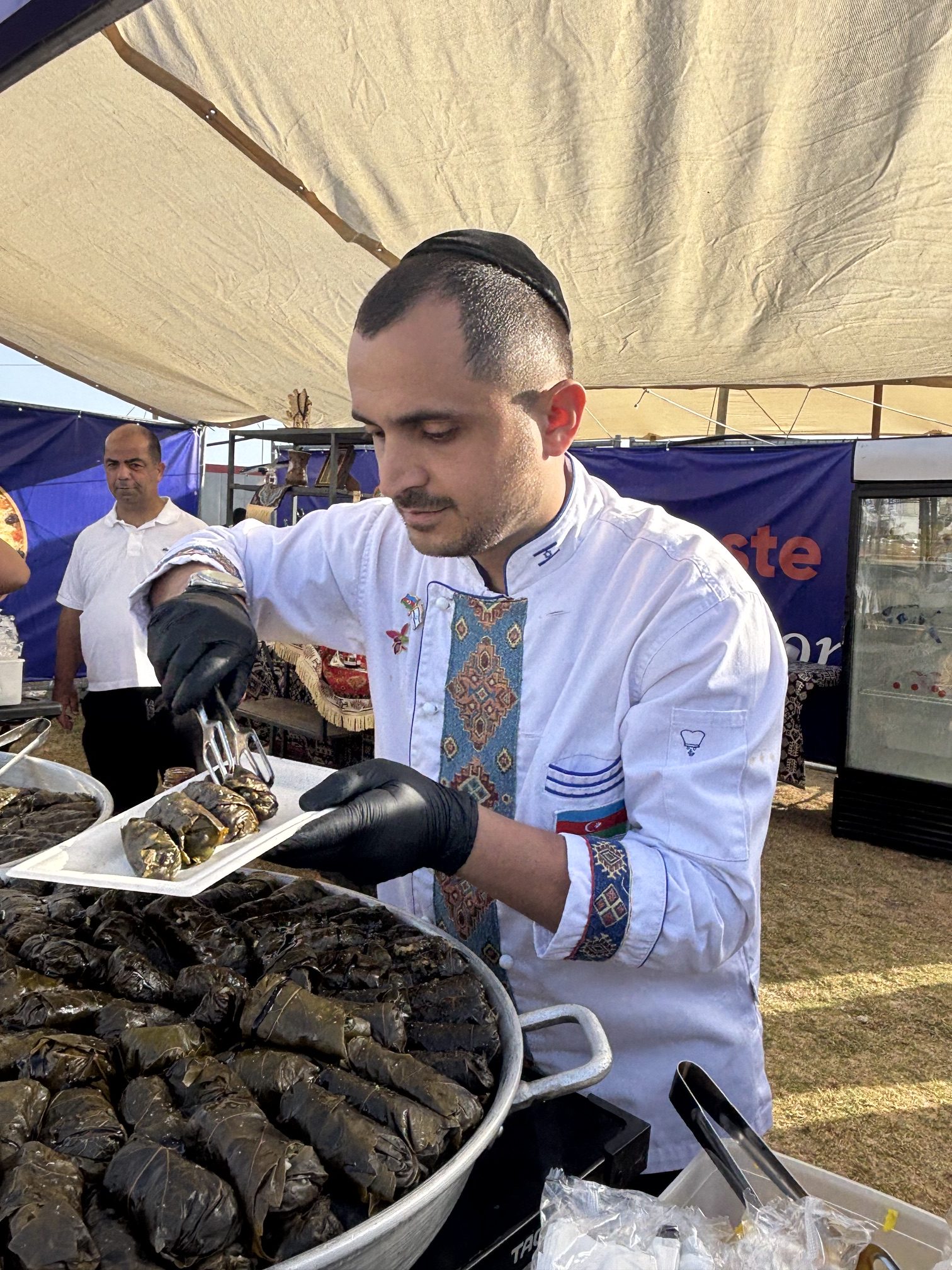
Chef Moti Yevdayev, an Azerbaijani immigrant who arrived in Israel in 1998, presented his mother’s traditional recipes while wearing colorful traditional clothing in turquoise, red, and yellow hues. “From the age of one, I was always near the tandoor oven, my aunt, my mother, and my whole family while they cooked,” Yevdayev told The Media Line. “Over the years, I grew up and decided I wanted to enter the culinary world because food is what I love most.”
Yevdayev emphasized the authenticity of Azerbaijani cooking, highlighting fresh vegetables and minimal seasoning. According to the chef, the cuisine relies primarily on salt, pepper, saffron, and “lots of love and patience.”
His featured dish, shah plov, consists of rice steamed with dried fruits, raisins, chestnuts, meat, caramelized onions, and pomegranate, all encased in dough and baked for hours. “It creates this incredible crust while everything inside steams together into one perfect bite, sweet, sour, salty, and rich,” the chef described.
Additional offerings included qutab, a grilled pastry with spinach and herbs or meat, brushed with vegan butter substitute to maintain kosher standards, and gürzə dumplings with both meat and vegetarian potato-onion versions. He also brought authentic stuffed grape leaves directly from Azerbaijan.
Currently serving as chef for the Azerbaijani Embassy in Israel, Yevdayev manages all embassy events and leads kosher culinary tours internationally. Security concerns have prevented his long-held restaurant dreams, though he hopes this year will finally allow that goal to materialize.
“Today we’re here at the festival in Tel Aviv. This is a huge dream of mine,” Yevdayev said. “We make all the food here by hand. It’s very hard work. Around 20 older women came to help cook because only they know the traditional folding, stuffing, and preparation techniques. It’s honestly beautiful to watch, almost like a movie.”
Asian cuisine was well-represented through authentic Thai and Korean food stalls. Suni Kim originally visited Israel eight years ago for the Jerusalem Marathon and fell in love with the country. After returning permanently a year later, she met her husband and now has a one-year-old child. Three years ago, she established Tel Aviv’s first Korean restaurant, Kimchi’s Korean Restaurant.
Kim’s festival offerings included authentic Korean dishes such as bibimbap, Korean barbecue, and Korean corn dogs – “anything that you see on TikTok that people love to try,” she explained to The Media Line.
Observing the packed park around her, Kim praised Israeli resilience. The people of Israel are “very, very brave. One day, there’s a tragedy, and the next day, they recover so fast. And it’s very, very impressive.”
She noted that despite living under war’s shadow, “everyone’s excited to come out for the food, so it shows the energy.”
Jerusalem’s renowned Machneyuda restaurant, established by celebrity chef Assaf Granit, sent representative Gal Hadar to the festival. According to Hadar, they participate because “the sea is here. You can get a tan. It’s not cold here,” and crucially, “The people of Tel Aviv want polenta. They don’t want to travel to Jerusalem for polenta, so the polenta comes to them.”
Machneyuda’s signature polenta with mushroom ragout and truffle oil was featured alongside buns filled with chorizo and siska, a spiced meat preparation. Hadar explained that superior siska originates from Jerusalem because “that is where the Kurdish people live and they brought their traditions and food culture there.”
When asked if Tel Aviv residents appreciate Jerusalem cuisine, Hadar responded confidently: “Yes, very much. We try our best to make them love it.”
Mantzour showcased his specialty dish of pita stuffed with kebab meat, typically fatty lamb. “We grill it over a very low flame so the pita becomes crispy while the kebab stays soft,” he described to The Media Line. “We serve it with dips like tahini, red harissa, and pickles.”
While acknowledging arayes as traditionally Lebanese, he jokingly remarked that “we took it from the Arabs like everything else.” Despite this humor, he expressed genuine pride in participating annually since the festival’s inception a decade ago.
“Tel Aviv is undoubtedly the culinary center of Israel,” Mantzour stated, emphasizing this year’s special significance. “This event is extremely important this year because there haven’t been many events since Purim. This is a very major event in Israel, and it’s important that it happens. We’re very happy it’s taking place despite the tension in the background.”
Tamir Cohen, Mantzour’s colleague, echoed these sentiments. “Food in Israel is the best therapy for us Israelis,” Cohen concluded. “Through food and culinary culture, we continue living. For us, food is the cure for all the madness we experience as a nation. We are a people constantly living through wars, but we also love to enjoy life, celebrate, and eat.”
Hadar from Machneyuda added: “Am Yisrael Chai – long live the people of Israel.”