
Israeli parliament members are pushing forward with legislation to establish specialized courts for prosecuting those accused in the October 7 attacks, arguing that current anti-terrorism laws weren’t designed to handle such a massive and historically significant assault.
The proposed legislation, developed through rare cooperation between governing coalition and opposition members, would create dedicated court procedures for October 7 defendants. This includes specialized judicial panels, modified evidence rules, faster proceedings, public documentation, enhanced victim rights, and potential death penalties for the most serious offenses. The bill’s creators emphasize this is distinct from National Security Minister Itamar Ben-Gvir’s separate efforts to broaden death penalty applications for terrorists.
According to materials from the bill’s sponsors, the legislation centers on three primary objectives: swift, focused, and uncompromising legal proceedings; giving victims a voice; and ensuring permanent historical record. The sponsors position this proposal not just as legal machinery but as a moral and historical statement designed to transform the prosecution of alleged October 7 attackers into justice for future generations.
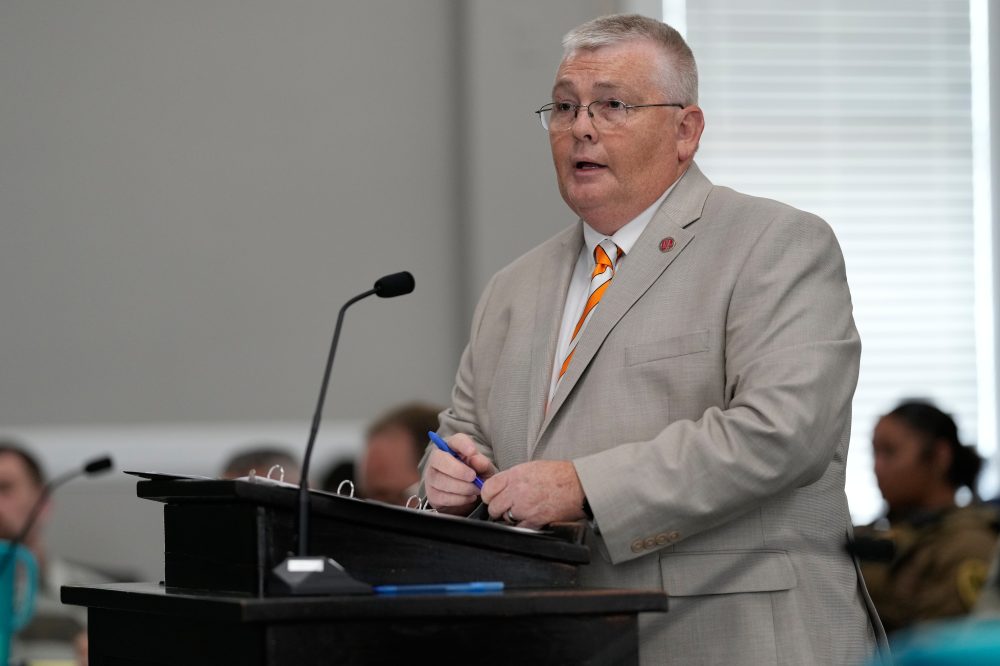
During a press conference, opposition parliament member Yulia Malinovsky from Yisrael Beitenu declared alongside Constitution, Law and Justice Committee Chairman Simcha Rothman and Justice Minister Yariv Levin: “This is the modern Eichmann trial. Just as there was Nuremberg and later Eichmann, this is what this law creates.”
Israel has executed only two individuals in its history: IDF officer Meir Tobianski in 1948, who was convicted by military tribunal during the Independence War and later cleared posthumously in 1949, and Adolf Eichmann in 1962, a key Holocaust architect. By referencing Eichmann and Nuremberg, the bill’s supporters are positioning the October 7 trials as more than criminal cases—they’re framing them as national documentation and historical judgment.
Rothman characterized the legislation as an extraordinary moment of political cooperation around an incident he said couldn’t be handled as routine criminal proceedings.
“This is not a partisan event, and not a personal event,” Rothman stated. “It is a national event.”
He noted that legislators who “normally cannot agree on which side the sun rises and which side it sets” collaborated in “complete harmony” on this bill.
“The October 7 massacre was not an attack on a specific community or a specific individual,” Rothman explained. “It was an attack on the entire Jewish people standing against enemies who seek to destroy it.”
Parliament members presented the bill as addressing an assault they believe standard criminal procedures cannot properly manage. The proposed system aims to handle large defendant numbers, sensitive evidence, victim participation, public access, and long-term preservation of trial records.
The legislation would cover crimes committed by enemy attackers from October 7 through October 10, 2023, defining relevant offenses as war crimes, crimes against humanity, and crimes against the Jewish people.
Levin identified the primary challenge as preventing proceedings that would extend for years under standard criminal procedures. “If these proceedings were conducted at the normal pace of legal proceedings in Israel, it would take an extraordinarily long time before they reached a conclusion,” Levin said.
The justice minister explained that drafters worked to build a system that would operate faster while maintaining process credibility. “We invested enormous effort and thought into creating the optimal combination between the desire to work efficiently and the need to preserve the essential principles required for a fair trial,” he stated.
The proposed system would feature main trial panels with three judges, including at least one district-level judge. Appeals would go before three-judge panels led by retired Supreme Court justices alongside senior district-level judges.
The case scale represents one reason lawmakers cite for needing separate procedures. Levin said Israel faces “hundreds of defendants” and legal questions that standard trials aren’t equipped to handle.
“There are solutions here for very complex questions, including how to conduct a trial when there may be 20, 30, or 40 defendants in the same case,” Levin noted.
Rothman confirmed the exact suspect number remains classified but acknowledged the scope has expanded as investigations progressed.
“When we began this process, the numbers were in the dozens,” he said. “As time passed, more intelligence was uncovered, more investigations matured, and the numbers developed.”
The bill would permit courts to modify standard procedural and evidence rules when needed to uncover truth in exceptionally large cases while maintaining proceeding fairness. Sponsors cite examples including written testimony in limited situations, preliminary proceedings before single judges, and rules to help manage indictments with multiple defendants.
The proposed system also emphasizes public memory unusually strongly. Proceedings would be recorded, archived, and accessible through a dedicated digital platform, creating records for courts, Israeli society, and future generations.
“We wrote into the law that the trial will be filmed and broadcast,” Malinovsky said. “There will be a dedicated website and archives in order to preserve the memory.” Malinovsky suggested part of the purpose involves forcing renewed international focus on October 7.
“The world forgot October 7,” she stated. “The media forgot. People moved on to other issues. These trials will remind the world what happened.”
Levin opened the event by characterizing the legislation as a moral obligation to those killed, injured, kidnapped, and left behind.
“For the memory of the murdered, for their families, for the wounded, for the hostages, and for the entire people,” Levin said, “we must fulfill our highest moral obligation and bring the perpetrators of the massacre to justice.”
The legislation would expand protections and rights for victims and grieving families, including rights to receive proceeding information, privacy protection, separation from defendants when needed, and access to public broadcasts and trial documentation.
Malinovsky described the legislation as parliament’s response to a day when many Israelis felt helpless.
“We are not soldiers,” she said. “We are legislators. This is our battlefield.”
The proposal includes capital punishment provisions. Rothman said the law would allow courts to impose the harshest penalties available under Israeli law.
“The law says clearly that the harshest punishments in Israel’s legal system will apply, including the death penalty,” Rothman stated.
The system would require political-level determination before executing death sentences: The defense minister, after consulting the justice minister, would decide implementation timing and method. Implementation regulations would need approval from the Knesset Constitution, Law and Justice Committee and the Knesset.
Nevertheless, Malinovsky emphasized that decisions would remain with judges.
“In the end, these are decisions of Israeli judges,” she said. “The entire system is built so the process will be efficient and fast, but while preserving the principles of justice, including public proceedings and victims’ rights.”
That balance—speed, documentation, punishment, and due process—will likely be central to legal debates over the measure. Special evidence rules, accelerated proceedings, filmed trials, and capital punishment could draw examination from legal experts, civil liberties advocates, and international observers, even with broad political Knesset support.
The proposal includes an unusual legal representation provision. The state wouldn’t provide representation through Israel’s public defender system as standard practice. If defendants lack lawyers, courts could appoint private defense attorneys to ensure fair trials, with attorney fees paid from tax funds Israel transfers to the Palestinian Authority rather than directly from Israeli taxpayers.
Another sensitive issue involves a proposed amendment preventing October 7 massacre participants from release in future prisoner or hostage deals.
“We believed it would not be appropriate for participants in the October 7 massacre ever to be released in any future agreement,” Malinovsky said. “This is also a very clear moral statement.”
Such provisions would carry political and diplomatic weight. Israel has repeatedly released convicted prisoners in past exchange deals, and legal restrictions on future releases could affect government flexibility in hostage negotiations or future agreements.
Rothman acknowledged the clause raised legal and political difficulties, including within coalition and opposition, but said he would support it.
“I know there are complexities surrounding this proposal for many reasons,” Rothman said. “But I will support it, and I will call on my colleagues in the coalition to support it as well.”
The legislation would also adjust detention periods to investigation and prosecution needs, modifying certain deadlines and mechanisms to reflect October 7 case scale and complexity.
The lawmakers defended the bill against expected legal challenges and international criticism. Levin said the framework was drafted considering how trials would be viewed internationally, especially in the United States and other Western nations.
“There are countries in the world that support terrorism and support Hamas regardless of what happens,” Levin said. “We certainly do not act according to their dictates.” Still, he argued most countries would understand the need to prosecute attackers. “I think that in other countries there is understanding and agreement that these terrorists must stand trial. Both for justice and for the future.”
“When people see how these proceedings are conducted, they will recognize them as fair trials,” he added.
Malinovsky said she doesn’t expect Israel’s High Court of Justice to strike down the law, arguing it was drafted with legal advisers and relevant state bodies.
“When you know how to legislate wisely, and you understand the limits of power, you reach the desired result,” she said. “This law is balanced.”
The proposal also outlines logistical and security frameworks around trials, including dedicated Israel Prison Service security units for military courts, detention facilities and budgets, information-sharing mechanisms among justice and security agencies, and centralized defendant and witness registries, subject to legal restrictions.
Rothman said the bill expects support from approximately 110 Knesset members, an unusually high number in Israel’s divided 120-member parliament.
“This is the Knesset at its best,” he said. “If I was elected for this law and for this moment, then I feel I fulfilled my mission.”
For the bill’s sponsors, the legislation represents a historic justice framework following the deadliest attack in Israeli history. For Israel’s legal system, it may become a test of whether exceptional procedures, public memory, victim rights, capital punishment, adapted evidence rules, security logistics, and fair-trial guarantees can coexist within one courtroom.