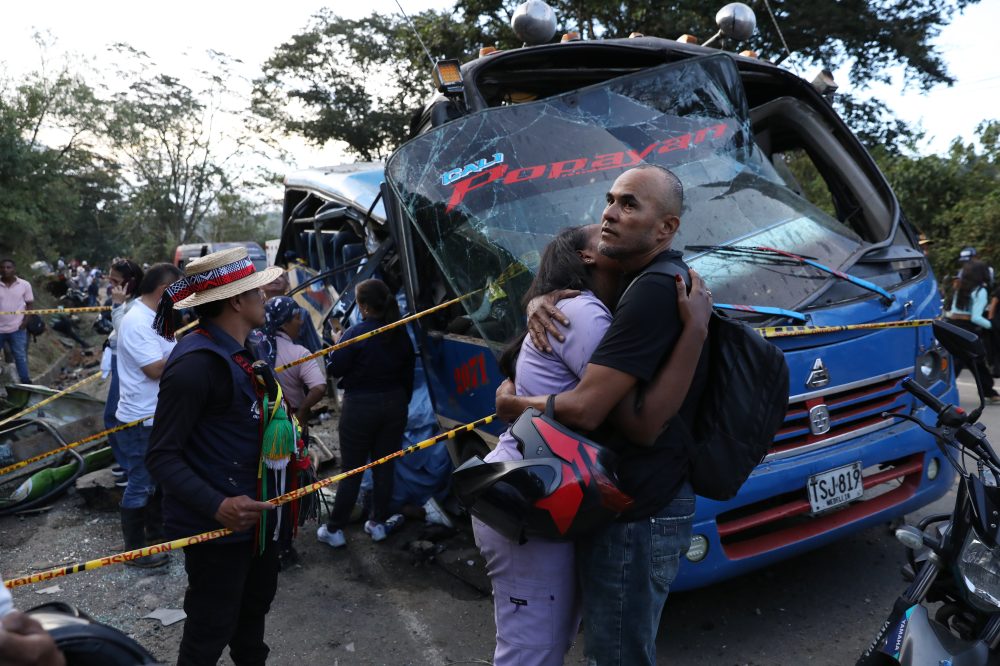

BOGOTA, Colombia – Civilians in Colombia endured their most devastating year of armed violence in a decade during 2025, according to a new report released Tuesday by the International Committee of the Red Cross highlighting the country’s worsening security crisis.
The humanitarian organization documented that forced displacement doubled last year, affecting 235,000 individuals as criminal organizations and insurgent groups battled both government forces and each other for territorial dominance. Community lockdowns enforced by rebel factions in rural towns and villages also surged by 99% compared to the previous year.
Colombia has experienced decades of warfare as insurgent movements and narcotics traffickers compete with government forces for control over remote regions, particularly strategic routes connected to cocaine smuggling operations.
While a 2016 peace agreement between Colombian authorities and the country’s most powerful rebel organization, the Revolutionary Armed Forces of Colombia (FARC), initially decreased rural bloodshed, security conditions have since declined across numerous regions. Smaller armed factions have moved to seize territories previously controlled by FARC fighters, imposing taxes on local enterprises and threatening civilians who resist their authority.
“The humanitarian situation in 2025, is the result of a progressive deterioration that the ICRC has warned about since 2018,” stated Olivier Dubois, the ICRC’s chief of mission in Colombia.
President Gustavo Petro’s government has spent the last four years attempting to curb rural violence through negotiations with surviving rebel organizations and establishing temporary ceasefires with several groups.
However, opponents argue these truces have allowed insurgent forces to reorganize, acquire weapons, and tighten their control over local populations, leading to increased recruitment of minors into criminal organizations.
Political violence has also escalated throughout Colombia, exemplified by the fatal shooting of a presidential candidate during a campaign event in Bogota last year. Government officials have attributed the assassination to one of the country’s rebel factions.
The United Nations Human Rights office in Colombia reported in February that the nation’s security conditions were experiencing significant “backsliding,” with killings of human rights advocates rising 9% during the previous year.
Tuesday’s Red Cross report also revealed that 965 individuals were killed or wounded by explosive weapons, including landmines and drone attacks, representing a 33% increase from the prior year.
The humanitarian organization called on all parties involved in Colombia’s ongoing conflict to honor civilian protections and safeguard those seeking to withdraw from hostilities.
“Respect for international humanitarian law is not optional,” the group emphasized.