
LONDON, May 12 – The extended military confrontation between the United States and Iran is creating widespread economic disruption around the world, challenging the stability of international financial systems in multiple ways.
Asian markets are experiencing some of the most severe impacts, with regional currencies plummeting since U.S. and Israeli forces launched attacks against Iran in February. The region faces particular vulnerability because approximately 80% of oil transported through the Strait of Hormuz typically heads to Asian destinations.
Indonesia’s rupiah reached an all-time low on Tuesday, joining other Asian oil-importing nations like India and the Philippines, whose currencies have also dropped to unprecedented levels. For several weeks, central banks across the region have been stepping into currency markets either directly or through state-controlled banks, searching for additional tools to address the crisis. South Korea, Thailand, and Malaysia are also experiencing currency pressures.
“Central banks will be reluctant to sell down reserves,” explained Mitul Kotecha, who leads Asian foreign exchange and rates strategy at Barclays. “As such, we’re probably going to see more creative measures to support their respective currencies.”
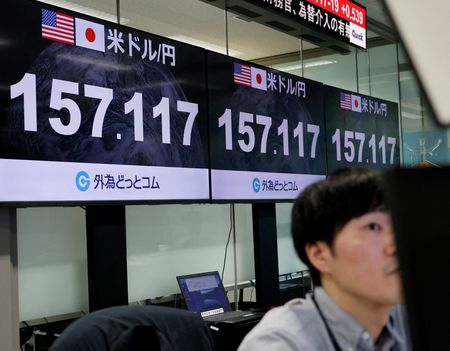
Japan faces particularly acute challenges as the conflict adds new stress to the yen, which was already weakened by the country’s low interest rate policies and concerns about Prime Minister Sanae Takaichi’s debt-financed economic growth strategy. Since Japan relies on Middle Eastern sources for roughly 95% of its oil imports, the currency remains extremely vulnerable to rising energy costs. Government officials have stepped in as the yen approached 160 per dollar to discourage speculation.
“With oil prices spiking higher, traders naturally attacked the yen, since this is a low-yielding currency, but also one whose fundamentals is most adversely affected by high oil prices,” noted Thierry Wizman, a global foreign exchange and rates strategist with Macquarie Group.
Market experts believe intervention efforts are unlikely to stop the yen’s decline unless the conflict subsides and interest rates increase quickly.
The global food supply faces new threats just as price instability was beginning to calm following the 2022 disruptions caused by Russia’s invasion of Ukraine. A new wave of problems appears imminent as the Middle Eastern conflict restricts fertilizer availability and drives up energy costs – issues that could worsen if the El Nino weather pattern returns. The Baltic shipping index has climbed to its highest point since 2023.
Developing nations, where food represents a larger portion of inflation calculations, will likely face the most severe consequences.
“Elevated food prices are a problem across the world, but particularly in economies where food makes up a large share of the inflation basket or food supplies are reliant on imports,” said James Pomeroy, a global economist with HSBC.
American consumers are experiencing direct impacts at gas stations, where average prices have climbed from approximately $3 to more than $4.50 per gallon, according to AAA data. These fuel costs are being closely monitored as they could influence President Trump’s approach to potential negotiations before November’s midterm elections.
“If that continues to go up and we head towards $5, there’s going to be a lot of unrest domestically, and that might force Trump to change tack again on the war with Iran,” said Guy Miller, chief market strategist at Zurich Insurance Group.
The energy crisis is driving up costs for household items manufactured from oil or natural gas, including toothpaste and laundry detergent. Market analysts are tracking rising inflation expectations that might prompt central banks to increase interest rates. The European Central Bank’s Consumer Expectations Survey revealed that one-year inflation expectations surged to 4.0% in March from 2.5% in April.
Aviation companies are confronting their most serious challenge since the 2020 COVID-19 pandemic forced global lockdowns. Jet fuel costs have increased nearly 84% since the conflict began, with shortages expected if hostilities continue. Spirit Airlines, an ultra-low cost carrier, shut down operations this month, blaming rising fuel expenses for its collapse.
While some airlines suggest supply disruption risks may be decreasing, the sector continues to underperform. European airline stocks have fallen roughly 14% this year, contrasting with a 3% gain in broader markets.
Major bond markets initially stabilized after early conflict-related selling forced traders to adjust rate forecasts. However, new vulnerabilities are appearing that analysts warn could escalate. Britain faces additional political risks that are intensifying pressure on its government bond market.
The crucial U.S. Treasury market shows 10-year yields near 4.40%, approximately 40 basis points higher than pre-war levels. Rising U.S. yields also threaten to pressure emerging markets that base their borrowing costs on Treasury rates.
“There is a danger zone for equity markets and credit markets if we get yields above the 4.5% level on 10-year Treasuries,” Miller explained. “That has tended to be disruptive.”