
When Anna Yegoyan relocated from Armenia’s capital city to the mountainous northern community of Ijevan, she had to navigate rough, damaged roadways to reach her destination.
Today, she highlights freshly constructed streets and roadways as evidence of progress during Prime Minister Nikol Pashinyan’s leadership, who was raised in that area, and declares her intention to support him in Sunday’s electoral contest.
The nation has transformed into “a proper country,” stated the 40-year-old, who participated in a Pashinyan campaign event in the community of approximately 20,000 residents. “Our place in the world is more recognisable.”
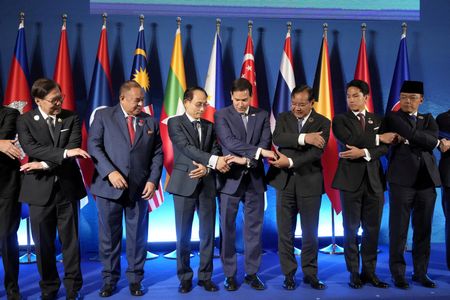
Citizens will cast ballots in a parliamentary election on June 7 that will evaluate Pashinyan’s attempts to establish peace with long-standing adversary Azerbaijan and strengthen relationships with Western nations, shifting away from traditional ally Russia. He expresses his goal to transform the landlocked country of 3 million into a “crossroads of peace,” reopening borders with Azerbaijan and its partner Turkey that have been sealed for years.
Polling data indicates Pashinyan’s Civil Contract party holds the lead with approximately 30% backing, while his primary opponent, Russian-Armenian billionaire Samvel Karapetyan, who advocates for strengthened Moscow relations, follows with 6 to 11% support.
The shift from Russia represents a sensitive maneuver. Armenia exports roughly one-third of its goods to Russia and has historically relied on Moscow for energy needs. Recently, Russia – which operates a significant military installation in Armenia – has increased pressure by limiting various Armenian exports and threatening to eliminate affordable gas and oil supplies.
Yerevan’s administration has mostly minimized these concerns, though polling reveals one-third of Armenians now consider Russia threatening, ranking only behind Azerbaijan and Turkey.
Pashinyan has received strong backing from U.S. President Donald Trump, who facilitated discussions between him and Azerbaijani President Ilham Aliyev while promoting a transportation route through southern Armenia as part of peace negotiations.
European leaders are also monitoring developments closely. Seeking influence in a region positioned between Russia and Iran, Europe has clear interests in Armenia “being more sovereign, more autonomous, and more able to trade westwards,” according to Thomas de Waal, a senior fellow at Carnegie Europe.
Sunday’s election marks the first since Armenia’s 2023 military loss, when Azerbaijan reclaimed the separatist territory of Nagorno-Karabakh, causing approximately 100,000 ethnic Armenians to flee.
Pashinyan emphasizes his achievements toward peace and reopening the Turkish border, closed since 1993. However, no agreement with Baku has been finalized, and opponents argue he has surrendered too much.
“The ruling party says peace has arrived, (but this) diverts the responsibility for all the security failures we’ve had throughout the years,” said Tigran Grigoryan, director of the Regional Centre for Democracy and Security think-tank in Yerevan.
If Pashinyan cannot achieve a two-thirds parliamentary majority, his commitment to Azerbaijan regarding a constitutional referendum would become challenging to honor, potentially hampering peace initiatives.
He also confronts accusations of authoritarian behavior from opposition groups and international human rights organizations. Numerous political opponents have been arrested, including supporters of main challenger Karapetyan, who remains under house arrest for allegedly inciting power seizure.
Karapetyan and another candidate, former President Robert Kocharyan, seek to preserve positive Russian relations and caution that Pashinyan is developing excessive closeness with Azerbaijan.
During the 2021 election, Pashinyan gained backing from voters outside power centers while struggling in the affluent capital.
“Pashinyan is able to talk the language of the common people, the language people understand,” said Mikayel Zolyan, a political analyst and former member of parliament.
Since assuming leadership during the 2018 Velvet Revolution, he has presided over doubled GDP per capita, established hundreds of kindergartens, and constructed thousands of kilometers of roadway.
Such achievements hold no significance for Anahit Grigoryan, who escaped Nagorno-Karabakh with her young child after her spouse died in a military fuel depot explosion during the brief conflict.
Now 26, she resides with four family generations in a village near Yerevan, surviving on modest refugee assistance and income from selling baked goods made with eggs from her backyard poultry.
As a former Karabakh resident, Grigoryan would require Armenian citizenship documentation to participate in voting, but expressed no interest.
“I feel like my voice will not be heard,” said the mother of four-year-old Karen. “Justice, for me is not realistic…It’s very hard for me to look my mother, my grandmother, and other women who lost their kids in the eyes.”