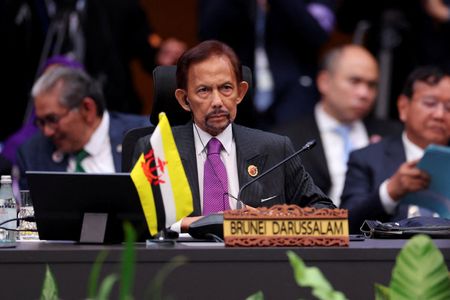

The leader of Brunei revealed significant changes to his government structure Thursday, establishing new key positions and naming two of his sons to ministerial roles, suggesting possible succession preparations in the wealthy oil nation.
This marks the first major government reorganization since 2022 and occurs while Brunei, located on Borneo island, confronts challenges from worldwide energy difficulties triggered by the U.S.-Israeli conflict with Iran.
The announcement also comes one year ahead of Sultan Hassanal Bolkiah’s diamond jubilee celebration. The monarch, who took power in 1967, holds the distinction of being the world’s longest-serving ruler.
The 79-year-old leader, who manages several government positions, has appeared publicly less frequently this year following knee replacement surgery in January.
During a television address, Sultan Hassanal stated he would maintain his positions as prime minister, defence minister and finance minister.
Prince Abdul Malik, his second eldest son, received appointment as Minister in the Prime Minister’s Office, marking his initial cabinet position.
Prince Abdul Mateen, his second youngest son who enjoys polo and has social media popularity, was named foreign minister, a position the sultan previously managed personally.
Crown Prince Al-Muhtadee Billah, his eldest son, kept his existing position as Senior Minister at the Prime Minister’s Office.
The sultan also revealed the establishment of three new ministerial positions designed to improve policy coordination throughout the government. He announced that the Primary Resources and Tourism Ministry would be restructured into the Ministry of Economy, Trade and Industry.
“This is intended to accelerate the development of priority sectors, strengthen economic diversification efforts, support sustainable economic growth and create meaningful employment opportunities,” he said.
The reorganization resulted in the greatest number of women appointed to cabinet positions to date, including the education minister and three deputy ministers.
Brunei has gained advantages from the Iranian conflict, increasing exports of crude oil, refined products and gas recently. However, the nation struggles with rising subsidy expenses to maintain some of the region’s lowest fuel prices.
Last month, Brunei implemented restrictions preventing foreign-registered vehicles with fuel tanks less than three-quarters full from entering the country, aiming to prevent cross-border smuggling and preserve domestic fuel supplies.
On Wednesday, the energy department announced that officials had formed a special committee to oversee and coordinate responses to address impacts from the Middle East conflict.