
BUCHAREST, Romania — In an effort to resolve a mounting political crisis, Romania’s President Nicusor Dan selected one of his advisors Thursday to lead the country’s next government after the ruling coalition fell apart last month.
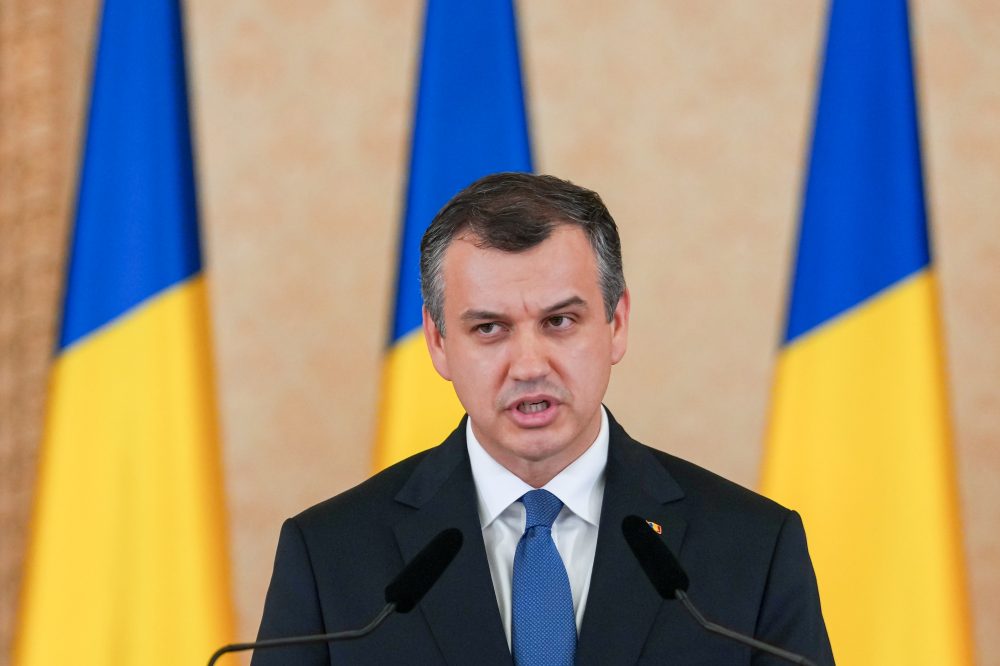
Dan tapped 44-year-old Eugen Tomac, who serves as a member of the European Parliament, to attempt forming a new administration following weeks of political uncertainty and governmental paralysis in the EU nation. Parliamentary lawmakers must give their approval to the selection.
The president explained his decision by saying Tomac possesses “independence, experience and values” that qualify him for the position.
During remarks at the presidential Cotroceni Palace in Bucharest, Dan stated: “I chose a person independent of the parties in Parliament, who has the political experience to discuss with each of the parties, because consensus from many parties is needed on many issues. It is an act of responsibility on my part, and I expect the same responsibility from the political parties.”
In his own statement at the palace, Tomac acknowledged Romania’s current difficulties on both political and economic fronts, pledging to bring before Parliament “a team of specialists, a technical government, not a political one.”
“I understand the political stakes,” he remarked. “They are legitimate and natural in a democratic state, but I know that Romania now needs national projects carried through to the end and clear objectives.”
The nomination follows by one month the no-confidence vote that brought down Prime Minister Ilie Bolojan, triggered by a motion filed by the Social Democratic Party, or PSD, which had been part of the governing coalition, alongside the nationalist opposition Alliance for the Unity of Romanians party.
As an MEP, Tomac belongs to Renew Europe, a pro-EU liberal faction. He previously held a seat in Romania’s parliament from 2012 to 2019 and received his appointment as presidential adviser from Dan in the past year.
Tomac described his goals for Romania as matching Dan’s perspective “of belonging to the European family, of strengthening the strategic partnership with the United States, of our transatlantic relationship as a whole, our relevance in NATO being a priority.”
He continued: “Economic competitiveness is very important, because only a strong economy can support the well-being that the citizens of Romania deserve.”
The country currently faces one of the EU’s largest budget shortfalls, alongside widespread inflation and a technical recession. The previous coalition took office in June 2025 with budget deficit reduction as a key goal. Bolojan had been installed to address what was considered one of Romania’s most severe political upheavals since the end of communist rule.
Within the European Parliament, Tomac serves on the culture and education committee and has participated in delegations backing Moldova’s EU membership bid. He leads the People’s Movement Party, a minor pro-European, center-right Romanian political organization that identifies as Christian democratic and classically liberal.
Political consultant Cristian Andrei, based in Bucharest, believes Dan’s choice suggests the incoming cabinet will probably feature “neutral ministers, experts from the state apparatus and from big business, but with a negotiated support from the political parties.”
“The extent to which the large political parties will be involved at lower levels of the cabinet will determine how long this experiment will last,” Andrei noted. “The president will enter the stage as a direct facilitator of a cabinet and will negotiate every political deal through a low-profile prime minister.”
The former coalition included the PSD, the National Liberal Party, the reformist Save Romania Union party, and the small ethnic Hungarian UDMR party, along with support from national minorities.