
BEIRUT (AP) — The militant organization Hezbollah turned down a new ceasefire proposal on Thursday that had been negotiated between Israel and Lebanon’s government, insisting instead on a total Israeli pullout from the region. The rejection occurred as Israeli military operations resulted in the deaths of at least four individuals, local officials reported, while a U.N. peacekeeper also died during the fighting.
In a written declaration broadcast on television, Hezbollah leader Naim Kassem stated that the proposal’s requirement for Hezbollah militants to evacuate southern Lebanon while under attack would constitute “surrender, defeat and achieving the enemy’s goals.”
“What we are concerned about is an end to the aggression, ceasefire and Israel’s withdrawal,” he said. “We did not make any commitment to any party to stop resisting as long as there is occupation,” he added.
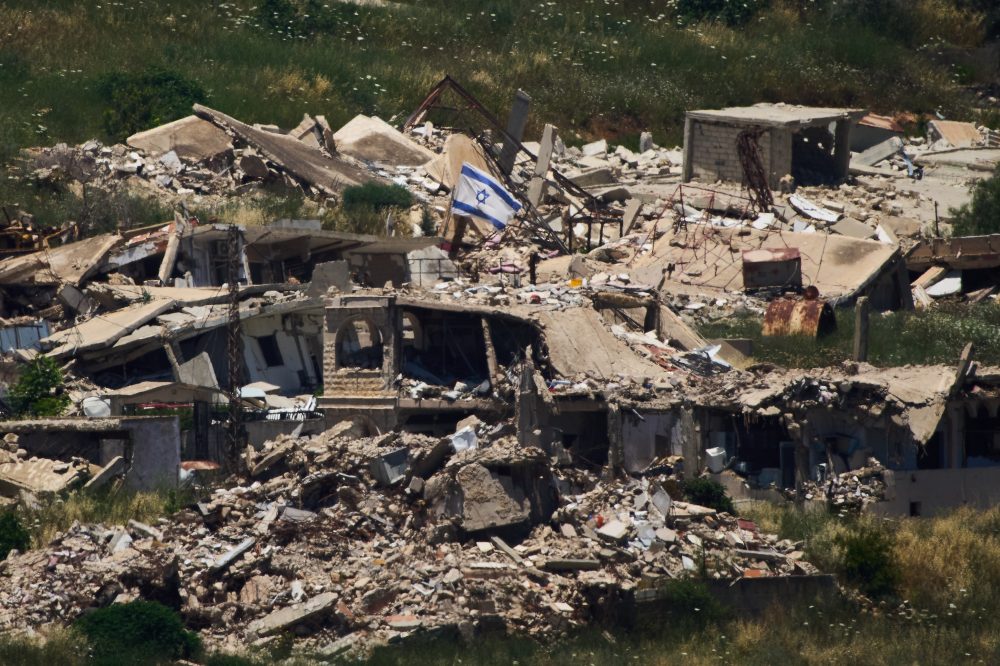
The continued combat in Lebanon, where Israeli military units have captured significant portions of the southern region, poses challenges to efforts aimed at concluding the Iran conflict and reopening the Strait of Hormuz, a crucial passage for oil and gas transport whose blockade has disrupted the global economy.
Iran has insisted that any permanent ceasefire must include Lebanon. Israeli Prime Minister Benjamin Netanyahu, who is facing upcoming elections this year, aims to continue Israel’s military campaign until Hezbollah is no longer considered a threat. Israeli forces have captured approximately one-fifth of Lebanon since Hezbollah started launching rocket and drone strikes in support of Iran shortly after the broader conflict began.
U.S. President Donald Trump, who received unusual criticism from Congress on Wednesday, has attempted to minimize the diplomatic impasse and the inability of announced ceasefires to halt the violence, stating to reporters that in the Middle East, “a ceasefire is when you’re shooting in a more moderate manner.”
A Serbian peacekeeper lost his life, while two additional peacekeepers sustained injuries when mortar fire hit their position near Marjayoun, a town with a Christian majority that has experienced heavy fighting, according to the U.N. mission, called UNIFIL, and Serbia’s Defense Ministry.
Neither organization specified whether the mortar attack originated from Israeli or Hezbollah forces.
Lebanon’s government-operated National News Agency reported that a drone attack killed a motorcyclist and injured four individuals in the village of Maaroub. The agency stated that air attacks on the village of Sohmor in the Bekaa Valley in eastern Lebanon resulted in three deaths and additional injuries. Air strikes were also reported in other southern regions.
The Israeli military provided no immediate response, though it has cautioned people against entering areas of southern Lebanon where it claims to be targeting Hezbollah installations.
Hezbollah restarted its rocket attacks following Israel and the United States’ unexpected assault on Iran on Feb. 28. Prior to that date, Israel had consistently conducted strikes in Lebanon against what it described as militant locations, frequently resulting in civilian casualties, despite an earlier truce established in 2024.
In the southern city of Sidon, numerous residents responded to the ceasefire announcement with doubt, stating that previous agreements had been unsuccessful in ending the violence.
“Every few days a ceasefire is announced, but people keep getting killed,” said Mayada Hijazi.
“It’s all talk and no action,” said Salah Nassab. “We keep going back to our homes and then we get displaced again, back and forth. We’re very tired.”
During the current fighting, Israeli forces have advanced deeper into southern Lebanon than at any point since Israel’s 1982-2000 occupation concluded. The country now controls approximately one-fifth of Lebanese territory.
The conflict has claimed more than 3,500 lives in Lebanon and displaced over 1.2 million people. The violence has resulted in 27 Israeli military deaths and three civilian fatalities.
The most recent ceasefire declaration emerged from U.S.-mediated negotiations between Israel and Lebanon’s government, which blames Hezbollah for involving the nation in warfare and had attempted to disarm the group before the current hostilities.
The ceasefire proposal does not formally involve Hezbollah and requires Lebanon’s military forces to assume control of security areas in Lebanon where the militants would be prohibited. Hezbollah has previously stated it will only accept a ceasefire if Israel stops its attacks and starts withdrawing from Lebanese territory.
Lebanese President Joseph Aoun described the new proposal on Thursday as “the last chance to enter a final and comprehensive ceasefire.” He indicated Lebanon was prepared to implement Wednesday’s agreement upon receiving responses from relevant Lebanese factions, including Hezbollah. The United States — and Trump personally — would decide how and when the agreement takes effect, he informed reporters on Thursday.
The proposal declares that Hezbollah “is not just an enemy of Israel and an enemy of America, but that it is an enemy of Lebanon” and demands its dismantlement. The government has pledged to accomplish this previously but lacks the capacity to forcibly disarm Hezbollah.
The current agreement did not specify when Israel would withdraw from southern Lebanon but stated the U.S. would assist the Lebanese army as it works to establish control in regions where Hezbollah has maintained influence for years.
A senior Iranian general on Thursday restated Tehran’s requirement for a complete ceasefire in Lebanon and demanded Israel withdraw forces to their positions when the broader war started. At that time, Israel controlled five strategic border locations.
“Supporting the resistance in Lebanon is the duty of all of us, and eliminating Israel from the region is an achievable goal for Muslims,” Esmail Qaani, the head of the Revolutionary Guard’s elite Quds Force, was quoted as saying by the semiofficial Fars and Tasnim news agencies.
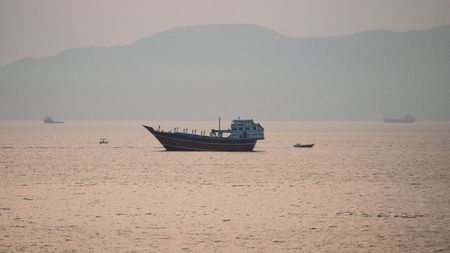
As diplomatic initiatives have consistently failed, Iran and the U.S. have engaged in combat in and around the Strait of Hormuz, which remains essentially blocked. Before the conflict, approximately one-fifth of global oil and gas, along with substantial shipments of fertilizer and other commodities, traveled through the narrow passage.
The U.S. has struck what it characterizes as Iranian threats to commercial vessels and its own military, while Iran has conducted missile and drone strikes against Gulf nations hosting U.S. forces.
An attack Wednesday on a commercial airport in Kuwait that American forces also utilize for logistics and refueling resulted in one Indian national’s death and injured more than 60 people, including passengers and workers. Iran has denied responsibility for the strike.