
BUENOS AIRES, Argentina — A horrific crime against a teenage girl has once again sparked nationwide outrage in Argentina, reviving debates over gender-based violence that first erupted more than a decade ago.
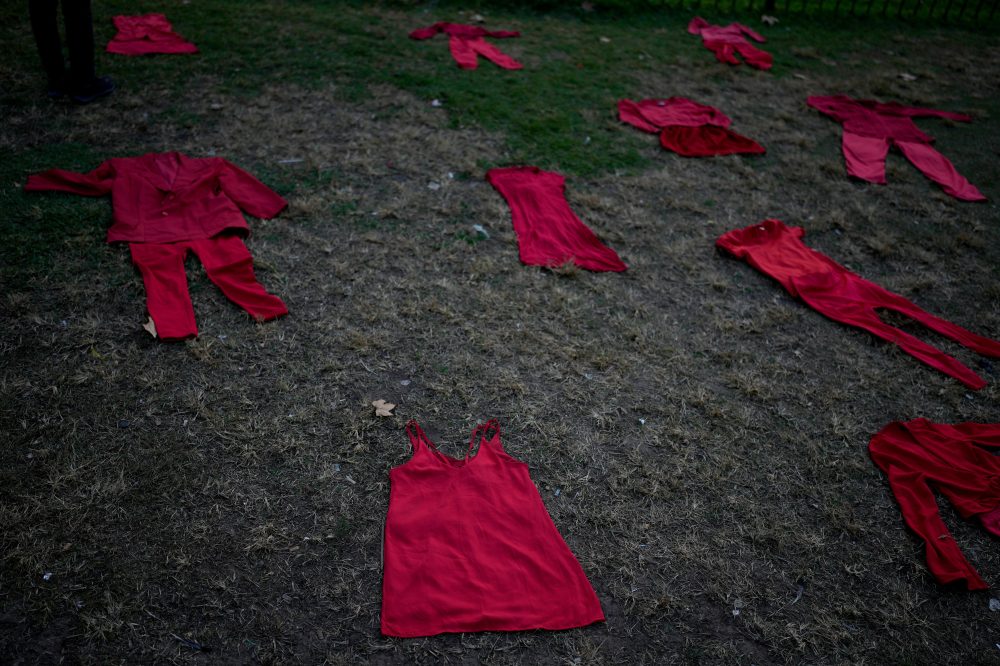
The brutal murder of 14-year-old Agostina Vega in the central city of Cordoba has triggered protests across the country, echoing the massive demonstrations that began in May 2015 following the death of pregnant 14-year-old Chiara Páez. That earlier case launched the “Ni Una Menos” (Not One Woman Less) movement that spread throughout Latin America, creating widespread awareness about femicide — the murder of women and girls based on their gender.
Agostina went to a family friend’s residence on the evening of May 23, planning to collect a present for her mother. According to preliminary autopsy findings, she was sexually attacked and strangled, with her body later cut apart using a kitchen knife.
Authorities discovered her remains in a drainage canal on Saturday, one week following her disappearance, while memorial gatherings in her home province turned violent with confrontations between demonstrators and law enforcement.
The public fury has spread nationwide in advance of Wednesday’s yearly Ni Una Menos demonstration in central Buenos Aires, strengthening calls for governmental intervention and escalating criticism of President Javier Milei.
The libertarian leader, who is aligned with U.S. President Donald Trump, has described the feminist movement as “a ridiculous and unnatural fight,” advocated for removing femicide from criminal law, and eliminated funding for gender violence victim support programs as part of his cultural agenda and budget reduction efforts.
Attorneys from the Center for Legal and Social Studies, a prominent Argentine human rights organization, have documented 63 officially recognized femicides this year. However, these advocates and others report facing significant governmental resistance in securing such classifications. Some groups have assembled lists containing over 100 names of women killed this year, contending that many deaths are incorrectly categorized.
According to Supreme Court data, reported femicides in Argentina decreased by 12% to 200 cases last year compared with 2024. Victim advocates argue this reduction doesn’t indicate less gender-based violence but rather inadequate crime classification.
“To stop calling femicides by their name, to deny the existence of gender violence — it’s an attempt to rewind the past 20 years,” said Natalia Gherardi, director of the Latin American Team for Justice and Gender, a Buenos Aires-based rights group. “I hope this reaction generated by Agostina’s case, what we show in the streets, will be enough to counter the desire to move backward.”
Following Agostina’s death, demonstrators targeted local police, igniting tires in Cordoba’s streets. Her relatives filed a missing person report the morning following her disappearance, yet more than 80 hours elapsed before a child abduction alert was sent to phones throughout the province, according to family attorney Gustavo Vaca.
The day following her death, a taxi operator reported transporting Agostina to 33-year-old Claudio Barrelier’s residence, which surveillance video verified.
Agostina’s relatives have criticized security forces for being preoccupied with potential fan violence during a significant soccer match in Cordoba that same day. Police conducted a raid on Barrelier’s home three days afterward. Barrelier, who previously dated Agostina’s mother, is currently detained as the primary suspect and maintains his innocence.
Investigators reveal his criminal background includes an arrest for abducting a young woman one year prior, though he was freed on $3,500 bail after 20 days in custody.
When confronted with allegations of delayed action, chief prosecutor Raúl Garzón stated last week that authorities “are not engaging in any self-criticism.”
Pressure mounted to classify Agostina’s murder as a femicide. Security Minister Alejandra Monteoliva has declined to make such a designation.
“A homicide, whatever its nature, is not solely defined by what happens during one hour, two hours, or three hours, where the act itself occurs,” Monteoliva told reporters Monday in her only public comments on the case.
Activists emphasize that employing the femicide classification — which mandates harsher punishments than other homicides, including mandatory life imprisonment in Argentina — is essential for successful prosecution and victim safety.
“If we don’t name the specific form of violence, if we don’t recognize it, then we can’t understand the problem in all its dimensions, and we can’t create policies to prevent and combat it,” said Lucila Galkin, director of the gender and diversity program for the Argentina chapter of Amnesty International.
Milei has conducted a cultural campaign against gender-focused policies — which he views as a harmful result of socialism.
Following Milei’s criticism of femicide laws as “legally making a woman’s life worth more than a man’s” at the Davos summit last year, his justice minister revealed intentions to eliminate the classification from legal statutes.
While that proposal stalled, his administration is currently developing legislation to increase penalties for women who file false gender-based violence reports. The measure awaits congressional consideration.
Over the past two and a half years, Milei has eliminated Argentina’s women’s ministry, closed its anti-discrimination agency, destroyed support programs for gender violence victims, prohibited gender-inclusive language in government documents, and removed funding for gender education in public schools and for government workers.
The terminated programs include Acompañar, which provided assistance equivalent to six months’ minimum wage to 350,000 women before losing funding. A 24-hour victim assistance hotline lost two-thirds of its budget and half its personnel last year. A government-funded program offering free legal aid to domestic violence and sexual abuse survivors has also been eliminated.
On Wednesday, demonstrators plan to assemble at Plaza Congreso, across from the National Congress building, continuing the annual tradition that began after Chiara Páez’s death in 2015.
Agostina’s family announced they will participate in a Cordoba demonstration that day, seeking justice for her murder under the movement that once established Argentina as a regional leader in social and legal progress on gender equality.
“I think this femicide, which caused so much pain, so much shock, also mobilized us, reminded us that this is a problem concerning all of society,” Galkin said of Agostina’s case.
“We are being forced to have conversations about issues we thought we had agreed on, a topic that we thought had been settled.”