
A U.S.-brokered ceasefire between Israel and Lebanon could open the door to resolving the larger conflict between America and Iran, according to the Trump administration.
Tehran has established an end to Lebanon hostilities as a prerequisite for any peace agreement with Washington, and has indicated in recent statements that it might intervene directly to support its ally Hezbollah if Israel continues or intensifies attacks in the region.
Lebanese President Joseph Aoun announced Thursday that the ceasefire would take effect within 24 hours once all involved parties give their approval, seemingly referencing Hezbollah, which has yet to issue a statement about the agreement.
However, questions remain about how solid the truce will be, as Israel’s Defence Minister Israel Katz stated Thursday that military operations would persist in Lebanon for now and troops would not pull back from southern areas.
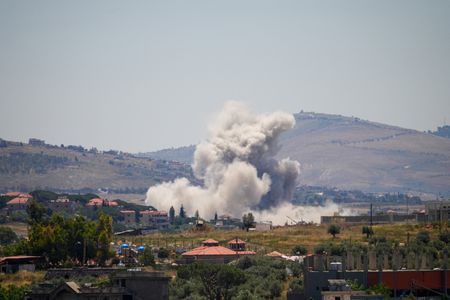
The agreement follows escalated violence throughout the region. Israeli attacks resulted in at least six deaths in southern Lebanon, while U.S. and Iranian forces exchanged strikes in the Gulf on Wednesday during one of the most severe confrontations since a previous ceasefire stopped major U.S.-Israeli bombardment of Iran in early April.
Iranian forces attacked Kuwait, causing airport damage and injuring dozens, while U.S. military forces conducted operations near the Strait of Hormuz. The strait, which typically handles one-fifth of worldwide oil and liquefied natural gas transport, has remained mostly shut for over three months following U.S. and Israeli strikes on Iran.
Oil markets Thursday gave back some of Wednesday’s increases amid optimism that the Lebanon ceasefire might help Washington and Iran discover a diplomatic solution to their conflict.
U.S. President Donald Trump, facing pressure to reduce fuel costs, hinted that progress in Iran negotiations could occur as early as this weekend.
“If it happens, it could happen over the weekend,” Trump informed reporters in the White House’s Oval Office on Wednesday, without providing details about what he anticipated within that timeframe.
Trump noted that parties were attempting to separate the strait reopening issue from the Lebanon conflict.
Wednesday’s attacks on Kuwait harmed airport infrastructure and diplomatic facilities, resulting in one death and more than 60 injuries, according to Kuwaiti officials and state media.
Iran’s elite Revolutionary Guards denied firing at Kuwait’s airport and attributed the damage to U.S. interceptor missiles that missed their intended targets, Iranian state media reported.
The U.S. military disputed that account, stating that Iranian drones deliberately targeted the airport.
Iranian media indicated the Revolutionary Guards also struck the U.S. Fifth Fleet headquarters in Bahrain and a U.S. airbase. U.S. Central Command rejected claims its bases were hit and said Iranian ballistic missiles failed to reach their regional targets.
CENTCOM announced it conducted additional “defensive strikes” in southern Iran, targeting missile launch locations and Iranian vessels attempting to place mines, and carried out strikes on Qeshm Island near the strait following attempted Iranian attacks.
Last week, Iran and the U.S. indicated movement toward a preliminary agreement to end the war and reopen the strait, but both sides have not yet finalized the deal, which would postpone more complicated negotiations.
Iran’s Supreme Leader Ayatollah Mojtaba Khamenei stated in a Thursday message that Iran’s adversaries had already suffered battlefield defeats and were now attempting to create internal divisions.
“In order to confront these plans everyone must be patient, clear-minded, maintain unity, harmony, mutual trust, and not be in agreement with the enemy,” he said in a message delivered on his behalf during ceremonies marking the anniversary of the death of the Islamic Republic’s founder, Ruhollah Khomeini.
Khamenei has not appeared publicly since succeeding his father, who died in an airstrike when the war began.
Beyond Tehran’s demand for ending Lebanon fighting, it also seeks access to billions in oil revenue, sanctions waivers on crude exports, removal of a U.S. port blockade, and continued control over the strait.
Trump has identified preventing Iran from obtaining nuclear weapons as his primary objective. Iran maintains its atomic program serves peaceful purposes. In a podcast interview released Wednesday, Trump said Iran had committed to not developing nuclear weapons and that Khamenei was participating in negotiations.