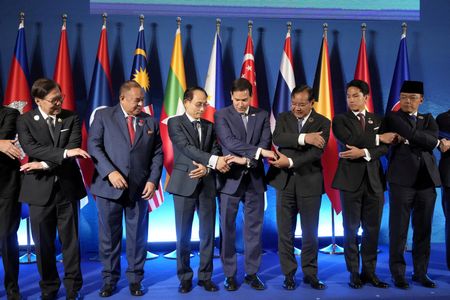

China has imposed a one-year travel prohibition on four New Zealand parliamentarians and is requesting they issue an apology following their visit to Taiwan during a parliamentary delegation, according to correspondence from China’s embassy that was shared with The Associated Press on Thursday through parliamentary channels.
While China has previously imposed sanctions on legislators from other nations for Taiwan-related activities, this marks the first instance involving New Zealand parliamentarians, Wellington’s government confirmed. China has escalated its pressure in recent years on the democratically-ruled island, which it considers part of its territory.
When contacted by the AP on Thursday, two of the affected lawmakers refused the apology demand, while the remaining two were not immediately available for comment. New Zealand’s government indicated it plans to raise concerns about these travel restrictions with China.
The parliamentarians traveled to Taipei in May, continuing a practice New Zealand legislators have maintained “for decades,” according to a statement from a spokesperson for Foreign Minister Winston Peters.
China maintains that Taipei lacks authority to engage in foreign diplomatic activities and considers visits by international lawmakers to the island as challenges to China’s territorial claims.
The spokesperson for Peters stated the officials’ trip was “not inconsistent with New Zealand’s One China policy,” which recognizes China’s position that Taiwan constitutes a Chinese province. New Zealand does not maintain formal diplomatic ties with Taiwan’s government, unlike 12 other countries globally.
Communications sent to the legislators through New Zealand’s Parliamentary Service, which the AP reviewed, indicated that China’s Wellington embassy had requested notification be given to the four officials regarding their prohibition from entering China, Macau and Hong Kong for twelve months.
The restriction could potentially be lifted if the affected lawmakers issued apologies for their Taiwan visit, the correspondence noted.
“China has consistently opposed visits to China’s Taiwan region by members of the legislatures of countries that have established diplomatic relations with China, including New Zealand, and this case is no exception,” stated a spokesperson for China’s Wellington embassy in a Thursday website posting. “The New Zealand side should not be surprised.”
New Zealand representatives in both Beijing and Wellington plan to address this issue with China “in order to express concern at this departure from past practice and to better understand it,” Peters’ spokesperson noted. New Zealand lawmakers make individual decisions about joining international delegations, and these trips typically include members from various political parties.
Laura McClure, a legislator from the libertarian ACT party, characterized the apology “demand” as “frankly insulting” and stated she would not comply.
Duncan Webb from the center-left Labour Party emphasized that New Zealand supports democratic institutions and the freedom to engage with international partners.
“If the cost of doing that is to be excluded from China for a year, I will pay that price,” Webb stated in an email response.
Wellington-Beijing relations have generally remained favorable in recent years. China serves as New Zealand’s primary trading partner, and New Zealand became the first Western nation to establish a free trade agreement with China.
In neighboring Australia, Foreign Minister Penny Wong announced Thursday that her government would also voice concerns to Beijing and China’s Canberra mission regarding the lawmakers’ restrictions.
“We agree with the principle expressed by New Zealand that members of parliament, including the Australian Parliament, are free to make their own decisions about their travel independent of government,” she informed a Senate committee in Canberra on Thursday.
“Placing pressure on parliamentarians is not appropriate,” she continued.