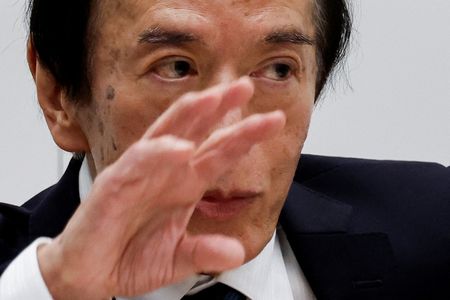

Bank of Japan Governor Kazuo Ueda has virtually guaranteed an interest rate increase this month as he adopts a more aggressive stance against rising inflation driven by Middle East conflict and energy price shocks.
During a Wednesday address, Ueda abandoned his previously cautious approach and emphasized the central bank’s willingness to combat escalating inflation that could damage Japan’s economy if allowed to continue unchecked.
This represents a fundamental change in Japan’s monetary policy direction, placing inflation concerns at the heart of interest rate decisions rather than simply focusing on reaching the stable 2% inflation target.
Most significantly, he dropped previous uncertainty regarding supply disruptions, signaling the BOJ will no longer ignore war-related inflation if it threatens to create broader economic ripple effects.
This messaging signals a new chapter in Ueda’s five-year leadership. After spending his initial period dismantling his predecessor’s aggressive stimulus measures, he’s now guiding the BOJ toward a more traditional function: maintaining stable inflation.
The BOJ ended a decade of massive economic stimulus in 2024 and has increased its benchmark rate multiple times, including in December, based on expectations that Japan was approaching sustainable achievement of its 2% inflation goal.
“Even if the situation surrounding the Middle East remains unclear, we must discuss the pros and cons of raising the policy rate if we judge that upside risks to prices outweigh downside risks to economic activity,” Ueda stated, words that strengthened widespread market expectations for a rate increase at the June 15-16 policy meeting.
His comments mirrored statements he made before December’s rate boost, when he mentioned a similar “pros and cons” evaluation.
However, this time Ueda expanded the circumstances under which rates might increase.
Previously, the BOJ’s tightening approach had been characterized as a careful, gradual withdrawal from stimulus connected to achieving consistent 2% inflation.
Ueda has now introduced an additional catalyst focused solely on inflation dangers. With companies altering their pricing strategies, he cautioned that energy disruptions could intensify price pressures.
“Unless there’s a severe escalation in the conflict, the BOJ will probably hike rates in June,” said a source familiar with its thinking, a view echoed by another source.
Ueda also warned against delaying action too long, pointing out that increasing raw material expenses are already pushing up wholesale prices and could spread more widely throughout the economy.
The shift in messaging demonstrates the BOJ’s increasing worry about building price pressures, according to veteran BOJ watcher Mari Iwashita, who considers a June rate hike certain.
“The war-induced wave of price increases has only just begun and is likely to intensify around summer,” she said. “Ueda’s remarks suggest the BOJ is bracing for the chance of being forced to raise rates in autumn, possibly at a faster pace.”
Meanwhile, Ueda attempted to ease concerns from a dovish government about potential economic harm from rate increases.
He presented policy tightening as protection against declining household buying power. Considering the administration’s resistance to higher government borrowing expenses, Ueda also promoted timely hikes as a method to maintain market confidence and prevent disruptive spikes in bond yields.
Despite the more hawkish direction, the yen kept declining, highlighting ongoing market doubt. The currency stays close to the 160-per-dollar threshold viewed as Tokyo’s intervention trigger, maintaining pressure on import costs and living expenses.
Even a June increase may not reverse the yen’s downward trajectory.
Some experts believe it will require a stronger, sustained tightening message to significantly impact the currency.
“Even if the BOJ raises rates in June, any rebound in the yen will be limited,” said Rinto Maruyama, a strategist at SMBC Nikko Securities.