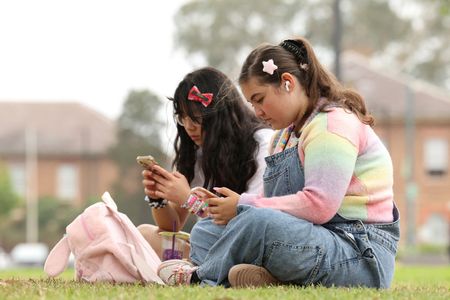

Governments around the world are taking aim at social media companies in an effort to protect children from potential harms online, with a growing list of nations either passing new laws or actively working toward restrictions.
Australia led the way, becoming the first country on Earth to ban social media for children under 16. The landmark legislation took effect December 10, 2025, blocking minors from platforms such as TikTok, YouTube and Instagram and Facebook. Companies that fail to comply could face fines as steep as A$49.5 million — roughly $34.9 million U.S. dollars.
In Britain, Prime Minister Keir Starmer announced on June 15 that a ban on social media for children under 16 is expected to be approved by Christmas, with the measure taking effect around Spring 2027. Starmer also said on June 8 that major tech companies must take action to stop children from sharing nude images on their devices, or face legislation requiring them to do so. Under those plans, companies like Apple and Google would need to build or activate tools on smartphones and tablets to detect and block such images for minors, while adults could still access that type of content through an age verification process.
China has already implemented what it calls a “minor mode” program, which places device-level restrictions and app-specific rules on screen time based on a child’s age.
Denmark announced in November it would ban social media for children under 15, though parents could grant access to certain platforms for children as young as 13.
France’s National Assembly approved legislation in January to ban children under 15 from social media, citing concerns about online bullying and mental health. The bill still needs to clear the Senate before a final vote in the lower house.
In Germany, children between 13 and 16 may use social media only with parental approval, though child protection advocates argue those controls do not go far enough.
Greece is reportedly very close to announcing a social media ban for children under 15, according to a senior government source who spoke to Reuters on February 3.
India’s chief economic adviser called for age restrictions on social media platforms in January, referring to them as “predatory” in how they keep young users hooked. That came just two days after the tourist state of Goa said it was considering restrictions similar to Australia’s.
In Italy, children under 14 must have parental consent to create a social media account, while no such consent is needed for those 14 and older.
Malaysia began blocking those under 16 from registering on social media platforms, its communications regulator announced on June 1.
Norway proposed in 2024 raising the age at which children can consent to social media terms of service from 13 to 15, while still allowing parents to give permission for younger children. The government has also started work on legislation to set a firm minimum age of 15.
Poland’s ruling party announced on February 27 that it is preparing legislation to ban social media for children under 15 and to make platforms responsible for verifying users’ ages.
Slovenia is drafting a law that would bar children under 15 from accessing social media, Deputy Prime Minister Matej Arcon announced on February 6.
Spain plans to move forward with rules making social networks and artificial intelligence safer despite pushback from the tech industry, according to Digital Transformation Minister Oscar Lopez, who spoke to Reuters in May. Prime Minister Pedro Sanchez had previously stated in February that Spain would ban social media access for minors under 16, with age verification required of platforms.
A government-appointed commission in Sweden recommended on June 2 that the country set a minimum age of 15 for social media use. Investigator Lisa Englund Krafft, speaking at a news conference alongside Social Affairs and Public Health Minister Jakob Forssmed, said a ban could be structured so that platforms themselves bear responsibility for verifying ages.
Turkey’s parliament passed legislation on April 24 banning social media use for children under 15 and introducing new rules for digital platforms, including companies that make game software.
The United Arab Emirates approved a resolution on June 18 setting the minimum age for social media use at 15, according to the government’s media office. The UAE became the first Arab nation to introduce such a measure. The resolution bars children under 15 from creating or using personal social media accounts and limits their access to platform features.
In the United States, legislation aimed at pushing social media companies to better protect young users cleared a significant hurdle after Republican Senator Ted Cruz announced on May 12 that he would support the bill. Cruz said he would back the Kids Online Safety Act, which would require social media companies to “exercise reasonable care” when designing features that could cause harm to minors. That bill is separate from the long-standing Children’s Online Privacy Protection Act, which prohibits companies from collecting personal data from children under 13 without parental consent. Several states have already passed laws requiring parental consent for minors to use social media, though those laws have faced legal challenges on free speech grounds.
At the European Union level, Commission President Ursula von der Leyen said on May 12 that the EU would pursue stronger protections for children from harmful social media features. She said the Commission would target what she called “addictive and harmful design practices” through its planned Digital Fairness Act, expected to be proposed later this year. The European Parliament also agreed in November on a resolution calling for an EU-wide ban on social media access for children under 16 without parental consent, and an outright ban for those younger than 13.
Meanwhile, major social media platforms including TikTok, Facebook and Snapchat say users must be at least 13 years old to sign up. Child protection advocates say those self-imposed rules are not enough, and official data from several European countries shows that large numbers of children under 13 already have social media accounts.