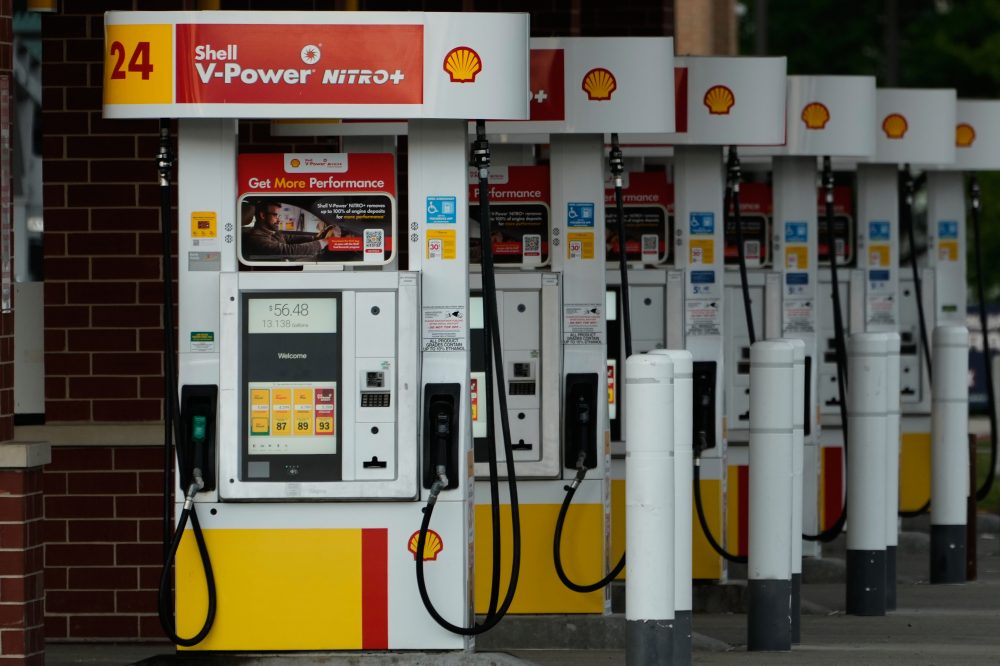

NICOSIA, Cyprus — The war involving Iran has rattled global fuel prices and strengthened Europe’s resolve to develop alternative trade and energy routes that don’t rely on the Strait of Hormuz.
Here’s a closer look at what the European Union is considering to strengthen its energy security and reduce vulnerability to future conflicts, as it deepens ties with Gulf nations and India.
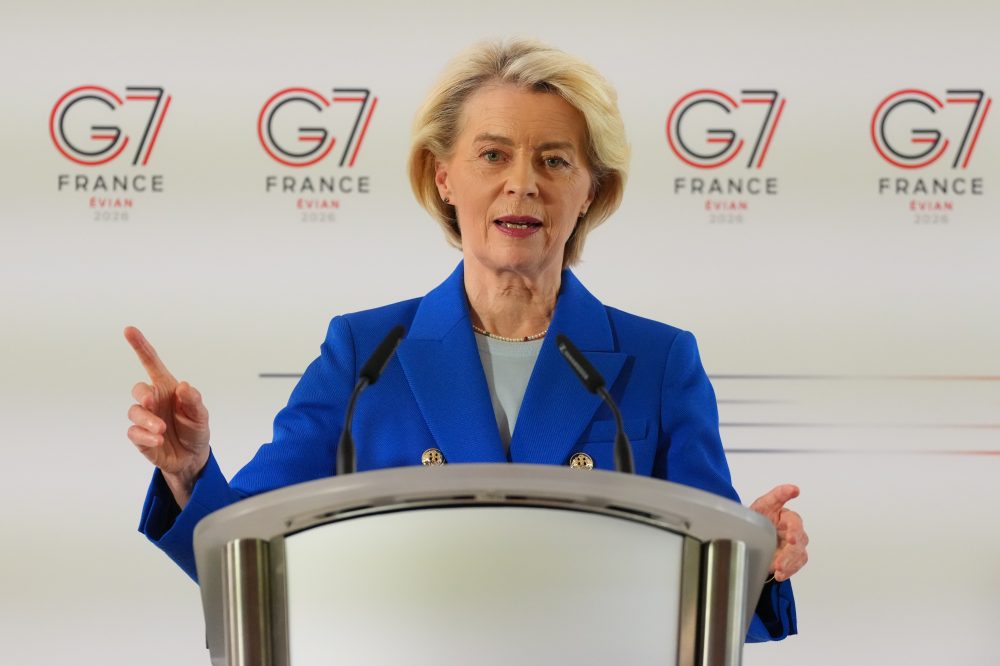
European Commission President Ursula von der Leyen has expressed fresh enthusiasm for a project known as the India-Middle-East-Europe Economic Corridor, or IMEC. Speaking to G7 leaders at this week’s summit, she noted that “alternative export routes have been created that are more resilient and offer choices” and added that “other routes will be built — for example, a typical one is IMEC.”
The corridor is viewed as a way to give the EU greater economic resilience, diversified supply chains, and stronger energy security — particularly at a time when Russia continues its aggressive posture and U.S. strategic commitments appear to be shifting.
While the EU has backed IMEC through a memorandum of understanding, only a small number of its 27 member states have formally signed on. Still, a senior EU diplomat — speaking anonymously because they were not authorized to discuss confidential talks — said political support behind closed doors is strong.
“The focus now is on translating that vision into practical implementation across its three pillars: transport and trade connectivity, energy connectivity and digital connectivity,” the diplomat said, noting the initiative could include new pipelines and transmission cables.
The EU’s press office would not offer a timeline for when the project might move forward.
IMEC would run through Israel, which has voiced its support. Israeli Prime Minister Benjamin Netanyahu said last year that he had spoken with Indian Prime Minister Narendra Modi about the corridor, describing it as “a very revolutionary and transformative development that we want to bring into place.”
Lianne Pollak-David, co-founder of the Israel-based Coalition for Regional Security, told a recent online briefing that U.S. leadership would be critical to advancing IMEC — particularly in helping normalize relations between Israel and Saudi Arabia, a key player in the project.
“Without normalization between Israel and Saudi Arabia, IMEC cannot be truly realized,” she said.
Saudi Arabia has stated it will only normalize ties with Israel if there is a clear path toward Palestinian statehood — a position that Netanyahu has rejected.
It is still uncertain how the Iran war, which was launched by the U.S. and Israel and caused damage to Gulf Arab nations, may affect Saudi Arabia’s calculations going forward. Saudi officials declined to comment when asked about their stance on IMEC.
Von der Leyen has said the EU spent an additional 25 billion euros — roughly $29 billion — on oil and gas imports during just the first 54 days of the Iran war, while also facing the prospect of a prolonged jet fuel shortage.
She and European Council President Antonio Costa said during an EU leaders’ meeting in April that the bloc is “ready to team up with Gulf countries” to develop new energy infrastructure that avoids conflict zones like the Strait of Hormuz.
The importance of such alternatives is already on display. Saudi Arabia’s East-West Pipeline, which runs from its eastern oil fields to the Red Sea, saw Aramco ramp up transport to its maximum capacity of 7 million barrels per day after the Iran war began.
French Foreign Ministry spokesperson Pascal Confavreux told the Associated Press that G7 leaders are discussing ways to finance and build infrastructure — “sometimes on the terrestrial part” — that can route energy “outside of the track of the Strait of Hormuz.”
Von der Leyen and Costa have not spelled out specifics on EU-backed projects. However, an EU official who spoke anonymously said the bloc would encourage European companies to invest in Gulf renewable energy projects to meet EU energy demand.
Gabriel Mitchell, an analyst with the German Marshall Fund think tank, said getting European collaborative projects off the ground in Gulf nations will take time. He noted that oil and gas pipelines are the most likely near-term projects given their shorter construction timelines, along with subsidizing repairs at Gulf facilities that were targeted by Tehran during the war. Mitchell added that any new infrastructure would need to align with the EU’s green policies — meaning pipelines, for instance, would likely be designed with future “dual-use” capability to carry both gas and potentially hydrogen.
Another significant initiative is the Great Seas Interconnector — an EU-backed undersea electricity cable planned to stretch 1,208 kilometers, or about 750 miles, connecting continental Europe’s power grid with EU member Cyprus and eventually Israel. Known as GSI, the project is currently held up by financing red tape, but its potential goes beyond ending the energy isolation of Cyprus and Israel — it could also serve as an energy link to India and become part of IMEC.
Gallia Lindenstrauss, a senior fellow with the Israel-based Institute for National Security Studies, praised the GSI as a “very pragmatic solution for the modern energy needs” that helps pave the way toward green energy transition. “As energy security and grid backup move to the forefront of the global agenda, this project provides a flexible platform,” she said.
The United States is also working to strengthen energy ties among Greece, Cyprus, and Israel. U.S. Secretary of Energy Chris Wright said last week that Washington views the Eastern Mediterranean as “an increasingly important region for global energy development.” Wright was in Houston to open the Eastern Mediterranean Energy Center at Rice University, which is designed to boost cooperation on natural gas development, U.S. liquefied natural gas infrastructure, and energy transportation networks across the European region.