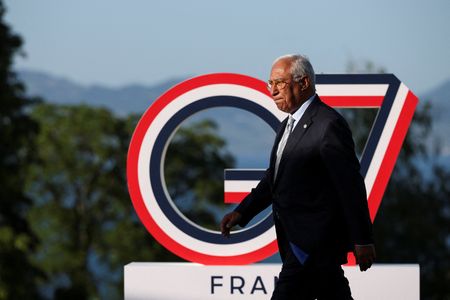

BRUSSELS — The office of European Council President Antonio Costa has quietly reached out to the Kremlin in recent weeks, making what an EU official described as “brief contacts at diplomatic level” aimed at opening lines of communication with Russia.
The official, who spoke on the condition of anonymity, emphasized that no policy matters were on the table. “Nothing was discussed on substance,” the official said. “In any future scenario, the EU has specific interests that will need to be defended, therefore it is important to have established diplomatic channels with Russia.”
The official was also clear about the EU’s role in the ongoing conflict: “The EU is not a mediator. It supports Ukraine in its efforts to achieve a just and lasting peace.”
European leaders have been increasingly discussing the idea of engaging directly with Russia over the Ukraine war and broader security concerns — a significant shift after years of cutting Moscow off diplomatically. However, no unified approach has been agreed upon, and several European nations have expressed hesitation about entering into dialogue with Moscow. The United States has been the primary driver of diplomatic efforts to broker a peace agreement between Ukraine and Russia.
There has also been pushback from some European leaders against Britain, France, and Germany — collectively known as the E3 — taking the diplomatic lead on behalf of Europe in any future talks with Russia.
Italian Prime Minister Giorgia Meloni, speaking Wednesday at the conclusion of a G7 summit held in France, renewed her call for the European Union to designate a single envoy to manage contact with Russia on the Ukraine issue. She suggested that individual should not come from one of Europe’s larger nations.
Meloni warned reporters that having multiple competing diplomatic groups within Europe risked sending a muddled message, making it critical for the bloc to speak with one unified voice when dealing with Moscow.
“It would be very difficult to put forward someone from one of the largest European countries,” she said, adding: “In my view, proposing one of those candidates would make an agreement harder to reach, so I would look instead to the EU’s medium-sized powers.”