
Asian financial markets held steady Thursday while oil prices slipped after the leaders of the United States and Iran put pen to paper on an interim peace agreement, offering cautious hope for an end to the conflict in the Middle East — though significant uncertainty remains.
Both governments released the full text of the deal, which had already been widely circulating before its official publication. The agreement extends a ceasefire that was first announced in April by an additional 60 days, giving both nations time to work toward a permanent truce.
Despite the diplomatic progress, U.S. President Donald Trump issued a stern warning, threatening to resume military strikes and target Iranian officials if Iran fails to follow through on its obligations under the deal.
Kyle Rodda, a senior financial market analyst at Capital.com, offered this assessment: “Major geopolitical risk persists and will also remain a major driver of market action.”
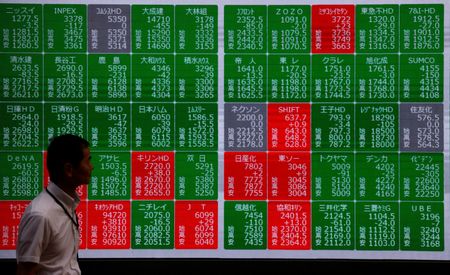
On the markets, MSCI’s broadest measure of Asia-Pacific shares outside Japan was essentially unchanged. Japan’s Nikkei average climbed to a new record, crossing the 71,000 mark for the first time ever, driven by strong performance in semiconductor and artificial intelligence-related stocks. South Korean shares rose 0.9%. U.S. stock futures tied to the S&P 500 were up 0.81%, sitting at 7,484.8.
The yield on Japan’s benchmark 10-year government bond ticked up 2 basis points to 2.620%, approaching its highest closing level since June 16 after briefly touching 2.63% earlier in the session.
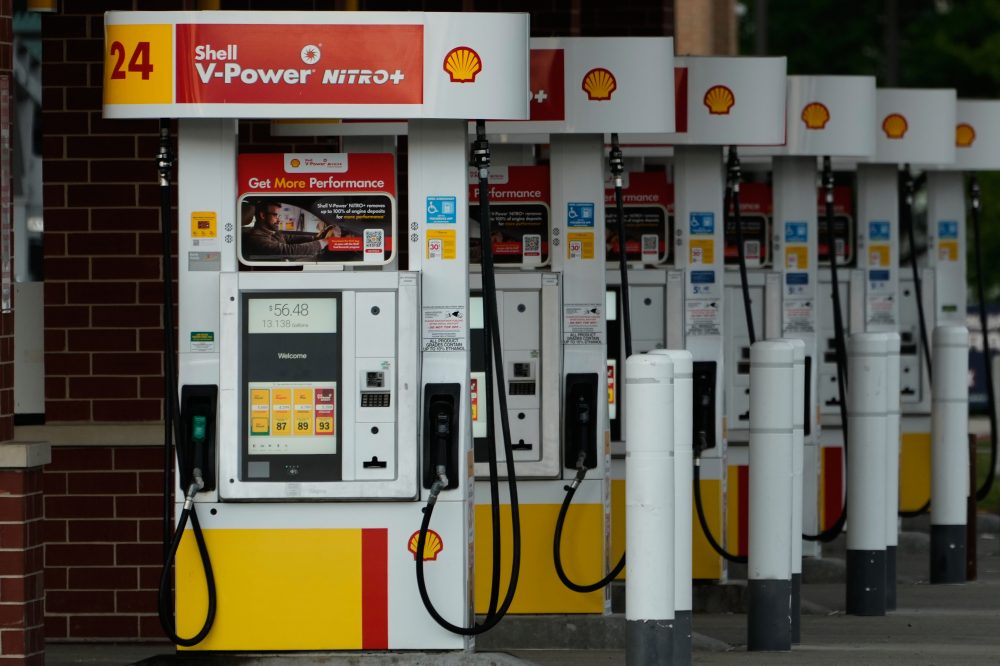
Oil markets moved lower, with U.S. crude falling 1.25% to $75.83 per barrel and Brent crude dropping 1.4% to $78.41 per barrel.
On Wall Street overnight, all three major stock indexes declined by close to or more than 1%. Traders grew increasingly convinced that the Federal Reserve’s next move would be a rate increase, after new Fed Chair Kevin Warsh emphasized the importance of bringing inflation under control and other policymakers signaled expectations for higher rates later this year.
The Dow Jones Industrial Average shed 507.12 points, or 0.98%, closing at 51,492.55. The S&P 500 dropped 91.25 points, or 1.21%, to finish at 7,420.10. The Nasdaq Composite lost 354.69 points, or 1.34%, ending the session at 26,021.66.
The yield on the 10-year U.S. Treasury note rose to 4.471%, up slightly from its Wednesday close of 4.463%. The 2-year Treasury yield, which reflects trader expectations for Federal Reserve rate moves, reached 4.1759%, compared to Wednesday’s close of 4.163%.
The Bank of England is also meeting Thursday, and similar to the Fed, no rate change is anticipated. Attention will be focused on the tone of officials’ remarks following the decision.
The U.S. dollar edged up 0.01% against the Japanese yen to 160.65, after briefly touching 160.79 overnight — its strongest level against the yen since July 2024. The dollar index, which tracks the greenback against a group of major currencies, slipped 0.03% to 100.32. The euro gained 0.1%, trading at $1.1511 against the dollar.
The recent slide in oil prices has helped ease some anxiety about an economic slowdown, particularly in energy-importing European nations. The International Energy Agency said Wednesday that the global oil market is expected to shift into a substantial supply surplus by 2027, following a recovery from the closure of the Strait of Hormuz.
Gold was trading at $4,309.75 per ounce. In the cryptocurrency market, bitcoin gained 0.16% to $64,464.75, while ethereum climbed 0.37% to $1,752.54.