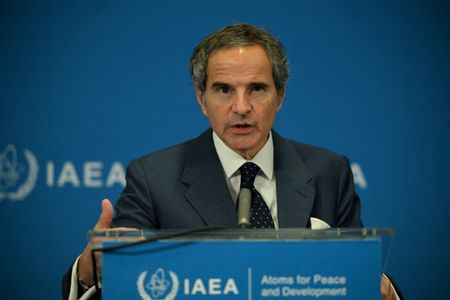

GENEVA — The United Nations nuclear watchdog is expressing support for the interim peace agreement reached between Washington and Tehran, announcing Thursday that it will now take part in technical talks to carry out the deal’s provisions.
“It is good that the memorandum is there. Now the technical work starts,” said Rafael Grossi, the director of the International Atomic Energy Agency, speaking to reporters in Geneva.
“Now it is for us to sit down with our American and Iranian colleagues and start formulating concrete steps that will have to be taken,” Grossi added.
The agreement, which consists of 14 points and was signed Wednesday evening, extends by 60 days a ceasefire that was first announced in April — including in Lebanon — giving both parties additional time to negotiate a permanent truce.
Both Trump and Iranian President Masoud Pezeshkian have digitally signed the memorandum in both English and Farsi, according to officials from the United States and Iran. Iran’s foreign ministry stated the agreement took effect as of Wednesday.
Grossi emphasized the significance of the IAEA’s oversight role under the deal. “The fact that they are mentioning that this will be under the supervision and control of the IAEA is very important, because in our conversation, what we are going to be doing is defining what we need to see, what we need to access,” he said.
He noted that the full scope of the agency’s involvement will depend on the final terms of the agreement, and that upcoming technical discussions will work to translate broad principles into concrete actions.
The path to this agreement has not been smooth. Back in February, talks held in Geneva between Iran and the U.S. aimed at resolving their long-running nuclear standoff ended without a breakthrough. While an Omani mediator indicated that progress had been made and further technical talks with the IAEA in Vienna were planned for the following week, those efforts were derailed when the U.S. and Israel launched military strikes against Iran just 48 hours later, triggering a wider regional conflict.
Despite that troubled history, Grossi urged against letting past setbacks breed pessimism. “We have a chance and we need to seize it,” he said.