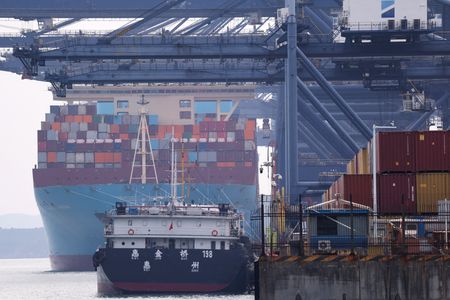

European Union leaders convened in Brussels on Thursday to discuss potential new and stronger steps to address the bloc’s rapidly growing trade imbalance with China, as well as the EU’s deep dependence on the world’s second-largest economy for rare earth minerals and other essential supplies.
EU diplomats indicate that all 27 member nations are increasingly aligned in recognizing the severity of the trade deficit problem with China, which has now reached roughly €1 billion — about $1.15 billion — every single day. The concern is heightened by the fact that U.S. tariffs have already reduced European access to the American market.
One EU diplomat captured the urgency of the moment bluntly: “We live in a world of wolves now. We no longer live in a world of pink ponies and rainbows.”
The numbers underscore the concern. China’s goods trade surplus with the EU reached €360.6 billion in 2025, a 15% jump compared to 2024. That gap has continued widening, growing another 10% in just the first four months of this year, as Chinese companies have ramped up exports to Europe while buying less from it.
Adding to the tension, Beijing moved in April 2025 to restrict exports of rare earth minerals — a sector where China holds dominant processing power — as a countermove to tariffs imposed by U.S. President Donald Trump. Those restrictions have also dealt a blow to European companies.
EU UNITY ON THE PROBLEM, BUT NOT THE SOLUTION
The European Union has taken steps to reduce its trade dependency, striking new mineral partnership agreements and free trade deals with Australia, India, and Indonesia over the past year. But diplomats say leaders at this week’s summit are expected to call for even more action.
Leaders are anticipated to direct the European Commission — the body that manages the EU’s trade policy — to engage in dialogue with China while simultaneously strengthening European trade defenses.
However, agreement on the specific approach remains elusive. France is pushing for a harder stance against China, while Germany, the EU’s largest exporter, and Spain, which has become an increasingly popular destination for Chinese investment, are urging more caution.
“There is a certain convergence of views and a shared analysis, but nuances come in when it comes to how to respond to this,” a second diplomat explained. “We need to get it right, because otherwise we are stuck with our industry being stuck with the second-largest economy in the world.”
The divisions became public last month when France, Italy, the Netherlands, and Lithuania jointly released a paper calling on the EU to consider a new mechanism to reduce over-dependence on any single foreign country, potentially including additional duties or quotas to shield domestic producers. Spain had originally been listed as a co-signer of that document but later publicly withdrew its support.
The EU has already been directing its trade enforcement tools heavily toward China. Of 21 newly launched anti-dumping and anti-subsidy investigations, 18 are aimed at Chinese producers. Since 2024, the bloc has also levied extra tariffs on electric vehicles imported from China — a move that prompted Beijing to retaliate with measures targeting European dairy products and brandy.
Critics argue the EU must accelerate its investigations and set clearer priorities rather than processing cases purely in the order they are received. They also contend that current cases are too limited in scope and that Chinese manufacturers frequently find ways to work around the tariffs.
The European Commission acknowledged that Chinese electric vehicle imports did decline after the tariffs took effect, but noted that Chinese producers responded by increasing shipments of hybrid vehicles instead. EV imports have also begun climbing again in the first quarter of this year.
The Commission is scheduled to carry out a sweeping review of its trade defense tools in the third quarter of this year. Among the options being considered are new measures to address manufacturing overcapacity and excessive reliance on single suppliers — with China specifically in mind. In sensitive industries, EU companies could potentially be required to maintain at least three separate supply sources.