
BEIRUT/DUBAI — A preliminary agreement reached between Iran and the United States is poised to give Hezbollah a significant financial and political boost in Lebanon, with Tehran reportedly pledging increased support for the group once its frozen assets become accessible, according to four sources with knowledge of the relationship between Iran and the organization.
An influx of Iranian money could help Hezbollah rebuild after suffering devastating losses during a 2024 war with Israel, potentially undermining Israeli efforts to weaken the group. Israel, which dealt Hezbollah severe blows during that conflict, has actively lobbied against any easing of sanctions on Tehran.
The U.S.-Iranian memorandum of understanding, which was set to be formally signed on Friday, is expected to bring hostilities to a halt across multiple fronts, according to mediator Pakistan — though the specific terms of the agreement have not been released to the public.
The halt to fighting, which Iran insisted upon, extends to Lebanon. There, Hezbollah launched attacks against Israel on March 2 in a show of solidarity with Tehran, triggering an Israeli military offensive that has killed thousands of people and resulted in Israel invading southern Lebanon — a conflict running alongside the broader standoff between the U.S. and Iran.
Southern Lebanon remains unstable. Iran issued a warning to Israel on Tuesday, threatening a military response if Israeli attacks in the south did not stop. Israel has stated it intends to keep forces in the area, and lower-level violence has continued.
The ceasefire leaves Hezbollah in a stronger political position after two difficult years, which included the fall of its Syrian ally Bashar al-Assad in December 2024.
The deal also puts Lebanon’s U.S.-backed government in a difficult spot. Over the past two months, Lebanese officials held direct talks with Israeli counterparts in Washington in hopes of reaching a broader ceasefire that could limit Hezbollah’s military role — those efforts ultimately failed.
Hezbollah, a Shi’ite Muslim organization that Washington has designated as a terrorist group, has been armed and funded by Tehran since the Revolutionary Guards established it in 1982.
Two regional diplomats who were briefed by Tehran said Iran assured Hezbollah it would receive additional funds once its assets are unfrozen. A senior Lebanese source said Iran promised to deliver funds as soon as possible, while another Lebanese source said Iran was expected to increase its support. None of the sources provided specific dollar amounts.
Hezbollah’s media office said Iran had publicly declared its ongoing support for the group. When asked whether Hezbollah would receive a portion of any released Iranian funds, the media office told Reuters that Tehran would continue to back Lebanon “regardless of the details of the retrieval of its funds.”
A U.S. official pushed back on the idea, stating that Washington had made clear to Iran that “funds will not be unfrozen if they are going to any terror organization.” The official added, “The MoU also incentivizes Iran to keep proxy groups in check, as if they fail to do so, they will be unable to access any benefits of the agreement.”
The Israeli prime minister’s office and Iran’s foreign ministry did not respond to requests for comment.
Despite years of heavy U.S. sanctions, Iran has continued to channel money to Hezbollah. According to the U.S. Treasury Department, Iran transferred $1 billion to the group in just the first ten months of 2025.
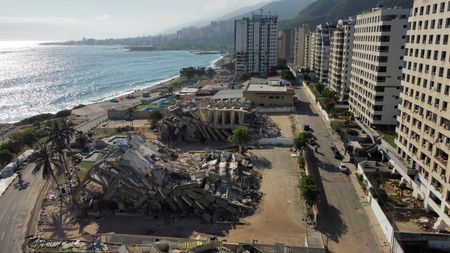
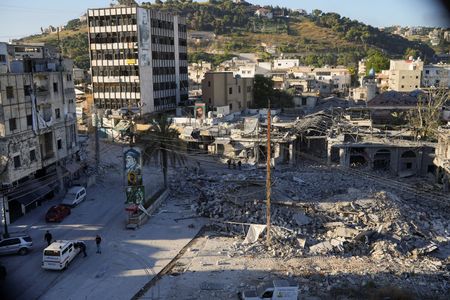
The war has taken an enormous toll on Lebanon. Israeli forces have displaced roughly one-fifth of the country’s population and destroyed villages in the south, with Israel claiming Hezbollah uses civilian areas for its operations.
Hezbollah acknowledged in May that it had been forced to scale back cash payments due to financial strain. Earlier this month, the group offered $200 to displaced families — the first direct cash assistance it had provided since the war began, according to recipients.
Mohanad Hage Ali of the Carnegie Middle East Center described a major injection of Iranian cash as “a game changer” for Hezbollah, saying it would allow the group to support its constituents and mend strained political relationships within Lebanon. He also predicted that the question of Hezbollah disarming would “take a backseat,” noting the group could point to Israeli military presence as justification for keeping its weapons. He characterized Hezbollah as a strategic asset Iran is unlikely to surrender.
Iran is pushing for Israel to withdraw its troops from Lebanon. The Iranian foreign minister said Tuesday that continued Israeli troop presence there would be seen as a violation of the memorandum of understanding.
Hezbollah believes Iran will not finalize a nuclear agreement with Washington unless Israel pulls out of Lebanon.
Iran’s push for a Lebanon ceasefire and its demands for Israeli withdrawal have complicated Beirut’s attempts to assert its own authority and negotiate an end to the conflict.
President Joseph Aoun sharply criticized Iran earlier this month, accusing it of using Lebanon as leverage in its negotiations with the U.S. However, on Monday he spoke with Iran’s foreign minister and expressed support for the memorandum of understanding.
Andreas Krieg of the School of Security Studies at King’s College London said Israeli withdrawal “can realistically only be achieved through diplomacy,” raising the question of what Hezbollah might be prepared to offer in return.
Israel wants Hezbollah to be dismantled entirely, but the group has ruled out any disarmament. Krieg suggested a more realistic resolution might involve some form of demilitarization of southern Lebanon in exchange for an Israeli withdrawal.
Previous ceasefires have called for Hezbollah to remove fighters from the zone between Israel and the Litani River, which runs east to west across southern Lebanon. Hezbollah’s media office said the group could not engage in discussions about its weapons while Israeli soldiers remain on Lebanese soil.
Hezbollah officials have said the group calculated that entering the war would place Lebanon at the center of U.S.-Iranian negotiations, and that Iran could secure a stronger ceasefire than the one that ended the previous round of fighting in November 2024.
Israel continued striking Hezbollah members after that earlier ceasefire, even as the group refrained from retaliating.
Hezbollah’s media office said Israel could not return to the situation that existed before March 2 “without there being a response.” The group also renewed its demand that the Lebanese government reverse a decision that banned its military activities.
Nick Blanford, a senior fellow at the Atlantic Council, said Israeli occupation had reinvigorated “Hezbollah’s resistance narrative and it’s going to be very difficult for the government to move against Hezbollah now, particularly if fighting flares up again.”