
HARRISBURG, Pa. — Pennsylvania’s Supreme Court issued a unanimous ruling Tuesday declaring that digital voting records from individual ballots must be treated as public information, granting access to “cast vote records” that an election researcher working for the Trump Administration had sought last year.
The court’s Democratic majority stated their decision aimed to “satisfy the voting public that our elections are safe, secure and accurate” while upholding constitutional protections for ballot secrecy.
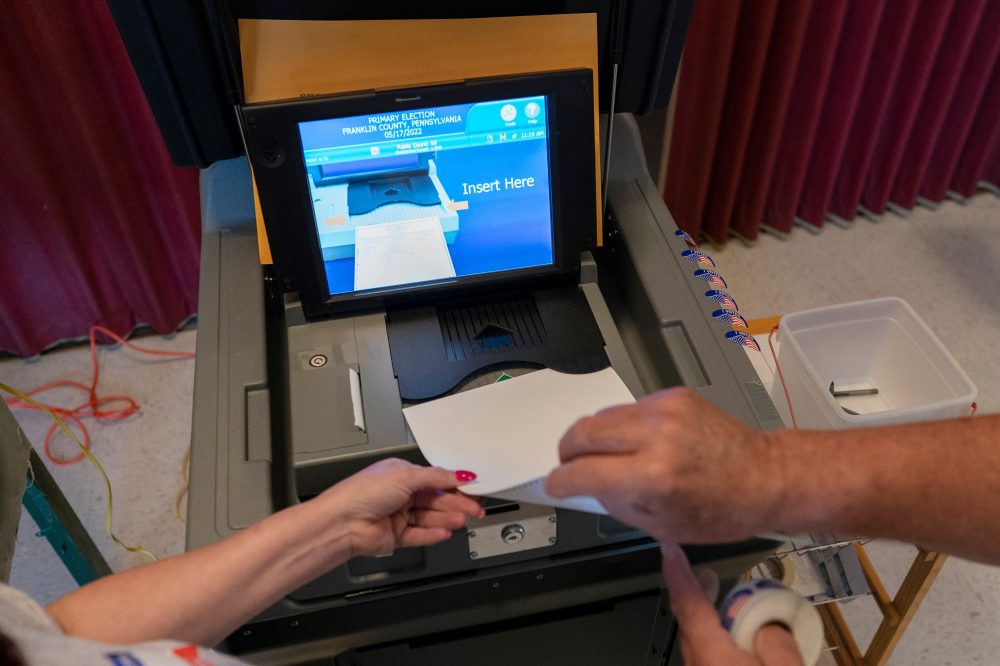
Election officials in Lycoming County’s Williamsport office had rejected Heather Honey’s application for electronic copies from the 2020 presidential race, claiming such access would essentially permit examination of individual ballot contents. These cast vote records generate automatically when voters make selections electronically or through scanned paper ballots.
State election statutes grant broad public access to county voting records, with exceptions for ballot box contents, voting machine data, and documentation related to voters who received assistance. Lycoming’s election office had contended that their scanning and tabulation equipment qualified as voting machines, making the cast vote records equivalent to protected ballot box contents.
When Honey’s non-resident status in Lycoming County became an issue, three local Williamsport residents took over the legal challenge — including a business owner, a former state police officer, and Republican state Representative Joe Hamm.
Attorney Thomas Breth, representing the plaintiffs, argued the information would enable citizens to examine what occurred during the contentious 2020 election cycle.
“In short, it’s not solely about the past,” Breth said. “It’s about the future. This significantly improves election integrity moving forward in the Commonwealth of Pennsylvania.”
Lycoming’s election supervisor Forrest Lehman stated Tuesday that he believes the records, which contain scrambled data, will not compromise any confidential voting information and expressed readiness to fulfill requests for the materials.
“The court made its decision, and anybody who wants it can have at it,” Lehman said.
The Supreme Court determined that cast vote records “are spreadsheets of raw data pulled from the cast ballots. They are not the physical ballots contained in the ballot box.” This classification makes them public records, the justices reasoned: “This interpretation does not destroy the secrecy of the vote any more than a tally of all votes from a specific election.”
The court emphasized its ruling applied specifically to the Lycoming County situation and noted that other counties might not adequately scramble their data. “Whether the Election Code requires disclosure of CVRs that clearly link the contents of a ballot with personally identifying data is not before us,” Justice Daniel McCaffery wrote.
Breth rejected concerns about voter privacy, explaining that Pennsylvania’s current voting equipment standards mandate protections for voter anonymity.