
President Trump has overturned a federal prohibition on mining activities near Minnesota’s pristine Boundary Waters Canoe Area Wilderness, opening the door for a Chilean corporation to pursue extraction permits in the region rich with valuable minerals.
Conservation advocates worry this decision establishes a dangerous precedent that could eliminate protections for public lands nationwide. Twin Metals Minnesota LLC, owned by Chile’s Antofagasta Minerals, has sought to extract copper, nickel and other valuable metals from the Superior National Forest since 2019.
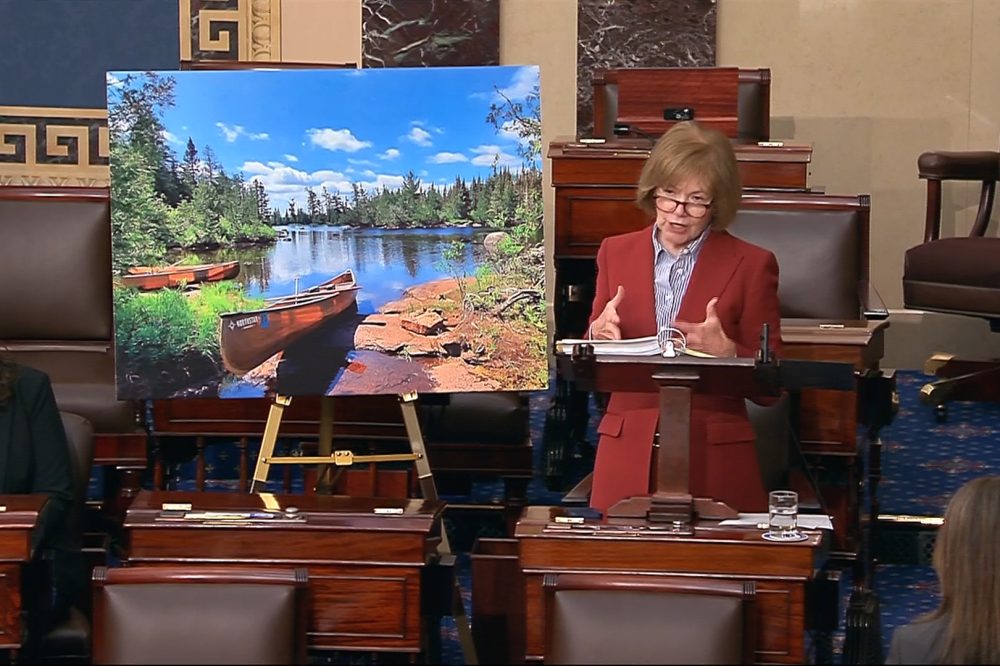
The wilderness canoe area sits within the national forest directly downstream from the proposed mining location, sparking fears that excavation activities could generate contamination threatening one of America’s few remaining pristine wild spaces.
The Biden administration established a two-decade mining prohibition in the national forest during 2023, halting Twin Metals’ development plans. However, Trump has advocated for expanding domestic energy and mineral extraction, and GOP lawmakers delivered him legislation to eliminate the prohibition this month, arguing the action would generate employment and revitalize Minnesota’s Iron Range mining sector. The president approved the measure Monday.
“Today is a dark day for America’s most beloved Wilderness area, the Boundary Waters Canoe Area Wilderness, and a stark warning call for public lands nationwide,” stated Ingrid Lyons, executive director of Save the Boundary Waters. “Minnesotans and the American public writ large have been loud and clear — this iconic place needs to be protected. Today, by the very people who claim to represent them, they were ignored, and even worse, silenced. But of course, it’s not over, and we will always keep fighting.”
Twin Metals representative Kathy Graul told The Associated Press that removing the prohibition opens opportunities to strengthen mineral supply networks, while emphasizing the company must still navigate an extensive permitting process spanning multiple years.
The proposed mining location encompasses a complex mix of state, federal and private properties, creating a complicated regulatory maze.
The company’s initial challenge involves reestablishing mining rights after Biden administration Interior Department officials canceled their federal land leases in early 2022. Twin Metals launched federal litigation seeking confirmation that their leases remain active, but a judge dismissed their case in 2023. The company is challenging that ruling.
Twin Metals must also secure a mining authorization from Minnesota’s Department of Natural Resources by demonstrating their ability to prevent water contamination, safely manage waste materials and rehabilitate the land following extraction completion. The company requires additional state water and air quality permits. Minnesota Democratic Senator Amy Klobuchar, who opposed lifting the prohibition, could present significant obstacles if she succeeds in her gubernatorial campaign this November.
Environmental organizations and tribal groups may potentially contest every permit through litigation, possibly delaying Twin Metals’ operations for years. Friends of the Boundary Waters has indicated legal action remains “under active consideration.”
Canadian authorities might also express concerns about potential cross-border contamination violating international agreements with the United States. The Boundary Waters forms the border between northeastern Minnesota and northwestern Ontario.
The region remains largely undisturbed by human activity. Timber harvesting is forbidden, aircraft must maintain minimum flight altitudes overhead, and motorized watercraft access is restricted to designated zones. The Forest Service distributed approximately 776,000 visitor permits from 2020 through 2024.