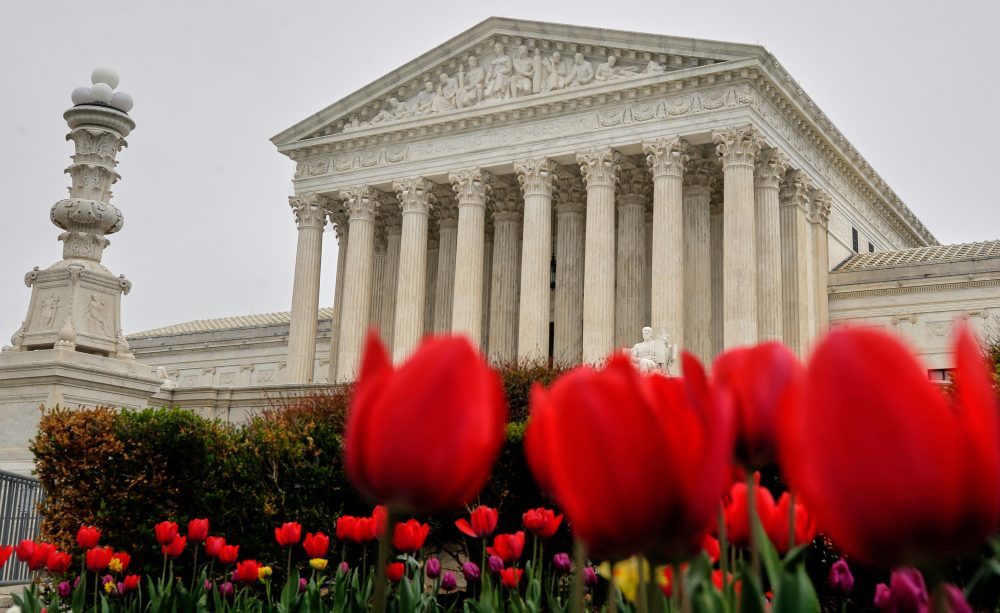

A landmark Supreme Court decision Wednesday delivered Republicans their most significant advantage yet in the ongoing fight for control of Congress and state legislatures nationwide, though the timing may prevent major changes to this year’s midterm races.
The court’s 6-3 conservative majority essentially dismantled key portions of the Voting Rights Act that required electoral districts to provide minority communities fair opportunities to choose their preferred candidates. This protection had previously safeguarded reliably Democratic majority-minority districts, even within Republican-dominated states where GOP lawmakers might otherwise create maps favoring their party.
Without this federal requirement, Republican state officials nationwide—particularly throughout the South—now possess greater freedom to dismantle Democratic-friendly districts and increase the number of seats they can capture to maintain House control. More than twelve such seats exist in GOP-controlled states.
Following Wednesday’s announcement, Republicans immediately began pushing for congressional map reviews in Alabama, Louisiana, Tennessee and other states.
However, they face a significant obstacle: the decision arrived well past filing deadlines for 2022 primary elections, and some primaries have already occurred. This means ballots are finalized and early voting has commenced in several states.
These timing constraints make wholesale map revisions extremely difficult. Louisiana exemplifies this challenge—where the requirement to create a second Democratic-leaning, majority-Black House district prompted Tuesday’s court action, the federal primary is scheduled for May 16 with early voting beginning Saturday. Despite this, the state’s governor, attorney general and legislative leadership planned meetings to determine their response.
Republican officials have been working frantically to follow President Donald Trump’s instructions to redesign maps and create additional winnable House seats to prevent midterm losses. Demonstrating the urgency Republicans feel to capitalize on this opportunity, several gubernatorial primary candidates demanded immediate redistricting.
Georgia businessman and GOP gubernatorial candidate Rick Jackson emphasized urgency even as voting continued for the May 19 primary. “There is no time to waste,” Jackson declared while advocating for immediate redistricting. “Georgia must act now to ensure secure elections in Georgia and counter the Democrats’ national assault on our elections.”
Tennessee GOP gubernatorial nominee Sen. Marsha Blackburn demanded her state redraw its congressional boundaries to eliminate its single majority-Black Democratic congressional district in favor of one more favorable to Republicans—despite the March 10 ballot qualification deadline having passed.
While Democrats have largely neutralized Republican attempts to create more winnable seats during last year’s mid-decade redistricting cycle, they lack clear options to offset GOP gains from the effective weakening of the Voting Rights Act.
Former Attorney General Eric Holder, who chairs the National Democratic Redistricting Committee, criticized the timing in a statement referencing Republican-nominated Chief Justice John Roberts. “It should not be lost on anyone that the Roberts court makes this decision at a time when Republican leaders across the country are foaming at the mouth to draw the American people out of a meaningful say in our elections,” Holder stated. “They want to retain illegitimately obtained power through the use of, among other things, now Supreme Court-sanctioned racial and partisan gerrymandering.”
Florida stands as the only Republican state with a realistic opportunity to gain seats from Wednesday’s decision before the midterms. GOP Governor Ron DeSantis has scheduled a special session to approve his map potentially delivering four additional winnable House seats for his party. DeSantis had anticipated this Supreme Court outcome, and Florida’s primary doesn’t occur until August.
Wednesday saw the Florida Legislature approve the new congressional map.
Other states must navigate the unusual challenge of potentially revising maps while voting is already underway or candidate filing processes have concluded.
National Republican Congressional Committee Chairman Rep. Richard Hudson of North Carolina acknowledged uncertainty about fall implications. “I don’t know what the implications are going be for the fall. It’s pretty late,” Hudson said.
He indicated that upcoming redistricting decisions would remain with governors and state legislatures.
Long-term, the ruling opens the door for dramatic changes to America’s political landscape, potentially taking full effect by the 2028 presidential election.
Carnegie Mellon University political scientist Jonathan Cervas, who has served as court-appointed special master and mapmaker in multiple Voting Rights Act cases, declared the law’s protective power essentially eliminated. “The Voting Rights Act as a means to protect minority voters from vote dilution is essentially dead,” Cervas explained. “It’s hard to imagine how this decision does not lead to additional GOP districts into the future.”
Cervas observed that the Voting Rights Act doesn’t exclusively benefit Democrats. Its primary application occurs in local, nonpartisan elections for positions like school board or city council. However, Republicans have long argued that Democrats exploited the law to secure winnable districts for Black voters in red states—advantages that Republican-leaning white voters could never obtain in blue states.
National Republican Redistricting Trust Executive Director Adam Kincaid celebrated the decision in a statement. “For decades the left has spent hundreds of millions of dollars seeking to divide Americans along racial lines in a cynical pursuit of partisan power masquerading as civil rights,” Kincaid said. “Today’s decision rebukes that divisive and unconstitutional effort.”
Although the Voting Rights Act helped maintain Democratic-leaning districts, those voters don’t disappear because of Wednesday’s ruling. Republicans in some states cannot simply eliminate all such districts without distributing enough Democratic voters to threaten their own incumbents.
Similarly, the mandate to concentrate Democratic-leaning minority voters in specific districts has occasionally disadvantaged Democrats in states like Michigan, reducing the number of competitive districts they might capture. The party could partially offset Republican gains by distributing minority voters more broadly in states under their control.
However, political pressure against this approach will likely come from some Black and Hispanic Democrats who want to ensure their communities maintain majority status in certain districts. Democratic-controlled states are also more likely to have nonpartisan redistricting commissions that make congressional maps less partisan and increasingly adopt state-level Voting Rights Act versions to protect marginalized communities.
While this will require time, it all indicates a much less regulated mapmaking environment ahead.
This prospect concerns Thomas Johnson, a Black voter from New Orleans who was at the state Capitol lobbying on unrelated legislation Wednesday when the Supreme Court ruling was announced. The majority-Black congressional district where he lives could now be divided by the state’s Republican legislature.
“We are going to do all we can and continue fighting so our voices are heard,” Johnson said. “That’s all we want, to be heard.”