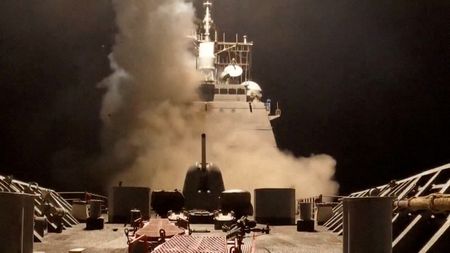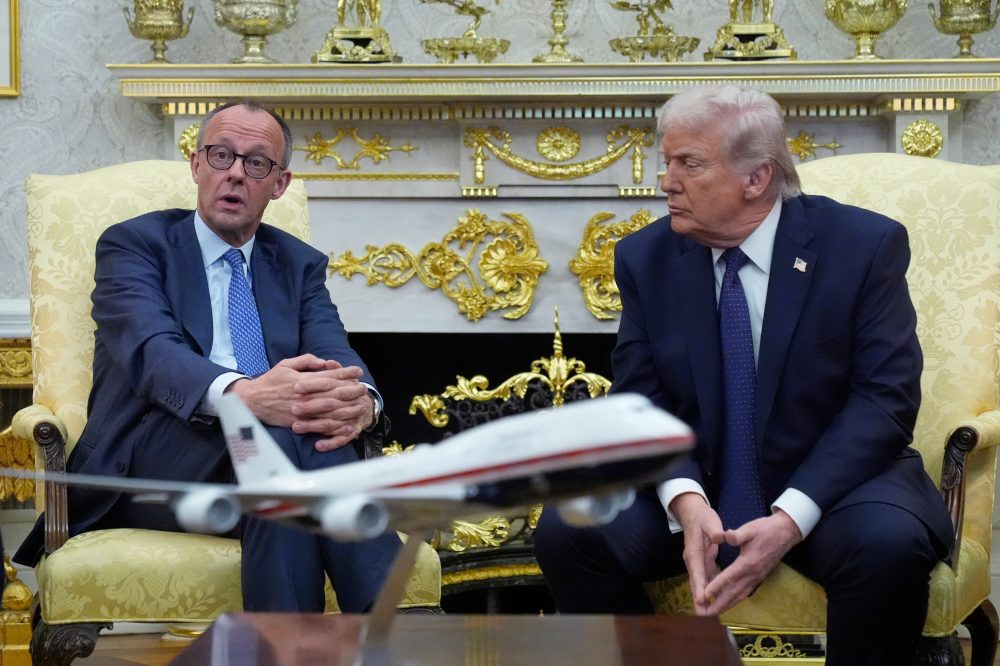

WASHINGTON — President Donald Trump issued a fresh warning to NATO partner Germany on Wednesday, indicating he may decrease American military forces stationed there amid ongoing tensions with Chancellor Friedrich Merz regarding the U.S.-Israel conflict with Iran.
The president’s warning followed Merz’s earlier comments this week claiming Iranian leadership was “humiliating” the United States and condemning Washington’s apparent lack of clear strategy in the conflict. Trump has also consistently criticized NATO members for their unwillingness to support America in the two-month military engagement.
“The United States is studying and reviewing the possible reduction of Troops in Germany, with a determination to be made over the next short period of time,” Trump declared on social media.
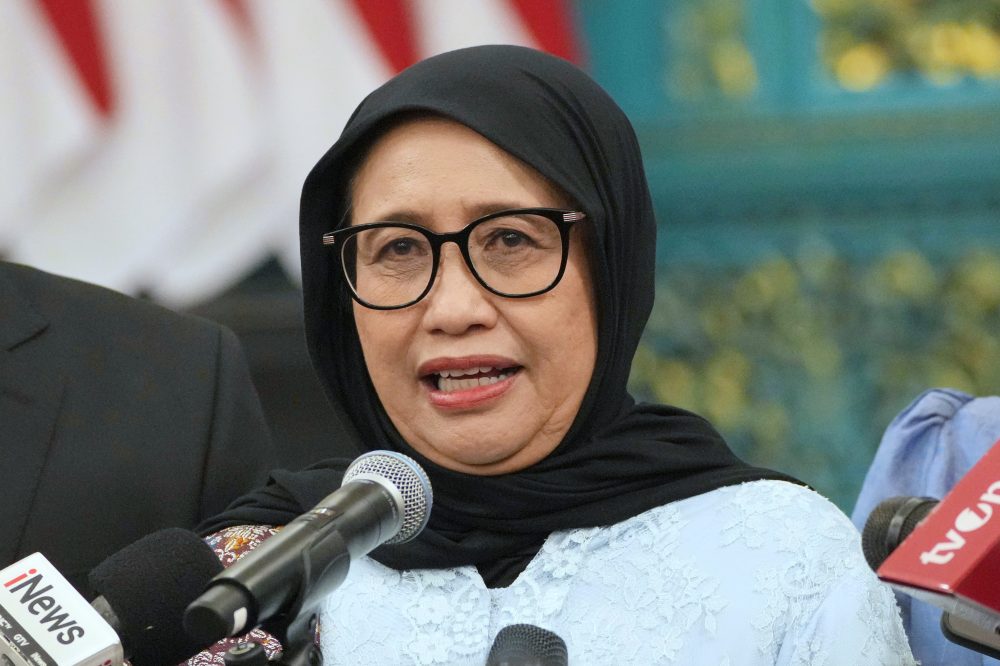
Earlier Wednesday, Merz stated his personal ties with Trump continued to be “as good as ever,” though he acknowledged having “had doubts from the very beginning about what was started there with the war in Iran.”
This isn’t Trump’s first attempt to reduce American forces in Germany. During his initial presidency, he previously sought to decrease U.S. troops there, arguing the nation wasn’t spending adequately on its own defense.
In June 2020, Trump revealed plans to withdraw approximately 9,500 of the roughly 34,500 American service members deployed in Germany at that time, though the reduction never began. President Joe Biden officially halted the proposed withdrawal after assuming office in 2021.
Germany hosts multiple significant American military installations, including headquarters for both U.S. European Command and U.S. Africa Command, along with Ramstein Air Base and Landstuhl Regional Medical Center, which serves as the largest U.S. hospital beyond American borders.
Merz visited Trump at the White House in March, shortly after the U.S. and Israel launched their bombing campaign against Iran. During that meeting, Merz expressed Germany’s willingness to collaborate with America on planning for the eventual fall of Iran’s current government. He also voiced concerns that prolonged warfare could severely harm the worldwide economy.
Those worries, shared by numerous European officials, have intensified as the U.S. and Iran remain unable to negotiate the reopening of the Strait of Hormuz, the vital shipping channel that previously carried roughly 20% of global oil supplies before hostilities commenced on February 28.
“We are suffering considerably in Germany and in Europe from the consequences of, for example, the closure of the Strait of Hormuz,” Merz stated Wednesday, just hours before Trump posted his warning online. “And in that regard, I urge that this conflict be resolved.”
Merz emphasized that his administration maintained “good speaking terms” with the Trump administration.
Meanwhile, Trump has made little effort to hide his irritation with the German leader.
On Tuesday, he posted: “The Chancellor of Germany, Friedrich Merz, thinks it’s OK for Iran to have a Nuclear Weapon. He doesn’t know what he’s talking about!” Trump continued by saying it came as no surprise “that Germany is doing so poorly, both economically and in other respects!”