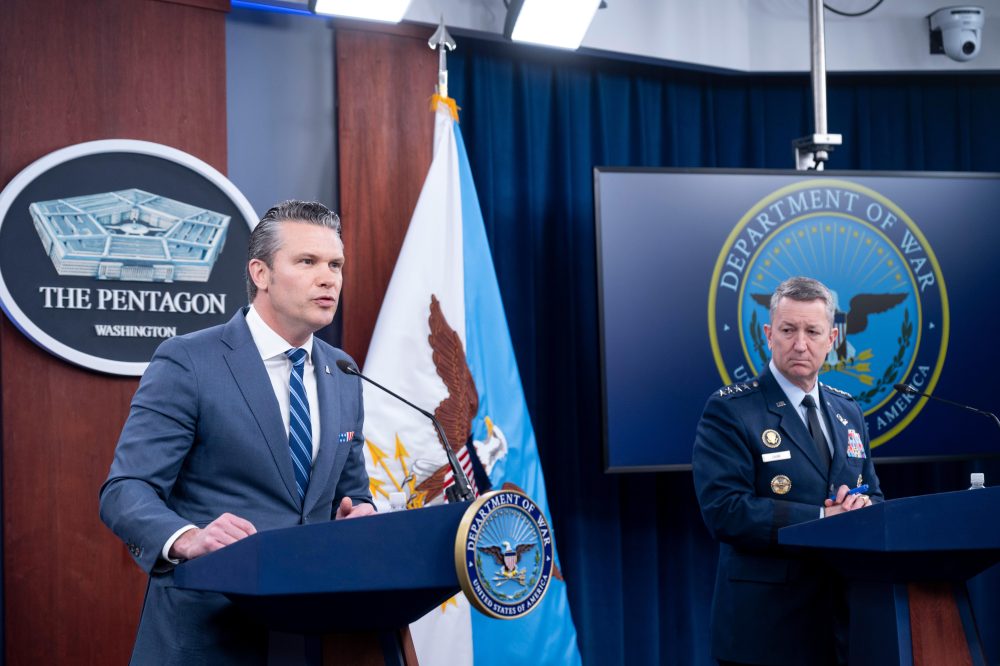

WASHINGTON — Defense Secretary Pete Hegseth is scheduled to appear before lawmakers on Wednesday in his first congressional testimony since the Trump administration initiated military action against Iran, a conflict that Democratic leaders have criticized as an unauthorized and expensive military engagement.
The House Armed Services Committee session is planned to review the administration’s proposed 2027 defense budget, which seeks to increase military spending to an unprecedented $1.5 trillion. Hegseth and Joint Chiefs Chairman Gen. Dan Caine are anticipated to emphasize requirements for additional drone technology, missile defense capabilities, and naval vessels.
Democratic committee members are expected to challenge officials on the escalating expenses of the Iranian conflict, the significant depletion of essential U.S. weapons stockpiles, and a school bombing incident that resulted in civilian casualties. Legislators may also examine the military’s readiness to counter Iranian drone attacks, particularly after some aircraft breached American defenses and caused casualties among U.S. personnel.
Although a temporary ceasefire is currently active, the United States and Israel initiated hostilities on February 28 without seeking congressional authorization. Democratic members in both chambers have been unsuccessful in advancing war powers legislation that would compel President Trump to suspend operations pending congressional approval.
Republican lawmakers have expressed continued support for Trump’s military strategy, pointing to Iran’s nuclear capabilities, diplomatic possibilities, and the risks associated with military withdrawal. However, GOP members are anxious for the conflict’s conclusion, with some considering future legislative actions that could challenge the president if hostilities continue.
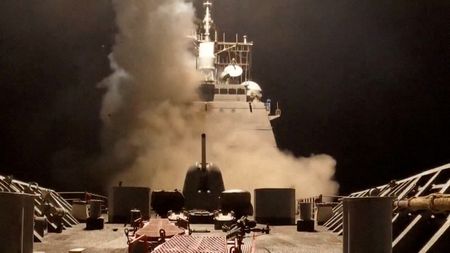
Iran’s blockade of the Strait of Hormuz, a critical global oil transport route, has caused fuel costs to surge and created political challenges for Republicans approaching midterm elections. The United States has implemented a naval blockade against Iranian vessels and increased regional military presence, deploying three aircraft carriers to the Middle East simultaneously for the first time in over two decades.
Both nations seem trapped in a military deadlock, with Trump reportedly rejecting Tehran’s recent proposal to reopen the shipping lane in exchange for ending the war, removing the naval blockade, and delaying nuclear negotiations.
Hegseth has evaded public congressional scrutiny regarding the conflict, though he and Caine have conducted televised Pentagon press conferences. The defense secretary has primarily engaged with conservative media representatives while referencing biblical texts to criticize mainstream news organizations.
Wednesday’s hearing will present a significantly different environment for Hegseth, as will Thursday’s Senate Armed Services Committee appearance with Caine. Lawmakers’ inquiries are expected to extend beyond budget matters and the Iranian situation to address Hegseth’s dismissal of senior military officials.
Following Navy Secretary John Phelan’s exit last week, Hegseth has also removed Army Chief of Staff Gen. Randy George and multiple other high-ranking generals, admirals, and defense officials.
“Tell us why. You know these are important positions. We are in a war posture with Iran,” said North Carolina Sen. Thom Tillis, a Republican.
Tillis, whose vote was essential for Hegseth’s confirmation, stated that the defense secretary’s Pentagon management has led him to reconsider his endorsement.
“He may be able to clean it up, but on its face, you don’t go through the number of highly reputable, senior-level officials, admirals and generals,” Tillis added.
Georgia Republican Rep. Austin Scott criticized George’s dismissal during last week’s House Armed Services Committee session, declaring that “some of us are not through asking the questions about that.”
“I think the firing of Gen. George was an extreme disservice to the United States Army,” Scott said. “And I think it was reckless conduct.”