Asian airlines that capitalized on the chaos of the Iran conflict — picking up passengers and commanding higher fares on routes to Europe — are now seeing those gains slip away as Middle Eastern carriers bring their flights back online and cut ticket prices, according to industry data.
The change has been happening slowly, but it is casting doubt on whether carriers such as Singapore Airlines, Cathay Pacific Airways, Korean Air Lines, and ANA Holdings will be able to hold onto the market share they picked up during the disruption.
“It is clear that we have passed the peak of the load factor gains for the Asian carriers,” said Nathan Gee, head of Asia-Pacific transportation research at BofA Global Research, using an industry term that refers to the percentage of seats filled on a flight. “But long-haul bookings tend to be on a six-month window, suggesting the strongest contribution to flown revenues will be seen in the upcoming quarters.”
Before the conflict began, Emirates, Qatar Airways, and Etihad Airways together carried nearly one-third of all passengers traveling from Asia to Europe, and more than half of those flying from Australia and New Zealand to Europe, according to figures from Cirium.
When the Iran war broke out on February 28, Gulf hub airports were shut down due to drone and missile attacks. But by mid-June, those airlines had recovered to roughly 90% of their pre-conflict flight levels, according to Flightradar24 data.
Between March and May, Middle Eastern carriers went from a nearly 60% drop in passenger numbers compared to the previous year to a 28% decline, based on data from the International Air Transport Association. Meanwhile, non-stop traffic from Asia to Europe that had surged nearly 30% year-over-year in March had narrowed to a 15% gain by May.
In June, Australia removed a “do not travel” advisory that had been invalidating travelers’ insurance coverage at Gulf hub airports. Flight Centre Travel Group reported that bookings on Emirates, Qatar, and Etihad jumped 36% in the week that followed.
Some travelers who had pre-war reservations with Gulf carriers had purchased refundable backup tickets on Asian airlines while they monitored the security situation, according to Michael Schischka, a senior adviser at Mary Rossi Travel in Sydney who focuses on luxury European travel.
“Not all clients, but I’d say the majority are now feeling more comfortable and safe and secure in flying through the Middle East,” Schischka said. “A lot of the Asian flights were very full and the cheaper fares weren’t available. So that’s driven people back to looking at the Middle East airlines again as well.”
A spokesperson for Korean Air said the airline saw year-over-year load factor increases on its European routes from March through May, but that connecting passenger demand softened as Gulf carriers resumed operations during the second quarter.
ANA, which has not yet released May figures, reported that its load factor on European flights dropped from 93.1% in March to 86.9% in April, though it remained 8.7 percentage points above the same period last year. Cathay Pacific said its network-wide load factor rose 2 percentage points in May to 86.8% year-over-year, compared to a 9.5-point gain in March when it reached 92.2%.
Independent aviation analyst Brendan Sobie said the numbers point to a slow, steady shift rather than a sharp reversal, with Singapore Airlines serving as a clear illustration of the trend. That airline’s European load factor surged 13.8 percentage points in March, but the gains narrowed significantly to 4.9 points in April and just 1.1 points in May.
“In May the load factors for both Europe and Australia normalised,” Sobie said. “They had a big uptick in March, a smaller uptick in April and in May even smaller. To me it’s more gradual, not overnight.”
Cherie Lavin, a travel agent at Travel My Dear in Brisbane, said her clients planning trips within the next one to three months are still cautious about booking with Middle Eastern carriers.
“But I think for next year there’s no qualms in quoting it,” she said. “And it’s being received well.”
Lime, the electric scooter and bike-sharing company backed by Uber, has set the price for its U.S. stock market debut at $25 per share, according to a Bloomberg News report published Tuesday.
The pricing lands at the midpoint of the range Lime had been offering to potential investors, Bloomberg said, citing a source with knowledge of the matter.
Reuters reached out to Lime for confirmation, but the company had not responded by the time the report was published, as the inquiry came outside of normal business hours.
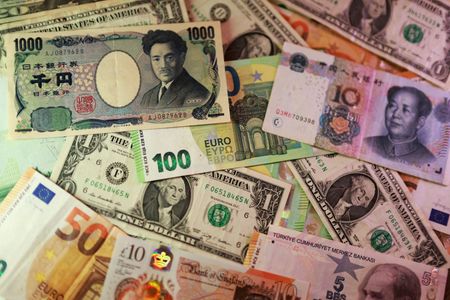
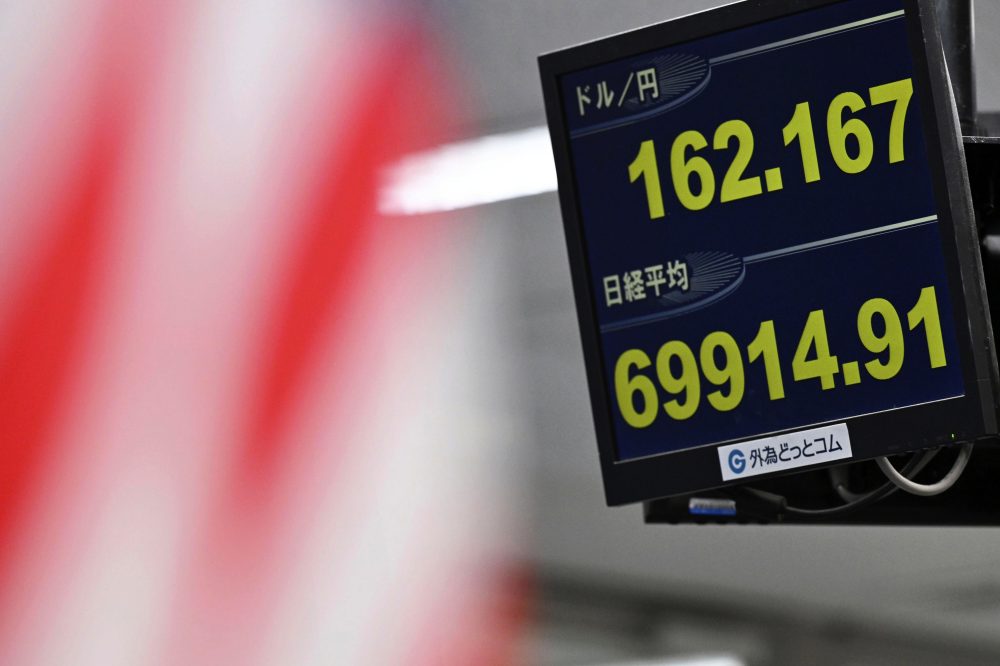
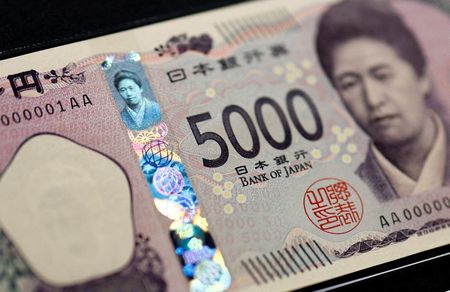
The U.S. dollar gained significant ground Wednesday, riding a sharp overnight surge in Treasury yields that sent the Japanese yen tumbling to its lowest value in 40 years.
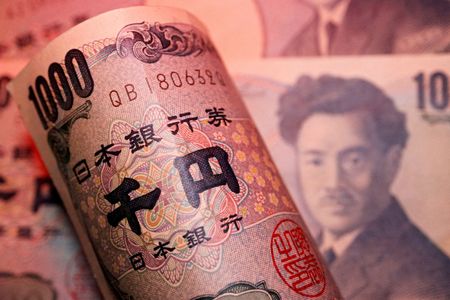
The dollar climbed to a new peak of 162.77 yen during early Asian trading hours — a level that surpasses the thresholds that previously prompted Japanese authorities to step in and support their struggling currency.
Chidu Narayanan, head of macro strategy for APAC at Wells Fargo, suggested that another round of intervention could be on the horizon. “We believe we are close to potential action,” he said. “We are at crucial levels, not necessarily in terms of a target spot level, but levels where the (Ministry of Finance) might need to intervene to retain its credibility.”
Some traders are eyeing the upcoming U.S. public holiday on Friday as a possible opportunity for Tokyo to purchase yen, since lower trading volume during that period could amplify the effect of any intervention effort.
Across the broader currency markets, the dollar was on the offensive. The euro dipped 0.07% to $1.1413, while the British pound slipped 0.09% to $1.3252. Measured against a basket of major currencies, the dollar held steady at 101.24.
The greenback’s strength followed a significant intraday jump of 9 basis points in the 10-year U.S. Treasury yield on Tuesday, which ultimately closed the session about 4.8 basis points higher. The 2-year Treasury yield also rose 3 basis points, last sitting at 4.1702%.
Analysts noted there was no single obvious driver behind the yield moves, though some of the activity may have been tied to end-of-month portfolio adjustments.
With Thursday’s U.S. nonfarm payrolls report on the horizon, data released overnight showed that U.S. job openings edged up to their highest level in two years during May. However, sluggish hiring has dampened workers’ confidence in the job market.
Ray Attrill, head of FX strategy at National Australia Bank, said the labor market continues to send a clear signal to the Fed. “All the evidence and the Fed’s view itself is that the labour market is proving to be resilient, and therefore in terms of the Fed’s dual mandate, the labour market is clearly not giving any signal that they should be thinking about cutting rates,” he said.
According to the CME FedWatch tool, traders now see a 67% probability that the Fed will raise rates in September — a dramatic jump from just 20.5% a month ago.
Prashant Newnaha, senior rates strategist at TD Securities, warned that the window for inaction is narrowing. “The runway is certainly getting shorter for those advocating for no policy change when the Fed’s stance is viewed to be hawkish, inflation is well above target and U.S. data is beating expectations,” he said.
Markets were also keeping an eye on Fed Chair Kevin Warsh’s scheduled appearance at the European Central Bank Forum on Central Banking in Portugal. NAB’s Attrill tempered expectations for any major announcements, saying, “There’s probably as much focus on whether he might say anything, but I think he probably won’t, given his lack of interest in offering any forward guidance (in June).”
In other currency moves, the Australian dollar fell 0.18% to $0.6907, while the New Zealand dollar edged down 0.04% to $0.5674.
Business confidence among Japan’s largest manufacturers climbed to its highest point in more than six years during the three-month period ending in June, according to a widely followed survey released Wednesday — suggesting the country’s economy is holding up against the energy shock caused by the ongoing Middle East conflict.
Despite the encouraging numbers, companies are signaling they expect conditions to deteriorate over the next three months, citing rising costs and the possibility of supply disruptions tied to the war.
The survey also found that corporate expectations for inflation are growing, a development that could keep alive market speculation about additional interest rate increases by Japan’s central bank, the Bank of Japan, known as the BOJ.
The headline index tracking sentiment among large manufacturers came in at +22 in June, jumping from +17 in March and topping the median market forecast of +16. That reading marks the strongest level since March 2018.
A separate index measuring mood among large non-manufacturing companies registered +37, up from +36 in March, beating the median market forecast of +35 and reaching its highest point since August 1991.
While many businesses reported feeling the squeeze from higher raw material costs linked to the Iran war, a BOJ official told reporters at a briefing that strong demand for artificial intelligence-related products and semiconductor chips helped offset some of that pressure.
The official also noted that some companies pointed to progress in passing along their higher costs to customers as a reason for a more positive business outlook.
Large companies indicated they plan to boost capital spending by 11.5% during the current fiscal year, which runs through March 2027 — exceeding the median market forecast of a 10.5% increase.
These survey results will be among the data points the BOJ examines when its policymakers convene for their next meeting on July 30 and 31. While the central bank is widely expected to hold interest rates steady at that gathering, its board will release updated quarterly forecasts for economic growth and inflation that are expected to offer clues about the timing and pace of future rate hikes.
The BOJ raised interest rates to their highest level in 31 years back in June, a significant step in its effort to normalize monetary policy. The bank signaled it was prepared to tighten further as it works to contain price pressures fueled by the energy shock from the Iran war.
The Middle East conflict has made the BOJ’s policy decisions more complicated, pushing inflation higher through rising oil prices while also putting strain on an economy that relies heavily on imported fuel.
Although a peace agreement between the United States and Iran helped ease global market concerns about price pressures, wholesale inflation had already surged to a three-year high of 6.3% in May — a sign that businesses were already passing on elevated energy costs to buyers.
A BOJ official noted that most companies responded to the survey before the U.S.-Iran peace deal was reached on June 15.
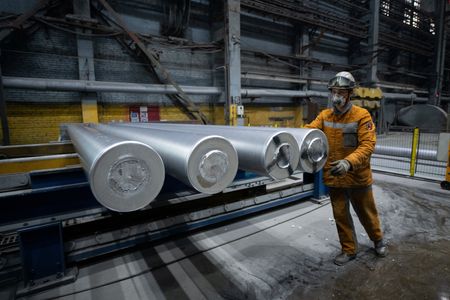
South32 CEO Matthew Daley signaled Wednesday that the diversified mining company is willing to pursue mergers and acquisitions, though he stressed that any potential deal would need to clear a high bar before moving forward.
The comments came after South32 reached an agreement to sell the majority of its aluminum portfolio to Alcoa for a price tag of up to $5.6 billion.
Speaking to investors on a call, Daley outlined the conditions any future deal would need to meet. “We will definitely look at opportunities that we see are value accretive, that are strategically aligned and maintain our financial strength, but they’re going to have to compete for capital with the organic pipeline,” he said.
The remarks suggest South32 is not ruling out growth through acquisitions, but that management intends to weigh any external opportunities carefully against the company’s existing internal projects.
South Korea’s export figures shattered expectations last month, climbing at the fastest annual rate since October 1978 as surging demand for computer chips — powered by the worldwide boom in artificial intelligence spending — drove sales to record heights.
Preliminary trade data released Wednesday showed exports from Asia’s fourth-largest economy reached $102.25 billion in June, a 70.9% increase compared to the same month one year ago. That pace accelerated well beyond May’s already impressive 53.4% gain.
The result blew past the median forecast of 61.0% growth from a Reuters poll of economists, outperforming all 13 projections submitted.
Semiconductor exports were the standout driver, skyrocketing 199.5% to reach $44.8 billion. The achievement made South Korea only the fourth country in history to record monthly export totals exceeding $100 billion, joining Germany, China, and the United States, according to the country’s trade ministry.
Computer sales also exploded, rising 308.8% as major technology companies continued pouring money into AI infrastructure. Steel product exports ended a 13-month losing streak, rising 9.6% as data center construction projects fueled demand. Petroleum product exports climbed 49.8%, boosted by elevated oil prices.
Looking at where those goods were headed, shipments to China surged 92.1% and exports to the United States climbed 78.6%. Exports to the European Union increased 31.8%, while shipments to the Middle East declined 8.4%.
On the import side, South Korea brought in $66.10 billion worth of goods — a 30.1% increase from a year earlier, up from the 20.7% rise recorded in May. That exceeded the 26.3% growth economists had anticipated and represented the fastest import growth since May 2022.
The gap between exports and imports produced a monthly trade surplus of $36.15 billion, the largest ever recorded for the country.
NEW YORK — Indie film distributor Neon has stepped in to acquire “Artificial,” the Luca Guadagnino-directed film centered on Sam Altman and OpenAI, after Amazon MGM Studios walked away from the project.
Neon announced Tuesday that it secured the film through a competitive bidding process. Amazon had dropped the nearly finished production — which carries a budget of around $40 million — earlier this month. The move caught many in the industry off guard, especially since it came just months after Amazon had announced a $50 billion investment in OpenAI.
When stepping away from the project, Amazon stated that the film would “be better served if it were released by a different studio.”
Neon confirmed it plans to release “Artificial” before the end of this year, with intentions to “compete in this year’s Oscar race.” The film follows the events surrounding Altman’s firing and subsequent reinstatement as OpenAI’s chief executive in 2023. Andrew Garfield stars as Altman, with Monica Barbaro, Yura Borisov, and Academy Award winner Mark Rylance also in the cast. Ike Barinholtz portrays Elon Musk.
Amazon had entered into a broad, multiyear partnership with the artificial intelligence company in late February before Amazon MGM announced it was putting the film up for sale earlier this month.
Neon has built a strong reputation during awards season, having backed Oscar-winning films such as “Parasite” and “Anora.” The specialty distributor has also supported the last seven Palme d’Or winners at the Cannes Film Festival. The studio did not reveal the price it paid for the worldwide distribution rights to “Artificial.”
“The acquisition underscores Neon’s commitment to partnering with visionary filmmakers, and bringing ambitious cinema to audiences around the world,” the studio said in a prepared statement.
Microsoft is gearing up for another significant round of job cuts, with plans to reduce its workforce by less than 2.5%, according to a report published Tuesday by Business Insider.
Sources familiar with the situation told Business Insider the layoffs could be formally announced as early as next week. The cuts are expected to number in the thousands and span a variety of roles across the company.
Among the areas expected to be affected are sales and consulting positions, along with jobs tied to the company’s Xbox gaming division, according to the report.
Reuters, which first picked up the Business Insider report, noted it was unable to independently confirm the details at this time.
Canada’s South Bow and U.S.-based Bridger Pipeline have revealed plans to work together on a new oil pipeline running from Guernsey, Wyoming, all the way to Cushing, Oklahoma, the two companies confirmed to Reuters on Tuesday.
According to the companies, the pipeline would be built along a corridor they acquired from another firm. South Bow and Bridger said their first order of business is reaching out to landowners and communities that would be affected along the planned route.
This new pipeline would function as the third and final segment of a broader initiative designed to transport crude oil from Alberta, Canada, down to the Cushing oil hub in Oklahoma.
A research report from J.P. Morgan published last week indicated that a joint venture between South Bow and Bridger had purchased the right-of-way originally belonging to the Liberty Pipeline from Tallgrass Energy. The Liberty Pipeline was a project that was previously cancelled; it had originally been intended to move oil from the Rocky Mountain region and North Dakota’s Bakken production fields to Cushing, Oklahoma. Tallgrass Energy did not respond to a request for comment, while South Bow and Bridger declined to confirm specifics about the acquisition.
The two companies have already separately proposed another pipeline — called Prairie Connector — that would run from Alberta to Guernsey, Wyoming. That project, if completed, could boost Canada’s crude oil exports to the United States by more than 12%, adding badly needed export capacity for Canadian producers.
U.S. President Donald Trump signed an executive order in April granting a cross-border permit for the Prairie Connector project, partially reviving the concept behind Keystone XL. Former President Joe Biden had formally cancelled the Keystone XL permit back in 2021, ending what had been the last major pipeline proposal between Canada and the United States.
While Prairie Connector would travel a different path through the U.S. than Keystone XL did, South Bow’s portion of the project would make use of roughly 150 kilometers — about 93 miles — of existing but dormant pipeline in Canada. That section would connect to Bridger’s proposed pipeline in Montana and then extend approximately 645 miles to Guernsey.
Energy analyst Matthew Lewis, founder of Plainview Energy Analytics, explained why the third leg of the project is so critical. “The third leg is an imperative piece of the overall project. There is currently no significant oil egress capacity out of that Wyoming/Colorado area to major hubs like Cushing. Thus, you need a major new build project to carry that oil from Wyoming to an oil hub,” Lewis said.
South Bow has indicated it plans to resume construction on its segment of Prairie Connector around the second quarter of 2027, with the full pipeline expected to be operational by the fourth quarter of 2028, according to a filing with the Canada Energy Regulator. The company announced last month that it had secured the shipper commitments necessary to move the project forward.
Technology stocks helped lift Wall Street on Monday as investors wrapped up a month that ended in the red for the S&P 500 and the Nasdaq — yet all three major U.S. stock indexes posted their best quarterly percentage gains in years.
Here is a look at the major market moves and the stories driving them.
Key Market Highlights
Chip stocks led the charge, with SanDisk, AMD, Marvell, and Intel each climbing anywhere from 6.0% to 10.9%. Europe’s STOXX 600 also recorded its strongest quarterly gain in years, with artificial intelligence momentum fueling much of the advance across markets.
The U.S. dollar moved higher while Japan’s yen slid to its lowest point in 40 years. U.S. Treasury yields rose on the day, though the benchmark 10-year yield was still on track for a monthly decline. Oil prices barely budged but recorded their steepest quarterly loss since 2020, and gold saw its largest quarterly drop in 13 years.
What’s Driving the Conversation
Markets had a strong first half of the year, but analysts say the rally will face serious headwinds going into the second half of 2026. Key factors to watch include whether artificial intelligence spending remains sustainable, whether corporate earnings can meet lofty expectations, and how interest rate policy evolves under Federal Reserve Chair Kevin Warsh.
On the diplomatic front, uncertainty is hanging over U.S.-Iran peace talks. President Donald Trump’s son-in-law Jared Kushner and envoy Steve Witkoff traveled to Doha on Tuesday following weekend airstrikes that put pressure on a June 17 interim agreement between the United States and Iran. No high-level meeting with Iranian officials is currently scheduled, but technical discussions — including regional security matters — are underway. According to a spokesperson for Qatar’s Foreign Ministry, those talks could be elevated to a senior level.
Meanwhile, President Trump is expected to announce on Wednesday that the United States will not extend the U.S.-Mexico-Canada Agreement on trade. That move would start a ten-year countdown to dissolve the 32-year-old North American free trade zone, even as the three countries continue negotiating proposed changes. The announcement would trigger a six-year review process tied to a “sunset clause” that was built into the agreement during Trump’s first term in office, though it is not expected to significantly change the ongoing — and contentious — talks about the pact’s future.
What Could Move Markets Tomorrow
Investors will be watching developments in the Middle East, energy market activity, and any social media posts from President Trump. Possible intervention in currency markets to support the yen is also on the radar. On the data front, markets will receive the U.S. ISM PMI for June, the Challenger layoffs report, the ADP National Employment Report, and U.S. construction spending figures. Internationally, euro zone and UK PMI readings, Netherlands GDP and retail sales data, Japan consumer confidence, UK house prices, and Switzerland retail sales are all due.
Federal Reserve Chair Kevin Warsh is also scheduled to participate in a policy panel at the ECB Forum.
The U.S. Justice Department and 17 states have struck deals with three of the country’s largest egg producers to settle accusations that the companies secretly worked together to illegally drive up egg prices — including during the period when costs hit record highs.
Federal and state authorities accused Cal-Maine Foods, Versova, and Hickman’s Egg Ranch of quietly coordinating from June 2022 through March 2025 to “artificially inflate the daily price quotations for eggs.” Investigators found the companies worked together on what bids they submitted to Urner Barry Publications, a firm that runs a pricing index used to determine how much grocery stores, restaurants, and other buyers pay for billions of eggs every year.
That coordination ultimately led to “higher prices for eggs sold to consumers,” according to the complaint, which was filed in Iowa on Monday — the same day the settlement terms were made public.
“When powerful corporations collude behind the scenes to raise prices, working families suffer the costs,” said New York Attorney General Letitia James, one of the lead investigators on the case. “These egg producers manipulated the market to squeeze even more profit out of consumers and businesses.”
None of the three companies admitted any wrongdoing as part of the agreements. However, to resolve the states’ claims, Cal-Maine, Versova, and Hickman’s will together owe $3.3 million in cash and 53 million eggs. The eggs will be donated to food banks and nonprofit organizations, while the money will be divided among the participating states.
As part of the settlements, the companies must also put antitrust compliance programs in place and are prohibited from communicating with competitors about pricing or bidding strategies.
The agreements are not yet final — they still require a judge’s approval. Justice Department official Omeed A. Assefi said Tuesday that the proposed deals “resolve years of conduct that dragged on Americans’ finances and their everyday lives.”
Average egg prices in the U.S. climbed to a record high of roughly $6.23 per dozen in March 2025, largely driven by a widespread bird flu outbreak that led to the slaughter of millions of egg-laying hens. The egg industry pointed to the disease as the cause of the price spike, but critics argued that large producers were exploiting their market power — prompting the government investigation.
The complaint notes that price quotations “dropped significantly” after Cal-Maine, Versova, and Hickman’s were notified of the Justice Department’s investigation and told to preserve their records in March 2025. Consumer prices also fell sharply afterward, dropping to under $2.20 per dozen as of May 2026, as poultry flocks were rebuilt even as the outbreak continued.
Cal-Maine pushed back on the allegations Monday, calling claims of price manipulation “baseless” and maintaining that its actions were lawful. The company also noted that while it had participated in a cooperative with the other two producers, it exited that group in May 2024.
Despite its denial, Cal-Maine CEO Sherman Miller said the settlement “enables us to move forward so we can devote our full attention to what matters most: delivering affordable, high-quality eggs and egg-based prepared foods to consumers nationwide.” Miller also described the period under review as “a particularly challenging time,” pointing to avian flu, the COVID-19 pandemic, severe weather, and other market disruptions as factors behind recent supply shortages and elevated prices. He said the company “took numerous steps to protect and grow its hen flock” throughout that period.
Versova offered a similar response, highlighting the hardship bird flu has placed on its farmers, who it said “don’t set the wholesale price of eggs.” The company argued that the cost of most of its eggs is tied to fluctuations in the price of grain used to feed hens.
Hickman’s new owner, Mantiqueira USA — which purchased the egg producer in November — stated that the “conduct referenced in the complaint predates our acquisition” and expressed its commitment to following the law going forward.
Not everyone views the settlements as sufficient. Angela Huffman, president of the advocacy group Farm Action, criticized the outcome: “Consumers paid record prices while dominant egg producers reported extraordinary profits, yet the result is another settlement that corporations can treat as the cost of doing business rather than meaningful accountability.”
Cal-Maine, the only one of the three companies that is publicly traded and reports quarterly earnings, posted a profit of $1.22 billion for its 2025 fiscal year. Under its portion of the settlement, Cal-Maine will pay $1.5 million and donate 30 million eggs. Versova will contribute 20 million eggs and $800,000, while Hickman’s is responsible for 3.25 million eggs and $1 million.
In addition to New York, the states involved in the settlement include Arizona, California, Colorado, Connecticut, Florida, Hawaii, Iowa, Maryland, Minnesota, North Carolina, Ohio, Pennsylvania, Texas, Utah, Vermont, and Wisconsin.
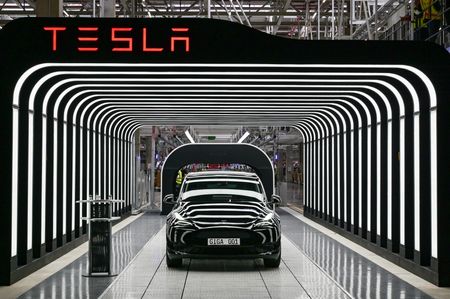
Tesla is expected to announce a 5% increase in vehicle deliveries for the second quarter when it releases its figures on Thursday, with much of that growth coming from a resurgence in European demand.
According to a poll of 20 analysts by Visible Alpha, Wall Street is forecasting Tesla will deliver approximately 402,780 electric vehicles during the April-through-June period. That would represent a 4.9% increase compared to the same quarter last year and a 12.5% jump from the previous three months.
Deutsche Bank projects the biggest regional growth will come from Europe, where deliveries could climb by nearly 40% year-over-year. China is expected to see a modest 3% increase, while North America is forecast to fall 21% compared to the prior year.
The European rebound follows a difficult stretch for Tesla in the region throughout 2025, when sales dropped sharply amid public backlash over CEO Elon Musk’s far-right political comments. Now, analysts say surging fuel prices — driven in part by the ongoing Iran war — are steering European consumers back toward battery-powered vehicles, both new and used.
In the United States, Tesla continues to face headwinds after the $7,500 federal electric vehicle tax credit that was established during the Biden administration expired in September. Demand in China, meanwhile, is expected to hold steady.
Analysts also point to Tesla’s Full Self-Driving (FSD) advanced driver assistance technology as a potential catalyst for further European growth. The software has only been approved for use in a small number of European countries so far, but a broader rollout could follow a European Union vote expected later this year.
To help stimulate overall sales, Tesla has introduced lower-priced versions of its Model 3 and Model Y vehicles over the past year. The company does not publicly break down its delivery numbers by region. Several European nations are also expected to release their own monthly and quarterly auto sales data on Wednesday.
Bloom Energy and Brookfield announced Tuesday that they have significantly expanded their joint effort to fund power projects supporting artificial intelligence infrastructure, growing their financial commitment five times over to a total of $25 billion.
The two companies first joined forces in October, when Brookfield agreed to put up as much as $5 billion into Bloom’s fuel cell technology to help power data centers. That initial deal came as businesses across the industry began searching for cleaner energy solutions to keep pace with the rapidly growing demands of the AI sector.
Data center operators are increasingly looking to nuclear power, renewable energy, and fuel cells to handle the surging electricity needs driven by AI and cloud computing — a trend that has triggered billions of dollars in new infrastructure investment.
Bloom Energy has already put its fuel cell technology to work at data centers through existing partnerships with American Electric Power, Equinix, and Oracle.
The newly expanded agreement falls under Brookfield’s dedicated AI Infrastructure Fund, which the company launched in November 2025 with a goal of deploying $100 billion toward AI-related energy and infrastructure projects.
American stock markets closed higher on Tuesday, helping to soften what had been a difficult June. The S&P 500 climbed 0.8%, though it still ended the month in negative territory — its first losing month after two strong ones. The Dow Jones Industrial Average edged up 0.3% to reach another record high, while the Nasdaq composite surged 1.5%. Stocks tied to artificial intelligence performed particularly well after experiencing sharp volatility earlier in the month amid concerns about overvaluation. Treasury yields moved higher in the bond market, and oil prices dipped. Markets across much of Europe and Asia also advanced, though the Japanese yen slipped to near a 40-year low against the U.S. dollar.
Supreme Court Allows Fed Governor Cook to Stay, But Expands Presidential Firing Power
The U.S. Supreme Court ruled that Federal Reserve Governor Lisa Cook may keep her position for now, dealing a setback to President Donald Trump’s effort to gain control over the nation’s central bank. At the same time, the justices significantly broadened presidential authority on Monday by upholding Trump’s removal of leaders at other independent federal agencies. Trump described the decision as a “Historic and Unprecedented Ruling.” However, the court turned down Trump’s request to immediately remove Cook from her post based on allegations of mortgage fraud — claims she denies. Cook said the dispute was really about her refusal to let politics influence interest rate decisions. She was originally appointed by then-President Joe Biden, a Democrat.
What the Ruling Means for the Fed’s Independence
In a 5-4 decision, the Supreme Court declared on Monday that the Federal Reserve holds a unique level of independence from the White House and everyday political pressures — though the court stopped short of spelling out exactly how far that independence extends. The ruling is the latest chapter in an extraordinary conflict between the Fed and President Trump. Analysts warn that increased political meddling at the Fed could rattle financial markets worldwide, which pay close attention to its interest rate decisions. The court’s ruling protects the seven members of the Fed’s board of governors from being fired without clear cause, even as it eliminated similar protections for heads of other agencies, who can now be dismissed at the president’s discretion.
Egg Producers Settle Price-Fixing Claims for $3.3M and 53 Million Eggs
The U.S. Justice Department and 17 states have struck settlement deals with three large egg producers accused of illegally working together to drive up prices. The companies — Cal-Maine Foods, Versova, and Hickman’s Egg Ranch — are alleged to have coordinated between June 2022 and March 2025 to artificially inflate egg costs. Under the agreements, the three firms must collectively pay $3.3 million and donate 53 million eggs to resolve the states’ claims. They are also required to put antitrust compliance programs in place and cease sharing pricing information with competitors. The settlements are still pending court approval. Some critics have argued the terms are far too lenient given the scope of the alleged wrongdoing.
Iran War Pushes Asia to Rethink Energy Strategy
Countries across Asia, reeling from energy price shocks triggered by the Iran war, are scrambling to broaden and shore up their energy supplies — a shift that experts warn could undercut their pledges to fight climate change. In energy-hungry Southeast Asia, nations are exploring nuclear power and expanding renewable energy, while at the same time continuing to burn coal and pour investment into it. Analysts say this wide-ranging approach, driven by the pressures of the Iran war, is slowing the push to phase out coal-fired power across the region. While renewables still lead growth in regional electricity generation, the trend may slow progress on cutting carbon emissions and improving air quality in Asia’s heavily polluted cities.
Puerto Rico Power Company Offered $3B Debt Restructuring Deal
A federal oversight board managing Puerto Rico’s finances has put forward a $3 billion settlement offer to bondholders in a renewed attempt to restructure more than $10 billion in debt carried by the territory’s electric utility. The board’s proposal involves a combination of cash payments and newly issued bonds for creditors who have not yet settled and are seeking roughly $8.5 billion in claims. The offer is $1.4 billion more than what was previously proposed. Puerto Rico’s Electric Power Authority has been working to sort out its debt load for close to a decade.
Job Openings Hold Steady at 7.6 Million in May
The number of available jobs in the United States remained at a surprisingly robust 7.6 million in May, signaling that the American labor market is holding up well despite economic turbulence from the Iran war. Economists had projected the figure would come in at just 7 million. Layoffs increased during the month, and the share of workers voluntarily leaving their jobs — typically seen as a sign of confidence in finding new work — edged up only marginally.
Consumer Confidence Nudges Up as Gas Prices Fall, But Pessimism Lingers
Americans are feeling slightly better about the economy this month, largely thanks to declining gas prices, but overall sentiment remains downbeat by historical measures. The Conference Board reported Tuesday that its consumer confidence index rose 0.6 point in June to reach 91.2 — still below the 95.2 reading from a year ago. Attitudes had soured after the Iran war sent oil and gas prices soaring, fueling inflation and eroding Americans’ purchasing power. Prior to the pandemic, the index routinely exceeded 120.
Brazilian Workers Demand Shorter Work Week
Hundreds of bus drivers went on strike and demonstrated in downtown Rio de Janeiro on Tuesday, calling for higher pay, improved working conditions, and an end to six-day work weeks. The action is part of a broader national movement pushing for a guaranteed two-day weekend for all Brazilian workers. A proposal to cap the work week at five days is currently being considered by the Brazilian Senate and has the backing of President Luiz Inácio Lula da Silva, who is running for reelection in October. If passed, the measure could transform the daily lives of millions of lower-income Brazilians and potentially give Lula’s campaign a significant lift. Approximately 14 million Brazilians currently work six days a week.
Tips for Talking to Your Kids About Money
Having money conversations with children can feel uncomfortable, especially for parents who aren’t entirely confident about personal finance themselves — but that’s beginning to change. Jennifer Seitz, director of education at Greenlight, a family personal finance app, notes that a growing number of financial tools are designed to help families navigate these discussions. Options include supervised debit cards for children and apps that turn money management into a game to make it more accessible for younger users. Financial experts recommend bringing up money regularly and openly, and finding creative ways to make those conversations enjoyable and engaging for kids.
Activist hedge fund Jana Partners has quietly acquired a new stake in technology company Everpure and is expected to soon disclose that position through a regulatory filing, according to two sources familiar with the matter and documents reviewed by Reuters.
The New York-based hedge fund began accumulating shares during the first quarter of 2026. However, it did not include the holding in its standard 13-F quarterly disclosure form because it had obtained what is known as “confidential treatment” — a temporary delay in reporting the position to U.S. regulators.
By the close of the first quarter, Jana Partners held more than 1 million shares in Everpure, which is headquartered in Santa Clara, California. The sources, who are not authorized to speak publicly about the fund’s holdings, could not confirm the current size of the stake.
It also remains unknown what specific changes the hedge fund — led by managing partner Scott Ostfeld — may be pushing for at the company.
Everpure, which was previously named Pure Storage, rebranded in early 2026 to reflect its evolution from a data storage provider into an artificial intelligence-focused data management and intelligence platform. The company has benefited from surging demand tied to AI infrastructure growth and increased appetite for data services.
The company carries a market value of $23 billion, and its stock has risen 2.35% so far this year. Everpure also surpassed Wall Street earnings expectations for its fiscal first quarter, which wrapped up in May.
Activist investment firms sometimes seek confidential treatment to give themselves more time to build a position without tipping off competitors who might otherwise jump ahead of their trades. Berkshire Hathaway is a well-known example of a firm that regularly requests such treatment from the U.S. Securities and Exchange Commission while still accumulating shares.
A spokesperson for Jana Partners did not respond to a request for comment. A representative for Everpure offered this statement: “We maintain an open dialogue with all shareholders and we remain focused on executing our strategic plan and delivering for our customers and investors.”
Jana Partners is widely regarded as one of the more successful activist investment firms on Wall Street, and its investment decisions are closely watched by bankers and investors alike. Among its past campaigns, the firm pushed telecom company Frontier Communications to pursue a sale, which eventually led to its acquisition by Verizon Communications.
Jana is also currently pressing fintech payments company Fiserv to divest non-core businesses and bring fresh faces onto its board of directors.
SAN JUAN, Puerto Rico — A federal oversight board responsible for managing Puerto Rico’s finances announced Tuesday that it is offering bondholders a $3 billion settlement in a renewed effort to restructure more than $10 billion in debt carried by the territory’s electric utility.
The proposal would provide bondholders — who have not yet reached a deal and are seeking roughly $8.5 billion in claims — with a combination of cash payments and newly issued bonds. The offer is $1.4 billion higher than what had previously been put on the table.
Puerto Rico’s Electric Power Authority has been working to resolve its debt situation for close to ten years. The crisis began in 2015 when the U.S. territory declared it could not repay a debt load exceeding $70 billion. In response, the U.S. Congress established the federal oversight board in 2016. The following year, Puerto Rico’s government filed for what became the largest municipal bankruptcy in American history.
In the years since, the board and the power company’s bondholders have repeatedly clashed over compensation, with several rounds of mediation failing to produce a resolution.
The board’s executive director, Robert F. Mujica Jr., said the time has come to move on. “Puerto Rico must be able to close this last chapter of its fiscal crisis and move forward,” he said.
Mujica also emphasized that resolving the utility’s debt “is essential to Puerto Rico’s recovery — to the reliable, affordable electricity and the new investment its residents and businesses deserve.”
One significant unknown remains: the board has not yet determined where the money to fund the proposed settlement would come from. That uncertainty has raised concerns among some observers, who fear that residents could end up footing the bill through higher electricity rates. Power costs in Puerto Rico are already among the steepest of any U.S. jurisdiction, even as the island continues to experience frequent and prolonged outages.
The board noted that prior agreements reached with certain creditors and bondholders in the power company’s case are still in effect. It also highlighted that, across Puerto Rico’s broader fiscal restructuring, it has completed 12 separate debt deals, eliminating more than $55 billion in debt payments over a 40-year period.
WASHINGTON — Americans are feeling a little better about the economy this month, thanks in part to declining gas prices, but their overall mood remains historically low, according to a new report released Tuesday.
The Conference Board announced that its consumer confidence index climbed 0.6 point in June to reach 91.2 — an improvement, but still below the 95.2 reading recorded at the same time last year. The index took a hit after the Iran war sent oil and gas prices sharply higher, fueling inflation and cutting into Americans’ purchasing power when adjusted for rising prices. Prior to the COVID-19 pandemic, the index routinely came in above 120.
The data points to a slow and uneven recovery in consumer confidence following the economic disruption triggered by the Iran conflict. Despite their pessimistic outlook, Americans have kept opening their wallets, which has helped sustain economic growth even as inflation picked up speed. Analysts note that since the pandemic, measures of consumer sentiment have become less reliable predictors of actual spending behavior.
Dana Peterson, the Conference Board’s chief economist, offered this assessment: “Consumer confidence inched up in June as falling oil prices in recent weeks provided some relief to consumer inflation fears. Consumer appraisals of current business conditions were slightly more positive compared to last month. However, perceptions of the current labor market softened measurably.”
A government report released earlier this month showed that consumers actually increased their spending in May, even with gas prices elevated at the time. Analysts believe that consistent consumer spending likely kept the economy growing at roughly a 2.5% annual rate during the April through June quarter.
Continued declines at the gas pump could further lift Americans’ spirits in the months ahead. After the U.S.-Iran conflict broke out on February 28, the national average for a gallon of gas shot above $4.50. Since then, prices have retreated to $3.85 per gallon, according to AAA.
The Conference Board survey also revealed that Americans have grown more concerned about the job market. The share of respondents who described jobs as “hard to get” jumped from 19.8% last month to 22.5% in June — a significant shift in perception.
However, a separate government report released Wednesday offered a more encouraging picture, showing that the total number of available job openings held steady at a healthy 7.6 million in May, suggesting employers are still actively looking to hire.
The Labor Department is set to release its monthly jobs report for June on Thursday. Economists are forecasting that employers added 100,000 jobs during the month, which would be considered a solid result. The unemployment rate is projected to remain at 4.3%, according to data provider FactSet.
Amazon announced Tuesday it is launching a new division within its Amazon Web Services cloud computing unit, one that will station so-called forward-deployed engineers directly at customer sites to help businesses integrate artificial intelligence tools more quickly and effectively.
The tech giant is putting up an initial $1 billion to get the initiative off the ground. According to Francessca Vasquez, AWS vice president of frontier AI engineering and services, the plan calls for sending groups of five to six engineers — referred to as pods — to work alongside customers for 45-day stretches at a time.
“We have a ton of demand for customers who are asking for our help to really drive agentic AI patterns in their workflows,” Vasquez said in an interview ahead of the official announcement. Forward-deployed engineers are described as adaptable professionals who work side-by-side with clients, handle internal organizational dynamics, and write production-level code to help AI systems deliver real-world results.
Amazon is entering a space where competitors have already established a foothold. Palantir Technologies has operated a similar forward-deployed engineering unit for more than ten years, and companies like Salesforce, Anthropic, and Google Cloud have their own comparable offerings.
Despite widespread job cuts across the technology sector driven by AI expansion, forward-deployed engineering has emerged as a growth area. Box CEO Aaron Levie wrote in a LinkedIn post this past May that forward-deployed engineers are “about to become one of the most in-demand jobs in tech.” A LinkedIn report released earlier this year found that demand for these roles grew 42 times over between 2023 and 2025.
AWS indicated the new division would eventually employ “thousands” of workers, though the company did not provide exact figures. Amazon plans to bring in outside hires as well as reassign existing employees to fill positions. The company has eliminated more than 30,000 corporate jobs since October.
The announcement came during a two-day customer conference in Washington, where Amazon is also expected to unveil additional products and services related to government cloud computing.
Vasquez said the division’s performance will be judged by how fast customers can build new products or develop new capabilities with the assistance of Amazon’s engineers. “We want to make sure that these customers get value in faster durations than what they’ve traditionally seen in project-based activity,” she said.
Amazon confirmed that the National Basketball Association and Ricoh, an electronics company, are among the first businesses participating in the new program.
Global investors have needed a strong stomach to weather the financial storms of 2025’s first half, as the chaos of the Iran war collided head-on with a seemingly unstoppable artificial intelligence investment frenzy.
When all was said and done, global stocks finished the first six months of the year up $7 trillion compared to the end of 2025 — a remarkable result given that the war sent markets plunging by $9 trillion back in March, when crude oil spiked to $120 per barrel and hopes for interest rate cuts quickly evaporated.
Among the standout stories: South Korea’s stock market doubled in value, and Elon Musk’s SpaceX — now valued at $2 trillion — made its debut on the Nasdaq. Meanwhile, the group of tech heavyweights known as the “Magnificent Seven” have collectively underperformed, and gold, once a go-to safe haven, has lost much of its luster.
Charlie Robertson, chief economic adviser at Equity Bank, called the period remarkable — not for what went wrong, but for what didn’t. “We have had one of the greatest geopolitical shocks that it has been possible to imagine and it has still not undermined global markets,” he said.
The MSCI All-Country World index climbed nearly 10%, adding roughly $7 trillion in market value during the first half of the year. The second quarter was the strongest since 2020, though it still fell short of South Korea’s record-breaking performance.
In currency markets, Japan’s yen has been the center of attention for all the wrong reasons. The currency has sunk to a 40-year low, even after Tokyo spent 11.7 trillion yen — about $72.25 billion — in an effort to stabilize it.
Japan’s Nikkei stock index surged nearly 40%, but Michael Metcalfe, head of global macro strategy at State Street, flagged the yen’s weakness as a growing danger for global markets. “It is all about what happens to Japanese fixed-income demand if you have a crisis in the yen,” he said, pointing to the risk that rising Japanese interest rates could pull money back into Japan and trigger selloffs in other markets.
Metcalfe also noted that the U.S. dollar’s 3% gain suggests recent predictions of its decline may have been premature, though analysts at BofA describe the dollar as a “rent, not an own” for now.
The year’s turbulence began almost immediately. The United States captured Venezuela’s president, and President Donald Trump pushed to take control of Greenland while threatening tariffs against countries across the globe.
Gold had a dramatic January, posting its biggest monthly gain since the later stages of the global financial crisis. But the metal has since reversed course sharply — falling more than 12% in June alone, putting it on pace for its worst monthly performance since October 2008 and its steepest quarterly decline since 2013. That said, gold had already doubled in value since the beginning of last year.
Venezuelan bonds, on which the country has made no payments in nine years, skyrocketed 55% following the U.S. capture of President Nicolas Maduro, making them the top-performing bonds in the world.
Major bond markets wrapped up the first half with more measured moves. U.S. and UK 10-year yields rose about 24 basis points each, Germany’s held roughly flat, and Japan’s climbed around 50 basis points. Still, there were dramatic moments along the way: British borrowing costs hit multi-decade highs, U.S. 30-year yields reached their loftiest levels since 2007, and Japan’s 10-year yields set new records.
The lion’s share of second-quarter stock gains came from a blazing rally in AI-related investments, especially across Asian markets. The S&P 500 gained 14% for the half, while the Nasdaq — which added SpaceX to its listings just weeks ago — rose 20%.
Still, not everything is rosy. Each of the “Magnificent Seven” tech companies has trailed the broader MSCI world index, and the Bank for International Settlements recently cautioned that disappointing returns from AI investments could spark serious turbulence in global markets.
Looking ahead, the second half of the year appears equally eventful. British markets are anxiously watching for a new prime minister, the yen remains vulnerable, newly installed Federal Reserve chief Kevin Warsh has been striking a hawkish tone, and Trump is gearing up for November’s U.S. midterm elections.
Robertson at Equity Bank expressed concern that a wave of upcoming initial public offerings could signal “peak AI” before year’s end. Patrick Dupont-Liot, managing director of debt capital markets at Standard Chartered, said he senses an “undertone of risk” heading into the second half.
“None of us has a crystal ball, we don’t know what’s going to really happen, but we do know that Trump has not ceased to surprise us since he has come into office,” Dupont-Liot said.
U.S. stocks inched upward Tuesday but are still on pace to close out their first losing month after back-to-back strong performances. The S&P 500 gained 0.3%, the Dow Jones Industrial Average climbed 49 points, and the Nasdaq composite added 0.1%. Shares tied to the artificial intelligence sector steadied after a turbulent stretch earlier this month, driven by concerns those stocks had become overvalued. Treasury yields were largely unchanged, oil prices crept higher, and stock markets across much of Europe and Asia finished in positive territory. Meanwhile, the Japanese yen dropped to near a 40-year low against the U.S. dollar.
Supreme Court blocks Trump’s bid to oust Federal Reserve governor
The U.S. Supreme Court ruled that Federal Reserve Governor Lisa Cook may remain in her position for the time being, dealing a setback to President Donald Trump’s effort to gain control over the nation’s central bank. However, in the same decision, the justices significantly broadened presidential authority by upholding Trump’s removal of leaders at other independent federal agencies. Trump described it as a “Historic and Unprecedented Ruling.” The court rejected Trump’s request to immediately remove Cook from the Fed amid allegations she committed mortgage fraud — allegations she denies. Cook stated the case was really about her refusal to let political pressure influence interest rate decisions. She was originally nominated by then-President Joe Biden, a Democrat.
Job openings remain strong at 7.6 million in May
The U.S. labor market showed continued resilience in May, with job openings holding steady at 7.6 million — well above the 7 million economists had predicted. The figures come as the economy absorbs the impact of the Iran war. Layoffs increased slightly during the month, and the number of workers voluntarily leaving their jobs — often seen as a signal of worker confidence — rose only marginally.
Consumer confidence edges up, but pessimism lingers
Americans’ feelings about the economy improved slightly in June as gas prices declined, though the overall mood remains downbeat by historical standards. The Conference Board reported Tuesday that its consumer confidence index rose 0.6 point to 91.2 in June — still below last year’s reading of 95.2. Attitudes had soured after the Iran war sent oil and gas prices surging, fueling inflation and eroding inflation-adjusted incomes. Prior to the pandemic, that same index routinely exceeded 120.
What the ruling means for Fed independence
In a 5-4 decision Monday, the Supreme Court declared that the Federal Reserve holds a unique level of independence from the executive branch and day-to-day political influence — unlike any other federal agency. The ruling means the president cannot remove the seven members of the Fed’s board of governors without demonstrating clear cause. However, the court stopped short of spelling out the full extent of that independence. The decision comes amid an unprecedented standoff between the Fed and President Donald Trump, with experts warning that increased political interference at the central bank could rattle financial markets worldwide.
Talking to your kids about money
Having money conversations with children can feel uncomfortable, particularly for parents who aren’t fully confident in their own financial knowledge — but that’s beginning to change. Jennifer Seitz, director of education at Greenlight, a personal finance app designed for families, says a growing number of banking tools are making it easier for parents to guide their kids financially. These include debit cards for children used under parental oversight and apps that turn money management into a game. Financial experts recommend making these conversations frequent, open, and fun.
Global scammers exploit U.S. technology to defraud victims
A joint investigation by AP and FRONTLINE has revealed that technology developed by American companies is playing a central role in powering a sophisticated, industrialized global scam operation. The investigation found that these tools have enabled fraud to grow in scale and reach in ways that were not previously well understood. Watchdog groups say the companies involved have the technical ability to do more to stop misuse but face limited legal, regulatory, and financial motivation to act. The Federal Trade Commission estimates that scams cost Americans nearly $200 billion in losses in 2024.
Carnegie Foundation honors immigrants’ contributions to America
The Andrew Carnegie Foundation has revealed its 2026 “Great Immigrants, Great Americans” honorees. The list includes Citi CEO Jane Fraser, Pulitzer Prize-winning authors Hernan Diaz and Cristina Rivera Garza, Dr. Iman Abuzeid, and conductor Cristian Măcelaru. The awards program, which launched in 2005, recognizes the contributions immigrants have made to the United States. Carnegie Foundation President Dame Louise Richardson said that celebrating those contributions carries special significance given the ongoing national debate over immigration policy. Harvard’s Gregory Nagy highlighted the cultural richness immigrants bring to the American “melting pot.”
Comcast to spin off NBCUniversal and Sky into separate company
Comcast has announced plans to divide itself into two independently traded public companies by spinning off NBCUniversal and Sky. Company leadership said its board and management believe each entity will be better equipped to pursue its own growth strategy and deliver long-term value to shareholders as standalone businesses. The media and entertainment side — NBCUniversal — encompasses Universal film and television studios, NBC and Telemundo networks, the Peacock streaming service, Bravo, a theme parks division, and European media outlet Sky.
Seventeen downtown organizations across the First State are now holding national designations after the Delaware on Main Street Program presented them with certificates of recognition.
The Delaware on Main Street Program, which operates within the Delaware Division of Small Business, awarded the certificates of accreditation or affiliation to the 17 community organizations on behalf of Main Street America.
WASHINGTON — Despite the economic turbulence triggered by the ongoing Iran war, the U.S. job market is holding its ground. New federal data shows that job openings across the country remained at a robust 7.6 million in May, far exceeding analyst expectations of just 7 million openings.
The Bureau of Labor Statistics released the figures Tuesday, which also showed that layoffs increased somewhat during the month. Meanwhile, the number of workers voluntarily leaving their jobs — typically viewed as a signal that employees feel confident about finding new work — edged up only slightly.
The economic backdrop has been challenging. After the United States and Israel launched an attack on February 28th, Iran struck back by shutting down the Strait of Hormuz — a critical global shipping passage through which roughly one-fifth of the world’s oil and natural gas flows. That closure sent energy prices surging, adding more financial pressure on American families already struggling with the high cost of living.
Even so, the labor market has continued to recover from a difficult 2025. Over the first five months of this year, U.S. employers have been adding an average of nearly 114,000 jobs per month — a dramatic turnaround from 2025, when monthly job gains averaged just 9,700, the weakest hiring pace outside of a recession since 2002.
Analysts point to several factors that weighed on hiring last year, including high interest rates and uncertainty surrounding President Donald Trump’s economic policies. This year, Trump’s tax cuts and the country’s status as an energy producer have helped cushion the blow from the conflict abroad.
All eyes now turn to Thursday, when the Labor Department is set to release its June jobs report. Economists anticipate it will show that employers across the public and private sectors added roughly 100,000 positions, with the unemployment rate holding steady at 4.3%.
Experts note that the number of jobs needed each month to keep unemployment stable has dropped significantly. With baby boomers retiring in large numbers and fewer immigrants entering the workforce due to federal crackdown policies, there is less competition for available jobs. Economists suggest the so-called “break-even” hiring rate — the number of jobs needed just to keep unemployment from rising — could now be as low as zero per month, compared to roughly 150,000 a year ago.
Wall Street futures edged upward on Tuesday as traders wrapped up the last day of a quarter that produced some of the most impressive stock market gains in recent memory.
Several closely watched economic reports are expected to draw attention throughout the day, including the JOLTS job openings data and the Conference Board’s consumer confidence index.
Despite an unsettled global environment — marked by geopolitical tensions, a spike in oil prices, and worries about artificial intelligence spending — stock markets have managed to hold their ground.
Both the S&P 500 and the Nasdaq Composite are on track to record their strongest quarterly performance in six years. The blue-chip Dow Jones Industrial Average is also heading toward its largest quarterly gain since 2022.
However, recent softness in the market has put the S&P 500 and Nasdaq on course to break two consecutive months of gains in June. The Dow has fared comparatively better and appears set to notch a third straight month of positive returns.
Many analysts are looking to the approaching earnings season as a potential catalyst to lift stocks — particularly following last week’s sharp selloff in semiconductor and technology shares.
“Technology has been experiencing a period of June gloom, but that could easily reverse as earnings season approaches,” said Brian Levitt, chief global market strategist at Invesco.
Some market watchers, however, caution that any significant rally in the second half of the year may hinge on whether negotiations to resolve the U.S.-Iran conflict produce meaningful results.
According to data from LSEG, traders are currently pricing in at least one interest rate increase from the Federal Reserve before the end of 2026. Investors are also monitoring remarks from Fed Chair Kevin Warsh, who is scheduled to speak at a prominent economic conference in Portugal on Tuesday.
As of 7:15 a.m. ET, Dow E-minis had gained 107 points, or 0.2%. S&P 500 E-minis were up 15.75 points, or 0.21%, and Nasdaq 100 E-minis climbed 102.5 points, or 0.34%.
“Whether the price action is noise or signal will become clearer in the coming days — perhaps weeks — and will depend on a balance of geopolitical risks, U.S. rate uncertainty and the earnings outlook,” said Kyle Rodda, senior financial market analyst at Capital.com.
In premarket trading, shares of Concentrix tumbled 22.7% after the customer experience company slashed its forecasts for full-year revenue and adjusted profit. On the other end of the spectrum, AeroVironment surged 30% following a strong jump in quarterly revenue.
Shares of Morgan Stanley and Goldman Sachs slipped 1.2% and 0.5%, respectively, after brokerage firm Oppenheimer downgraded major Wall Street investment banks, urging investors to shift capital toward alternative asset managers instead.
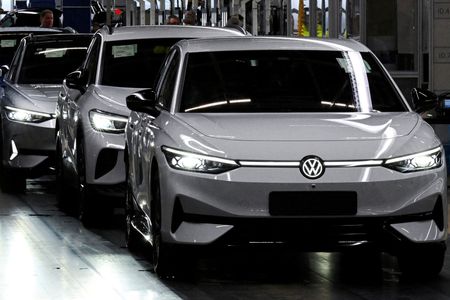
Volkswagen chief executive Oliver Blume is spearheading what could be the most significant transformation in the German automaker’s history, as the company struggles to adapt to a rapidly changing global car market. Mounting pressure from Chinese competitors, international tariffs, and sluggish European demand have fundamentally disrupted the company’s business model.
The ongoing crisis has put Europe’s largest automaker under intense scrutiny. Analysts and investors have long pointed to the company’s complicated organizational structure, poor stock performance, and resistance from certain stakeholders to the kind of sweeping cost reductions now seen as necessary.
PARALYZED BY COMPLEXITY
Volkswagen’s ownership and governance structure is unlike anything else in the global auto industry. It combines the influence of powerful labor unions with the billionaire Porsche and Piech families, who control the majority of the company’s voting rights but hold less than half of its total equity. The 89-year-old company, which employs more than 657,000 people worldwide, operates a sprawling network of divisions, joint ventures, and other investments — a conglomerate structure that some investors argue is dragging down its overall valuation.
CHINA TROUBLES DEEPEN
The most glaring sign of Volkswagen’s struggles can be found in China, the world’s largest automobile market and a region that for years served as one of the company’s most important profit engines. That era has come to an end. Profits in China have collapsed by more than 80% over the past decade, shifting pressure to Europe — where car demand is not expected to recover to pre-COVID levels — and to the United States, where tariffs are costing the company billions of euros.
Competition within China has grown dramatically more intense. Volkswagen, which once held the top spot as China’s leading automaker, has now fallen to third place as homegrown rivals offering technologically advanced vehicles at competitive prices have taken significant market share.
Porsche, which Volkswagen took public in a landmark IPO four years ago, has been one of the most severely affected brands. The luxury automaker’s profit margins collapsed from 18% in the year of its stock listing to just 1.1% last year.
PROFITS SQUEEZED
Across the broader Volkswagen group, profit margins more than halved between 2021 and 2025. The decline reflects a combination of fiercer global competition, higher labor and energy costs, weak demand across Europe, and growing trade barriers in key markets. Despite remaining the world’s second-largest automaker by vehicles sold — behind Japan’s Toyota — Volkswagen now ranks among the weakest-performing mass-market manufacturers in terms of profitability.
STOCK AT ROCK BOTTOM
The turmoil has taken a heavy toll on Volkswagen’s share price, which has fallen to its lowest level since July 2010. The stock is now trading below where it stood during the Dieselgate scandal — widely regarded as the worst corporate crisis in the company’s history — raising fresh concerns about the road ahead for one of the world’s most recognized automotive brands.
Energy analysts have trimmed their oil price predictions for 2026 for the first time since the Iran conflict broke out, ending a five-month streak of upward revisions, according to a Reuters survey released Tuesday.
The monthly poll of 31 economists and analysts now places Brent crude at an average of $84.50 per barrel for 2026, a notable drop from the $90.44 forecast issued last month. U.S. crude is projected to average $79.49 per barrel, compared to May’s estimate of $84.63.
These latest adjustments represent a decline of more than 6% from May’s figures. Forecasts had been climbing steadily after the Iran conflict erupted at the end of February, which disrupted global oil supplies and pushed prices to multi-year highs.
Since those peaks — Brent surpassed $126 per barrel and WTI approached $120 — prices have dropped considerably as geopolitical tensions have eased and shipping through the Strait of Hormuz has resumed, reducing fears of prolonged supply disruptions.
“The bulk of the geopolitical risk premium has already unwound,” said UniCredit analyst Tobias Keller, noting that recovering oil flows from the Middle East and softer demand are likely to limit any further price increases.
On average, analysts in the poll expect Brent to ease from roughly $84 in the third quarter of 2026 to around $79 in the fourth quarter, then slide further to the mid-$70s by the middle of 2027. That said, some market observers warned that remaining geopolitical uncertainties could still prop up prices.
LBBW’s head of commodity research, Frank Schallenberger, pointed to the potential for a supply surplus: “If traffic through the Strait of Hormuz comes back to normal, we will go back to supply surplus on the oil markets. Therefore prices will continue to go down in the second half of 2026.”
During the height of the conflict, the closure of the Strait of Hormuz cut off nearly one-fifth of the world’s oil supply, draining inventories and pushing markets into a deficit in 2026.
Kim Fustier, head of European oil and gas research at HSBC, described the shifting balance: “Our 2026 balance estimates show a market in about a 2 million barrel per day deficit… and a return to a small surplus of about 1 million bpd in the fourth quarter of 2026, assuming Gulf production is restored to near normal.”
Many survey respondents anticipate that OPEC+ will keep gradually increasing output as the group tries to reclaim market share without triggering a sharp price collapse.
The International Energy Agency, in its first assessment of 2027, projected a significant supply glut, with global supply expected to grow by 8 million barrels per day while demand rises by only 2 million.
On the demand side, the poll found that oil consumption growth in 2026 is expected to fall by roughly 1.0 to 2.0 million barrels per day. Analysts attributed the slowdown largely to weaker buying from China, the world’s biggest oil-importing nation.
OPEC held its 2026 demand growth forecast steady at around 1.4 million barrels per day from February through April, then lowered it to approximately 1.2 million bpd in May and to below 1 million bpd in June.
Some poll participants, however, believe demand could pick up later due to improved affordability. Goldman Sachs pointed to a structural trend of global strategic stockpiling exceeding 1 million barrels per day in 2027 as a potential source of support.
Most people think of retirement accounts as simple savings buckets — you put money in and wait. But according to financial planning experts, a smarter approach treats an IRA as something that evolves with you over your entire lifetime, from your first summer job as a teen all the way through your final years of retirement.
By thinking of retirement savings as a five-stage life cycle, investors can reduce what they hand over to the IRS and keep more money for themselves.
The single most powerful advantage in the tax code is time — and it can start working for young people earlier than most realize. If a child has earned income, whether from a summer job or working in a family business, they are already eligible to begin building their financial future.
Parents can encourage their teens to find employment or even hire them for legitimate work within their own business. In 2026, the standard deduction stands at $16,100, meaning most teenagers will earn below that threshold and owe zero in federal income tax. Additionally, children working in a parent’s unincorporated business are generally exempt from Social Security and Medicare taxes until they turn 18.
With that earned income, a child can contribute up to $7,500 — or the total amount they earned, whichever is lower — into a Roth IRA. Because they are in a 0% tax bracket, there is essentially no tax cost to making a Roth contribution, yet the long-term reward is enormous: decades of compounding growth where both the original investment and all earnings remain completely tax-free.
When a young adult lands their first professional job, their tax rate is typically the lowest it will ever be. That makes it the ideal moment to prioritize Roth contributions rather than chasing immediate tax deductions.
Early-career workers are advised to put money into a Roth IRA or a Roth 401(k), and at the very least, contribute enough to their employer’s plan to receive the full company match — essentially free money left on the table otherwise.
Paying a 10% or 12% tax rate now — which in 2026 applies to married couples with taxable income up to $100,800 — in exchange for completely tax-free withdrawals four decades down the road is considered a bargain. Workers are locking in a tax-free future while their tax rate is still at a discount.
Once workers reach their 40s and 50s, they typically hit their peak earning years. At this point, the math works in reverse. Rather than paying taxes now, the focus shifts to deferring taxes while income — and the tax rate on it — is at its highest.
Highly compensated workers are encouraged to redirect their attention to traditional IRAs and deductible 401(k)s. In 2026, investors can shelter up to $24,500 in a 401(k), or $32,500 for those over 50. Every dollar contributed lowers taxable income today at what is likely the highest marginal rate of their career.
The underlying bet is that a person’s tax bracket in retirement — once a regular paycheck disappears — will be lower than it is during their working years. Saving 37 cents on every dollar now, with the plan to pay it back at a reduced rate later, is the core of this strategy.
The stretch of time between leaving the workforce and the start of required minimum distributions — which now kick in at age 73 for most retirees — is considered a golden window for tax planning. Income often drops sharply during this period, placing retirees in an unusually low tax bracket.
Retirees are advised to take advantage of this low-income window by executing Roth conversions, shifting money from a traditional IRA into a Roth IRA and paying taxes at today’s reduced rates.
This approach shrinks the size of future required minimum distributions and creates two separate pools of money — one that is taxable and one that is entirely tax-free. Having both gives retirees flexibility to adapt to whatever tax law changes may come in the future.
In the final stage of retirement, the goal becomes maintaining the lowest possible average tax rate while also meeting charitable and family legacy goals.
The recommended approach is to draw strategically from both pools — using the traditional IRA for routine expenses and tapping the Roth for larger one-time costs, like a new vehicle or a major vacation, to avoid being bumped into a higher tax bracket.
There is also a charitable giving option available: qualified charitable distributions allow retirees who have reached age 70½ to satisfy their required minimum distributions without owing any tax on the amount given.
For those thinking about their heirs, leaving a Roth IRA to children gives them up to 10 years of continued tax-free growth. Meanwhile, leaving a traditional IRA to a charitable organization means the charity pays no tax on the distribution at all.
Retirement planning is not a one-time decision — it is a process that should adapt throughout life. By matching the type of retirement account you use to your current tax situation, you can make smarter financial moves at every stage and keep more of what you earn.
This article was provided by Morningstar. Sheryl Rowling, CPA, is an editorial director and financial adviser for Morningstar.
The U.S. stock market enters the second half of 2026 with significant hurdles to clear if its current rally is going to hold, including whether artificial intelligence spending can sustain itself, whether companies can deliver on high profit expectations, and how a newly led Federal Reserve will handle inflation.
The S&P 500 benchmark index has risen more than 8% so far this year, pushing a bull run that has now lasted well over three years. The tech-focused Nasdaq Composite has climbed 11%. However, both indexes showed signs of weakness in June, reflecting growing investor anxiety about what lies ahead.
CAN AI SPENDING KEEP FUELING THE RALLY?
Enormous investment in artificial intelligence infrastructure has been a central driver of the market’s gains, lifting profit forecasts across a wide range of companies. According to JPMorgan, five companies — including Microsoft, Alphabet, and Amazon — are collectively projecting capital expenditures of roughly $730 billion this year.
“It is certainly priced in to the market that the level of capex that we’re seeing will continue for the foreseeable future,” said Nicolas Janvier, head of North American equities at Columbia Threadneedle Investments.
Some investors are concerned that major technology companies need to demonstrate adequate returns on their massive outlays. In the meantime, AI enthusiasm has powered sharp increases in semiconductor stocks and lifted other technology shares, as well as industrial and energy companies connected to data center construction and operations.
“The risk from the market’s perspective is the technicals are so crowded within those trades that anything that starts to sow some seeds of doubt in the narrative and you are at a somewhat vulnerable position,” said Garrett Melson, portfolio strategist with Natixis Investment Managers Solutions.
CAN COMPANIES MEET HIGH EARNINGS EXPECTATIONS?
A strong first quarter for U.S. corporate profits has helped drive stock performance, and earnings are expected to remain robust. According to LSEG IBES, S&P 500 earnings are projected to grow by more than 26% in 2026.
“The main question is delivery of the earnings that are expected out of the S&P 500, but also the tech sector,” said David Bianco, Americas chief investment officer at DWS. “That’s one of those things that there can’t be any excuses.”
Strong earnings expectations aren’t limited to tech and AI. All 11 sectors within the S&P 500 are projected to post higher profits in 2026, with Janvier noting solid consumer spending even as “AI gets all the headlines.”
CAN THE MARKET HANDLE A WAVE OF MAJOR IPOs?
SpaceX recently went public, and AI companies Anthropic and OpenAI are expected to follow with their own initial public offerings in the coming months, creating a surge of high-profile new stocks for investors to consider.
Together, these large IPOs could represent a substantial amount of new equity for the market to absorb and are being watched as a possible indicator of market excess.
“It’s this test of risk appetite and liquidity, just how much dry powder is out there,” Bianco said.
HOW WILL THE NEW FED CHAIRMAN APPROACH INFLATION?
Kevin Warsh has taken over as chairman of the U.S. Federal Reserve, and his first meeting in the role already caught investors off guard with a hawkish stance that raised the possibility of near-term interest rate increases as policymakers focus on keeping inflation in check.
Interest rate decisions will influence Treasury yields, and bond market turbulence earlier this year already triggered episodes of stock selling. Higher interest rates increase borrowing costs and can also make bonds a more attractive alternative to stocks, putting downward pressure on equity prices.
“Valuations, I think, are justifiable,” said Noah Weisberger, chief U.S. equity strategist at BCA Research. “But that doesn’t mean the market’s not vulnerable to a re-rating of interest rates.”
COULD MIDTERM ELECTIONS SHAKE UP THE MARKET?
Congressional midterm elections have not been a major focus for markets so far this year, but political uncertainty could increase as November approaches. Historical data from CFRA going back to 1945 shows that midterm election years tend to produce the steepest intra-year market declines of any year in the four-year presidential cycle, with the S&P 500 averaging an 18% drop. Third quarters in midterm years have also historically produced negative average returns.
“Midterm years certainly are open to a little bit of turmoil leading up to the elections,” Melson of Natixis Investment Managers Solutions said.
The Japanese yen has tumbled past the 162-per-dollar threshold for the first time in roughly four decades, and analysts now believe Tokyo may be willing to absorb more weakness before stepping in — with the 165 level increasingly seen as the next trigger point for official currency intervention.
In contrast to previous episodes of dollar-selling by Japanese authorities, experts say the government appears reluctant to engage at current levels, believing any intervention at this stage would have only a limited effect.
Past attempts to prop up the yen have not managed to reverse its downward slide, and the situation is further complicated by a stubbornly strong dollar, fueled by high U.S. interest rates and global geopolitical tensions.
With those large-scale forces difficult to overcome, Japan’s approach to currency intervention appears to be changing, analysts say.
“Intervention is increasingly driven by speed and disorder rather than a fixed level as markets grow comfortable fading policy signals,” said Masahiko Loo, senior fixed income strategist at State Street Investment Management.
Loo identified the 163-165 range as the next key zone to monitor, adding: “Warnings have been front-run and lost their effectiveness, so shifting to strategic ambiguity helps restore the shock value of actual intervention.”
The dollar-yen exchange rate crossed the 162 mark on Tuesday despite the Bank of Japan’s most recent interest rate increase earlier this month. That move has essentially cancelled out the effects of Tokyo’s record intervention campaign in April and May, which totaled 11.7 trillion yen — roughly $72.2 billion — leaving markets confident the dollar could reach 165 before authorities act.
Finance Minister Satsuki Katayama repeated her warning that officials stand ready to respond to sharp currency movements, but verbal statements from her and other Japanese policymakers have recently failed to push the dollar-yen rate lower.
The yen’s decline picked up pace after fiscally dovish Sanae Takaichi rose to the premiership last October, and accelerated further as the war in Iran sent imported oil prices sharply higher, worsening Japan’s trade conditions.
The Bank of Japan’s rate hike this month came too late to meaningfully support the currency, which is now largely at the mercy of broad dollar strength and expectations for further rate increases by the Federal Reserve and other central banks.
“The best policy for Japan is for the BOJ to speed up its hike frequency to let the market know it is becoming more active in supporting the yen,” said Takuji Okubo, chief economist of Japan Macro Advisors. “And if that is not sufficient and the yen falls further toward 165, FX intervention will be sensible.”
When the dollar-yen rate climbed to 160.725 on April 30 — then a near two-year peak — Japan launched what is believed to have been multiple rounds of dollar-selling intervention, pushing the rate down to 155 by May 6. However, the effect faded quickly, with the pair steadily climbing back up while speculative bets against the yen built up to near a two-year high.
That buildup of bearish yen positions could actually benefit Tokyo if it decides to intervene, since traders betting against the yen would be forced to buy it back to close their positions.
“Given the accumulation of yen shorts, we would expect the impact to be significant if intervention were to be carried out,” said Hirofumi Suzuki, foreign exchange strategist at SMBC.
One potential game-changer would be coordinated action with the United States. Japanese officials have repeatedly pointed to a joint statement signed with Washington last September that opened the door to such cooperation in the event of excessive currency volatility.
“The probability of action rises materially and coordinated signalling with the U.S. Treasury cannot be ruled out — especially if a break above 163 triggers stop-driven momentum toward 165,” State Street’s Loo said.
Daisaku Ueno, chief FX strategist at Mitsubishi UFJ Morgan Stanley Securities, noted that the area around 169 yen — representing a 50% retracement of the move from the pre-Plaza Accord high of 262.80 in February 1985 to the record low of 75.31 in October 2011 — could serve as a near-term upside target for the dollar-yen pair. If that level is cleared, Ueno said, “no distinct psychological or technical milestones can be found on the upside until around the 260 yen mark.”
The next major test for currency markets will be U.S. labor data due Thursday, followed by a trading pause for the July 4 holiday. A stronger-than-expected jobs report would increase bets on an earlier Federal Reserve rate hike, further boosting the dollar. Japan has previously taken advantage of thin holiday trading to carry out currency intervention.
Still, Finance Minister Katayama may simply allow the dollar-yen rate to drift higher and “re-establish a new line in the sand around 165, 166,” according to Tony Sycamore, a market analyst at IG. “They don’t want to spend any yen right here right now, because they know they are fighting potentially higher rates in the U.S.,” Sycamore said. “They probably want to keep their powder dry.”
Skyrocketing stock valuations, wild swings in the worth of trillion-dollar companies, and sudden sharp market drops have sparked growing worry that portions of the U.S. stock market may be caught in a speculative bubble.
For some time, investors have been uneasy about the massive gains seen in artificial intelligence and semiconductor stocks, questioning whether Wall Street is building up another dangerous bubble like those seen in the past.
Those worries intensified last week when technology stocks took a steep dive, driven by concerns about debt-financed AI spending and fears that the Federal Reserve may keep interest rates elevated.
Markets have since stabilized, with investors pointing to positive sentiment, broader participation across sectors, and strong corporate earnings as reasons the rally could hold — but the unease has not gone away.
Warning Indicators on the Rise
“Looking through the lens of valuations, positioning, and sentiment … all measures of asymmetry and risk are flashing amber,” said Oliver Shale, investment specialist for the U.S. at Britain-based Ruffer.
Several valuation measures have climbed close to record highs, while certain gauges of investor mood are running hot.
“None of this is to say that the end is nigh, but that is a fragile setup for any market,” Shale added.
A proprietary risk tool from BofA Global Research — which scores assets on a scale from 0 to 1, with 1 representing extreme bubble-like behavior — currently sits at 0.91 for the PHLX Semiconductor Sector and 0.82 for the Technology Select Sector.
Valuation Concerns Mount
The overall value of the U.S. stock market has climbed to levels that have historically preceded major downturns, according to the so-called Buffett Indicator — a measure named after investor Warren Buffett.
That indicator, which compares the total value of U.S. stocks to the country’s gross domestic product, stood at 218% in the first quarter — just below the all-time record of 219% set the quarter before.
The S&P 500’s price-to-sales ratio is currently at 3.22, according to Tajinder Dhillon, head of earnings research at LSEG. That figure is well above the long-term historical average of 1.84, indicating that stocks are priced at a premium.
“Nearly every S&P 500 valuation metric is higher than it’s ever been except, possibly, PE ratios,” said Mark Spiegel, managing member and portfolio manager at Stanphyl Capital Partners.
While the S&P 500’s price-to-earnings ratio — the most commonly used measure of stock value — has not hit the extreme levels seen during past bubbles, some investors remain doubtful. Solid earnings growth has helped keep that number in check, but skeptics aren’t convinced.
“There’s a solid argument that the ‘E’ (earnings) in those ratios is an unsustainable bubble in itself,” Spiegel said.
The S&P 500’s price-to-earnings ratio currently stands at 20.2 times projected earnings over the next 12 months, compared with 25.2 during the height of the dotcom bubble, according to LSEG Datastream.
The explosion in demand for AI-related chips has created enormous profits for chipmakers, but questions linger about whether the companies spending billions to buy that technology will ever see a worthwhile return.
“The folks selling the picks and shovels are in incredibly good stead. Those buying them still have to prove that the billions and billions of dollars they’re spending is worth it,” said JJ Kinahan, head of retail expansion and alternative investment products at Cboe Global Markets.
Sentiment Signals Are Mixed
Measures of investor mood and market positioning are sending conflicting signals.
A June global fund manager survey from BofA showed investors are still leaning bullish, though the level of optimism dipped slightly compared to May.
The latest American Association of Individual Investors Sentiment Survey showed a notable drop in bearish views alongside a jump in bullish sentiment. The resulting bull-bear spread reached 8.8% — above its historical average of 6.5% for only the second time in 20 weeks. However, that figure remains well below the 44.2% peak, suggesting markets are not yet in a state of euphoria.
Some investors also find encouragement in a recent widening of market leadership. After the gap between the S&P 500 and its equal-weight version surged to around 14 percentage points in early 2026, it has since narrowed to roughly 3 points — a sign that more stocks across the market are participating in the rally, not just a handful of tech giants.
“A red flag is when sentiment and positioning is at extremes, and that’s not what we see now,” said Angelo Kourkafas, senior global investment strategist at Edward Jones.
While the market may not be sending full alarm signals just yet, Brian Jacobsen, chief economic strategist at Annex Wealth Management, urged investors to keep their portfolios diversified.
“It does look like too many people are assuming fat margins and high growth rates are here to stay, while I’m a bit more skeptical about that outlook,” Jacobsen said.
Samsung Electronics and SK Hynix are placing one of the largest bets in tech history on the continued surge in artificial intelligence, committing hundreds of billions of dollars to expand chip manufacturing — a move that has both excited investors and alarmed industry analysts.
The two companies, which together dominate global memory chip production, pledged a combined 3,200 trillion won, equivalent to roughly $2.07 trillion, toward expanding their operations. The package includes a brand-new chip manufacturing cluster in South Korea’s southwestern region valued at 800 trillion won, along with a collection of previously announced projects.
South Korean President Lee Jae Myung praised the chipmakers — reportedly offering a deep bow — after they threw their support behind the government’s semiconductor expansion agenda. The government’s goal is to double South Korea’s memory chip production capacity within five years.
Part of the plan calls for speeding up construction at the Yongin semiconductor cluster, cutting what had been projected as a 7-to-12-year timeline and bringing new manufacturing capacity online sooner.
South Korea has become a major beneficiary of the global AI investment wave, largely due to Samsung and SK Hynix’s strong foothold in high-bandwidth memory chips — a critical component in advanced AI processors. Demand from AI data center operators and consumer electronics companies, including Apple, has created a global shortage and driven chip prices sharply higher.
But analysts caution that chip factories take years to build and fully operate, meaning most of this new capacity won’t be available until well into the next decade.
Morningstar analyst Jing Jie Yu offered a measured take on the announcement. “We see memory pricing remaining a function of demand and supply, and accelerating capex over the next decade further increases the risk of an oversupply longer term,” he said, adding that the memory boom depends heavily on whether AI data center operators continue expanding at their current pace.
Lee Jong-ho, a professor in the Department of Electrical and Computer Engineering at Seoul National University, questioned whether the investment decisions were made too hastily. “It is the kind of investment that could determine a company’s future,” he said. “No one knows what the situation will look like three years from now. We need to respond quickly while demand is strong, but after that, demand is uncertain and decisions should be made cautiously.”
The current profitability of both companies’ memory divisions is a relatively new development, fueled by the AI boom and a chip shortage that nearly doubled prices in just the first quarter. The industry has a turbulent history — past downturns pushed SK Hynix close to bankruptcy in 2001 and caused both firms to post significant losses in 2023.
The push to build factories in the southwest has political undertones as well. In recent months, ruling party lawmakers and government officials began advocating for relocating some chip production to that region, which had largely been left out of South Korea’s industrial development. As recently as two months ago, SK Hynix Chairman Chey Tae-won expressed doubt about the idea when a lawmaker raised it. “I’m not sure semiconductors are necessarily the field you have to go into,” he said at the time. Neither company has explained what changed their position.
Both Samsung and SK Hynix said the government’s pledge to accelerate regulatory approvals made it possible to speed up construction at Yongin. Nomura analyst CW Chung suggested the southwest expansion may also serve as a hedge. “Investing in other regions could be a way of hedging the uncertainty surrounding the Yongin semiconductor cluster,” he said.
Analysts believe the companies will draw on lessons from previous industry downturns. CLSA senior analyst Sanjeev Rana acknowledged that “a downturn in the memory industry is clearly a risk to the plan,” but noted that “memory producers retain the flexibility to adjust their investment pace if signs of excess capacity emerge.”
Samsung’s portion of the plan calls for 2,100 trillion won in chip production investment through 2040, with the company noting that spending levels could be adjusted based on market conditions. The company previously halted construction of a chip plant in Pyeongtaek for nearly two years during a market slump before resuming work late last year.
During a Monday presentation attended by President Lee, SK Hynix Chairman Chey said the company would keep a close eye on demand as it determines the appropriate scale of investment, while noting that supply is still struggling to keep up with current demand.
South Korean presidential chief of staff Kang Hoon-sik said Monday that the government would fast-track approvals and aim to complete the new chip cluster before President Lee’s term concludes in 2030.
Koh Taebong, head of research at iM Securities, expressed confidence in the direction of the investment. “Yesterday’s message was that South Korea is serious about becoming one of the world’s top three AI powers. This isn’t just rhetoric — the government is committing to spending real money to make it happen,” he said.
A surge in copper prices to an all-time high earlier this year has strengthened the case for switching to aluminium, a cheaper and lighter alternative, across multiple industries.
Both metals are capable of conducting electricity and heat, but aluminium carries a significant price advantage — coming in at roughly one-quarter the cost of copper. The trade-off is efficiency: aluminium only delivers about 61% of copper’s conductivity, which means aluminium conductors need to be approximately 1.6 times larger to do the same job.
Industry insiders say companies typically begin seriously considering the swap when the price ratio between copper and aluminium reaches somewhere between 3.5 and 4.0. That ratio hit a record 4.3 back in January and currently sits around 4.2. Retooling operations comes with costs, so businesses only make the move after careful review.
Weight is another major factor. Copper is about 3.3 times heavier than aluminium, making the lighter metal especially appealing for the auto industry — particularly for electric vehicles, where shedding weight directly translates to longer driving range.
AUTO INDUSTRY
Swapping steel and iron for aluminium in car bodies and engine blocks has long been standard practice, but replacing copper wiring with aluminium is a newer development.
Italian sports car brand Ferrari, which already relies on aluminium for engines and chassis, began using aluminium wiring in its 296 model last year. Combined with reducing cable cross-sections, the change cut total wiring weight by 15% to 20%, the company said.
German automaker BMW told Reuters it first introduced aluminium conductors back in 2011 in its subcompact 1 Series, gradually expanding the substitution in hybrids and battery electric vehicles. Since rolling out its 6th generation eDrive technology last year, BMW now uses aluminium cables extensively in both high and low-voltage systems.
Stellantis, the world’s fourth largest automaker by sales, is also making the switch for wiring, according to an industry source. The company itself declined to comment.
Tesla has been a trailblazer in this space, pioneering the use of massive aluminium casting machines to produce simplified chassis components. The company began using aluminium for wiring in its Model Y in 2019 and has extended the practice to its Cybertruck.
Chinese EV manufacturers AVATR, XPeng, and Xiaomi are among those using aluminium electrical wiring in newer models to reduce costs and weight, according to U.S. consultancy Caresoft, which analyzes vehicle components. The three companies did not respond to requests for comment.
Toyota, the world’s top-selling automaker, said it continually evaluates materials and may adopt aluminium as a copper substitute depending on the specific use, but offered no additional details. Volkswagen, the world’s second largest automaker, said it has no broad plans to replace copper with aluminium for wiring, though it does use aluminium in select applications where it provides clear advantages.
ELECTRICAL CABLES AND GRID INFRASTRUCTURE
Significant aluminium substitution has already taken place in the cable industry, and further global investment in electrical grids of around €10 trillion is expected by 2030, according to Nexans, the world’s second largest cable manufacturer, based in France. The company anticipates strong growth for both metals, with copper holding its place for high-demand applications while aluminium is expected to claim a larger share of grid investment thanks to its cost and availability advantages.
Prysmian, the world’s largest electrical cable maker based in Italy, has seen steady substitution among its customers. The company currently uses aluminium for about 40% of its cable weight — up 3 percentage points over the past five years — with copper making up the remaining 60%. “Grid resilience and data centres are projecting strong growth in both categories,” Prysmian told Reuters.
In Australia, Energy Queensland’s Energex division has been replacing copper with aluminium across its 210,000-kilometer distribution network for many years, swapping out aging equipment as it reaches the end of its useful life. Spokesperson Emma Oliveri said, “Aluminium is more cost-effective, equally as durable, lighter and can span further when stringing power lines.”
HEATING AND AIR CONDITIONING
Japan’s Daikin Industries, the world’s largest air conditioning manufacturer, stated in its 2025 annual report that it was “maximizing cost reductions by switching from copper to aluminium,” though it declined to elaborate further.
U.S.-based Lennox International developed technology to swap out copper coils for aluminium in air conditioners, heat pumps, and evaporator coils. According to its website, the change reduces the risk of corrosion and can cut model weight by up to 50 pounds.
Also in the U.S., Carrier Global has used aluminium coil technology in all of its coastal air conditioning and heat pump models since 2023, citing improved resistance to corrosion.
LONDON — Britain’s competition watchdog has proposed new rules that would give app developers the ability to direct users to payment methods outside of Apple and Google’s app store platforms, a move intended to lower costs and increase competition in the digital marketplace.
The Competition and Markets Authority announced the proposals, which would lift current restrictions that block UK-based developers from sending users to off-platform payment options. Apple currently prohibits such practices entirely, while Google places significant limits on them.
Under the proposed framework, any fees that Apple or Google charge for allowing developers to redirect users in this way — a practice known as “steering” — would have to be fair and reasonable. The watchdog specified those fees should be lower than existing app store commission rates, with any resulting savings either passed along to consumers or put back into innovation.
The authority is also weighing whether to require Apple to open up its near-field communication technology to outside developers, which could enable contactless payment features to be built directly into iOS apps.
Google responded to the announcement by saying it had already taken steps in line with what regulators are now proposing. “We have already made the changes that the CMA is proposing today,” the company said in a written statement. Google pointed to updated Play Store policies introduced earlier this month that allow developers to direct users to complete purchases outside the platform, along with adjustments to how it structures its fees.
Apple had not responded to a request for comment at the time of this report.
Political pressure is mounting on Japan’s central bank to pump the brakes on interest rate hikes, as the government of Prime Minister Sanae Takaichi works to place more dovish — or low-rate-friendly — policymakers inside the Bank of Japan, potentially reshaping the institution’s direction for years to come.
Though recent calls from Takaichi and her political allies to keep borrowing costs low are not expected to derail near-term rate hike plans, fresh appointments to the BOJ board could reignite older debates about whether Japan needs ongoing monetary stimulus to keep its economy growing.
The Takaichi administration stayed largely quiet as the BOJ moved forward with a June decision to raise interest rates to 1% — a 31-year high — partly out of concern about worsening a yen slide and irritating Washington.
However, Economy Minister Minoru Kiuchi, who was present at the June meeting, urged the central bank to take the government’s pro-growth initiatives into account when making future decisions — a clear sign of the administration’s unease about continued rate increases.
A draft of the Takaichi government’s first economic blueprint, expected to be finalized in July, calls for monetary policy to be aligned with government efforts to stimulate growth — signaling a preference for keeping interest rates low, according to a draft reviewed by Reuters.
For now, the government’s primary strategy appears to be gradually reshaping the BOJ’s leadership. Those changes are already being interpreted by observers as a signal that a more dovish era is coming.
Former BOJ board member Makoto Sakurai offered this assessment: “The Takaichi administration can’t openly criticise the BOJ’s monetary policy for fear of upending markets. But she can wield influence with personnel decisions. That’s a very powerful weapon.”
Takaichi, a well-known supporter of “Abenomics” — the economic strategy of the late Prime Minister Shinzo Abe — took office last October promising to revive Japan’s economy through major spending initiatives that would be easier to fund under low interest rates.
Her first pick for the BOJ board, Toichiro Asada, voted against the June rate hike. Her second appointee, Ayano Sato, joined the board this week and is also regarded as favoring loose monetary policy.
Two hawkish — or rate-hike-favoring — board members, Naoki Tamura and Hajime Takata, are set to see their five-year terms expire in July of next year, giving Takaichi an opportunity to fill more seats on the nine-member board with low-rate advocates.
The biggest turning point could come when BOJ Governor Kazuo Ueda’s term ends in early 2028. Ueda was selected by former Prime Minister Fumio Kishida with a clear directive to unwind the bank’s massive stimulus program.
Questions about Ueda’s health have already raised concerns about how firmly the BOJ can defend its independence. The 74-year-old governor missed the June meeting to receive medical treatment and has not made any public statements since being released from the hospital on June 19.
Whoever succeeds Ueda — likely someone chosen by Takaichi given her strong hold on power following a landslide election victory this year — may receive an entirely different set of marching orders. Some market observers point to former Deputy Governor Masazumi Wakatabe, a pro-stimulus academic with ties to Takaichi, as a leading candidate to take over.
Despite the political headwinds, the BOJ is pressing ahead with its inflation-fighting stance. Energy prices driven up by the war in Iran, combined with a weak yen pushing up the cost of imports, are adding to price pressures across Japan.
In a speech last week delivered by his deputy, Ueda reaffirmed the BOJ’s commitment to continued rate hikes, cautioning about the danger of inflation overshooting the bank’s 2% target.
Hawkish board member Tamura also called for rate increases roughly every few months, emphasizing the BOJ’s responsibility to keep prices stable.
A summary of the June meeting showed that some BOJ policymakers highlighted strong demand tied to artificial intelligence as a factor boosting both growth and inflation — further evidence of their intent to keep raising rates.
“Japan will likely see price rises broaden, which should remain the BOJ’s focus,” said a source familiar with the central bank’s thinking, speaking anonymously due to the sensitivity of the matter. “The BOJ’s policy approach stays unchanged.”
BOJ staff estimate that Japan’s neutral interest rate — the level that neither cools nor overheats the economy — falls somewhere between 1.1% and 2.5%, leaving room for additional hikes. Most analysts surveyed by Reuters expect the rate to reach 1.25% by the end of this year and 1.5% by the middle of next year.
Market dynamics may also help insulate the BOJ from political interference. The June rate hike has not succeeded in reversing the yen’s weakness, which has been squeezing household budgets by raising the price of imported goods. With the yen already near four-decade lows and the possibility of U.S. rate hikes strengthening the dollar further, resisting BOJ rate increases could carry serious economic consequences.
“If the Fed resumes rate hikes, that may force the BOJ to speed up rate hikes,” a second anonymous source said.
Still, political risk shadows all of these projections. Ryutaro Kono, chief Japan economist at BNP Paribas, expects the BOJ to raise rates again in October, citing the central bank’s own emphasis on robust AI-related demand as an inflationary driver.
“But we cannot deny the risk of political considerations delaying the rate-hike timing,” Kono said.
The world’s central banking watchdog is raising red flags about the explosive growth in artificial intelligence spending — even as one of the tech world’s most powerful investors calls such concerns an offense against the very idea of AI itself.
In its most recent annual review of global financial conditions, the Basel-based Bank for International Settlements released a report Sunday that stopped short of questioning whether AI investment will ultimately pay off — but expressed serious concern about what happens when the spending wave finally peaks.
The backdrop is striking: even as military conflict between the U.S. and Israel against Iran continued in the background, American chipmaker stocks surged a record 75% during the second quarter of 2026. That rally was fueled by yet another round of upward revisions to capital spending forecasts from the largest technology companies, all racing to build out AI infrastructure — a race that has created supply bottlenecks and chip shortages along the way.
The surge pushed U.S. earnings growth projections for 2026 to nearly 25%. The five biggest technology hyperscalers are expected to collectively spend close to $1 trillion on AI infrastructure this year alone, and Goldman Sachs estimates the cumulative total could reach $7.6 trillion by 2031.
So is this a bubble?
Absolutely not, according to SoftBank chief Masayoshi Son, one of the technology sector’s most prominent and deep-pocketed supporters. Speaking just last week, Son made clear he considers the very question an insult to the potential of artificial intelligence.
“It’s blasphemy against AI if you say it’s a bubble,” Son said. “It’s just the beginning. AI’s potential will be unlocked.”
With hundreds of billions of dollars on the line should the AI boom continue, his confidence is perhaps understandable.
Still, other investors — perhaps worn down by years of debate — are starting to come around to the idea that the spending explosion and soaring stock prices may not represent the bubble they once worried about. A quarterly client survey released Tuesday by Deutsche Bank showed bubble risk perceptions for the so-called Magnificent Seven megacap stocks — the companies at the center of the AI spending wave — have fallen to their lowest level since 2021.
For the broader U.S. technology sector, however, bubble concerns remain as high as they’ve been over the past two years. That split may help explain why, even as chipmakers enjoyed their best quarter on record, June turned out to be the worst single month ever recorded for the Magnificent Seven group since it was first defined three years ago.
For many chipmaker companies, the financial results are very real. Micron Technology, now valued at $1.25 trillion, has seen its stock more than triple since March — but revenue estimates have climbed just as steeply, leaving its forward price-to-earnings ratio essentially unchanged for the year. At just eight times forward earnings, that valuation is less than half what it was two years ago.
While the near-tripling of still-loss-making Intel’s stock stands out as something of an exception, valuations for chipmakers such as Broadcom and Qualcomm remain within historically normal ranges.
Even so, it remains the job of financial stability monitors like the BIS to spell out what could go wrong — and their latest report does exactly that.
The BIS focused its concerns primarily on the long-term sustainability of the current investment pace, particularly given that a small number of firms are competing on the assumption that only a handful of players with the best technology will ultimately control the market.
That fierce rivalry, the watchdog cautioned, could push companies to pour money into AI projects whose returns are still far from guaranteed. If the promised payoffs don’t materialize, the entire sector could be left exposed.
With competitive pressure continuously driving capital spending higher, the BIS warned that the sector’s overall return on investment — after accounting for costs — could shrink or even go negative in a bad scenario.
“Disappointment in returns could trigger a sudden pullback in financing and turn the capex boom into a protracted investment bust, with potential knock-on effects on financial conditions,” the report stated.
The BIS also flagged supply shortages in power generation, electrical grid capacity, and memory chips as additional risks. These constraints could push companies into long-term supply contracts to lock in scarce resources — potentially leaving them overexposed if demand doesn’t hold up.
The report’s most striking warning, however, concerns the possibility that AI’s very success could undermine the economy that supports it. In an extreme scenario where AI proves as capable of replacing human labor as its most enthusiastic advocates believe, a growing share of national income could flow away from workers and into further AI investment. If taken far enough, workers’ share of the economy could approach zero — leaving too few people with enough purchasing power to sustain demand for what the economy produces.
Recognizing that problem in advance, the BIS suggests, rational companies would eventually stop investing further.
“Productivity stalls not because of technological limitation, but because the demand to justify further capacity expansion is missing. The demand bottleneck becomes the binding constraint,” the report concluded.
Blasphemy or not, the BIS is reminding the world that an enormous amount of money in today’s AI arms race is still being wagered on faith.
The opinions expressed are those of Reuters columnist Mike Dolan.
BRUSSELS — The European Union’s side of a trade agreement reached with the United States will officially take effect on July 1, according to a formal regulatory filing from the EU.
The filing confirms that the new regulations will be in effect from July 1 through December 31, 2029. The document also noted that the European Commission may propose extending the agreement beyond that date if warranted.
As the filing stated, “Where appropriate, the Commission shall submit together with the comprehensive assessment a legislative proposal to extend the period of application of this Regulation.”
As part of the agreement, the EU committed to dropping import duties on U.S. industrial goods and offering preferential market access for American farm products. The deal also extends duty-free treatment of U.S. lobster imports — an arrangement that was originally negotiated during Trump’s first term in office.
The EU legislation includes built-in protections that would allow the bloc to pull back its concessions if the United States fails to hold up its end of the agreement. Those safeguards remain active throughout the deal’s lifespan, which runs through the close of 2029.
SHANGHAI — A 23-year-old collector named Xiao Neng says he has poured at least $1 million into Ralph Lauren clothing over the last four to five years, amassing such an enormous wardrobe that he now moves pieces of it through two vintage shops he opened in downtown Shanghai.
Neng is among a rising wave of devoted Chinese customers who are helping drive a remarkable comeback for the American fashion label. The company posted a 50% increase in China sales last quarter — a striking figure given that the wider luxury market there continues to struggle under weak consumer confidence, a prolonged slump in the property sector, and ongoing worries about employment and income.
Research firm Bain notes that China’s luxury sector is “slowly recovering” in 2026 following several years of declining and stagnant sales.
For Neng, the brand’s appeal goes beyond fashion. “Ralph Lauren, through clothing, provides people with a way to achieve this American Dream,” he said. “What he makes is clothing with an American Dream feel to it.” He emphasized that the American Dream concept isn’t limited to people born in the United States — it represents an aspirational way of living that resonates with consumers in China as well.
Company executives and market analysts say the brand’s strong footing in China — where it operates roughly 250 stores — is the product of a lengthy strategic overhaul, not simply a short-term bounce. The company’s chief executive said during a post-earnings call last month that the results were “not a one-off,” crediting years of effort to sharpen the brand’s identity and make it more relevant to local consumers.
“We’re in China not just to win this year, but we’re in China trying to win for the next 10 and 20 years and really make sure we’re building the right foundations for the long term,” the CEO added. The company declined to offer additional comment for this report.
A SWEET SPOT ON PRICE
Ralph Lauren’s brand-building push has aligned well with a notable shift in how Chinese shoppers are spending. Many have moved away from the most expensive luxury names in favor of labels they feel deliver stronger value for the money.
The brand sits at a lower price point than most European luxury houses, many of which have aggressively raised prices in recent years. According to data from Bernstein, luxury brands collectively hiked prices by 36% between 2020 and 2023, with top-tier names leading the charge.
In China, Ralph Lauren boutique dresses typically run a few thousand yuan, with shirts often priced under 2,000 yuan — roughly $294. By comparison, dresses at brands like Dior can exceed 20,000 yuan, with shirts topping 6,000 yuan.
“Another advantage is that they offer great value,” Neng said. “The brand’s positioning and style are very high-end, meaning you’re getting a high-class item for a smaller price.”
Jacques Roizen, co-founder of Shanghai-based consulting firm Foresight Performance Partners, said a large segment of Chinese luxury buyers has pulled back from the priciest labels as their economic confidence has softened.
“She looks at Hermès and the like, and she says this is above my needs,” Roizen said. “The value proposition doesn’t match my current confidence in the economy. And you’ve seen brands like Coach and Ralph Lauren do very, very well as a result.”
Roizen was clear that Ralph Lauren’s performance isn’t just about being in the right place at the right time. “You don’t overperform the market by 50% because you got lucky,” he said. “They’ve done a lot of things right.”
One of those changes involved stepping back from heavy reliance on discounts. “They’ve walked away from being, first and foremost, a brand that generated revenue on discounts during shopping festivals and all that stuff,” Roizen added.
The company has also poured resources into upgrading its stores and marketing efforts. According to Yann Bozec, a former Asia-Pacific president at the parent company of Coach and founder of consultancy YB Stratis, Ralph Lauren has adopted a city-focused strategy — concentrating its efforts on key urban centers like Shanghai, Beijing, and Chengdu rather than spreading itself thin across the entire country.
“When it comes to media spend, stores, events, targeted digital marketing, they will do it in those cities,” Bozec said. “It is a sound strategy to be very focused on some cities where they can achieve the reach and the frequency that they need in order to create impressions.”
Some of the world’s most recognizable automakers are turning away from copper wiring in favor of aluminium, a move that could reshape the global metals market for years to come.
Ferrari and BMW have both rolled out new vehicle models featuring aluminium electrical wiring, joining Tesla and a growing number of Chinese electric vehicle manufacturers who have already made the switch. According to JPMorgan, the trend is expected to impact roughly 2% of worldwide copper demand this year alone.
Copper has been the go-to material for electrical wiring ever since the electric battery was invented two centuries ago. But with copper prices hitting record highs near $15,000 per metric ton in late January, and forecasts showing global supply falling short of demand for more than the next decade, many companies are rethinking their materials choices.
Ferrari, which already relies on aluminium for its car bodies, engines, and chassis, told Reuters it began using the metal for power cables in its 296 hybrid sports car last year. The company has since expanded aluminium wiring to additional models, including the Luce — its first-ever electric vehicle, launched last month. The change reduces total wiring weight by as much as 20%.
Ferrari communications executive Dario Esposito pushed back on the idea that cost was the primary motivation. “We are not choosing aluminium because it’s cheaper, we choose the material that has better performance,” he said. Still, aluminium currently runs about $3,100 per ton — roughly one-quarter the price of copper.
Germany’s BMW said it first incorporated aluminium conductors back in 2011 in its subcompact 1 series and has gradually expanded their use in hybrid and electric vehicles. The automaker now uses a large number of aluminium cables in both high- and low-voltage systems within its latest eDrive electric vehicle technology, which launched last year.
Stellantis, the world’s fourth-largest automaker, has also recently begun replacing copper wiring with aluminium, according to an industry source with knowledge of the matter. Stellantis declined to offer any comment.
The transition isn’t limited to automakers. Norwegian aluminium producer Hydro reported steady growth in sales of aluminium heating-and-air tubing as a substitute for copper in recent years. Hydro’s CFO Trond Olaf Christophersen said the company anticipates gaining market share as aluminium increasingly takes over from copper in that sector.
Chinese EV parts supplier JONVER has also seen demand surge. Sales director Feng Lu said aluminium wiring products now account for about 30% of the company’s sales this year, up from around 20% in 2023.
Xavier Mathieu, a representative at France-based Nexans — the world’s second-largest cable manufacturer — noted that manufacturers will continue buying copper at elevated prices when performance demands it, but tend to shift toward aluminium when copper prices climb to roughly 3.5 times higher. Copper currently sits at more than 4.2 times the price of aluminium.
The switch does come with complications. U.S. tariffs, the large amounts of energy required to produce aluminium — which translates into higher greenhouse gas emissions — and the fact that aluminium is less efficient as a conductor all factor into companies’ decisions. More aluminium is needed to carry the same electrical load as copper.
China has been especially aggressive in pushing the transition. The Chinese government encouraged companies to make the switch in a policy paper issued in March 2025, and many have responded. Chinese EV manufacturers AVATR, XPeng, and Xiaomi have all moved to aluminium wiring, according to Terry Woychowski, president of engineering consultancy Caresoft Global, which analyzes vehicle components. Woychowski noted that the Chinese auto industry has largely looked to Tesla as a model, as the company was a pioneer in using aluminium wiring when it introduced its Model Y in 2019 and later in its Cybertruck.
Analysts at consultancy Zhuochuang forecast that between 25% and 30% of components currently made from copper — by metal volume — could be switched to aluminium across the power, automotive, and home-appliance sectors by 2030. For now, about 85% of the electrical wiring busbars connecting an EV’s battery to its systems are still made from copper, according to Hydro, leaving considerable room for aluminium to expand its foothold.
SHANGHAI — Chinese drugmaker Innovent Biologics announced Tuesday that it has reached a deal giving it exclusive rights to market and sell Eli Lilly’s breast cancer treatment Verzenios throughout mainland China.
Under the terms of the agreement, Innovent will handle all commercialization of the drug in the Chinese market, while Eli Lilly will remain responsible for producing, supplying, and advancing the development of Verzenios.
Hong Kong-listed drug design technology company Metis TechBio announced Tuesday that it has entered into a licensing agreement with U.S.-based biotechnology company Boulevard Bio, granting the American firm exclusive global rights to develop, manufacture, and bring to market its experimental autoimmune drug, MTS-128. The deal carries a potential total value of up to $1.6 billion.
The agreement represents a notable step forward in technology cooperation between the United States and China at a time when Beijing has been increasing its scrutiny of cross-border deals that involve sensitive technologies.
Under the terms of the agreement, Boulevard Bio will gain worldwide rights to develop, manufacture, and commercialize MTS-128. Metis TechBio stands to receive an initial upfront payment of $20 million, along with additional payments of up to $1.6 billion tied to development benchmarks, regulatory approvals, and commercial performance targets.
In a filing submitted to the Hong Kong stock exchange, Metis TechBio stated that the successful development of MTS-128 reflects the company’s ability to “deeply integrate artificial intelligence with protein drug design.” According to the company’s website, MTS-128 is intended for use in treating autoimmune conditions, though the company did not immediately respond to questions about which specific disease the drug targets.
The deal arrives amid a broader tightening of regulations in China surrounding U.S. investment in domestic companies working on cutting-edge technologies. Earlier this year, China directed U.S. tech giant Meta to reverse its acquisition of AI startup Manus, a deal valued at more than $2 billion.
HONG KONG (AP) — Most Asian stock markets climbed Tuesday, following a positive session on Wall Street, with South Korea’s market recovering after two days of significant losses driven by a tech sell-off.
Oil prices found their footing after both the United States and Iran announced separately that they would be sending delegations to Qatar — though Iran clarified that no formal talks with the U.S. had been scheduled.
U.S. stock futures ticked upward in early trading.
South Korea’s Kospi index bounced back 1.3% to reach 8,504.43. The index had dropped 0.2% and 5.8% over the previous two trading sessions. The Kospi has been a strong performer during the global artificial intelligence boom, partly due to rising demand for chips from South Korean companies like SK Hynix. Shares of Samsung Electronics climbed 3.6% Tuesday, while SK Hynix rose 1%. On Monday, Samsung Electronics and SK Hynix jointly announced plans for more than $500 billion in chipmaking and AI investments within the country.
Concerns about whether the AI-driven rally can be sustained have contributed to market swings in South Korea and elsewhere.
In Japan, the Nikkei 225 rose 0.9% to 70,116.82. Japan’s markets have also benefited from the AI sector surge. Chip equipment manufacturer Tokyo Electron jumped 4.3%, while SoftBank Group — an investment holding company with a stake in OpenAI — gained 0.6%.
Hong Kong’s Hang Seng index slipped 0.8% to 22,836.39, while China’s Shanghai Composite edged up 0.2% to 4,080.42. Australia’s S&P/ASX 200 was nearly flat, gaining less than 0.1% to close at 8,825.80. Taiwan’s Taiex surged 3.2%, and India’s Sensex dipped 0.1%.
Oil prices dipped slightly in early Tuesday trading but remained close to levels seen before the start of the U.S.-Iran war in late February. Traders are keeping a close eye on diplomatic efforts aimed at ending the four-month conflict. Brent crude, the international benchmark, fell 0.2% to $73.73 per barrel, not far from the roughly $72 per barrel price before the war began. U.S. benchmark crude dropped 0.4% to $70.49 per barrel.
On Wall Street Monday, stocks rebounded after earlier declines. The S&P 500 gained 1.2%, finishing at 7,440.43. The Dow Jones Industrial Average rose 0.6% to 52,182.74, and the technology-focused Nasdaq composite climbed 2.1% to 25,820.14.
Among tech stocks, Intel advanced 2.7%, Micron Technology gained 1.1%, Nvidia added 1.3%, and Advanced Micro Devices — known as AMD — rose 3.4%.
In currency markets, the U.S. dollar strengthened against the Japanese yen, rising to 162.18 yen from 161.94 yen as the yen continued to weaken. The euro slipped slightly to $1.1399 from $1.1422.
AP Business Writer Stan Choe contributed to this report.
HONG KONG (AP) — A new government survey released Tuesday shows China’s manufacturing sector gained momentum in June, powered by strong overseas demand for artificial intelligence hardware.
The official manufacturing purchasing managers index, known as PMI, rose to 50.3 in June, up from 50.0 in May, surpassing what economists had predicted, according to the National Bureau of Statistics. On a scale of 0 to 100, any reading above 50 signals growth, while a number below 50 points to a slowdown.
Key components of the report also showed improvement. The sub-index tracking new orders jumped to 51.2 in June from 49.9 in May, while the production sub-index edged higher to 51.4 from 51.2.
Julian Evans-Pritchard, head of China economics at Capital Economics, noted in a Tuesday analysis that while conditions have improved, the recovery is narrow. “China’s economy has regained some momentum lately. But this remains heavily dependent on exports and AI-related tech,” he wrote. “External demand remains the main engine of growth for China’s manufacturing sector.”
Huo Lihui, a chief statistician at the National Bureau of Statistics, said in an official statement that the June figures indicated China’s economic environment was improving.
Still, some economists sounded a note of caution. Chinese consumers have stayed cautious in their spending following years of trouble in the country’s real estate market, leaving domestic demand weak.
Lynn Song, chief economist for Greater China at ING Bank, said additional government policy measures aimed at encouraging spending and investment inside China would be helpful, and could prevent the country’s growth from becoming increasingly one-sided.
China’s leadership has set a national economic growth target of between 4.5% and 5% for the year. Many economists believe the country is on track to hit that goal, largely thanks to the surge in AI-related exports.
American retailers are racing to lock in their holiday season inventories by pulling forward orders from China by four to six weeks, according to shipping industry executives. The goal is to get goods on shelves before anticipated tariff increases hit later this year.
A 10% universal tariff that Washington put in place in February — after the Supreme Court struck down some earlier tariffs as illegal — is set to expire on July 24. While U.S. President Donald Trump’s visit to China last month helped maintain a fragile peace between the two economic powers, uncertainty about what comes next remains elevated.
The U.S. Trade Representative has proposed a 12.5% tariff on goods imported from China and other countries, following an investigation into forced labor practices that Beijing denies. A final decision on those levies is expected in the coming months.
Tony Meng, a China-based senior sales manager at shipping company XPD Global, described the current rush this way: “There is an expectation that tariffs could be raised again, or restored to previous levels, so everyone is rushing to get goods in before that happens.”
Typically, shipping volumes from China to the U.S. peak between July and September. But shipping firms say May and June have already seen stronger-than-expected activity, which has contributed to a spike in freight prices.
The early ordering surge helped fuel a 35% jump in U.S. imports from China in May — a significant leap compared to April’s 11% growth and March’s contraction. That pace may continue into June but is expected to taper off as summer progresses.
China’s leading export items to the U.S. by value in May included smartphones, lithium-ion batteries, solid-state drives, toys, kitchenware, and holiday-related products. June trade figures are scheduled for release on July 14.
Shipping giant Maersk confirmed in a statement that container space on the China-to-U.S. route has been tightening since mid-May due to “stronger customer demand and earlier seasonal bookings.”
A China-based shipping executive, who spoke on condition of anonymity because he was not authorized to talk to reporters, said back-to-school products like stationery and clothing were part of the May-June rush. He also noted that early Christmas stockpiling played a role, along with soccer World Cup-related merchandise — including jerseys, flags, souvenirs, and large-screen televisions. The U.S. is co-hosting the tournament alongside Canada and Mexico.
The surge in demand has driven up shipping costs considerably. According to maritime consultancy Drewry’s World Container Index, spot rates from Shanghai to New York stood at $7,149 per 40-foot container as of June 25 — up 6% from the prior week and 25% higher than a year ago. The Shanghai-to-Los Angeles route cost $5,750 per container, a 12% weekly increase and 54% above year-ago levels.
“Importers continue frontloading shipments ahead of potential tariff changes and higher bunker-related costs,” Drewry noted in a recent report.
Outdoor furniture manufacturer Jin Chaofeng said passing the full weight of rising shipping costs on to customers would be difficult, highlighting the slim profit margins facing Chinese manufacturers in less technology-driven sectors.
Kyle Henderson, CEO and co-founder of container-tracking software company Vizion, offered a note of caution. He said tariffs are still weighing on overall U.S. demand, which remains below its three-year average and should only be characterized as “normal-to-soft.” Henderson attributed the higher shipping costs more to capacity management by carriers — including some cancelled sailings — than to a genuine surge in U.S. consumer demand.
Henderson also projected that shipping volumes will decline after July and into the third quarter, citing “a combination of inventory already landed and a tariff environment that structurally raises the cost of China-origin goods.”
Asian stock markets stumbled slightly at the close of a remarkable quarter on Tuesday, even as a stronger U.S. dollar pushed the Japanese yen to its lowest point in 40 years and headed toward its fourth consecutive quarterly gain.
Japan’s Nikkei index, which held relatively steady in early trading, is on track to finish the quarter with a record-setting gain of more than 36%. South Korea’s KOSPI, driven largely by chipmakers, slipped about 1% on Tuesday, though it still posted a stunning second-quarter rise of nearly 65% — more than doubling its value since the start of the year.
Fears about war’s impact on oil prices have largely faded, with benchmark Brent crude futures trading at $72.49 per barrel — levels not seen since before the conflict began — even as a temporary ceasefire remains under pressure.
Kerry Craig, a strategist at J.P. Morgan Asset Management in Melbourne, noted the broader economic impact of lower oil prices. “Now that we have oil prices down, it’s reinforcing our view of more trend-like growth around the world relative to sub-trend that we were thinking about a couple of months ago, and feeding into the better earnings story as well,” he said.
U.S. stock indexes climbed overnight, with futures holding flat during Asian morning trading. The dollar has been gaining ground this quarter as expectations for U.S. interest rates shifted dramatically — from anticipated cuts to potential hikes — driven by the strength of the American economy and ongoing inflation concerns.
That dollar strength has taken a heavy toll on gold, which is on pace for its worst quarterly performance in more than a decade. The yen fell to 162.41 per dollar during Asian trading, its weakest level in four decades, putting currency traders on alert for possible action by Japanese authorities.
Japan’s Finance Minister Satsuki Katayama signaled that officials were prepared to act, saying authorities stood ready to respond appropriately at any time.
The dollar index has climbed 1.3% this quarter. The euro, however, managed to reclaim the $1.14 level this week. Traders are now watching for U.S. jobs data due Thursday — moved up a day because Friday is a holiday — along with a Wednesday appearance by Federal Reserve Chair Kevin Warsh.
New data released Tuesday showed Chinese manufacturing expanded in June, boosted by high-tech exports. European inflation figures and U.S. consumer confidence and job openings data are also on the agenda for the session.
Across the broader Asian region, Taiwan’s benchmark index is set to finish the quarter up more than 40%, while other markets have struggled to keep up with the semiconductor-driven leaders. Hong Kong’s Hang Seng has been a clear underperformer, barely moving Tuesday and sitting on a quarterly decline of 7.5%.
Large investors have behaved in an unusual way throughout this record-setting quarter. As Asia’s major chipmakers have grown to dominate index weightings, foreign investors have actually been selling into the rally, rebalancing their portfolios and managing concerns about concentration. According to BNY, a net $17.3 billion has flowed out of South Korean equities so far this year.
BNY macro strategist Geoff Yu described the trend: “That gap between returns and flows fits a broader pattern across Asia’s tech-heavy markets: strong performance is triggering rebalancing and profit-taking, not fresh institutional buying.”
Meanwhile, Europe’s STOXX index and China’s mainland blue-chip CSI300 are drawing investor interest, with the STOXX on pace for a 9% quarterly gain and the CSI300 up roughly 10% for the quarter.
Craig from J.P. Morgan Asset Management explained the shift in investor thinking. “Some of the concerns that investors have around how much tech exposure they have … (has them) looking for other themes — whether that’s defence, renewables, and how they think about building more robust diversification in their portfolio,” he said.
Billionaire investor Warren Buffett is putting the brakes on his customary mid-year multibillion-dollar gift to the Gates Foundation, choosing to wait for the outcome of a review examining the foundation’s past relationship with the late sex offender Jeffrey Epstein, according to a Monday report from the Wall Street Journal.
The Gates Foundation has been under a cloud of controversy tied to Chairman Bill Gates’ personal association with Epstein. Adding to the pressure, the U.S. Justice Department released a batch of emails in January that revealed communications between Epstein and members of the Gates Foundation’s staff.
Gates Foundation CEO Mark Suzman initiated an outside review to evaluate the foundation’s historical dealings with Epstein. The results of that review are anticipated sometime this summer.
According to the Wall Street Journal, which cited sources familiar with Buffett’s thinking, the 95-year-old Berkshire Hathaway chairman is pushing his donation decision to later in the year — potentially as late as his annual Thanksgiving letter.
Reuters, which first reported on the Wall Street Journal’s story, said it was unable to independently confirm the account. Neither Berkshire Hathaway nor the Gates Foundation responded to Reuters’ requests for comment.
Over the past two decades, Buffett has contributed more than $47 billion worth of Berkshire Hathaway stock to the Gates Foundation, making him one of its most significant benefactors.
Microsoft co-founder Bill Gates, 70, saw his public image take a hit after the Justice Department released documents related to Epstein in February. Gates has not been accused of any criminal wrongdoing. He has repeatedly said he regrets any involvement with Epstein, denied spending time with Epstein’s victims, and stated he never personally witnessed any criminal behavior by Epstein.
The Japanese yen tumbled to its lowest point in four decades on Tuesday, reaching 162.27 per dollar — a level the currency hasn’t seen since 1986 — fueling growing expectations that Japanese authorities may be forced to step in and support it.
The currency is on pace for a nearly 2% decline against the dollar for the second quarter, marking its fourth consecutive quarter of losses. The last time the yen fell for so many quarters in a row was in 2022, when it dropped for seven straight quarters. Analysts point to a wide gap in interest rates between Japan and the United States as a key driver of the yen’s weakness.
“It’s a question of when, not if, the Ministry of Finance intervenes again to support the yen,” said Carol Kong, a currency strategist at Commonwealth Bank of Australia. She added, however, that any such action is unlikely to turn the tide. “We forecast USD/JPY to keep rising to 164 by early 2027,” Kong said.
Japan’s government has already spent roughly 11.7 trillion yen — about $72.25 billion — on interventions in recent months, and the Bank of Japan has raised interest rates, but neither move has been enough to stop the yen’s slide. Concerns about inflation tied to the ongoing Iran war have complicated the global interest rate picture, further weighing on the yen.
Speculators have grown increasingly bold, rebuilding their bets against the yen. The most recent weekly data from a U.S. regulator shows short positions totaling approximately $11.3 billion — near the highest level seen in two years.
A previous round of intervention in late April and early May gave the yen a temporary boost, but the currency came under renewed pressure as traders began expecting the U.S. Federal Reserve to raise interest rates later this year.
That puts Thursday’s U.S. jobs report for June in the spotlight. Three straight months of stronger-than-expected hiring figures have reinforced the Fed’s more aggressive stance on rates, and traders currently see a 63% probability of a rate hike by September.
Matt Simpson, a senior market analyst at StoneX, said Japan’s Ministry of Finance faces a difficult position. “MOF will intervene if they can, but they can’t, as they know they’re currently swimming against the tide of a hawkish Fed,” he said. However, he noted that officials did act swiftly following a softer-than-expected U.S. inflation report in July 2024. “So if U.S. data throws a surprise gift for Fed doves this week, the MOF could burst into action with momentum of a weaker U.S. dollar on their side,” Simpson said. “Until then, it’s likely just talk.”
The U.S. dollar index, which tracks the greenback against six other major currencies, stood at 101.6 after slipping 0.26% in the prior session. Still, the dollar is on track for a 1.3% gain for the second quarter.
Other currencies showed modest moves: the euro traded at $1.14165, the British pound fetched $1.3251, the Australian dollar dipped 0.15% to $0.6876, and the New Zealand dollar was at $0.5647.
Thursday’s U.S. payrolls report is expected to show employers added 110,000 jobs in June, with the unemployment rate holding steady at 4.3%, according to a Reuters poll.
Investors were also watching a series of U.S. Supreme Court rulings, including a decision to block President Donald Trump from removing Fed Governor Lisa Cook — a development seen as easing some concerns about the Federal Reserve’s independence under the current administration.
On the geopolitical front, Iranian and U.S. negotiating teams were expected to meet in Doha this week, but Iran stated no meeting had been confirmed. Weekend missile exchanges between both sides tested a fragile interim ceasefire in the four-month-old conflict, keeping market sentiment on edge.
Chinese semiconductor company Nexchip is looking to raise as much as HK$6.98 billion, equivalent to approximately $890.26 million, through a stock offering in Hong Kong, according to an exchange filing released Tuesday.
The chip maker plans to offer 216.2 million shares at a maximum price of HK$32.30 per share, with trading of H shares expected to kick off on July 10, the filing indicated.
Nexchip’s fundraising effort comes amid a surge of Chinese technology companies turning to Hong Kong’s thriving capital markets. On the same day, Apple supplier Luxshare Precision Industry announced its own share sale of up to $3.10 billion. Meanwhile, Kunlunxin, a unit connected to Baidu focused on artificial intelligence, is reportedly planning a Hong Kong IPO with a target valuation of $50 billion, according to a report published Sunday by the Information.
The company intends to put roughly 53.6% of the money raised toward research and development, as well as improvements to its 22 nm technology platform. A portion of the proceeds is also earmarked for production projects tied to artificial intelligence technology.
Despite the fundraising push, Nexchip’s filing noted that the company anticipates its net profit for 2026 will come in lower than the previous year, largely because of expected depreciation costs associated with a new production facility.
Among the cornerstone investors — large-scale buyers who commit to purchasing shares ahead of a company’s listing — is a unit of Chinese automotive company Chery Automobile, according to the prospectus.
Uber and Waymo, the self-driving vehicle company owned by Alphabet, have officially parted ways in Phoenix, Arizona, as Uber moves forward with plans to establish a new autonomous vehicle partnership in that city.
The two companies first teamed up in 2023, with Waymo’s robotaxis being made available through Uber’s ride-hailing and food delivery apps. The Phoenix rollout was intentionally small in scale.
“Phoenix was our first pilot market with Waymo and was an intentionally limited deployment, reaching just over a dozen vehicles dedicated to the program,” an Uber spokesperson said.
A Waymo spokesperson confirmed that the vehicles previously used in the pilot have been folded back into Waymo’s own Phoenix fleet, where riders can still access them through the Waymo app directly. Waymo vehicles continue to be available through Uber in Austin and Atlanta.
Uber has announced it is gearing up to launch a different autonomous vehicle partnership in Phoenix, though the company has not revealed the name of its new partner.
The split comes in the wake of Waymo’s recent recall of nearly 3,900 robotaxis across the United States. The recall was triggered by a software problem that could cause the vehicles to enter closed freeway construction zones and keep driving.
A U.S. senator is pushing the nation’s top energy regulator to block one of the largest utility mergers ever proposed, warning it would place too much market power in the hands of a single company.
Senator Angus King of Maine filed a letter Monday with the Federal Energy Regulatory Commission urging the agency to reject NextEra Energy’s proposed $66.8 billion purchase of Dominion Energy. King argued that combining the two utilities would stifle competition across a service area affecting more than 10 million people.
Last month, NextEra unveiled its plan to acquire Virginia-based Dominion Energy, which would create the world’s largest regulated electric utility. Dominion is notable for serving the highest concentration of data centers anywhere on the globe.
The proposed deal comes amid a wave of large-scale power company mergers driven by surging electricity demand. After roughly two decades of relatively flat consumption, demand has climbed sharply due to the rapid growth of energy-hungry data centers and the widespread shift toward electrifying industries such as transportation.
In his letter, King pointed to the combined 110 gigawatts of electricity-generating capacity the two companies would bring together — representing the country’s largest natural gas power operation and its second-largest nuclear portfolio. “A single firm with that mix of merchant generation, regulated generation, transmission, and load-pocket exposure has powerful incentives and tools to shape regional markets in its favor,” King wrote.
The senator also accused NextEra of previously undermining clean energy competition through lobbying campaigns in New England, and raised additional concerns about the company’s business practices that he said could lead to higher costs for everyday consumers.
NextEra Energy did not respond to a request for comment.
A Michigan judge issued a court order Monday blocking prediction market company Kalshi from continuing to let state residents place financial wagers on sporting events, following accusations from the state’s top law enforcement official that the company was violating Michigan gaming laws.
Ingham County Circuit Court Judge Rosemarie Aquilina signed a temporary restraining order at the request of Michigan Attorney General Dana Nessel. As part of the ruling, Judge Aquilina warned that Kalshi would face fines of $120,000 for every day it fails to meet the geolocation requirements outlined in her order.
Comcast’s NBCUniversal announced Monday that its Peacock streaming service has expanded its reach by making the Premium Plus subscription tier available through YouTube Primetime Channels.
The new arrangement lets Peacock subscribers watch content directly inside the YouTube platform, without needing to switch to a separate app. Available programming includes live sports, popular NBC and Bravo series, original shows, and Universal films.
The launch builds on a wider partnership between NBCUniversal and Google that was first announced in late 2025.
The Premium Plus tier, which features only limited advertising, can now be purchased through YouTube’s Primetime Channels feature. That feature allows YouTube users to subscribe to and access various streaming services all in one place.
NBCUniversal noted that customers who prefer to sign up directly can still do so through Peacock’s official website.
Federal securities regulators announced Monday that Merrill Lynch, the investment arm of Bank of America, has been hit with a $7.5 million fine for neglecting to file a significant number of required suspicious activity reports.
The U.S. Securities and Exchange Commission said the violations spanned more than four years, from April 2020 through September 2024.
Martin Marietta Materials has reached an agreement to merge with limestone producer Lhoist North America in a deal valued at $13.5 billion, including debt, according to a Wall Street Journal report published Monday that cited sources with knowledge of the transaction.
Shares of the Raleigh, North Carolina-based Martin Marietta fell roughly 1.5% in premarket trading following the news.
According to the report, Martin Marietta plans to finance the acquisition using approximately $7 billion in cash combined with shares worth around $6.5 billion.
Representatives for both Martin Marietta and Lhoist were not immediately available to respond to requests for comment.
The Wall Street Journal also reported that Lhoist’s Berghmans family is anticipated to hold approximately 15% ownership of Martin Marietta once the deal closes.
Comcast has announced it will divide into two independent, publicly traded companies by spinning off NBCUniversal and Sky, drawing a clear line between its steady broadband and cable revenue stream and a media and entertainment division facing mounting pressure from streaming competitors and industry consolidation.
The news sent Comcast shares surging more than 20% in premarket trading on Monday.
The announcement is the latest major shakeup in the American media landscape, coming after years of consumers cutting the cord on traditional cable. Legacy media companies have been scrambling to grow in order to keep pace with Netflix, while a $110 billion deal merging Paramount Skydance with Warner Bros Discovery is expected to intensify competition even further.
Comcast relies heavily on its cable division for cash flow, but the company has also been losing broadband subscribers to fixed wireless services offered by T-Mobile and Verizon, as well as to fiber internet providers expanding their networks.
Brian Roberts, chairman and co-CEO of Comcast, described the strategic reasoning behind the decision. “The transaction we are announcing will unlock a more entrepreneurial management approach and open up a multitude of new opportunities for each business,” he said.
The separation is expected to be finalized within approximately one year. When complete, one company will be built around Comcast’s cable, wireless, and business services operations. The other will be centered on Universal theme parks, film and television studios, NBC, the Peacock streaming platform, and the European media company Sky.
Mike Cavanagh, who currently serves as co-CEO of Comcast, will take the helm of the new NBCUniversal entity. Meanwhile, Michael Angelakis, a former chief financial officer for the company, will return to lead Comcast as CEO. Angelakis had previously come back to the company as a strategic adviser in advance of the planned separation.
Current Comcast shareholders will hold stock in both companies once the transaction is finalized. Comcast also intends to retain a stake of up to 19.9% in NBCUniversal for as long as one year after the spinoff, with plans to convert that stake into cash over time.
Comcast has unveiled plans to break itself into two distinct, independently traded companies by spinning off NBCUniversal and Sky.
The company announced Monday that its board and management believe both businesses will be better positioned to chase their own strategic goals, invest in growth, and deliver long-term value to shareholders as separate entities.
This latest announcement follows a move Comcast made in November 2024, when it said it would spin off several cable networks — including USA, Oxygen, E!, SYFY, Golf Channel, CNBC, and MSNBC — into a new standalone company. Movie ticketing platform Fandango and the Rotten Tomatoes film review website were also part of that planned separation.
In recent years, Comcast and other cable providers have been moving away from traditional cable television and focusing more on streaming services, film studios, theme parks, and wireless and internet offerings.
NBCUniversal, a media and entertainment giant, includes a theme parks division, Universal film and television studios, the NBC and Telemundo broadcast networks, the Peacock streaming service, and Bravo. Going forward, its portfolio will also include the European media business Sky.
Comcast, headquartered in Philadelphia, will remain focused on delivering internet services to both residential and business customers.
Comcast co-CEO Mike Cavanagh is set to take over as CEO of NBCUniversal. Meanwhile, Comcast’s former Chief Financial Officer Michael Angelakis will step into the role of Comcast CEO once the separation is finalized. Until that time, he will serve in an advisory capacity.
Comcast Chairman and co-CEO Brian Roberts will remain actively engaged in leading both Comcast and NBCUniversal, working alongside the CEOs of each company.
“Comcast will continue to build on its leadership in connectivity, while NBCUniversal, together with Sky, will have the scale, brands, content and financial resources to compete as a premier global media and entertainment company,” Cavanagh said in a prepared statement.
When the transaction is finalized, current Comcast shareholders will hold shares in both companies. The process is expected to wrap up in roughly one year, though it still requires final board approval and must clear regulatory hurdles.
Comcast has indicated it plans to retain up to a 19.9% ownership stake in NBCUniversal for as long as one year following the completion of the spinoff.
Comcast shares jumped 24% in premarket trading following the announcement.
AMANA, Iowa — When President Trump launched his sweeping trade tariffs, few American companies seemed better positioned to benefit than Whirlpool, the appliance giant whose workers hand-assemble refrigerators at a sprawling Iowa facility. But the reality on the ground tells a very different story.
At the facility known as “Big Blue” — a nickname drawn from the robin’s-egg-colored exterior of the building — the company has eliminated more than half of its workforce of nearly 2,000 people over the past year. This has happened even as the administration pushed tariffs as a way to protect and grow American manufacturing jobs.
“Jobs and factories will come roaring back into our country,” Trump declared in April 2025 during his self-described “Liberation Day” tariff announcement.
Whirlpool was widely seen as one of the companies that stood to gain the most. The Michigan-based company produces roughly 80% of the products it sells in the United States across 10 domestic factories — with an 11th on the way — making it far less vulnerable to import duties than many of its competitors. In theory, that should have given it an edge as foreign-made appliances became pricier for American consumers.
Instead, the plant that once ran five assembly lines and turned out close to one million refrigerators per year now operates just a single line. An additional 288 workers are scheduled to be let go in July.
CEO Called Company a ‘Net Winner’
Whirlpool’s CEO Marc Bitzer had been optimistic about the tariffs, telling investors last year that the company was a “net winner” from the trade policies. But that confidence has not translated into job security at the Iowa plant, nor has it reversed a dramatic slide in the company’s stock price, which has now fallen to its lowest level since the financial crisis of 2007 to 2009.
The tariffs have cut two ways for Whirlpool. While they have narrowed the cost gap between Whirlpool and lower-priced foreign competitors, they have also pushed up the company’s expenses for steel and imported parts. A sluggish housing market has further dampened demand for appliances. At the same time, Whirlpool has shifted some production to its facilities in Mexico and China and relocated certain specialty models to a newly updated Ohio plant.
The situation highlights the complicated and still-unfolding impact of the tariff strategy. Some businesses report that the measures have encouraged domestic investment, while others are grappling with higher costs and disrupted supply chains — with very different outcomes for workers depending on where they are.
Political Stakes in a Competitive Iowa District
The job losses are drawing political attention, particularly in Iowa’s 1st U.S. Congressional District, where the Whirlpool plant is located. The seat is considered one of just 18 true toss-up races in the country, according to the Cook Political Report. Republican incumbent Mariannette Miller-Meeks defeated Democrat Christina Bohannan by fewer than 1,000 votes in the 2024 election, making the November midterm contest extremely competitive.
Manufacturing job losses have become a flashpoint in the district. Beyond Whirlpool, tractor maker CNH shut down its Burlington, Iowa plant in May, and John Deere has trimmed its workforce at multiple Iowa locations.
Miller-Meeks and fellow Iowa Republican U.S. Representative Ashley Hinson both sent a letter to Whirlpool CEO Bitzer following a layoff announcement in March. “These layoffs would hollow out a community and undermine the very domestic manufacturing base that American workers have spent decades building,” the letter stated.
Democratic challenger Bohannan also sent her own letter to Bitzer. The two candidates have sparred over who has been more forceful in pushing back on the company. “She didn’t say anything about it until after I put out my statement,” Bohannan told Reuters. She added that many voters backed Trump in 2024 because of his promises to restore jobs. “But reckless, chaotic tariffs are not the way to do it.”
Miller-Meeks responded with her own statement: “I remain deeply disappointed by Whirlpool’s decision. From the moment we learned of the layoffs, I engaged directly with Whirlpool leadership and followed immediately with a formal letter.”
White House Defends the Strategy
The Trump administration maintains that tariffs will ultimately revive domestic production by making imported goods more expensive and less attractive.
White House spokesman Kush Desai said, “The Trump administration is implementing a nimble and multi-faceted strategy for America’s long-term reindustrialization,” and noted that industry leaders including Whirlpool have pledged to invest “trillions into American manufacturing.”
Whirlpool does say it is expanding its U.S. footprint — just not yet in Iowa. In October, the company announced a $300 million investment in its washer and dryer plants in Marion and Clyde, Ohio. In April, it committed another $60 million to build a new Ohio facility that will produce plastic parts for its laundry products.
Company officials say the Iowa plant overhaul is part of a long-term commitment to domestic refrigerator production. “We are one of the last who think we can be competitive making refrigerators in the U.S.,” said Jason Ebert, Whirlpool’s vice president of North American manufacturing. He explained that the workforce and assembly line reductions were necessary to make room for new technology and updated production layouts, which are currently in the design phase. The company is also working to bring more component manufacturing in-house at the Iowa location.
Luke Harms, Whirlpool’s director of government relations, said trade policies have helped level the playing field against low-cost foreign competitors, particularly Chinese manufacturers. He pointed to the administration’s decision to extend steel tariffs to include finished products like appliances and to apply those tariffs to the full value of the goods. “That’s made us more confident in our modernization plan,” he said. Even so, tariffs on steel and imported parts have added to the company’s overall costs.
Workers Feel Left Behind
For many of the workers still on the job in Amana, the mood is bleak. The plant was producing more than 900,000 refrigerators per year just a few years ago, according to the International Association of Machinists and Aerospace Workers, the union that represents the employees. That figure has now dropped to fewer than 250,000 units annually.
Kerry Waddell, a 36-year veteran of the plant who now serves as business agent for the union, said he has watched the facility shrink as Whirlpool poured investment into its refrigerator operations in Mexico. The sense of defeat was evident at the most recent monthly union meeting, held at a local community center, where only a handful of members showed up. One item on the agenda was arranging to clear out furniture from the union’s old hall — a space the shrunken workforce can no longer afford to maintain.
Greg Cousins, a 63-year-old forklift driver who attended the meeting, was blunt about where he thinks the work is going. “It’s all going to Mexico. I’ve thought that for the last three years,” he said. Cousins said he plans to retire next year and will be relieved to leave. When asked about Whirlpool’s modernization plans, he said he sees no evidence of them. “Just stuff going out.”
Aaron Southard, a 44-year-old auto press operator who describes himself as a Republican and voted for Trump in the last election, said he is now considering supporting Democrats in the midterms. “We thought we’d be getting our jobs back,” he said. “I feel betrayed — they’re out there stomping and saying Make America Great and bring jobs back.”
Many workers, including Southard, have begun searching for other employment. One company drawing interest from displaced Whirlpool employees is Sub-Zero, a high-end refrigerator manufacturer that is building a new, non-union plant in nearby Cedar Rapids.
Building refrigerators in the United States presents unique challenges. The appliances are labor-intensive, often containing hundreds of parts and complex features such as through-door ice and water dispensers and multiple compartment doors. That makes them harder to automate compared to products like washing machines or stoves, which can be assembled more quickly on automated production lines.
The pressure isn’t limited to Whirlpool. Sweden-based Electrolux announced in April that it would end refrigerator production at its 1,255-employee plant in South Carolina, moving that work to Ciudad Juárez, Mexico. The company said it plans to retool the South Carolina facility to manufacture laundry equipment instead.
Across the U.S. appliance industry, conditions remain difficult. The tariff rollout triggered a rush of imports as companies tried to stockpile goods before the taxes took effect, which drove down prices and squeezed profit margins for domestic producers — all against the backdrop of a housing market that has been slow to recover.
Investors have also grown frustrated. Whirlpool’s share price has tumbled roughly 70% since Trump returned to office 17 months ago and began issuing a rapid succession of tariff orders. The company recently suspended its dividend, ending a streak of consecutive payouts that had lasted seven decades.
That last move hit Southard personally. Over his decade at the plant, he had accumulated Whirlpool stock as part of his retirement savings. “I used to make $600 a year from it,” he said, referring to the dividend income. “Now, that’s gone.”
For years, JPMorgan Chase CEO Jamie Dimon has addressed the question of who would eventually take his place — but a concrete plan always seemed just out of reach. Now, according to people familiar with the situation, a real succession timeline is finally in motion.
Dimon is expected to remain chief executive for as many as three more years, with sources indicating the bank could name his replacement — either Troy Rohrbaugh or Doug Petno, the bank’s newly appointed co-presidents — before that window closes.
Rohrbaugh, who has been assigned to oversee JPMorgan’s large consumer banking division, is viewed internally as the leading candidate, according to two senior executives at the firm. They noted that his move from the commercial and investment banking side of the business to consumer operations signals he may be the top pick to eventually succeed Dimon.
When the transition does occur, Dimon is expected to shift into an executive chairman role, according to a separate source with knowledge of the private discussions. That aligns with what Dimon has previously said in public settings.
Such a handoff would bring an end to one of Wall Street’s longest-running open questions: who will step into the shoes of the banker who transformed JPMorgan into the largest and one of the most profitable banks in the United States.
Shareholders appear ready for the change, though they want it handled carefully. Walter Todd, chief investment officer at Greenwood Capital in South Carolina — a firm that holds JPMorgan shares — called the transition “inevitable” but emphasized the importance of how it unfolds. “My only request of the firm is that it is very clearly laid out and handled seamlessly,” Todd said.
TIMELINE TAKING SHAPE
Dimon has been open about the subject both in public and in private conversations. A source said that weeks ago, at a social gathering at the bank’s new Manhattan headquarters, Dimon voluntarily brought up the topic with a senior Wall Street executive, pointing to the “deep bench” of talent available to succeed him. JPMorgan declined to comment on those conversations.
According to one source, a successor could be announced within two to two-and-a-half years, even if Dimon stays on for the full three-year stretch. Board meetings are reportedly dedicating a considerable amount of time to the succession discussion. Once Dimon hands over the CEO title, he is expected to serve as executive chairman for a couple of years.
Dimon’s comments on the subject have varied over time. In 2024, he suggested he planned to exit in under five years — a similar message to one he gave back in 2018. Earlier this year he said he wanted to stay at least five more years, though his spokespeople later indicated that was a joke. In February, he said he expected to remain CEO for a few more years.
Spokespeople for both Rohrbaugh and Petno declined to comment.
RISKS OF A LONGER WAIT
Even a two-to-three year timeline comes with potential downsides.
Two senior executives noted that waiting up to three years could increase the risk of losing potential successors to other opportunities — a concern they said the board is likely mindful of. While JPMorgan has awarded multimillion-dollar retention packages to four top executives, including Petno and Rohrbaugh, the board would not want to lose them or other candidates during what amounts to an unofficial waiting period.
Several high-profile executives have departed the firm during Dimon’s tenure to take top roles at other companies, including Matt Zames, Charlie Scharf, and Bill Demchak. None of them immediately responded to requests for comment.
If either Rohrbaugh or Petno quickly demonstrates they are ready for the top job, the bank could accelerate the timeline, the two executives said. One noted that Rohrbaugh holds the internal edge, having built an impressive career rising through trading ranks. A separate source cautioned, however, that Petno should not be overlooked given his track record of securing major deals.
On the prediction platform Kalshi, Rohrbaugh leads with 45% odds, compared to Petno’s 34%.
Taking on the CEO role would represent a significant shift for Rohrbaugh, who made his name on trading floors. He would be overseeing JPMorgan’s broad network of branches, credit cards, and mortgages — a division that generated nearly 39% of the bank’s total revenue in the first quarter. The 56-year-old started his career as a foreign-exchange trader and joined JPMorgan in 2005.
Petno, 61, now has sole leadership of the commercial and investment bank after 35 years with JPMorgan. He is a veteran banker who spent more than two decades in investment banking and previously led the bank’s Global Natural Resources Group. His division covers global banking, markets, payments, and securities services — some of the bank’s most profitable areas.
An accelerated succession at JPMorgan would echo what happened at rival Morgan Stanley, where Ted Pick was selected to succeed longtime CEO James Gorman more than two years after being named co-president.
Despite the transition plans, many shareholders are in no rush to see Dimon go. Eric Kuby, chief investment officer at North Star Investment Management Corp., which holds JPMorgan shares, said the stock commands a premium compared to other major bank stocks in part because of Dimon’s presence.
“The market is well aware of his intentions to not run JPMorgan for very much longer,” Kuby said. “But we think he does a great job, so the longer he is steering the ship, the better.”
NEW YORK — The U.S. economy and the American stock market are increasingly moving in opposite directions, and the month of June has made that divide hard to ignore.
It has been a busy month, marked by the launch of the record-breaking SpaceX IPO and the first Federal Reserve meeting under new chief Kevin Warsh — and it has been filled with contradictions. Economic data has held up well, with steady job gains and strong consumer spending pushing sentiment higher. But at the same time, both the Nasdaq and S&P 500 are in the red for the month, and the group of powerful technology companies known as the Magnificent Seven has fallen more than 10% by at least one measurement. Treasury bonds climbed in value, pushing yields down — even after inflation topped 4% last week for the first time in three years.
Guy LeBas, chief fixed income strategist at Janney Montgomery Scott in Philadelphia, pointed to a notable trend: “The one thing that sticks out to me is that through a period of higher energy prices, consumers have remained resilient in their spending in non-energy goods and services. So that kind of combination strongly suggests a level of economic stability, resilience and strength over and above what we intuitively expected heading into the year. And so that creates a little bit of upside risk” for U.S. growth estimates.
RISING REAL RATES SHAKE UP THE MARKET
Investors find themselves at a turning point as inflation-adjusted interest rates climb higher, creating ripple effects through markets that have been largely driven by the AI investment surge. Warsh’s more hawkish stance has sparked increased bets that the Fed will raise rates, though many analysts are skeptical that will actually happen. Tightening financial conditions have already pushed gold and bitcoin sharply lower, along with shares of Microsoft and Meta.
Meanwhile, Wall Street continues to issue new stocks and debt at a rapid pace — partly to fund further AI investment, and partly reflecting continued demand from investors. Those pushing AI spending dismiss any comparisons to a market bubble, but the tension between a generally healthy economy and a market dominated by one sector remains unresolved.
Goldman Sachs analyst Kamakshya Trivedi noted that the easing of war fears and falling oil prices have brought markets back to a “friendly fundamental/cyclical backdrop but one that is reflected in high valuations.” He added: “That tension is most acute in the AI space, which is now also the primary source of volatility in equity markets.”
Much of the market’s swings come from investors rapidly shifting from one hot trade to another. Since war fears peaked in late March, the semiconductor index has surged nearly 87% for the year. Micron has quadrupled in value, while Intel and Marvell Technology have each tripled in 2026.
By contrast, the Magnificent Seven — led by Nvidia, Apple, and Alphabet — is down for the year after those same stocks accounted for roughly 40% of S&P 500 gains in 2025 through price appreciation and dividends.
DEBT LEVELS SHIFT INVESTOR MOOD
Many investors say a rethinking of the major tech companies building AI infrastructure began late last year, when firms like Oracle — once known for conservative balance sheets — started taking on more debt. Companies such as Amazon and Alphabet have issued $60 billion in bonds across multiple currencies over the past 12 months. Investment-grade bond sales by these so-called hyperscalers have already surpassed their full-year 2025 total and are on pace to hit BNP Paribas’ forecast of $250 billion this year.
Jake Dollarhide, chief executive officer of Longbow Asset Management in Tulsa, Oklahoma, put it plainly: “AI is working for the providers” of products such as chipmakers. “It is not working for the spenders. That’s why Mag 7 is down on the year. They are the spenders.”
Some investors worry the selloff in those tech-spending giants could accelerate given how large those companies are. This past week, UBS reduced its exposure to semiconductor and hardware stocks in its AI portfolio, warning that hyperscalers may cut back on AI capital spending in the future given the declines in their share prices.
Any pullback in AI spending would likely have broader economic consequences, given how much the largest tech companies are investing.
LeBas pointed to the scale of the stakes involved: “The biggest swing factor in economic growth is corporate spending, corporate investment.” He referenced current plans among the biggest hyperscalers to spend $700 billion or more on capital projects in the coming years. “It’s very hard to have a material economic downturn when the biggest swing factor in GDP is growing.”
Still, Dollarhide cautioned against getting ahead of the situation, noting that U.S. markets have shown remarkable resilience in recent years. “This is a market that is trained like Pavlov’s dog when there is blood in the water to buy the dip,” he said.
Richard Jackson has been at the helm of Occidental Petroleum for less than a month, and he’s already facing a daunting set of challenges — including a sluggish stock price, a heavy debt load, and costly dividend obligations to one of its largest investors.
Down the road, Jackson may confront an even bigger question: whether the Houston-based oil company, valued at roughly $51 billion, should seek a buyer altogether.
Berkshire Hathaway holds a preferred stake in Occidental that requires the oil company to pay the conglomerate hundreds of millions of dollars in dividends each year. Berkshire also owns 26.9% of Occidental’s common stock, along with warrants to purchase an additional $5 billion worth of shares.
Jackson, who first came to Occidental in 2003, officially took over as CEO on June 1. He replaced Vicki Hollub, who led the company for a decade and orchestrated two major acquisitions that shifted Occidental’s oil production heavily toward the United States.
That domestic focus turned out to be a strategic advantage when tensions from the U.S.-Israeli conflict with Iran shook confidence in Middle Eastern oil supplies. Competitors such as Exxon Mobil, which produces roughly 20% of its oil in that region, faced greater exposure to potential supply disruptions.
Still, those acquisitions came with a heavy price tag. At their peak, they left Occidental carrying as much as $38.5 billion in long-term debt. Hollub managed to bring that figure down to $15.2 billion by the time she stepped down — but during her tenure, Occidental’s share price dropped 26%, badly trailing its peers. Over the same period, ConocoPhillips delivered returns of 153% and Chevron returned 88%.
Investors are pushing for change. “The biggest opportunity is to clean up the capital structure, strengthen the balance sheet and increase shareholder returns,” said David Byrns, a portfolio manager at American Century Investments, which holds an Occidental stake valued at approximately $131 million.
Jackson has signaled his intentions. During an earnings call in May, he said his near-term priority is to cut the company’s principal debt down to $10 billion, boost free cash flow, and grow oil production organically through the use of technology.
An Occidental spokesperson noted that Jackson has been actively engaging with investors: “Richard has been spending time meeting with investors, hearing their points of view and reinforcing that our value improvement starts with executing from a strong balance sheet.”
Much of the financial pressure stems from Occidental’s 2019 acquisition of Anadarko Petroleum for $55 billion, including debt. To help finance that deal, Berkshire provided $10 billion in exchange for preferred stock that carries an 8% annual dividend — a rate higher than what a typical junk bond currently pays. Critics have long argued that arrangement benefits Berkshire far more than Occidental’s other shareholders.
Occidental has paid back about $1.5 billion of that preferred stock and plans to start redeeming the remainder at a 5% premium when it becomes eligible to do so in August 2029.
A former Occidental executive described Jackson as well-liked within the company and credited him with successfully turning around a previously troubled global drilling operation. But some investors say that operational progress alone may not be enough.
Bill Smead, chief investment officer at Smead Capital Management — which holds an Occidental position worth roughly $201 million — argued the company must either grow through additional acquisitions or position itself to be absorbed by a larger player. “Either Occidental needs to get bigger and beef up the oil in the tank, or they’re probably going to have to be part of a larger oil and gas company,” Smead said.
He also called on Occidental and Berkshire to clarify whether they envision Occidental eventually becoming a full subsidiary of the conglomerate. Billionaire Warren Buffett, who served as Berkshire’s CEO when it first invested in Occidental, has previously stated he had no plans to acquire the company outright. Berkshire, now led by CEO Greg Abel, declined to comment on the matter.
Smead added that Berkshire’s oversized stake is itself an obstacle, deterring other potential buyers from making a move. “It keeps other investors from being aggressive,” he said.
Saks Global stepped out of bankruptcy last week with a smaller footprint and a clear pivot toward upscale luxury — hoping to turn the page on one of the most turbulent stretches in the company’s long history.
But the American department store giant now faces a far more difficult challenge: recapturing the loyalty of luxury shoppers and steering clear of another courtroom, a fate that has befallen many brick-and-mortar retailers after bankruptcy.
Saks Global was formed through a heavily leveraged merger in 2024, bringing together Saks Fifth Avenue, Neiman Marcus, and Bergdorf Goodman — three pillars of American luxury fashion that have served shoppers for well over a century. The original Saks Fifth Avenue was founded by retail pioneer Andrew Saks back in 1867.
The company, now operating under the name Exemplar Luxury Group, sought Chapter 11 bankruptcy protection in January following delays in paying vendors and months of withheld inventory that strained its supplier relationships.
According to the company, it now stands on more solid financial ground after cutting its store count by more than half, concentrating on its top-performing premium locations while largely walking away from its discount-oriented outlets.
The leaner approach, Saks says, positions it to hit ambitious targets — including compound annual revenue growth of 7% between fiscal years 2027 and 2030.
Achieving that, however, requires bringing customers back through the door.
Whether that happens remains to be seen, according to Mark Cohen, former director of retail studies at Columbia Business School. He noted that major luxury labels — from Chanel to Louis Vuitton — have increasingly directed their most coveted products to their own brand-owned stores, a trend that accelerated during Saks’ difficulties.
At the same time, competitors Bloomingdale’s and Nordstrom have moved to capitalize on Saks’ struggles to attract new business.
“The Saks-Neiman network has to start demonstrating positive sales,” Cohen said. “Their forecasts for recovery are highly optimistic.”
The bankruptcy restructuring also reduced Saks’ overall debt by 75%, bringing it down to roughly $1.2 billion. Existing shareholders — including Amazon — were wiped out, and senior lenders took over control of the company.
Throughout the bankruptcy process, Saks’ largest luxury vendors held a distinct advantage, receiving exclusive payouts on claims from before the bankruptcy filing. Meanwhile, many smaller brands were largely left without meaningful recourse, according to four people with direct knowledge of the payment arrangements.
This dynamic highlights the ongoing influence that top-tier luxury brands will have as Saks narrows its retail focus. The company also severed its e-commerce partnership with Amazon during the proceedings as part of a broader retreat from mass-market retail.
High-end designer and luxury goods represent “the space that they understand best,” said Gary Wassner, CEO of Hilldun, a factoring firm that backs orders for approximately 180 Saks vendors.
Jonathan Saven, CEO of luxury women’s fashion label L’Agence, expressed confidence in Saks’ new leadership team to run the business effectively going forward.
Smaller luxury brands, however, appear to be getting a raw deal. One vendor owed at least $20,000 in unpaid invoices said he has not recovered any of his pre-bankruptcy claims and has abandoned hope of ever seeing that money.
The company noted that nearly half of the vendors offered any recovery on pre-bankruptcy claims were small and independent designers or brands.
On the inventory side, fashion brands are pushing for greater control over their products to protect themselves from future financial shocks. Saks is maintaining hundreds of agreements that allow vendors to either lease space within its stores or hold ownership of their goods until a sale is made, according to court records. Some brands that don’t yet have these so-called concession and consignment agreements are now seeking to enter into them, three sources familiar with vendor plans said.
That could spark a new conflict. A company spokesperson said wholesale accounts for 75% of Saks’ business — a model the company says “will account for an even larger share of our revenue going forward.” The company added that it “regularly” collaborates with brands on shared strategies but intends to keep wholesale as its priority.
Concession and consignment arrangements could also squeeze out smaller and up-and-coming brands even further.
“It’s not a fair system,” said Thomai Serdari, a luxury brand strategist and marketing professor at New York University’s Stern School of Business. “It favors brands that have more capital available.”
Apple is pushing back hard against an antitrust investigation in India, accusing the country’s competition watchdog of essentially lifting arguments straight from the company’s rivals instead of conducting its own independent review. Regulatory documents obtained by Reuters reveal the sharp new challenge filed by the tech giant.
The filing, dated June 25 and being reported publicly for the first time, represents the most aggressive move yet by Apple in its ongoing battle with the Competition Commission of India, known as the CCI. Among Apple’s opponents in the case are Match, the company that owns Tinder, along with several Indian technology startups.
Back in 2024, CCI investigators privately released a report concluding that Apple had engaged in what they called “abusive conduct” related to its iOS app platform, and that the company had improperly required developers to use its own payment system.
Apple has rejected those findings. In its latest submission, the company described itself as a “minuscule player” in India, holding less than 6% of the smartphone market. Apple argued the investigation’s conclusions were built on statements from competitors rather than the CCI’s own independent work.
The company also warned that being forced to alter how its App Store operates “could disrupt its integrated business model,” and pushed back against any fines or requirements that would change how it does business. Apple added that imposing such penalties “would create regulatory uncertainty and could deter investments in India’s digital economy.”
Neither the CCI nor its head of investigations responded to questions from Reuters. Apple also declined to comment.
Similar arguments from major corporations have not worked in the past. In 2023, Google made comparable claims during its own antitrust case, warning that the CCI’s order could stall its growth — but the company was ultimately required to change how it promoted its Android operating system, which holds a dominant position in India’s smartphone market.
A closed-door hearing involving all parties in the Apple case is set for July 21.
In its submission, Apple created comparison tables showing that the CCI’s investigation team had allegedly copied language from opponents in the case — including Match, Walmart’s Indian payments app PhonePe, and Indian competitor Paytm — rather than analyzing the issues independently.
“The DG (Director General) made no effort whatsoever to independently verify or critically assess these statements, often parroting them verbatim,” Apple said in the filing.
Match, Paytm, and PhonePe did not respond to requests for comment from Reuters.
Apple also took issue with a graphic used in the CCI investigation report, saying it was “blindly replicated” from a 2024 European Union ruling against Apple, even though India’s market conditions differ significantly from Europe’s. A Reuters review found that both the EU order and the Indian report cited data from Statista, an online research platform.
This isn’t the first time such accusations have been made. During Google’s 2023 case, the company also alleged that Indian investigators had copied from a European ruling. At the time, the CCI responded by saying, “We have not cut, copy and pasted.”
The CCI has accused Apple of dragging out the case for more than two years by delaying its responses to the investigation’s findings and separately challenging India’s antitrust penalty law. That law allows fines of up to 10% of a company’s total revenue over the previous three fiscal years. While the CCI has not specified which Apple revenues would be used in any penalty calculation, the potential fine could reach into the millions of dollars.
Apple’s own documents show the company has submitted its “relevant turnover of Apple in India” for fiscal years 2022 through 2024, which regulators typically use when calculating fines.
Apple is also arguing in its submission that investigators never gave the company “a single opportunity to record its statements and provide oral evidence” during the probe — a chance that was reportedly extended to Google during its Android case.
Gautam Shahi, an antitrust lawyer at Dua Associates in India, offered perspective on that argument. “While desirable, the CCI’s investigation team is under no legal obligation to give an oral hearing if it feels it has conclusive evidence,” he said. “CCI’s members will now decide if Apple should have been given that opportunity.”
The case comes at a critical time for Apple, which has been expanding iPhone manufacturing in India as it works to reduce its reliance on China. According to Counterpoint Research, India is on track to produce 26% of the world’s iPhones by 2026, up from just 6% four years ago.
If the CCI does move forward with penalties, Apple has asked that mitigating factors be taken into account, pointing to what it called its “unblemished record” and noting that it has exported $51 billion worth of iPhones from India over the past five years.
A major milestone has rattled investor confidence in Strategy, the Michael Saylor-founded company known for its massive bet on bitcoin — its overall market valuation has dropped below the total worth of its bitcoin holdings for the very first time.
Investors have been closely watching a metric known as “mNAV,” which measures the company’s enterprise value against the value of its bitcoin on hand. The focus on that number intensified after CEO Phong Le stated late last year that the company might consider selling off some of its bitcoin if the ratio dropped under 1.
As of the most recent market close, that ratio sits at 0.99, meaning the company’s enterprise value is now lower than the value of the bitcoin it carries on its balance sheet, according to the company’s own website.
Earlier this month, Strategy disclosed its first bitcoin sale since 2022 in a regulatory filing — a significant departure for the world’s largest corporate holder of the cryptocurrency.
The company also reported a larger-than-expected loss for the first quarter, driven by a sharp drop in bitcoin prices that eroded the value of its substantial crypto portfolio.
Strategy’s market capitalization as of the latest close stood at $29.54 billion — less than half of its record high valuation of more than $71 billion reached in 2024. The company’s stock has fallen more than 45% since the start of this year.
According to the company’s website, Strategy currently holds 847,363 bitcoin, a stash that would be valued at roughly $50.4 billion based on bitcoin’s Sunday closing price of $59,577.82.
Bitcoin itself was recently trading near 20-month lows at $59,897.50, having lost about half its value from its all-time high of $126,223.18 set in October of last year.
Nic Puckrin, a cross-asset analyst and founder of Coin Bureau, offered a stark assessment of the situation. “It’s bad news for overall investor sentiment toward crypto and bitcoin, which is already close to rock bottom,” he said.
Puckrin added: “MSTR was the one digital treasury company that investors continued to have faith in, but that faith is now eroding. We’re already seeing this reflected in the bitcoin price.”
The broader cryptocurrency market has struggled throughout this year, weighed down by heightened volatility, investor attention shifting toward anticipated major IPOs, and ongoing outflows from exchange-traded funds that track digital assets.
SEOUL, South Korea — Two of South Korea’s largest technology companies, Samsung Electronics and SK Hynix, announced Monday a combined investment of 800 trillion won — equivalent to approximately $518 billion — to construct a major new computer chip manufacturing hub in the nation’s southwestern region, aiming to capitalize on explosive demand fueled by artificial intelligence.
President Lee Jae Myung stood alongside the chairmen of both companies at Monday’s announcement, which aligns with the government’s broader strategy to spread economic investment beyond the greater Seoul metropolitan area — currently the country’s economic and semiconductor industry center.
The southwestern region has historically lagged behind in economic development and lacks major industrial hubs. It has also long served as a political stronghold for President Lee’s liberal Democratic Party.
Samsung and SK Hynix together account for roughly two-thirds of the world’s memory chip production. Both companies announced plans to each build two fabrication plants in the southwest, expanding beyond their current manufacturing facilities in Gyeonggi Province, located south of Seoul.
Samsung Chairman Lee Jae-yong said the company’s new chip factories will be constructed in the southwestern city of Gwangju. Experts have identified several potential sites there, including land currently occupied by a military air base that is scheduled to be relocated.
Neither company provided a specific timeline for when the new southwestern facilities would be completed. SK Hynix Chairman Chey Tae-won described the undertaking as a massive and complex project, saying it would require “vast sites, along with sufficient power, water and skilled workers.” He noted that it took SK Hynix nine years to establish its major manufacturing cluster in Gyeonggi Province, but stressed that significant expansion is necessary to keep pace with worldwide demand.
Government officials pushed back on concerns about whether the southwestern region has adequate power and water supplies to support large-scale chip manufacturing. They argued that the region’s existing strength in renewable energy would actually give the chipmakers a competitive advantage as global pressure mounts to shift toward cleaner electricity sources.
Both Samsung and SK Hynix have posted record profits in recent months, driven by surging global investment in data centers and artificial intelligence infrastructure — all of which requires large quantities of memory chips. Government and business leaders expect AI-related demand to keep climbing as the technology expands into areas like AI-powered industrial robots and self-driving vehicles. Officials warn that the companies’ existing facilities in Gyeonggi Province could reach full capacity sooner than previously anticipated.
At Monday’s event, government officials also outlined a broader vision for a nationwide semiconductor ecosystem. Under the plan, existing manufacturing hubs in the southeast would ramp up production of chip components and materials, the central Chungcheong region would specialize in chip packaging, and data centers would be developed throughout the country.
President Lee emphasized the urgency of the effort, stating: “We must establish the core building blocks of artificial intelligence faster than any other country. Semiconductors, physical AI and AI data centers are the three pillars of our next great leap forward.”
French biotech firm Ipsen announced Monday that it has agreed to acquire U.S.-based Kartos Therapeutics in a $450 million deal aimed at strengthening its lineup of cancer treatments.
The purchase gives Ipsen access to navtemadlin, an experimental oral drug currently being tested in a Phase III clinical trial targeting myelofibrosis, a rare form of blood cancer.
Under the terms of the agreement, Kartos shareholders could receive up to $1.3 billion in additional payments depending on whether the therapy meets certain regulatory approval and sales benchmarks.
Early results from the ongoing clinical trial are anticipated in 2027, which could potentially open the door for the treatment to reach the market as soon as 2028.
Ipsen indicated the deal is expected to positively impact its core operating income beginning in 2029.
The transaction is projected to close by the end of the third quarter of this year, pending antitrust regulatory approval.
British American Tobacco announced Monday that it plans to eliminate 5,500 positions and transfer an additional 3,500 roles to outside strategic partners as part of a sweeping restructuring effort — a move that will affect approximately 20% of the company’s total global workforce.
The London-based tobacco company stated that the majority of affected employees have already been informed of the changes, with any remaining consultations being conducted in accordance with local laws and regulations in each country.
Importantly, the company confirmed that workers in the United States will not be affected by the job cuts.
The restructuring is being driven by an artificial intelligence-focused transformation initiative. British American Tobacco projects the cost-cutting measures will generate £600 million in additional annualized savings by 2028, building on a previously announced target of £500 million in savings by 2027.
Chinese memory chipmaker ChangXin Memory Technologies, known as CXMT, has locked in a major long-term supply contract with internet giant Tencent Holdings worth more than 20 billion yuan — approximately $2.94 billion — just before the company’s highly anticipated stock market debut, according to three individuals with knowledge of the deal who requested anonymity because the details are not public.
The contract involves the supply of DRAM chips for servers over a span of several years. Two of the sources indicated the agreement runs up to three years, while a third source said it could extend as long as five years.
DRAM, which stands for dynamic random-access memory, is a vital component that allows servers to handle cloud computing, database operations, and artificial intelligence tasks. Data centers depend on DRAM to keep applications running smoothly, and with a prolonged global shortage driving memory chip prices sharply higher, major tech companies have been eager to secure long-term supply commitments.
It remains unclear whether the deal includes CXMT’s high-bandwidth memory, or HBM — a specialized chip type that plays a key role in high-performance AI computing. Neither CXMT nor Tencent responded to requests for comment.
Established in 2016 with support from the Chinese government, CXMT is at the center of China’s effort to compete in a global DRAM market that has long been controlled by South Korean and American companies.
The deal, which had not been previously reported, comes at a pivotal moment for CXMT. In May, the Shanghai Stock Exchange approved the company’s application for an initial public offering on the STAR Market, with plans to raise 29.5 billion yuan in what could rank among the largest listings on mainland China in years.
The scale of Tencent’s commitment represents a significant vote of confidence in the Hefei-based chipmaker, which has historically been seen as trailing far behind global industry leaders. Two additional sources said CXMT is also in talks with other major Chinese internet firms about similar arrangements. According to its IPO filing, the company already counts Tencent, Alibaba Cloud, ByteDance, Lenovo, and Xiaomi among its key customers.
Explosive Growth
The Tencent agreement reflects a wider transformation underway in China’s technology supply chain, as leading domestic internet companies race to secure memory chip supply during a global shortage.
DRAM contract prices jumped roughly 95% quarter-over-quarter in the first three months of 2026, according to UBS, which projects the memory market upswing to continue at least through late 2027. The investment bank estimates the global memory market could hit $786 billion this year and grow to $1.2 trillion by 2027.
CXMT, which held approximately 7.7% of the global DRAM market in 2025 — making it the world’s fourth-largest producer — has seen remarkable growth during this upcycle. The company posted first-quarter revenue of 50.8 billion yuan, a 700% jump compared to the same period a year earlier, and recorded a net profit of 25 billion yuan, a sharp turnaround from a loss of 1.6 billion yuan in the prior-year quarter.
Long-term contracts featuring set price ranges and advance payments have become standard practice across the industry, with major cloud computing companies — often called hyperscalers — locking in supply commitments, sometimes covering more than half of their needs over three-to-five-year terms, according to UBS.
Doubling Production Capacity
CXMT is moving aggressively to expand its manufacturing output to take advantage of the current market conditions, according to multiple sources.
Beyond its existing Shanghai facility focused on high-bandwidth memory packaging, the company has broken ground on a new DRAM manufacturing plant in the same city, two sources confirmed. Currently, CXMT operates two 12-inch DRAM fabrication plants in Hefei and one in Beijing, with a combined monthly output of around 300,000 wafers.
Once the new Shanghai plant and other additional capacity come online, CXMT’s total DRAM wafer production is expected to double to approximately 600,000 wafers per month, all three sources said.
Still, the company faces hurdles. One source noted that CXMT struggled with low production yields on its DDR5 next-generation memory products during the first quarter — a reminder that a meaningful technology gap still separates the company from the world’s leading chipmakers.
Dutch digital services operator Prosus delivered a major financial milestone on Monday, reporting an 84% increase in full-year adjusted core profit — marking the first time its consumer platforms have been profitable in every region where it operates.
Adjusted earnings before interest, tax, depreciation, and amortization across the company’s digital services and e-commerce businesses climbed to $1.3 billion, while total revenue surged 57% to reach $9.7 billion.
Prosus is majority-owned by South Africa’s Naspers and holds the largest outside stake in Chinese technology giant Tencent. Over the past two years, the company has shifted away from being a passive investment holding firm, transforming itself into an active operator of consumer-facing digital services — including food delivery, travel, and financial technology — across Europe, Latin America, and India.
The company set a new record for free cash flow, bringing in $1.5 billion compared to $1 billion the previous year. It also announced a 40% increase in its full-year dividend, raising it to 28 euro cents per share.
Prosus’s European food delivery service Just Eat Takeaway.com, which the company purchased for €4.1 billion ($4.7 billion) last year, generated $1.9 billion in revenue and $83 million in adjusted earnings.
In Latin America, the food delivery platform iFood saw its adjusted earnings skyrocket 178% to $400 million. Meanwhile, the European online marketplace OLX posted a 61% increase in adjusted earnings, reaching $481 million.
South Korea’s government revealed Monday that two of the world’s leading chipmakers — Samsung Electronics and SK Hynix — each intend to build a pair of large semiconductor manufacturing plants in the nation’s southwestern region.
The announcement is part of an ambitious national effort to establish a chip production “ecosystem” with a total estimated value of 800 trillion won, which equals approximately $517.87 billion at current exchange rates.
Officials unveiled the plans alongside three new so-called “mega-projects” that South Korea and these global semiconductor leaders are pursuing together, with the goal of accelerating economic growth and securing a leading position in the rapidly expanding artificial intelligence industry.
At the time of the announcement, one U.S. dollar was equal to 1,544.80 South Korean won.
HONG KONG (AP) — Stock markets across Asia delivered a mixed performance Monday, with a pullback in artificial intelligence-related shares weighing heavily on indexes in Japan and South Korea, even as gains elsewhere helped cushion the blow.
U.S. futures moved higher and oil prices edged up, though both remained near the levels seen before the Iran war broke out in late February.
The situation between the U.S. and Iran grew more tense over the weekend after Iran launched new drone and missile strikes on Bahrain and Kuwait in retaliation for fresh U.S. airstrikes. The escalation is adding to concerns about the global economic outlook.
Tokyo’s Nikkei 225 index slipped 1% to close at 68,704.70, following a steep 4.2% drop on Friday. SoftBank Group, the multinational investment firm that holds a stake in OpenAI, tumbled 5.9% — coming on the heels of a 12.5% plunge the previous session.
South Korea’s Kospi index fell 2% to 8,246.50, after losing 5.8% on Friday. Samsung Electronics dropped 6%, and memory chip manufacturer SK Hynix declined 4.5%.
Taiwan’s Taiex index managed to climb 1.1%, recovering a portion of the 3.6% it lost on Friday. Taiwan’s market has been a major beneficiary of the global AI boom, home to a number of prominent tech companies including chipmaker TSMC.
Both Japan and South Korea have seen their markets surge in recent years, largely because major technology companies in those countries supply computer chips and other high-value components essential to artificial intelligence systems. Growing concerns about AI stock valuations have begun to eat into some of those gains.
Hong Kong’s Hang Seng index climbed 2.1% to 23,153.89, and the Shanghai Composite added a modest 0.2% to reach 4,034.08. Australia’s S&P/ASX 200 rose 0.4% to 8,798.00, while India’s Sensex finished virtually flat.
On Wall Street Friday, AI-related anxiety rippled through trading, though the major indexes finished with mixed results. The S&P 500 dipped less than 0.1% to 7,354.02, the tech-focused Nasdaq composite fell 0.2% to 25,297.62, and the Dow Jones Industrial Average declined 0.1% to 51,876.11. Among chip stocks, Micron Technology fell 6.7%, Intel dropped 3.4%, Nvidia lost 1.6%, and Advanced Micro Devices (AMD) shed 2.1%.
In the oil market Monday morning, Brent crude — the international benchmark — rose 0.7% to $73.27 per barrel, compared to roughly $72 a barrel before the war started. U.S. benchmark crude gained 0.8% to $70.02 per barrel.
ING commodities strategists Warren Patterson and Ewa Manthey warned in a Monday commentary that significant risks remain in the oil market due to the possibility of further U.S.-Iran escalation. They noted that recent attacks on ships have raised fresh concerns about the safety of vessels passing through the Strait of Hormuz.
The strategists said oil traders have been “too optimistic” about how quickly Persian Gulf oil supplies might recover. “This complacency is odd and clearly leaves significant upside risk if the supply recovery proves slow — or if we see significant re-escalation,” they wrote.
In currency markets, the U.S. dollar edged up to 161.81 Japanese yen from 161.71 yen, while the euro held steady at $1.1386.
In the intensifying global competition between the United States and China over artificial intelligence technology, Chinese chipmaker Huawei is now outpacing industry giant Nvidia on its home turf.
Nvidia CEO Jensen Huang attracted crowds of admirers during a visit to Beijing — even stopping for a bowl of traditional zhajiangmian noodles — while attending U.S. President Donald Trump’s May summit with Chinese leader Xi Jinping. Despite his rock-star reception, Huang’s company has struggled to capitalize on China’s booming AI market.
Washington’s export controls on advanced technology, put in place over national security concerns, effectively blocked sales of Nvidia’s powerful H200 AI chips in China. By the time Trump agreed to allow those sales to proceed, Beijing had already pivoted — actively encouraging Chinese companies to use domestically produced chips, with Huawei leading the charge.
Huang has been candid about the setback. “Well, we were in China for 30 years, and before the export control banned Nvidia out of China we had about 95% market share, and so we were competing just fine,” he told The Associated Press in a recent interview.
He also weighed in on the broader policy challenge: “We have to have, number one, make sure that we have national security and that we protect our nation, but we also simultaneously should go and compete and grow our technology industry and maximize our exports.”
The roots of this shift go back to 2019, when the U.S. began cutting off Huawei — and eventually China more broadly — from purchasing the world’s most advanced chips and chip-manufacturing equipment. That move accelerated China’s push for semiconductor independence, spurring local companies to develop their own chips and expertise.
Nvidia, headquartered in Santa Clara, California, along with its main rival AMD, still dominate the U.S. AI chip industry and hold a strong position globally. However, Huawei has made substantial gains inside China, fueled in part by Chinese AI companies like DeepSeek pushing for better chip performance at lower costs.
According to a report by Bernstein, a global equity research and brokerage firm, Nvidia held roughly 40% of China’s AI chip market in 2025 — nearly matching Huawei. But Bernstein projects Nvidia’s share will fall to around 8% this year, while Huawei’s is expected to climb to approximately 50%.
“Nvidia has definitely lost significant ground to Huawei, which (now) leads domestically,” said Antonia Hmaidi of the Mercator Institute for China Studies, who specializes in semiconductors.
Industry analysts say Huawei’s most advanced commercial AI chips — the Ascend 950 series — are now considered roughly comparable to Nvidia’s H200, one of Nvidia’s most powerful products.
“China now believes in its own self-sufficiency and supply capabilities,” said He Hui, director of semiconductor research at research and advisory firm Omdia.
Last September, Huawei announced it was launching some of the world’s most powerful AI computing clusters — combining the processing power of thousands of chips — despite being limited to Chinese-made semiconductors due to U.S. export restrictions.
When asked recently how Huawei’s chip technology stacks up against global competitors, including those in the United States, He Tingbo, head of Huawei’s semiconductor business, offered a measured response: “We have found pretty good solutions.” She added, “Who can walk faster? Huawei or other companies? I don’t know the answer. I think only time will tell.”
Experts note that no single country can manufacture a cutting-edge AI chip entirely on its own — the supply chain is inherently global.
Despite the competitive gains by Huawei, demand for AI chips in China still outpaces available supply, according to Rui Ma, founder of Tech Buzz China. Several recent smuggling cases involving Nvidia AI chips being brought into China illegally underscore just how much appetite remains for Nvidia’s technology.
Nvidia designs the world’s most powerful AI chips, relying on Dutch company ASML’s extreme ultraviolet lithography machines — which themselves depend on U.S. components — and Taiwan chipmaking giant TSMC to manufacture a significant portion of its top chips. China is currently barred from purchasing either Nvidia’s most advanced chips or ASML’s EUV machines.
Huawei’s high-performance chips still trail Nvidia’s most advanced offerings in several key areas. Analysts say that cutting-edge work in China — such as training large AI models like those developed by DeepSeek — still depends on Nvidia chips. Chinese universities and major tech companies also continue to seek access to chips like the H200 for research and development purposes.
Meanwhile, Nvidia’s overall global business continues to grow. The company projects approximately $91 billion in revenue for the May-through-July period, up from nearly $82 billion the prior quarter, not counting any data center revenue from China. Nvidia’s most recent annual revenue reached nearly $216 billion, compared to $126 billion for Huawei over a comparable period.
DeepSeek — the fast-growing Chinese AI company that competes with products like OpenAI’s ChatGPT and Anthropic’s Claude — announced in April that its latest V4 AI model was adapted to run on Huawei’s Ascend chips. Paul Triolo, a partner at DGA-Albright Stonebridge Group, said there is likely “significant effort going into collaboration between DeepSeek and Huawei” to train future models on domestic hardware.
That development signals the potential for Chinese chips to replace Nvidia’s in certain applications, according to Phelix Lee, an analyst at Morningstar. However, Lee cautioned that “we don’t expect an abrupt switch toward (Huawei’s) Ascend.”
Nvidia previously engineered a stripped-down version of its chip — the H20 — specifically designed to be sold in China without violating U.S. export rules. Through last year, the company was still moving H20 chips into China, though shipments were gradually tapering off, according to Brady Wang, a Taipei-based semiconductor analyst with Counterpoint Research.
Beijing’s official position on importing H200 chips has remained ambiguous. Nvidia has stated it has not sold H200 chips in China, and at a recent shareholders meeting, Huang said the company had “yet to generate any revenue, and we are uncertain whether any imports will be allowed into the country.”
Already the world’s largest supplier of telecommunications network equipment, Huawei has been expanding its global footprint, and its chip ambitions are no different. The company says it operates across 170 countries and regions.
While international demand for Huawei’s chips may exist, China’s domestic production capacity for advanced chips still falls short of meeting demand at home. Wang of Counterpoint Research noted that as China’s chip manufacturing capacity grows and prices become more competitive, Chinese chips could gain ground in markets like Southeast Asia and beyond.
“China’s strategy of pursuing technological self-sufficiency — and eventually exporting its technologies — is unlikely to change regardless of whether Nvidia can sell its chips in China,” Wang said.
Global financial markets are navigating a turbulent stretch, caught between an uneasy pause in Middle East fighting, growing skepticism about sky-high technology stock valuations, and the prospect that interest rates could stay elevated for longer than expected.
Oil prices, which had surrendered nearly all of the gains recorded since U.S.-Iran hostilities broke out in late February, ticked back up as fighting resumed — but then pulled back again after signs emerged that new negotiations could produce a temporary agreement.
That partial relief helped push U.S. and European stock futures higher. However, Asian markets continued to struggle as investors worried about inflated tech valuations and the headwinds created by a stronger American dollar.
Questions are mounting about whether the artificial intelligence boom that has been driving global stocks to record levels is beginning to lose momentum. Investors are increasingly asking whether the enormous sums being poured into AI infrastructure will ultimately generate adequate returns.
The picture is mixed on that front. Micron’s upbeat earnings forecast last week suggested demand for memory chips remains strong, but Apple’s decision to raise prices highlighted the difficulties companies face when they try to pass along higher chip costs to their customers.
The U.S. dollar held near a one-year high, weighing on most other currencies — but the Japanese yen has been hit hardest. The yen sat at 161.78 per dollar, hovering just above 40-year lows of 161.96. The only factor preventing a further slide is the possibility that Japanese authorities could intervene in currency markets again.
Officials in Japan did step in to support the yen in late April through early May, but as with similar moves in 2022 and 2024, the intervention did not fundamentally alter the yen’s downward path.
With markets now pricing in a Federal Reserve rate hike this year, analysts say only a dramatic policy shift from the Bank of Japan could meaningfully reverse the yen’s fortunes.
On the economic calendar Monday, euro zone sentiment surveys for June are among the key data points investors will be watching.
Toyota Motor reported Monday that its global vehicle sales continued to slide in May, marking the fourth consecutive month of year-over-year declines, as challenging conditions in China and the Middle East took a toll on overall numbers.
Worldwide sales fell 7.2% compared to May of last year, coming in at 834,279 vehicles. International sales outside Japan dropped 9.6%, while domestic Japanese sales bucked the trend with an 11.1% increase, boosted by strong buyer interest in models like the RAV4 and bZ4X.
Breaking the numbers down by region, China saw the sharpest drop, with sales plunging 31.7% amid difficult market conditions that included rising gasoline prices. The Middle East experienced an even steeper percentage decline, with sales falling 38.6%. In the United States — Toyota’s largest market globally — sales edged down a modest 0.6%.
On the production side, Toyota’s global output fell 5.5% from a year ago. A 3.8% decrease in U.S. production and a 13.3% drop across Asia more than cancelled out gains made in Japan.
Toyota’s reported figures also include results from its luxury vehicle brand, Lexus.
BEIJING — China’s manufacturing sector likely edged back into growth territory in June, though just barely, as the country’s massive economy continues to struggle for traction despite a surge in high-tech exports fueled by worldwide investment in artificial intelligence.
A survey of 23 economists conducted by Reuters projected that China’s official purchasing managers’ index — a key gauge of factory activity — would tick up to 50.1 from 50.0 in May. Any reading above 50 signals expansion, while anything below that mark indicates contraction. The official figures are set to be released Tuesday.
A wave of global AI investment has helped China, the world’s leading manufacturer, absorb an export blow that many analysts had anticipated from instability in the Middle East. However, there are growing signs that the stockpiling of goods tied to higher energy costs is beginning to wind down. Prices have been climbing, and buyers overseas are starting to draw down their existing inventories. At the same time, spending within China itself remains sluggish.
Among the economists surveyed, the Economist Intelligence Unit offered the most optimistic projection at 50.4, while Moody’s Analytics submitted the most pessimistic estimate at 49.7.
Xu Tianchen, a senior economist at the Economist Intelligence Unit, pointed to a notable trend in recent weeks. “We spotted trade frontloading in June,” he said. “Exporters accelerated shipments due to U.S. trade policy uncertainty. Late July will be a big moment for them because new U.S. Section 301 tariffs will kick in by then.”
Industrial profit data released Saturday painted a mixed picture: companies in upstream sectors and the computer industry posted sharp gains, while manufacturers further down the supply chain remained under strain as a prolonged crisis in the property market continues to suppress consumer spending across the $20 trillion economy.
Adding to concerns about weak demand, China’s central bank has reportedly directed certain commercial banks to ramp up their lending this month, according to people with knowledge of the situation. The move is seen as the latest indicator that appetite for credit remains soft as the country wrestles with lackluster domestic consumption.
Strong export performance helped China’s economy beat expectations in the first quarter of the year, but more recent data suggests that growth is becoming increasingly dependent on chips and semiconductors. The most current trade figures show that exports of automated data processing equipment jumped more than 60% compared to the same period last year, while shipments of other products — such as furniture — climbed just 1.9%.
The domestic picture offers little relief. Retail sales in May dropped for the first time in more than three years, and the decline in new home prices has been accelerating, according to the latest available data.
A separate private-sector survey of factory activity, the RatingDog index, is expected to dip to 51.6 from 51.8, with those results due out Wednesday.
The U.S. dollar pulled back slightly on Monday but remained positioned for its largest monthly gain in nearly a year, fueled by rising tensions in the Gulf and anticipation of key jobs data that could influence the Federal Reserve’s next moves on interest rates.
The United States and Iran exchanged sharp words over the weekend before both sides agreed to halt retaliatory strikes and sit down for talks in Qatar on Tuesday. That fragile ceasefire has left financial markets on edge.
Oil prices climbed Monday after attacks once again disrupted energy shipping through the Strait of Hormuz, boosting demand for the dollar as a safe-haven asset.
The euro held steady at $1.1387 after dropping to a 13-month low against the dollar last week, and is on pace for a 2.3% decline this month. The British pound slipped 0.1% to $1.3198, down about 2% for June. The Australian dollar, which tends to reflect investor appetite for risk, fell 0.1% to $0.6885 and is heading for a 4.1% monthly loss. The New Zealand dollar was nearly unchanged at $0.5635, down 5.9% for the month.
The Japanese yen continued to hover near a 40-year low, last trading at 161.75.
The dollar index, which tracks the greenback against a group of major currencies including the yen and euro, edged up slightly to 101.36. The index is now on course for a 2.5% gain in June — the biggest monthly advance since July of last year.
The ongoing conflict with Iran has kept inflation pressures elevated. Adding to the dollar’s strength, Federal Reserve Chair Kevin Warsh surprised markets with a notably hawkish tone when he took the helm earlier this month, reversing expectations that the Fed would cut interest rates this year.
A broad selloff in technology stocks has also contributed to dollar inflows as investors look for safer ground.
Traders are now focused on U.S. non-farm payroll and unemployment figures due this week, which are expected to shed light on the health of the labor market and what the Fed might do next.
Joseph Capurso, head of foreign exchange at Commonwealth Bank of Australia, wrote in a note that “we expect the USD to grind higher in coming weeks because of the ‘US exceptionalism’ narrative.” He added that a strong and improving labor market typically points toward higher U.S. interest rates and a stronger dollar.
Also on investors’ radar this week is the European Central Bank’s annual forum. ECB President Christine Lagarde is set to open the event on Monday, with a major policy panel scheduled for Wednesday that will include Fed Chair Warsh. Markets are hoping the panel provides a clearer picture of the new Fed chief’s policy direction.
Asian financial markets drifted without clear momentum on Monday after Iran and the United States agreed to stop a series of retaliatory strikes that had raised doubts about a peace agreement reached earlier this month.
The renewed hostilities began after an Iranian projectile struck a cargo ship in the Strait of Hormuz last week, triggering back-and-forth attacks and accusations from both sides that the other had violated an interim ceasefire. The two nations now appear to be returning to the negotiating table.
On Wall Street, futures tied to the S&P 500 and Nasdaq each gained 0.4% in early trading. In Asia, South Korea’s KOSPI dropped nearly 2% and Japan’s Nikkei fell 1%, pulling MSCI’s broadest Asia-Pacific index down 0.4%.
Nick Twidale, chief market strategist at ATFX Global in Sydney, described the mood in trading as uncertain. “It feels like we are lacking a bit of direction,” he said. “We may get a shot in the arm later today from more positive news out of the Middle East…but at the moment I think it’s going to be a bit of a flow-driven day without major moves to either side.”
Concerns about the durability of the peace agreement pushed oil prices upward. Brent crude futures rose 0.85% to $72.60 per barrel, while U.S. West Texas Intermediate crude climbed more than 1% to $70.01 per barrel. Despite the uptick, oil has given back nearly all the gains it recorded since the conflict began, as traders anticipate an easing of supply restrictions.
The 14-point interim peace agreement, reached on June 17, was designed to end fighting that the U.S. and Israel initiated on February 28, and to reopen the Strait of Hormuz while negotiations continue on matters including Iran’s nuclear program. The latest round of strikes has renewed fears of escalation, though most traders still expect the situation to be resolved.
Marc Chandler, chief market strategist at Bannockburn Capital Markets, summed up the sentiment bluntly: “Markets enter July with a ceasefire that nobody quite trusts.”
Beyond geopolitics, investors are also grappling with concerns about the technology sector. Strategists at BofA Global Research noted that markets appear to be shifting away from large AI-focused companies toward smaller, more cyclical stocks — a sign that the extreme concentration in big tech may be starting to loosen.
Market analyst Tony Sycamore at IG pointed to growing unease about the massive capital spending being undertaken by the largest technology firms on artificial intelligence, and mounting questions about when those investments will produce earnings growth that can justify current stock prices.
Some analysts also attribute recent weakness in big tech to routine month-end and quarter-end portfolio rebalancing, given how strongly those stocks performed through much of the second quarter.
On the currency front, the possibility of further interest rate increases by the U.S. Federal Reserve has strengthened the dollar. The dollar index, which tracks the greenback against six other major currencies, stood at 101.33 — just below the one-year high it reached last week. Easing oil prices could help ease some inflation pressure, but prices remain elevated enough to keep rate-hike expectations alive, with investors pricing in at least one increase this year.
Japan’s yen continued to struggle, sitting at 161.77 per U.S. dollar. Fears of potential intervention by Tokyo have kept the currency from sinking to its lowest level in 40 years.
Gold also felt the pressure of a stronger dollar, falling 0.4% to $4,072 per ounce. The precious metal is on track for a 13% decline in the second quarter — its steepest quarterly drop since 2013.
Three Chinese brokerage firms — Yongan Futures, Orient Futures, and Guotai Junan Futures — are preparing to seek membership on the London Metal Exchange, according to sources with knowledge of the situation. The move would significantly increase China’s influence on the globe’s largest trading venue for industrial metals.
The effort is driven by a desire among Chinese firms to claim a bigger piece of revenue generated by metals derivatives trading and to advance their broader goals of international expansion.
Currently, only six of the exchange’s more than 40 clearing members — companies responsible for clearing and settling trades — are Chinese. This leaves the world’s top consumer of metals with a relatively small footprint at the exchange.
According to one source, Guotai Junan Futures has already begun the formal application process for LME membership. Orient Futures is also planning to apply, though two sources said the timeline for that move remains uncertain.
Yongan Futures, which is headquartered in Hangzhou, is working on its own application following the establishment of a UK-based entity last year. Four sources, who spoke on condition of anonymity because the plans have not been made public, confirmed this development.
All three brokerages are major participants on China’s primary metals exchange, the Shanghai Futures Exchange, and each has built subsidiary operations in Singapore over the past decade.
Yongan’s British operation, known as Yongan International Financial (UK), recently brought on Zhang Wei to lead the unit and steer the firm through the LME membership approval process, the sources said. Corporate registration records show Zhang was named as a director in April.
Prior to joining Yongan, Zhang worked in London for GF Financial Markets, an existing Chinese LME member, as well as for China Merchants Securities, which gave up its LME membership in early 2021 after holding it for six years. Zhang could not be reached for comment, and Yongan did not respond to a request for a statement. Orient Futures and Guotai Junan Futures also did not reply to requests for comment.
Earlier this month, Yongan stated on an interactive investor platform that it is seeking a regulatory licence from Britain’s Financial Conduct Authority and working to build a strong base for lawful operations across UK and European markets. Two sources said obtaining that licence would be a stepping stone toward applying for LME membership, although Yongan made no direct reference to the exchange in its statement.
In its own words, Yongan said: “In the future, leveraging the advantages of London as an international financial centre and collaborating with resources in Hong Kong and Singapore, we aim to become a leading cross-border integrated financial services provider.”
The LME, which is owned by Hong Kong Exchanges and Clearing, recorded a record-breaking 183.3 million futures contracts traded last year — a 7.7% increase from 2024. However, most of that activity has been processed through non-Chinese clearing members, which earn fees on every transaction.
CLSA UK, a firm owned by China’s CITIC Securities, received LME membership approval last month and is set to begin trading on Monday.
An LME spokesperson commented on China’s role in the global metals market, saying: “As the world’s largest industrial metals producer and consumer, China is fundamental to the global metals market and represents significant activity in the LME market.” The spokesperson declined to address any pending membership applications.
Chinese autonomous driving technology company Momenta Global is looking to raise as much as HK$5.89 billion — roughly $751.10 million — through an initial public offering on the Hong Kong stock exchange, according to a filing submitted Monday. The company says the funds will help strengthen its research and development operations.
Beyond boosting R&D, Momenta plans to use the IPO proceeds to advance its self-driving technology and speed up the rollout of its Robotaxi service. Any remaining funds will go toward working capital and general business needs, according to the exchange filing.
The company is offering 19.9 million shares priced at HK$295.60 each. Allocation results are expected to be announced by July 7, with Class A ordinary shares set to begin trading the following day.
Several major investors are expected to participate as cornerstone backers, potentially including existing supporter Mercedes-Benz, as well as BlackRock and China’s Boyu Capital.
Momenta, which develops advanced driver-assistance systems comparable to Tesla’s self-driving technology, disclosed in its IPO filings that it recorded a loss of 3.46 billion yuan ($508.97 million) in 2025 — up from a 3.21 billion yuan loss reported in 2024.
The listing comes as Hong Kong’s IPO market has seen significant growth. Combined IPOs and secondary listings of A-share companies raised $21.6 billion in the first half of 2026, a 51% jump compared to the same period last year, based on preliminary data compiled by LSEG.
Momenta was founded in 2016 by Cao Xudong, a former Microsoft employee who now serves as the company’s CEO. The firm counts major automakers Toyota, Mercedes-Benz, SAIC, and General Motors among its backers, along with investment firms Temasek and Tencent.
The company has been expanding internationally, establishing a research hub in Germany where it plans to test Level 4 autonomous vehicles by 2026 in collaboration with Uber.
Momenta’s driver-assistance systems are currently deployed in Toyota, Mercedes-Benz, and Audi vehicles sold in China.
Reuters had previously reported on the IPO plans last Tuesday, citing sources familiar with the matter who were not identified by name.
(Exchange rates used: $1 = 7.8418 Hong Kong dollars; $1 = 6.7980 Chinese yuan)
Sovereign wealth funds and central banks collectively managing $29 trillion in assets are shifting their focus toward energy investments while raising red flags about the future of the U.S. dollar, according to a new survey released Monday by global investment management firm Invesco.
The survey, which included responses from 90 sovereign wealth funds and 54 central banks, found that growing geopolitical instability — including trade tariffs, disrupted shipping lanes, and ongoing wars in Ukraine and the Middle East — is pushing major investors to rethink how they build and protect their portfolios.
A full 80% of respondents identified energy security and energy transition infrastructure as the most credible ways to make their holdings more resilient. Infrastructure now accounts for 9% of sovereign wealth fund assets in 2026. The growing demand for energy-intensive artificial intelligence infrastructure has added further appeal to these investments, the report found.
Invesco’s head of research, Benjamin Jones, said the findings reflect a fundamental shift in how large-scale investors are approaching risk. “In a world of inflation shocks, geopolitical fragmentation and more concentrated markets, investors are rethinking old assumptions about diversification and redesigning portfolios to withstand a wider range of outcomes,” Jones said. “Resilience is becoming a hard requirement, not a nice-to-have.”
Concerns about the U.S. dollar were described as “widespread and deepening” in the report. Sixty-one percent of central banks surveyed said that U.S. debt levels are negatively affecting the dollar’s long-term standing as the world’s primary reserve currency — a dramatic jump from just 20% who felt that way in 2024.
While the dollar has gained roughly 3% this year amid the U.S.-Israeli conflict with Iran, analysts warn that policy uncertainty and mounting national debt could weaken the currency over time. Despite those concerns, the absence of a clear alternative means any move away from the dollar is expected to happen gradually. Still, 29% of survey participants believe the dollar’s reserve-currency status will be diminished within five years, up from 12% in 2022.
Several institutions told Invesco they are also reconsidering their dependence on U.S.-based financial custodians, counterparties, and clearing systems due to geopolitical tensions. One European central bank said it had already switched away from its U.S. custodian, while a Latin American central bank said it was establishing new non-U.S. custodial arrangements to prepare for a “worst-case scenario.”
However, one central bank respondent cautioned that such moves carry their own risks, warning that “this act in and of itself could be interpreted as hostile by the U.S.”
Separately, about one-third of those surveyed said they plan to increase their gold holdings as part of the broader diversification trend. The traditional reliance on bonds for portfolio balance has also weakened in recent years, with more investors now turning to liquid assets and real-world holdings instead.
German automaker Volkswagen is reportedly preparing to dissolve its automated driving partnership with auto parts supplier Bosch, according to Germany’s Bild newspaper, which cited multiple internal sources in a Sunday report.
The collaboration between Bosch and Volkswagen’s software division, Cariad, got underway in 2022 with the goal of developing driver assistance and self-driving software for use across Volkswagen’s lineup of vehicle brands.
When reached for comment, a Volkswagen spokesperson directed questions to Cariad. In response, Bosch and Cariad issued a joint statement saying they do not address market rumors. The statement acknowledged the two companies have maintained a close working relationship for years and share a goal of bringing automated driving technology to consumers around the world at scale.
“As a matter of principle, we regularly review our development partnership and continuously assess whether it aligns with our strategic and technological goals as well as current market developments,” the statement read, adding that the companies do not discuss the details of confidential partner conversations.
According to Bild’s internal sources, the venture failed to deliver on its promises after approximately €1.5 billion — roughly $1.71 billion — was poured into it. Internal reviews reportedly concluded that the technology had not reached a competitive level.
Bild reported that the wind-down of the Bosch arrangement is expected to follow the terms laid out in the existing contract, with a formal end no earlier than Monday.
Volkswagen is said to be actively searching for a new partner to supply both the hardware and software needed for its automated driving systems, with a contract expected to be finalized by September.
The latest development comes on the heels of reports from Friday indicating that the struggling automaker is weighing the closure of four factories in Germany and may cut its workforce by as many as 100,000 jobs.
Baidu’s artificial intelligence chip division, Kunlunxin, is working toward a public stock offering in Hong Kong with an eye on a $50 billion valuation, according to a report published Sunday by The Information, which cited two people familiar with the matter.
As part of the initial public offering process, investors are reportedly being asked to purchase chips at a value between three and seven times what they plan to invest in Kunlunxin shares, the report indicated.
Reuters was unable to independently confirm the details of the report, and Baidu had not responded to a request for comment at the time of publication.
In a related development reported earlier this month, TikTok’s parent company ByteDance was said to be exploring the use of Kunlunxin chips, according to sources cited by Reuters. Additionally, one source indicated that Tencent is already a paying customer of Kunlunxin chips.
Back in January, Baidu announced that Kunlunxin had quietly submitted a listing application to the Hong Kong stock exchange, setting the stage for the chip unit to be spun off and listed separately from its parent company.
The planned IPO comes as technology stock offerings within China are on pace for their best year since 2023. Beijing has been actively encouraging listings of chip and artificial intelligence companies as part of a broader strategy to achieve technological independence in the face of its ongoing competition with the United States.
Kunlunxin was established in 2012 as an internal team within Baidu focused on developing AI chips. Over time, it evolved into an independently run operation, though Baidu still holds a controlling ownership stake. While the company has historically supplied chips primarily to Baidu, it has expanded its sales to outside customers over the past two years.
An Australian artificial intelligence infrastructure company has announced a landmark agreement with chip giant Nvidia Corp that could reshape how smaller AI firms access the computing power they need to compete.
Firmus Technologies announced Monday that it had entered into a strategic partnership with Nvidia that would allow it to purchase Nvidia infrastructure and then offer Nvidia-powered cloud services to what the company calls “AI Native” customers, among others. Under the terms of the deal, Nvidia would receive both product revenue and a portion of cloud service revenue.
The agreement calls for the delivery of 170,000 Graphics Processing Units, commonly known as GPUs, beginning in the first quarter of 2027 and running through early 2028. Those units will be housed in Batam, Indonesia.
Firmus said it anticipates generating as much as $30 billion in revenue during the first six years of the partnership, based on existing customer commitments.
Company co-chief executive Tim Rosenfield explained the motivation behind the deal, telling Reuters: “We have worked to figure out how to close the gap between the cost benefits that the large guys have access to, which they do because they have great credit ratings, and the guys that are up and comers. This is actually a really material way to level the playing field a little bit to give the next a chance to compete with the big guys.”
The Australian-founded firm noted that Nvidia has taken part in previous rounds of capital fundraising, making the chip company an existing investor in Firmus.
Earlier this year in April, Firmus disclosed it had raised $1.35 billion over the prior six months, placing its post-money valuation at $5.5 billion. Sources familiar with the situation say the company has also brought on investment banks to explore a possible initial public offering, though Rosenfield declined to address those reports when asked.
A major international financial organization is warning that the world economy faces mounting dangers driven by rising government debt, questions surrounding the artificial intelligence investment wave, and deepening financial fragilities.
The Bank for International Settlements released its Annual Economic Report on Sunday, identifying a complicated web of risks that it says demand swift and coordinated action from policymakers around the globe.
“Policy actions must reinforce each other to avoid a pull and push on the global economy. Ultimately, success depends on sound fiscal and financial foundations,” said BIS General Manager Pablo Hernandez de Cos.
The report zeroes in on four major trouble spots. First, inflation has begun creeping back up, and the BIS cautions that more frequent disruptions to supply chains could cause households and businesses to start expecting persistently higher prices — a situation that would be difficult to reverse.
“The readiness to act if the central banks observe that there is the anchoring of inflation expectations is the main message that we want to set,” de Cos told reporters.
He also noted that the recent ceasefire between the United States and Iran and the reopening of the Strait of Hormuz was “good news” that should help prevent the worst-case scenarios from playing out, though he acknowledged the oil market would likely need time to “normalise.”
The BIS also raised concerns about whether the current flood of investment into artificial intelligence can be sustained. While AI has lifted confidence and helped economic growth through expectations of productivity gains, the organization warned it is also stoking fears about job losses. Additionally, supply bottlenecks and fierce competition could trigger the kind of overinvestment that has historically led to boom-and-bust cycles.
For central banks, the AI surge is raising fundamental questions about how economies will operate going forward, though de Cos said it would currently be “unwise” to be too prescriptive about how they should respond.
Financial vulnerabilities round out the BIS’s list of concerns. High asset prices and signs that investors may be growing too comfortable with risk have left core bond markets in a more fragile state. Meanwhile, the financing behind the AI boom is becoming increasingly dependent on debt and complicated funding arrangements throughout the supply chain.
Record levels of public debt, combined with sovereign bond markets now heavily influenced by large, highly leveraged hedge funds, have created what the BIS calls “a new sovereign-financial stability nexus” — a situation that poses growing dangers.
“The new fiscal-financial stability nexus may mean more frequent and sharper drops in sovereign bond values,” said Frank Smets, acting head of the BIS monetary and economic department, adding that such swings could quickly tighten financial conditions worldwide.
De Cos described the BIS’s overall message as one of “urgency” when it comes to reducing debt in major economies, “because the fact is that today debt is high, and this is financed through non-bank financial intermediaries.”
The organization is urging policymakers to make price stability a top priority, ensure government finances are on a sustainable path, strengthen oversight of financial institutions beyond just traditional banks, and pursue structural reforms.
“Policymakers must act now. Delay will only make the necessary adjustments more costly,” de Cos said.
Google has restricted how much access Meta has to its Gemini artificial intelligence models after the social media company requested more computing capacity than the tech giant was able to supply, according to a report published Sunday by the Financial Times.
Google, which operates under parent company Alphabet, informed Meta around March that it was unable to fulfill the full amount of Gemini capacity the company had wanted to purchase. That shortfall has disrupted and delayed certain AI projects Meta was working on internally, the newspaper reported.
Other Google clients have also been affected by similar capacity limitations, though the impact on those companies has been less severe. Meta has been hit especially hard because of its unusually high demand for Google’s AI models, the Financial Times noted.
Reuters, which first reported on the story, was unable to independently confirm the details. The report was based on sources familiar with the situation. Neither Google nor Meta responded to requests for comment made outside of normal business hours.
As a result of the restrictions, Meta has reportedly encouraged its employees to use AI tokens more carefully. AI tokens are the standard unit used to measure how much artificial intelligence processing is being consumed.
The situation reflects a growing challenge across the technology industry: even as companies pour billions of dollars into computer chips and data centers, many are still struggling to generate enough computing power to meet the rapidly increasing demand for AI services.
Google’s cloud division brought in $20 billion in revenue during the first quarter ending in March. However, the company’s CEO noted that computing capacity limitations held back even stronger growth and contributed to the cloud unit’s order backlog nearly doubling compared to the previous quarter.
American consumers turned to Amazon’s annual Prime Day sales event in force, snapping up deals on electronics, appliances, children’s products and everyday household items. According to data firm Adobe Analytics, shoppers spent more than $26.4 billion between June 23 and June 26 — a 9.3% increase compared to the same event last year.
Retail experts say the jump in spending doesn’t necessarily mean consumers are feeling flush. Instead, they point to a combination of persistent inflation and shoppers taking advantage of steep markdowns to finally purchase higher-priced items they had been putting off — things like electronics, toys, appliances and personal care products.
Adobe noted that the strong discounts during the four-day event pushed many buyers toward those pricier purchases, and warned that retailers may need to keep offering significant price cuts to move products during the upcoming holiday shopping season.
CFRA Research analyst Arun Sundaram pointed to another factor that may have fueled spending: tax refunds. He said those refunds “could have provided a sizable tailwind to a lot of these discretionary categories.” He cautioned, however, that tax refunds won’t be a factor for most shoppers heading into the fall and winter months.
According to data from the U.S. Internal Revenue Service, tax refund amounts climbed 11.1% to $3,462 in 2026, giving many households extra cash to spend on purchases they had been holding back on.
Shoppers also loaded up on back-to-school items, kids’ clothing, personal hygiene products and home goods. Sonia Lapinsky, managing director of retail at consultancy Alix Partners, said the buying patterns suggest Prime Day customers were stocking up on “things that they were going to buy anyway.”
“It’s really pointing to that fatigued consumer. They’re not necessarily spending more — they’re just trying to spread what they have over better deals and discounts,” Lapinsky said.
Discount levels during this year’s Prime Day were roughly in line with last year’s event, Adobe reported. Electronics averaged a 24% discount compared to 23% last year, apparel was also discounted at 24% versus 23% previously, and toys were marked down 20% compared to 19% a year ago.
A separate analysis by data firm Numerator, which tracked more than 178,000 Prime Day orders, found that the average order size dropped to $47.66, down from $53.34 last year. Some analysts say that decline is a sign that consumer spending power is weakening.
Economic pressures were a major focus over the past week, with new data showing that trips to the grocery store and gas station are costing Americans more than they did a year ago — and those rising costs are shaping decisions for both families and businesses alike.
The Federal Reserve’s go-to measure of inflation jumped to a three-year high in May, fueled in part by a spike in gas prices. The development could create political headaches for President Donald Trump and his party as midterm elections approach.
According to the Commerce Department, consumer prices in May were 4.1% higher than the same month a year ago — the steepest annual jump since April 2023. Month-over-month, prices rose 0.4%, matching April’s pace but lower than the 0.7% increase seen in March.
Much of the increase came from pricier gasoline, along with higher costs for semiconductors and computer hardware driven by surging demand related to the artificial intelligence boom.
Apple announced it is raising prices on its Mac computers and iPad tablets, pointing to a shortage of memory chips caused by that same AI-driven demand surge. The company described the situation as an “unprecedented challenge” for the consumer electronics sector.
“We have never seen a component price increase this much, this quickly,” Apple said in a written statement.
The new entry-level MacBook Neo now carries a price tag of $699, up from $599. The 512-gigabyte MacBook Air has risen to $1,299 from $1,099. The one-terabyte MacBook Pro now costs $1,999, compared to its previous price of $1,699. On the iPad side, the 128-gigabyte iPad Air is now $749, up from $599, and the 256-gigabyte iPad Pro Wi-Fi model has climbed to $1,199 from $999.
In a separate report, the Commerce Department said the U.S. economy grew at a stronger-than-anticipated annual rate of 2.1% during the first three months of the year — a final estimate that topped an earlier projection of 1.6% growth. That marked a significant rebound from the sluggish 0.5% pace recorded in the final quarter of 2025, a period weighed down by a 43-day federal government shutdown.
Business investment climbed sharply, likely tied to the AI investment wave, but consumer spending — which makes up roughly 70% of all U.S. economic activity — declined notably from the previous quarter. Analysts believe higher gasoline prices stemming from the war with Iran are prompting consumers to pull back.
Home borrowing costs edged up slightly this week. The benchmark 30-year fixed mortgage rate rose to 6.49% from 6.47% the prior week, according to mortgage buyer Freddie Mac. That rate has hovered near 6.5% for the past six weeks. A year ago at this time, the rate stood at 6.77%.
When mortgage rates increase, monthly payments for homebuyers can rise by hundreds of dollars, cutting into how much house they can afford.
The 15-year fixed mortgage rate, commonly used by homeowners looking to refinance, also ticked upward — moving to 5.84% from 5.81% last week. One year ago, that rate was 5.89%, Freddie Mac reported.
On the employment front, fewer Americans filed for unemployment benefits last week, a sign that layoffs are staying low even as economic uncertainty lingers. For the week ending June 20, jobless claims fell by 12,000 to 215,000, the Labor Department reported. That came in well below the 225,000 applications that analysts surveyed by data firm FactSet had predicted.
Weekly unemployment filings are widely viewed as a close-to-real-time indicator of how healthy the job market is.
U.S. stock markets finished the final trading session of the week on a positive note after oil prices retreated to pre-war levels, though a pullback in artificial intelligence-related stocks limited the gains. The S&P 500 recorded its second losing week out of the past 13, largely due to a retreat in the technology sector — particularly among AI companies and related tech firms.
The Trump administration may be on the verge of permitting AI company Anthropic to bring back its Fable 5 model, according to a Saturday report from Axios that cited a source with knowledge of the situation.
Reuters, which originally picked up the story, noted that it was unable to immediately verify the report independently.
WASHINGTON — Federal Reserve Chairman Kevin Warsh is facing a defining stretch early in his tenure, with a high-stakes Supreme Court decision expected and an upcoming appearance at a prestigious international economic gathering in Portugal both set to influence how his leadership of the U.S. central bank takes shape.
The Supreme Court, now in the final week of its current term, could rule as soon as Monday on whether Fed Governor Lisa Cook can keep her position. President Donald Trump announced last August that he was dismissing Cook, but she has remained on the Fed’s Board of Governors while lower courts — which found she was likely to prevail — allowed her legal challenge to proceed all the way to the nation’s highest court.
Federal Reserve governors are protected from dismissal except “for cause,” a standard that has never been clearly defined or tested through the judicial system. Trump became the first president to attempt to remove a sitting Fed governor, claiming that what he described as inaccuracies on Cook’s home mortgage application warranted her removal.
The move was widely interpreted as an attempt to undermine the Fed’s independence from political influence, with Trump reportedly seeking to place his own picks on the board after growing frustrated that current Fed officials refused to meet his calls for significant interest rate reductions.
During earlier hearings, Supreme Court justices appeared doubtful of the Trump administration’s legal arguments. While the court has permitted the administration to remove officials from other independent agencies, prior rulings suggested the Fed holds a unique legal standing — a signal that legal experts read as an indication the court may move to shield the central bank’s policymakers from being fired without cause.
A ruling that allows Cook to stay in her position would relieve a significant burden for Warsh, eliminating the possibility that his time leading the Fed could be marked by a series of politically motivated dismissals — including potentially his own removal. At the same time, such a ruling would also highlight the limits of Trump’s ability to steer Fed policy, including on interest rates, by protecting Warsh and his colleagues from the threat of being fired.
Recent economic data has complicated the picture further. A key inflation measure for May came in at more than double the Fed’s 2% target, leading investors to increasingly expect the central bank may raise rates in the months ahead — the opposite of what Trump has publicly called for.
Despite that tension, both Trump and Treasury Secretary Scott Bessent have been notably less combative toward Warsh than they were toward his predecessor, former Fed Chair Jerome Powell. Powell’s refusal to cut rates earned him a mocking nickname from Trump, along with what was later dropped as a criminal investigation and repeated calls for his ouster. Powell continues to serve on the Fed’s board.
“Kevin is fantastic, and I want him to do whatever he wants,” Trump said during an appearance on NBC News’ “Meet the Press” earlier this month. “I don’t want to have a big influence on him.”
Warsh’s own style may be helping to manage expectations. The new Fed chairman has indicated he intends to avoid as much as possible any public “forward guidance” — statements hinting at whether interest rates will go up or down on a particular schedule — keeping his personal outlook away from both public view and the president’s attention.
This preference is not new for Warsh. He has long been critical of central banks steering financial markets through guidance during ordinary economic times, arguing that investors should be reacting to actual economic conditions rather than central bank signals.
He moved quickly to put that philosophy into action, overseeing a new policy statement that stripped out forward guidance language and reinforcing the point during his first press conference as Fed chairman following the central bank’s June 16-17 meeting.
“Your question sounded like an encouragement for me to give forward guidance. We’ve dropped forward guidance,” Warsh said when asked about the conditions that might prompt a rate increase. “I can’t give any forward guidance about what we’re going to do next. The good news is, we’ll be meeting in six weeks” and releasing an updated policy statement.
On Wednesday, Warsh is scheduled to appear at the European Central Bank’s annual forum held at a hilltop resort in Sintra, Portugal. It will be his first opportunity to test his low-guidance approach before an audience of global central banking leaders, including ECB President Christine Lagarde, Bank of England Governor Andrew Bailey, and Bank of Canada Governor Tiff Macklem. The four will participate together in a question-and-answer panel.
While Lagarde has also stepped back from forward guidance, the Bank of England continues to offer fairly detailed assessments of how the economy may evolve under various scenarios. Because the U.S. dollar serves as the world’s primary reserve and trading currency, unexpected shifts in American interest rates can send ripples through global markets — making the Fed’s communication approach a matter of international concern.
Pierre-Olivier Gourinchas, who is stepping down as the International Monetary Fund’s chief economist next week to return to academia, offered his perspective in an exit interview with Reuters on Friday. He said strong forward guidance had received “really bad press” because it locked central banks into future actions regardless of how the economy actually developed — pointing to how it slowed the Fed’s response to the inflation surge following the COVID-19 pandemic.
“So I think moving away from these strong forms of forward guidance is entirely appropriate. Saying there is no forward guidance, I don’t think that is actually the case ever. You do it explicitly, or implicitly, the market is going to form a view,” Gourinchas said.
Cruising along the coastlines of France and Italy, Orient Express has unveiled its first large-scale luxury yacht — and the target clientele is a new generation of billionaires minted by the tech industry.
Orient Express, now operated as a joint venture between French hotel company Accor and LVMH, the parent company of Louis Vuitton, was created to breathe new life into the storied 19th century travel brand. The newly launched yacht is the first of two planned vessels aimed at the ultra-wealthy. The venture also includes a collection of upscale hotels and a historic art deco train that has yet to begin service.
Accor serves as the operational head of Orient Express, and its Chief Executive Sebastien Bazin told Reuters the company is counting on a fresh wave of billionaires emerging from the artificial intelligence industry to help push the brand further into the luxury experience market.
“When you are getting rich, very rich, money hasn’t got the same meaning,” Bazin said. “The only thing that has a meaning is recognition. Have you become someone?”
According to a Bain study released this week, spending on premium experiences is projected to grow between 9% and 11% this year — far exceeding the 1% to 4% growth expected for traditional luxury goods.
That surge is being driven in part by a technology boom in the United States and beyond, swelling the ranks of so-called ultra-high net worth individuals who are turning to private jets, yachts, and high-profile events like Formula One racing as ways to display their status.
“When people are very rich and they have seven homes, and 12 cars, and 17 watches… they still have a bucket list of things they promised themselves to do before dying. It’s not to have an 18th watch,” Bazin said in a recent interview with Reuters.
Bazin also confirmed that Accor and LVMH hold mutual options to purchase each other’s stake in the venture in the years ahead — offering the clearest picture yet of a partnership designed to capitalize on growing appetite for experiences at a time when the broader luxury goods sector is struggling with sluggish demand for items like handbags, clothing, and watches.
Neither company has publicly disclosed the joint venture’s operating profit or overall value, though Orient Express’s high-end assets are estimated to be worth approximately 1 billion euros, or about $1.07 billion.
Should either partner choose to exercise its buyout option, analysts suggest an acquisition by LVMH would be the more probable outcome. Accor faces pressure from investors to improve returns, as its core hotel chains have seen flat performance for several years. LVMH, by contrast, is a far larger luxury powerhouse with more than ten times Accor’s sales and significant resources available for acquisitions.
The Orient Express yacht has already been making appearances at high-profile gatherings, including the Cannes film festival and the Formula One race in Monaco, venues where social status is on full display.
“If you’ve been to a Monaco Formula One, if you want to go around, you need badges everywhere. Certain people would have certain badges,” said Estelle Dinh, a professor at Switzerland-based hospitality school Gilon and an industry advisor.
Guests booking a four-day cruise can expect to pay approximately €25,000 for a suite. Throughout the vessel, LVMH brands are prominently featured — from a Guerlain beauty salon to bottles of Hennessy cognac placed on display in the most expensive penthouse suites.
Apple is seeking clearance from the Trump administration to purchase memory chips from a Chinese chipmaker that the Pentagon has designated as a blacklisted entity, according to a report published Friday by the Financial Times.
The company has been lobbying the White House for permission to source chips from ChangXin Memory Technologies, known as CXMT, in an effort to relieve financial strain caused by surging memory chip prices, the FT reported, citing unnamed sources familiar with the matter.
Reuters reached out to the White House, Apple, and CXMT for comment outside of normal business hours but received no response from any of the parties.
The situation puts a spotlight on a growing problem for major American technology companies: rapidly increasing memory chip costs are running headlong into Washington’s national security restrictions targeting Chinese chipmakers.
According to one source who spoke with the FT, Apple first approached the Commerce Department over a month ago and has since engaged other administration officials and allies in Washington as part of its lobbying campaign.
CXMT holds the distinction of being China’s leading memory chip manufacturer. The Defense Department, under the previous Biden administration, designated the company as a Chinese military firm. The company was subsequently approved by an interagency committee last year to be added to the Commerce Department’s Entity List.
Being placed on the Entity List means U.S. companies are prohibited from sending goods, software, or technology to those firms without obtaining a license — a license that is generally expected to be denied.
Apple moved to raise the prices of its iPad and MacBook products on Thursday, citing its inability to continue absorbing the rapidly climbing costs of memory and storage chips. The company attributed the price surge to the massive expansion of data centers driven by the artificial intelligence industry.
Luxury Retailer Emerges from Bankruptcy with New Name
The parent company of Neiman Marcus, Saks Fifth Avenue, and Bergdorf Goodman has officially exited Chapter 11 bankruptcy protection. The company, previously known as Saks Global, announced Friday that it will now operate under the name Exemplar Luxury Group. The restructuring resulted in a nearly 75% reduction in debt and secured $500 million in additional financing. CEO Geoffroy van Raemdonck said the company is ready to move forward, noting that the new name reflects the organization’s commitment to delivering exceptional shopping experiences — from high-end merchandise to personalized customer service — supported by its sales team and an extensive database of customer information.
Trump Threatens 100% Tariff on Countries Taxing U.S. Digital Services
President Donald Trump is warning that any country imposing taxes on digital services provided by American companies will face a 100% tariff on all goods exported to the United States. In a Friday social media post, Trump called out European nations he said are moving toward “imminent” implementation of such taxes. “Please let this statement serve to represent that any Country that imposes such a Tax will immediately be met with a 100% TARIFF on any and all Goods sent to the United States of America,” Trump wrote.
Former Meta Executive Sues Company Over Memoir Suppression
A former executive at Meta has taken the company to court, alleging it tried to “silence” her after she published a memoir titled “Careless People” — a tell-all account of her time at the social media company. The lawsuit, filed Thursday in federal court in Northern California, argues that a private arbitration order barring her from discussing Meta or promoting her bestselling book is not legally valid. The suit also contends that the severance agreement she signed upon leaving the company was executed under duress.
OpenAI Restricts New AI Model at Trump Administration’s Request
OpenAI has limited access to its newest artificial intelligence model, GPT-5.6 Sol, following a request from President Donald Trump’s administration. Currently, only a small group of government-approved partners can use the model. The company said Friday the restriction is temporary, with broader availability expected in the coming weeks. The move comes after rival AI firm Anthropic was directed to take two of its models offline under a Trump directive. Concerns about AI tools being exploited by hackers have grown in recent months. Earlier in June, Trump signed an executive order aimed at reviewing national security risks tied to artificial intelligence.
Wall Street Mostly Up, but AI Stock Slump Drags Down the Week
U.S. stock markets ended Friday on a mostly positive note as oil prices retreated to pre-war levels with Iran, but weakness in artificial intelligence stocks weighed on overall performance. The S&P 500 finished the day nearly unchanged, slipping less than 0.1% — marking just its second losing week out of the past 13. The Dow Jones Industrial Average dropped 0.1%, while the Nasdaq composite fell 0.2%. Markets in South Korea and Japan saw sharp early declines tied to struggles among major AI stocks. Bond market Treasury yields also eased during the session.
Supreme Court Blocks Thousands of Roundup Cancer Lawsuits
The U.S. Supreme Court ruled Thursday in favor of the manufacturer of Roundup weedkiller, effectively halting thousands of lawsuits that claimed the company failed to warn consumers the product could cause cancer. The decision is considered a win for the Trump administration, though it may strain relationships with allied nations seeking stricter pesticide regulations. The court found that federal regulatory findings — which determined a cancer connection was unlikely — shield the company from lawsuits filed under state law. Roundup maker Bayer has disputed the cancer allegations but has set aside billions of dollars to settle existing cases. Bayer called the ruling a positive outcome for science and agriculture, while attorneys representing affected individuals said the decision “wrongly slams the courthouse door on Americans sickened by pesticides.”
Apple Raises Mac and iPad Prices, Cites Memory Chip Shortage
Apple announced Thursday that it is increasing the prices of its Mac computers and iPad tablets, pointing to a shortage of memory chips driven by surging demand from the artificial intelligence industry. The Cupertino, California-based company described the situation as an “unprecedented challenge” for the consumer electronics sector. Among the new prices: the entry-level MacBook Neo will now cost $699, up from $599; the 512 gigabyte MacBook Air rises to $1,299 from $1,099; and the one terabyte MacBook Pro climbs to $1,999 from $1,699. On the tablet side, the 128 gigabyte iPad Air now runs $749, up from $599, while the 256 gigabyte iPad Pro Wi-Fi version is now $1,199, up from $999. Industry analysts anticipate iPhone prices could also increase later this year.
Billionaire Investor Subpoenaed After Refusing to Answer Epstein Questions
The House Oversight Committee has issued subpoenas to billionaire investor Leon Black following a contentious voluntary interview Friday about his financial ties to Jeffrey Epstein. Black, who formerly served as chief executive of Apollo Global Management, paid Epstein $158 million between 2012 and 2017 for tax and estate planning services. In his opening remarks, Black denied any criminal wrongdoing and said he was misled by Epstein. However, lawmakers said Black declined to answer certain questions during the session, including those related to non-disclosure agreements. The committee issued subpoenas requiring Black to hand over documents and testify under oath in July.
JPMorgan Chase Names Two New Co-Presidents in Leadership Shakeup
JPMorgan Chase has elevated Doug Petno and Troy Rohrbaugh to co-presidents, positioning both as potential future successors to longtime CEO Jamie Dimon. The move comes as Marianne Lake, previously seen as a leading contender for the top role, announced she will retire at the end of the year. The bank’s board appears to be leaning toward its commercial and investment banking divisions for future leadership. Petno has served in advisory roles, while Rohrbaugh’s background is in trading. Dimon, who has led the nation’s largest bank since 2006, has dealt with health challenges but has indicated he intends to remain in his role.
California Governor Pushes National Billionaires Tax While Opposing State Version
California Gov. Gavin Newsom is advocating for a federal “billionaires’ tax” and is calling for the U.S. government to hold ownership stakes in artificial intelligence companies. Newsom argues that swift action is needed to prevent extreme wealth concentration from threatening democracy. His proposal would establish a minimum tax on individuals with a net worth exceeding $100 million and would close a loophole allowing the ultra-wealthy to borrow against stock holdings without paying taxes. Newsom’s stance aligns him with the progressive wing of his party as he weighs a potential 2028 presidential campaign. Notably, he is simultaneously opposing a similar measure at the state level in California, arguing that a federal approach is more effective since it would prevent billionaires from simply relocating to other states to avoid the tax.
NEW YORK (AP) — The luxury retail conglomerate that owns Saks Fifth Avenue, Neiman Marcus, and Bergdorf Goodman has officially come out of Chapter 11 bankruptcy, emerging Friday with a slimmer store count, a dramatically reduced debt load, and a brand-new corporate identity.
The company announced Friday that it will now operate under the name Exemplar Luxury Group. Along with the new name comes a healthier financial picture — including a debt reduction of nearly 75% and an additional $500 million in fresh financing. CEO Geoffroy van Raemdonck said the New York-based company is poised to move forward after weathering several difficult years.
“Today is really a brand new day for the organization and a new day where these three iconic banners have the right funding, the right equity and a bright future ahead of them,” Van Raemdonck said in a phone interview with The Associated Press on Friday.
Van Raemdonck explained that the Exemplar name reflects the company’s commitment to delivering an outstanding shopping experience — featuring top-tier merchandise and more personalized attention for shoppers, supported by its sales staff and an extensive database of customer information. He noted that the company has more than 1,500 sales associates who have each sold over $1 million worth of merchandise.
The company had sought bankruptcy protection back in January of this year, weighed down by growing competition and the heavy debt load it took on when it acquired rival luxury brand Neiman Marcus in July 2024.
Prior to the bankruptcy filing, the company operated 33 Saks Fifth Avenue stores and 36 Neiman Marcus locations, along with the flagship Bergdorf Goodman store on Fifth Avenue and approximately 70 Saks Off 5th discount outlets.
The restructured company now runs a total of 49 stores — 15 Saks Fifth Avenue locations, 33 Neiman Marcus stores, and the single Bergdorf Goodman location. Most of the Saks Off 5th discount stores have been closed, with only 12 outlet locations remaining.
SpaceX and internet provider Charter Communications have reportedly been in executive-level discussions about forming a partnership to offer consumer mobile phone services in the United States, according to a Bloomberg News report published Friday.
Bloomberg cited sources familiar with the matter in its reporting. Reuters, which initially covered the story, said it was unable to immediately verify the claims independently.
GameStop announced Friday that it remains committed to moving forward with its proposed acquisition of eBay.
The videogame retailer said it currently expects to generate adjusted earnings before interest, taxes, depreciation, and amortization of more than $600 million in fiscal 2026. That figure would represent a significant jump compared to the $345.4 million the company reported in fiscal 2025.
Insurance brokerage firm Hub International revealed on Friday that it has submitted a confidential filing for an initial public offering on the US stock market.
The company, headquartered in Chicago, was most recently valued at $29 billion during a funding round backed by T Rowe Price, Alpha Wave Global, and Temasek, the state-owned investment fund of Singapore.
Hub International’s history with private ownership stretches back to 2013, when private equity firm Hellman & Friedman purchased the company in a deal worth $4.4 billion.
Luxury retailer Saks Global officially exited Chapter 11 bankruptcy protection on Friday, nearly five months after seeking court shelter from its creditors. The company came out of the process with a new corporate identity, a restructured ownership arrangement, and a reduced number of store locations.
Going forward, the retailer will be known as Exemplar Luxury Group, or ELG, and will concentrate exclusively on the luxury retail market. As part of its restructuring over recent months, Saks closed the majority of its off-price store locations.
The newly formed board of directors at ELG will include two representatives each from investment firms Pentwater Capital Management and Bracebridge Capital — both of which partnered with Saks throughout the restructuring process, according to the company.
The road to bankruptcy began more than a year ago, when the company started experiencing weak sales, accumulating debt, and falling behind on payments to vendors. Saks formally filed for bankruptcy protection in January.
On Friday, ELG announced that its total debt load had been cut by nearly 75% as a result of the restructuring efforts.
A significant factor in the company’s financial troubles was its December 2024 merger with Neiman Marcus, which was orchestrated by real estate tycoon Richard Baker. That deal led to cash shortfalls and inventory problems at stores and damaged relationships with major vendors including Chanel, LVMH, and Kering.
At the time of its bankruptcy filing, Saks Global was carrying approximately $3.4 billion in debt — roughly one year after completing the Neiman Marcus merger.
Meta CEO Mark Zuckerberg has asked top company executives to investigate potential partnerships with two prominent prediction market platforms — Polymarket and Kalshi — as Meta works to build its own similar application, the New York Times reported Friday. The newspaper cited three employees who were familiar with the situation.
Neither Meta nor Kalshi responded to requests for comment from Reuters, and Polymarket declined to offer any statement. Reuters was unable to independently confirm the details of the report.
Meta executives have indicated that Arena, the company’s prediction market app currently in development, will set itself apart from Polymarket and Kalshi by avoiding real-money wagering. Instead, Arena will use a virtual currency similar to points found in video games, according to the report.
Prediction markets gained enormous attention during the 2024 U.S. presidential election and have since grown into a recognized investment category, allowing people to place bets on everything from government interest rate decisions to the outcomes of sports tournaments.
However, the platforms have also come under growing scrutiny. Suspiciously well-timed trades made before major policy announcements by U.S. President Donald Trump may have generated millions of dollars in gains for anonymous traders, raising serious questions about the integrity of these markets.
According to the report, Zuckerberg has set his sights on adults between 18 and 34 years old as Arena’s primary audience, with an ambitious goal of attracting at least 100 million monthly active users — referred to as “predictors” — to the platform.
Arena is still in internal testing phases and may never be publicly launched, the Times noted. The report also indicated that Meta eventually plans to fold elements of Arena into both Facebook and Messenger.
The Times had first reported earlier in the week that Zuckerberg recently assembled a small team within the company to develop a smartphone app modeled after Polymarket and Kalshi.
WASHINGTON — The outgoing top economist at the International Monetary Fund is warning that the world economy faces serious downside risks, particularly if a fragile ceasefire between the United States and Iran collapses.
Pierre-Olivier Gourinchas, who is departing the IMF to return to the University of California, Berkeley next week, spoke with Reuters on Friday ahead of his exit. He noted that coordinated releases from strategic petroleum reserves helped prevent an even sharper spike in oil prices following the outbreak of war in the Middle East. However, he cautioned that those reserves are now largely depleted, leaving countries with far less flexibility should the conflict escalate again.
The concern grew more immediate on Friday when President Donald Trump blamed Iran for an attack on a ship near Oman, calling it a violation of their ceasefire agreement — underscoring just how tenuous the preliminary peace deal remains.
Gourinchas said that thanks to rapid reserve releases and production adjustments by refiners, only about 3% of global oil was removed from the market, far less than the 10% to 15% that had initially been feared. But he made clear that a breakdown in the ceasefire would leave countries with fewer tools to soften the blow of further supply cuts.
On the question of upcoming IMF economic forecasts, Gourinchas hinted that the global lender may return to offering a single baseline forecast when it releases updated projections on July 8 — after he has already returned to academia. In April, the IMF opted to publish three separate growth scenarios rather than one baseline figure, partly because of the sweeping tariffs introduced by President Trump against imports from most countries. It was the second time during Gourinchas’ tenure that the Fund bypassed a traditional baseline forecast.
IMF spokeswoman Julie Kozack had left open on Thursday whether the organization would stick with the three-scenario approach or revert to a more conventional single forecast. Last month, with the Strait of Hormuz still closed and oil prices topping $100 per barrel, she had indicated the global economy was drifting from a more optimistic “reference forecast” — which assumed a quick end to the conflict and 3.1% growth in 2026 — toward an “adverse scenario” projecting only 2.5% growth.
Gourinchas explained that both 2025 and 2026 lacked enough historical precedent to support a reliable single forecast, which is why economists needed to “be humble” and instead map out a range of possible outcomes. That said, he acknowledged such an approach should remain the exception.
“We don’t want to do it too often,” he said, while admitting that uncertainty and risks remain elevated.
Beyond the energy sector, Gourinchas pointed to significant shifts happening in global trade. He highlighted the European Union’s recent completion of trade agreements with both Latin America and India — deals that had been in the works for decades but were suddenly finalized within the past year.
“All of a sudden, in less than one year, they’re both signed. This is not a coincidence. You can’t afford not to deepen trade relations with other countries out there,” he said, noting that many of these emerging agreements notably exclude the United States.
He also offered a broader observation about the long-term effectiveness of tariffs and economic sanctions as policy tools, suggesting their power tends to fade over time.
“There is a view that having these kinds of choke points or this critical leverage is really important, but I think what we are seeing is how quickly the global economy tries to find ways around them,” he said.
“You do have leverage in the short term, and then actors on the other side respond. They are not passive, they find ways to either circumvent, accelerate their own innovation, develop new trade ties with other partners, and basically those tools become blocked,” he added. “In the medium- to long-term, they almost never work.”
S&P Global announced Friday that it is maintaining its “AA+” credit rating for the United States, citing the country’s economic resilience as a key factor in supporting strong government revenue collection.
In a statement, the agency said, “Broad revenue buoyancy, including solid tariff income, should help mitigate the risk of fiscal slippage.”
S&P Global holds a notable place in financial history as the first ratings agency to strip the U.S. government of its top-tier credit rating back in 2011. Despite that downgrade years ago, the agency said Friday that the current outlook for the U.S. rating is stable.
The agency added that its stable outlook reflects confidence in the diversity and strength of the U.S. economy, even as both domestic and international policy landscapes continue to shift.
Chevron is setting its sights on more data center energy partnerships across the United States after announcing a landmark deal to supply power to a Microsoft facility in West Texas, a company executive revealed to Reuters.
Oil and gas giants like Chevron and Exxon Mobil are positioning themselves to cash in on the surging electricity demand driven by Big Tech’s rapid expansion of AI-powered data centers — leveraging their natural gas supplies and expertise in large-scale energy development.
Earlier this week, Chevron announced it had signed an agreement to build a natural gas power facility known as Project Kilby. The plant would have a capacity of 2.67 gigawatts and deliver dedicated electricity to Microsoft’s data center campus in Pecos, Texas. The project — a first for Chevron — would generate enough electricity to power a city comparable in size to San Francisco.
Jeff Gustavson, Chevron’s president of new energies, told Reuters in a Wednesday interview that the company sees strong potential for additional projects in West Texas, which sits within the Permian Basin — the nation’s leading oilfield and a region rich in natural gas.
Beyond Texas, Gustavson said Chevron is also interested in the Midwest, the Gulf Coast, and areas near Colorado’s Rocky Mountains. The company is additionally weighing data center deals in Utah, where it already operates a hydrogen facility.
“We’ll look at other parts of the country. We’ll look at it with Microsoft. We’ll look at it with other potential customers,” Gustavson said. “If we can put the right pieces together to meet our return thresholds, you can see more announcements over time.”
Project Kilby gives Chevron a separate revenue stream that isn’t tied to the ups and downs of commodity prices that affect its main business. Gustavson noted that Chevron and its partners are still working through the project’s design details and declined to reveal the estimated cost.
Industry analysts said this week it remains too early to determine whether powering data centers will become a significant revenue source for Chevron.
The company expects to make a final investment decision on the project before the end of this year. The first electricity generated by Kilby is anticipated in 2028, with the facility expected to take several more years to reach its full capacity. The project will require seven GE Vernova turbines along with multiple smaller turbines from Caterpillar, and has the potential to grow beyond its initial 2.67 gigawatt capacity.
The lithium industry is feeling considerably more upbeat about its future, with growing demand for battery storage systems helping to make up for a slowdown in electric vehicle sales in certain markets, according to top producers who spoke at a major industry conference in Las Vegas this week.
For years, electric vehicles were the primary force driving demand for lithium. But regulatory shifts in the United States and other countries have dampened EV sales in some important markets. That cooling came at the same time the industry was producing too much lithium, sending prices tumbling.
Now, a rising need for stationary battery storage systems — fueled by the rapid growth of artificial intelligence and efforts to modernize power grids — is changing the industry’s outlook for the better.
“The period of market overcorrection is over,” said Raju Daswani, CEO of consultancy Fastmarkets. “Energy storage has become a primary driver of growth in this market.”
Daswani said Fastmarkets estimates that lithium demand for battery storage systems is expanding at a rate of 40% per year. “This is a fundamental change and it adds a robust foundation if you compare it to a far-more volatile consumer-driven electric vehicle demand picture,” he said at the Fastmarkets Global Lithium, Battery and Critical Materials Conference in Las Vegas.
Attendance at the conference — considered the world’s largest annual gathering of lithium investors, executives, and consumers — climbed 10% this year to approximately 1,100 people, according to organizers.
The overall atmosphere at this year’s event was noticeably more positive compared to last year’s gathering. Lithium prices have more than tripled in the time since.
“Lithium demand in the next two years is going to be much more balanced between EVs and energy storage,” said Jérôme Pécresse, who leads Rio Tinto’s aluminum and lithium business unit. The company has plans to increase its lithium production capacity by 2028.
Albemarle, identified as the world’s largest lithium producer, reported that it is seeing consistent growth in the battery storage sector, which it contrasted with the more unpredictable nature of EV demand. “Grid storage is much more evenly distributed around the world,” said Eric Norris, the company’s chief commercial officer, speaking to reporters on the sidelines of the conference. “It’s an interesting demand driver.”
In another sign of market confidence, ioneer announced Monday that it had signed a letter of intent with Hyundai Engineering and an arm of the South Korean government to provide support for its lithium project in Nevada.
Despite the improving conditions, industry executives called on governments to do more to financially support lithium processing — a segment currently dominated by low-cost Chinese companies. G7 leaders last week agreed to better coordinate efforts aimed at strengthening Western lithium and nickel markets.
“What are governments willing to pay for security of supply? There’s a tax to be paid for that, and it hasn’t been paid yet,” said Dale Henderson, CEO of PLS, described as Australia’s largest independent lithium producer.
The U.S. assistant energy secretary, Audrey Robertson, encouraged industry players to pursue technological innovations that could transform how lithium and other critical minerals are processed and traded. “The way that we’re processing lithium today is not the way we’re going to process it in five years,” Robertson told reporters at the conference.
The Federal Communications Commission announced Friday that Verizon Communications placed the winning bid of nearly $3.2 billion for wireless licenses in its latest mid-band spectrum auction.
Three other major companies also secured licenses in the same auction. AT&T successfully bid $278 million, T-Mobile came in at $121 million, and SpaceX rounded out the group with a bid of $8.5 million. Combined, the auction brought in approximately $3.5 billion in total bids, according to the FCC.