
Sovereign wealth funds and central banks collectively managing $29 trillion in assets are shifting their focus toward energy investments while raising red flags about the future of the U.S. dollar, according to a new survey released Monday by global investment management firm Invesco.
The survey, which included responses from 90 sovereign wealth funds and 54 central banks, found that growing geopolitical instability — including trade tariffs, disrupted shipping lanes, and ongoing wars in Ukraine and the Middle East — is pushing major investors to rethink how they build and protect their portfolios.
A full 80% of respondents identified energy security and energy transition infrastructure as the most credible ways to make their holdings more resilient. Infrastructure now accounts for 9% of sovereign wealth fund assets in 2026. The growing demand for energy-intensive artificial intelligence infrastructure has added further appeal to these investments, the report found.
Invesco’s head of research, Benjamin Jones, said the findings reflect a fundamental shift in how large-scale investors are approaching risk. “In a world of inflation shocks, geopolitical fragmentation and more concentrated markets, investors are rethinking old assumptions about diversification and redesigning portfolios to withstand a wider range of outcomes,” Jones said. “Resilience is becoming a hard requirement, not a nice-to-have.”
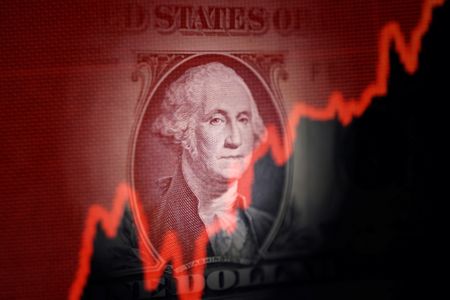
Concerns about the U.S. dollar were described as “widespread and deepening” in the report. Sixty-one percent of central banks surveyed said that U.S. debt levels are negatively affecting the dollar’s long-term standing as the world’s primary reserve currency — a dramatic jump from just 20% who felt that way in 2024.
While the dollar has gained roughly 3% this year amid the U.S.-Israeli conflict with Iran, analysts warn that policy uncertainty and mounting national debt could weaken the currency over time. Despite those concerns, the absence of a clear alternative means any move away from the dollar is expected to happen gradually. Still, 29% of survey participants believe the dollar’s reserve-currency status will be diminished within five years, up from 12% in 2022.
Several institutions told Invesco they are also reconsidering their dependence on U.S.-based financial custodians, counterparties, and clearing systems due to geopolitical tensions. One European central bank said it had already switched away from its U.S. custodian, while a Latin American central bank said it was establishing new non-U.S. custodial arrangements to prepare for a “worst-case scenario.”
However, one central bank respondent cautioned that such moves carry their own risks, warning that “this act in and of itself could be interpreted as hostile by the U.S.”
Separately, about one-third of those surveyed said they plan to increase their gold holdings as part of the broader diversification trend. The traditional reliance on bonds for portfolio balance has also weakened in recent years, with more investors now turning to liquid assets and real-world holdings instead.