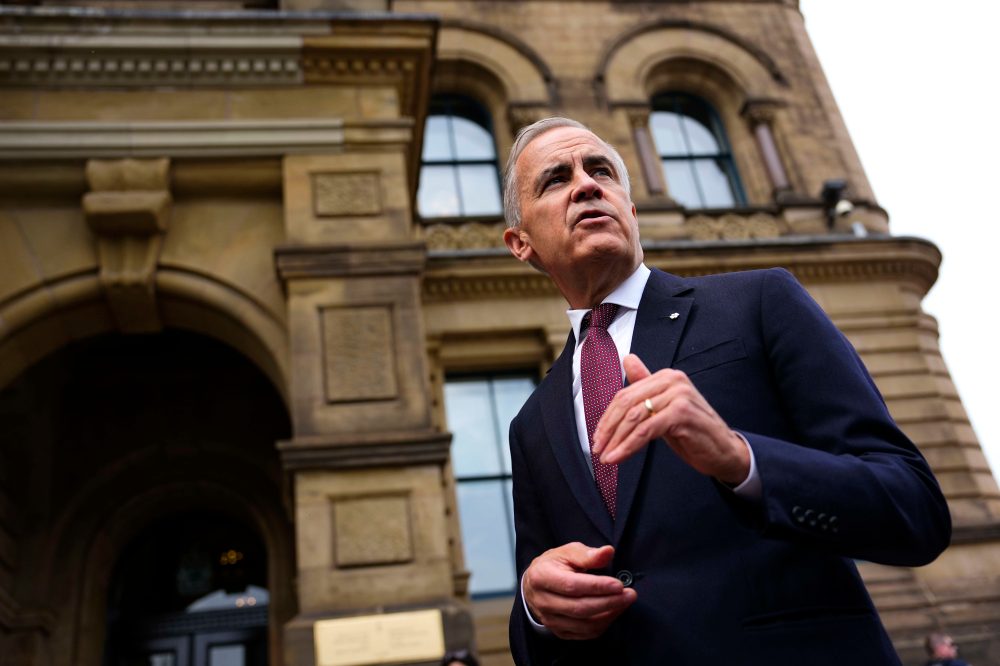

Richard Jackson has been at the helm of Occidental Petroleum for less than a month, and he’s already facing a daunting set of challenges — including a sluggish stock price, a heavy debt load, and costly dividend obligations to one of its largest investors.
Down the road, Jackson may confront an even bigger question: whether the Houston-based oil company, valued at roughly $51 billion, should seek a buyer altogether.
Berkshire Hathaway holds a preferred stake in Occidental that requires the oil company to pay the conglomerate hundreds of millions of dollars in dividends each year. Berkshire also owns 26.9% of Occidental’s common stock, along with warrants to purchase an additional $5 billion worth of shares.
Jackson, who first came to Occidental in 2003, officially took over as CEO on June 1. He replaced Vicki Hollub, who led the company for a decade and orchestrated two major acquisitions that shifted Occidental’s oil production heavily toward the United States.
That domestic focus turned out to be a strategic advantage when tensions from the U.S.-Israeli conflict with Iran shook confidence in Middle Eastern oil supplies. Competitors such as Exxon Mobil, which produces roughly 20% of its oil in that region, faced greater exposure to potential supply disruptions.
Still, those acquisitions came with a heavy price tag. At their peak, they left Occidental carrying as much as $38.5 billion in long-term debt. Hollub managed to bring that figure down to $15.2 billion by the time she stepped down — but during her tenure, Occidental’s share price dropped 26%, badly trailing its peers. Over the same period, ConocoPhillips delivered returns of 153% and Chevron returned 88%.
Investors are pushing for change. “The biggest opportunity is to clean up the capital structure, strengthen the balance sheet and increase shareholder returns,” said David Byrns, a portfolio manager at American Century Investments, which holds an Occidental stake valued at approximately $131 million.
Jackson has signaled his intentions. During an earnings call in May, he said his near-term priority is to cut the company’s principal debt down to $10 billion, boost free cash flow, and grow oil production organically through the use of technology.
An Occidental spokesperson noted that Jackson has been actively engaging with investors: “Richard has been spending time meeting with investors, hearing their points of view and reinforcing that our value improvement starts with executing from a strong balance sheet.”
Much of the financial pressure stems from Occidental’s 2019 acquisition of Anadarko Petroleum for $55 billion, including debt. To help finance that deal, Berkshire provided $10 billion in exchange for preferred stock that carries an 8% annual dividend — a rate higher than what a typical junk bond currently pays. Critics have long argued that arrangement benefits Berkshire far more than Occidental’s other shareholders.
Occidental has paid back about $1.5 billion of that preferred stock and plans to start redeeming the remainder at a 5% premium when it becomes eligible to do so in August 2029.
A former Occidental executive described Jackson as well-liked within the company and credited him with successfully turning around a previously troubled global drilling operation. But some investors say that operational progress alone may not be enough.
Bill Smead, chief investment officer at Smead Capital Management — which holds an Occidental position worth roughly $201 million — argued the company must either grow through additional acquisitions or position itself to be absorbed by a larger player. “Either Occidental needs to get bigger and beef up the oil in the tank, or they’re probably going to have to be part of a larger oil and gas company,” Smead said.
He also called on Occidental and Berkshire to clarify whether they envision Occidental eventually becoming a full subsidiary of the conglomerate. Billionaire Warren Buffett, who served as Berkshire’s CEO when it first invested in Occidental, has previously stated he had no plans to acquire the company outright. Berkshire, now led by CEO Greg Abel, declined to comment on the matter.
Smead added that Berkshire’s oversized stake is itself an obstacle, deterring other potential buyers from making a move. “It keeps other investors from being aggressive,” he said.