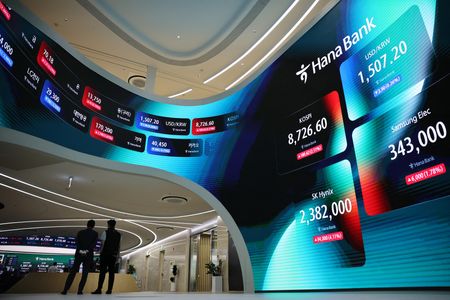
South Korean semiconductor giant SK Hynix is set to wrap up the bookbuilding process for its $28 billion American depositary receipt offering on Wednesday U.S. time, after demand from investors far exceeded the available shares, according to a source familiar with the situation.
Underwriters handling the massive deal informed investors that the order books would officially close at 4 p.m. Eastern Time. Pricing guidance is expected to follow the Thursday close of the South Korean market, with final allocations confirmed later that same Thursday, the source said.
SK Hynix had previously disclosed in regulatory filings that it planned to set the final ADR price on Thursday, with shares beginning to trade on the Nasdaq on July 10.
The level of investor enthusiasm was striking — U.S.-based buyers came in with individual orders starting around $200 million, while some of the larger commitments topped $1 billion, according to the source.
SK Hynix declined to offer any comment on the offering.
Earlier in the week, the company announced that Baillie Gifford Overseas Limited, along with investment funds managed by Coatue Management and Situational Awareness Partners, had each separately indicated interest in purchasing up to a combined $7 billion worth of the U.S. ADRs.
IFR was first to report Tuesday that the SK Hynix ADR offering had been covered multiple times over by investor orders.
The strong response comes even as global technology stocks took a hit amid renewed conflict in the Middle East. SK Hynix shares themselves dropped as much as 3.59% on Wednesday, yet investor appetite for the offering remained robust.
The company launched the share sale on Monday, putting 17.79 million new shares on the market — a move that places it among the most valuable technology companies in the world.
The transaction is expected to rank as the second-largest share sale on record, trailing only SpaceX’s record-setting $85.7 billion initial public offering last month. It would surpass Saudi Aramco’s $25.6 billion IPO in 2019 and Alibaba’s similarly sized offering in 2014.
SK Hynix is a major supplier of high-bandwidth memory chips that power artificial intelligence systems for companies including Nvidia and Alphabet Inc.’s Google.
Under the terms of the offering, ten ADRs will represent one common share. A filing from Monday listed a reference price of 242,500 won per ADR, based on SK Hynix’s closing share price in Seoul on July 3.
A South Korean startup focused on artificial intelligence chips is setting its sights on a stock market debut, with plans to list shares on the Korean market in the first half of next year — and potentially on US exchanges after that.
Rebellions co-founder and chief executive Park Sunghyun spoke with Reuters on Wednesday, outlining the company’s step-by-step approach to going public.
“Our priority right now is Korea market,” Park said.
He added that a US listing could follow using American Depositary Receipts, known as ADRs — financial instruments that allow American investors to purchase shares of foreign companies directly on US stock exchanges. “Then you can go to U.S. market using the ADR just as how SK Hynix is planning,” he said.
South Korean chipmaker SK Hynix recently launched a US share sale aimed at raising 43 trillion won, equivalent to roughly $28.07 billion, as the company looks to capitalize on the worldwide surge in demand for AI technology — one of the largest new share sales of its kind globally.
Park said Rebellions plans to have all required documentation ready before the close of this year. Whether the company goes public in the first quarter or second quarter of 2026 will depend on how markets are behaving at that time.
“We see the market volatility,” he said.
Park confirmed that JP Morgan has been selected as the underwriter for the offering.
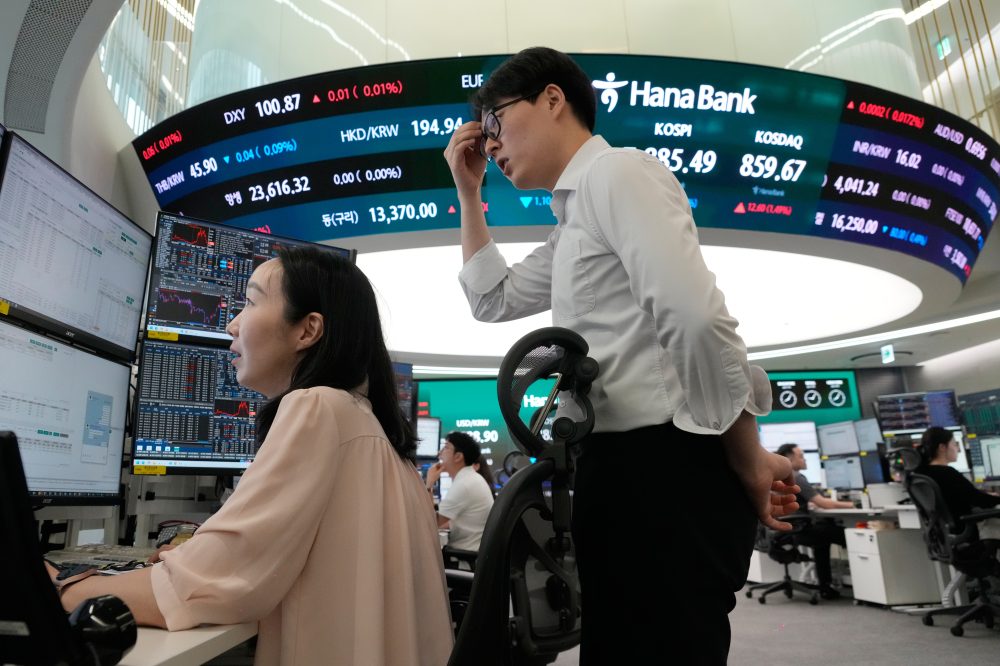
SEOUL — Dollar-selling activity tied to a U.S. share offering by South Korean chipmaker SK Hynix emerged in currency markets Wednesday, boosting the South Korean won to its highest point in more than a month, according to a source with knowledge of the situation who spoke to Reuters.
“There is forward selling related to SK Hynix American depository receipts (ADR) today,” the source said, choosing to remain anonymous given the sensitivity of the information.
Earlier this week, SK Hynix launched a U.S. share sale aimed at raising 43 trillion won — approximately $28.66 billion — attracting interest worth up to $7 billion from major investors. The offering is riding a wave of enthusiasm around artificial intelligence and ranks among the largest equity deals in the world.
Reuters reported Tuesday that SK Hynix is expected to bring U.S. dollars back into South Korea by around July 15, converting a portion of the funds raised through its ADR offering into the local currency.
The South Korean won climbed 1% against the dollar, breaking past the 1,500 mark and reaching 1,498.1 per dollar — its strongest level since May 29.
Brent Donnelly, president of market analytics firm Spectra Markets, explained the currency dynamics at play. “It is fresh USD equity proceeds to fund won-denominated capex… that is a giant USD receivable with a KRW use of funds,” he said.
Donnelly added that the bottom line for currency traders is straightforward: “FX traders will argue about timing, hedging, swaps, settlement, etc., but the first-order sign is: this is a dollar-selling, won-buying event.” He noted that even a small fraction of $29 billion would represent a significant flow in the dollar-won market.
South Korea’s Deputy Finance Minister Moon Ji-sung told Reuters on Wednesday that supply and demand conditions in the dollar-won market are expected to shift during the second half of the year, pointing to anticipated won demand tied to the SK Hynix share offering.
Singapore’s government-owned investment firm Temasek announced Wednesday that it plans to dramatically scale up its exposure to artificial intelligence companies, with a goal of raising its AI holdings from the current 6% to as much as 15% of its total portfolio over the next five years.
The announcement came alongside news that Temasek’s net portfolio value reached S$518 billion — roughly $400 billion U.S. — during the last financial year, marking the second straight year the firm has set a record high. That figure represents growth of 10.5% measured in Singapore dollars, or 14.8% in U.S. dollar terms.
For comparison, MSCI’s global stock market index rose 17% over the same period, though Temasek’s holdings differ from standard public market benchmarks in how they are structured and what types of assets they include.
Temasek currently holds ownership stakes in AI firms Anthropic and OpenAI. The company declined to reveal the size of those stakes or how they may have influenced overall performance.
Chief Executive Dilhan Pillay addressed reporters at a briefing, saying that the rapid pace of AI development represented “a pivotal phase that will create vast new opportunities.”
Pillay outlined five key areas where Temasek plans to direct investment: energy infrastructure and data centers, semiconductors, cloud service providers, foundational AI models, and AI applications and software systems.
He also emphasized that the firm’s entire existing portfolio would be evaluated through the lens of AI adoption. “The rubber hits the road in AI adoption,” Pillay said. “The remaining 85% of our portfolio must be focused on AI adoption for competitiveness. That is where the rest of our portfolio will see value capture.”
Temasek credited last year’s strong results in part to profits from selling off certain assets and the solid performance of local companies within its holdings.
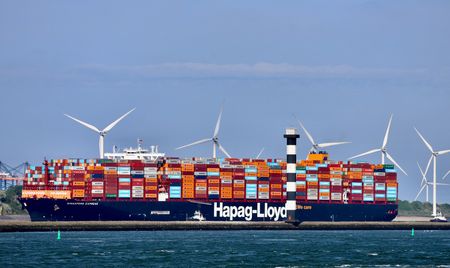
Germany may stand to gain from a new U.S. policy that would impose port fees on merchant vessels constructed in China, according to fresh research from the German Institute for Economic Research, known as DIW. The study, reviewed by Reuters on Wednesday, estimates that German exports to the United States could climb by roughly 2% compared to a situation where no such fees exist.
The key factor behind this potential gain is that German shipping fleets depend less on Chinese-built vessels than those operated by some of Germany’s competitors. That distinction could allow German exporters to capture a larger slice of the U.S. market once the fees go into effect.
The U.S. government is planning to roll out these port charges starting in November, framing the move as a way to reduce China’s outsized influence in the global shipbuilding sector. Officials have pointed to national security as a driving concern. Notably, the fees would be calculated based on where a ship was built — not on the origin of the goods being transported.
Despite the potential upside for some trading partners, DIW researchers warn that the policy would do the most damage to the United States itself. The institute projects that U.S. imports would drop by 0.2%, while U.S. exports could fall by 0.3%.
DIW economist Sonali Chowdhry explained the ripple effect in straightforward terms: “The mechanism is simple. The fees raise the cost of intermediate inputs, U.S. manufacturers lose competitiveness, and weaker economic activity also weighs on demand for foreign goods.”
Among European Union member nations, Finland, Denmark, and Poland are expected to absorb the biggest blows. Their exports to the U.S. could decline by 5.0%, 4.4%, and 3.0%, respectively. Meanwhile, developing economies including Costa Rica, Vietnam, and Pakistan could see their U.S.-bound shipments fall by nearly 9%. South Korea, like Germany, could come out ahead — potentially gaining around 2%.
Asian stock markets delivered a mixed performance on Wednesday as oil prices shot up more than 2% following U.S. military strikes against Iran. The U.S. said Iran had attacked three vessels in the Strait of Hormuz, prompting the military response.
U.S. futures showed little movement in early trading.
Brent crude, the global oil benchmark, climbed 2.6% to reach $76.09 per barrel early Wednesday. U.S. benchmark crude also rose 2.6%, reaching $72.25 per barrel. Both had recently fallen back to levels seen before the conflict with Iran started in late February.
Markets across Greater China moved higher, while most other Asian markets declined.
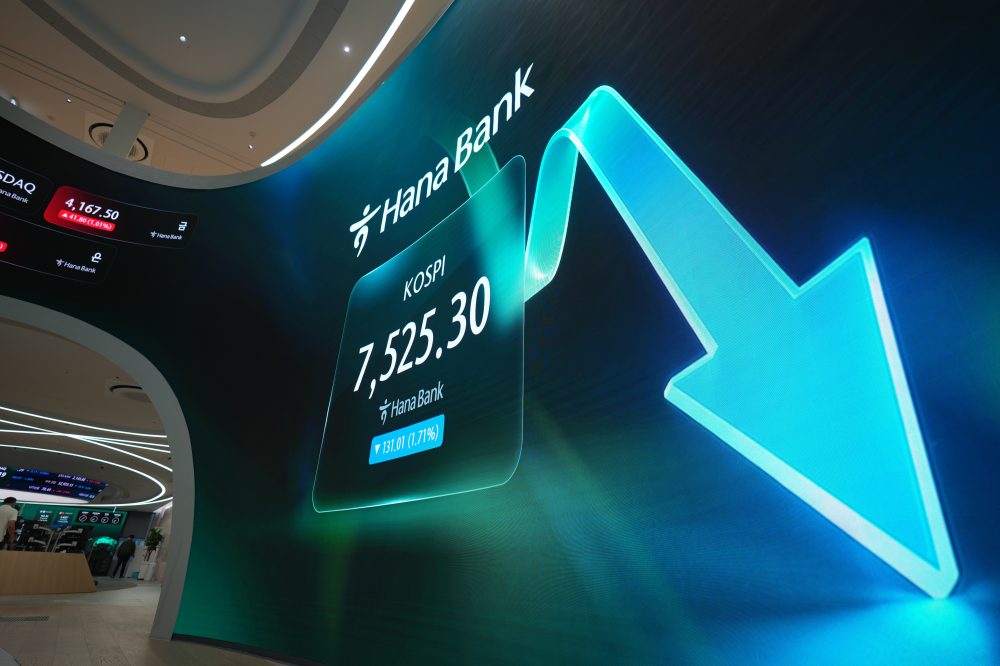
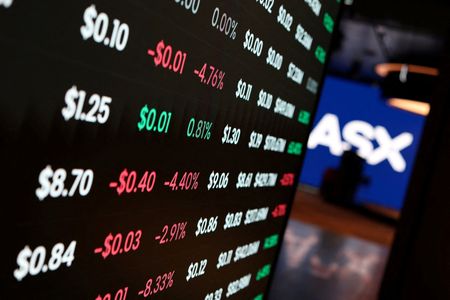
In Japan, the Nikkei 225 slipped 0.3% to close at 68,077.96. South Korea’s Kospi fell sharply, dropping 2.9% to 7,429.13. The South Korean index had previously surged past the 9,000 mark last month before retreating amid heavy selling of major AI-related technology stocks including Samsung Electronics and SK Hynix. Samsung dropped an additional 2.9% Wednesday after falling roughly 7% the previous day, while SK Hynix gained 2.4%.
Taiwan’s Taiex edged down 0.2%.
Hong Kong’s Hang Seng rose 2.4% to 24,057.24, and the Shanghai Composite index added 0.5% to reach 4,011.05. While Chinese markets have largely missed out on the broader global AI stock boom, investors appear to be turning their attention to China’s domestic push to develop its own artificial intelligence capabilities.
Technology stocks led the rally in China, with Tencent Holdings climbing 3.1%, e-commerce and financial giant Alibaba Group Holding surging 8.1%, and Baidu advancing 4.7%.
Elsewhere across Asia, Australia’s S&P/ASX 200 fell 0.7% to 8,738.90, and India’s Sensex also declined 0.7%.
On Tuesday, the volatile ride for AI-related stocks turned downward again, pulling U.S. markets lower. The S&P 500 dropped 0.4% to 7,503.85, even though most individual stocks within the index finished higher.
The Nasdaq composite fell 1.2% to 25,818.69, weighed down by losses in artificial intelligence stocks. The Dow Jones Industrial Average declined 0.2% from its record high, closing at 52,925.15.
Investors continue to grapple with concerns that AI stock valuations have climbed too fast and that massive spending on computer chips and data centers may not generate enough returns to justify the investment.
Among individual stocks, Advanced Micro Devices dropped 6.5%, Intel fell 9.7%, and Micron Technology lost 4.7%.
SpaceX, which operates the xAI business, declined 6.8% on its first day of trading following its inclusion in the Nasdaq 100 index. Rivian Automotive plunged 18.1% after the electric vehicle maker announced plans to sell 75 million new shares of stock, a move that reduces the ownership percentage of existing shareholders.
In currency markets early Wednesday, the U.S. dollar rose to 162.38 Japanese yen from 162.11 yen. The euro held steady at $1.1414.
Sino Biopharmaceutical, a drugmaker listed on the Hong Kong stock exchange, announced Wednesday that its mainland China subsidiary has obtained the rights to sell two respiratory medications developed by British company GSK.
The subsidiary, Chia Tai Tianqing Pharmaceutical (CTTQ), will take on the responsibility of bringing GSK’s triple therapy inhaler Trelegy Ellipta and dual therapy inhaler Anoro Ellipta to the Chinese market.
Anoro Ellipta is designed for the ongoing treatment of chronic obstructive pulmonary disease, commonly known as COPD. Trelegy Ellipta carries approval for the maintenance treatment of both COPD and asthma.
Under the terms of the arrangement, CTTQ will handle the importing, distribution, and promotion of both products throughout mainland China, with any sales revenue expected to be recorded under CTTQ.
The new agreement represents a broadening of the two companies’ working relationship, which had previously been centered on liver disease. It comes on the heels of a deal announced in May, in which CTTQ agreed to support the rollout of a GSK hepatitis B drug candidate in mainland China.
Japan’s ruling party is preparing to put forward a plan calling for tougher enforcement of rules requiring activist investors to disclose their shareholdings, according to a senior lawmaker who spoke with Reuters.
The push comes as Japan has grown into one of the most active markets globally for activist investing outside the United States, drawing in hedge funds that have pressured corporations to boost returns, unwind cross-shareholdings, and strengthen governance practices.
Fumiaki Kobayashi, who leads a group of Liberal Democratic Party lawmakers reviewing corporate governance, acknowledged that activist investors have had a positive impact. “The presence of activists has created healthy tension for management and helped drive positive change,” he said.
However, Kobayashi also raised concerns. “But there are cases where short-term demands by some activist shareholders may discourage growth investment, and there are concerns about those who may be disregarding rules,” he said.
Kobayashi stopped short of naming any specific activist shareholders who may have broken disclosure rules. He did point to recent updates to disclosure regulations that clarified the scope of so-called deemed joint holdings — changes aimed at curbing “wolfpack” behavior, in which investors are suspected of coordinating their actions while sidestepping disclosure requirements.
“The challenge now is ensuring effective enforcement,” Kobayashi said. He added that the Securities and Exchange Surveillance Commission — Japan’s securities watchdog — should receive additional resources to investigate potential violations, including more staff and expanded use of digital tools.
When asked about situations where activist funds and private equity firms might coordinate around a corporate takeover, Kobayashi said any arrangement involving a future share transfer with a private equity firm should be included in shareholding filings. “If such arrangements were not disclosed, it would warrant stricter regulatory enforcement,” he said.
Kobayashi’s working group is expected to wrap up its proposals before the end of the month. The group is also likely to recommend changes to the framework governing shareholder proposals, including stricter requirements for submitting them and the creation of a formal mechanism allowing shareholders to introduce non-binding advisory resolutions at annual meetings.
The recommendations reflect wider concerns within the Liberal Democratic Party that while corporate profits and shareholder returns have climbed sharply in recent years, spending on capital investment, research and development, and workforce development has not kept pace.
Japanese companies faced a record number of activist proposals at this year’s general shareholders meetings. Among them was a call by Hong Kong-based Oasis Management for a vote against the leadership of publisher and gaming company Kadokawa.
Kobayashi pushed back against the idea that his group’s work represents an anti-activist agenda. He described it instead as an effort to bring Japan’s rules in line with global standards, crack down on rule-breakers, and help companies do a better job of communicating their long-term growth plans to shareholders.
Workers employed at BHP’s Port Hedland facility in Western Australia have formally announced an eight-hour work stoppage planned for July 16, a move that could halt approximately A$120 million — or about $83.16 million U.S. — in daily iron ore production and shipping.
The announcement came on Wednesday after six months of negotiations between unions and BHP failed to produce an agreement on a proposed four-year labor contract. Port and maintenance workers represented by the Combined Ports Unions are expected to take part in the stoppage.
Electrical Trades Union WA Secretary Adam Woodage addressed the decision directly, saying, “This is nobody’s preferred way forward, but when it is our only way forward, we will take it.”
Woodage added that he hopes the planned action gets the attention of company leadership. “I hope this sharpens the minds of BHP managers — and shareholders — on the importance of negotiating for a fair, safe and productive iron ore industry,” he said.
The Port Hedland announcement follows a separate development last week, when workers at BHP’s South Flank and Mining Area C iron ore operations narrowly voted to accept a new labor agreement. That deal included a guaranteed 16% pay increase over its four-year term, higher site-based allowances, and a new compensation arrangement for delayed flights.
The union push is being described as the most aggressive effort to expand union influence in Australia’s mining sector in 30 years. The momentum follows a 2022 law enacted by the Labor government that gave unions the ability to negotiate wage agreements covering multiple employers, greater flexibility in bargaining, and the authority to call industry-wide strikes.
Port Hedland, which is also utilized by Fortescue and Hancock in addition to BHP, handles around $150 million worth of iron ore shipments daily, highlighting just how significant any disruption could be.
Shares of South Korean memory chipmakers Samsung Electronics and SK Hynix dropped by as much as 4.4% and 5%, respectively, during early Wednesday trading, mirroring a sweeping decline in U.S. semiconductor stocks driven by growing doubts about how long the artificial intelligence chip boom can last.
Overnight, major chip-related stocks took a significant hit on Wall Street. Intel closed down 9.7%, while AMD fell 6.5% and Micron dropped 4.7%. The Philadelphia Semiconductor Index, a key measure of the chip sector’s performance, also declined 4.7% as investors grew increasingly skeptical about the staying power of AI-related spending.
The wave of selling started after Samsung released its preliminary second-quarter earnings on Tuesday. Although the company reported an estimated 19-fold increase in quarterly operating profit — largely fueled by strong demand for AI memory chips — the results still fell short of the high expectations investors had set. That disappointment sent Samsung’s stock tumbling, which then rippled out into a broader retreat from AI-related investments that eventually reached U.S. markets.
By early Wednesday morning, however, the situation had begun to stabilize. Samsung had trimmed its losses to a decline of about 2.3%, while SK Hynix had actually reversed course and edged up 0.2%. Both companies outperformed South Korea’s benchmark KOSPI index, which was still down 1.4% at that point.
American airlines paid a combined $6.66 billion for jet fuel during the month of May, government figures released Tuesday show — the second month in a row that fuel spending has crossed the $6 billion threshold.
Compared to the same month a year ago, that figure represents an 84% jump. In April, carriers had already spent $6.47 billion on fuel, according to the Bureau of Transportation Statistics.
The dramatic year-over-year increase has less to do with airlines flying more and more to do with the soaring cost of fuel itself. U.S. carriers actually consumed 1.627 billion gallons in May — a slight dip of 0.6% compared to May 2025. Consumption in April was also marginally lower than the prior year.
Airlines paid an average of $4.09 per gallon in May, a hair below the $4.11 average recorded in April, but a staggering 85% above the $2.21 per gallon they paid in May 2025, according to the agency.
Across the globe, airlines have been working to offset the surge in fuel expenses by hiking ticket prices, adding fees, and scaling back the number of flights they offer. Fuel consistently ranks among the industry’s biggest operating costs, making carriers especially sensitive to energy price fluctuations.
The data reflects the ongoing ripple effects of a sharp rise in energy prices that followed the outbreak of conflict in the Middle East earlier this year, which disrupted shipping traffic through the Strait of Hormuz — a critical corridor for global crude oil and fuel supplies.
Prices have retreated somewhat from their spring peaks after the U.S. and Iran reached a temporary ceasefire agreement, giving airlines a measure of relief. However, the situation remains unstable.
On Tuesday, the British military reported that three tankers were struck by projectiles in the Strait of Hormuz, and the U.S. moved to revoke a license that had permitted Iranian oil sales under the terms of the agreement.
Delta Air Lines is scheduled to release its second-quarter earnings results on Friday, kicking off a series of financial reports from major U.S. carriers. Industry executives are expected to address how the recent easing of fuel prices may shape the financial outlook for airlines in the months ahead.
As of Monday, the average price of jet fuel in Chicago, Houston, Los Angeles, and New York stood at $2.90 per gallon, according to the Argus U.S. Jet Fuel Index, which monitors daily average prices across those major aviation hubs.
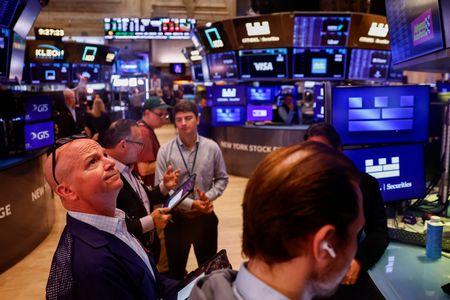
Wall Street stocks closed lower Tuesday, following European markets downward as a wave of selling hit technology shares — particularly chipmakers — while fresh unrest in the Middle East sent crude oil prices climbing.
Here is a look at the major stories shaping markets on Tuesday:
1. The U.S. trade deficit grew by 42.1% in May, reaching $77.6 billion — just $900,000 less than what analysts had forecast.
2. New York Federal Reserve President John Williams said he is less concerned about inflation than he once was, pointing to recent declines in energy prices as a reason for his eased worry.
3. Two oil tankers were struck in the Strait of Hormuz as large crowds gathered in the Iranian city of Qom on the fifth day of mourning following the death of Iran’s Supreme Leader, Ayatollah Ali Khamenei.
4. Meta Platforms announced the launch of Muse Image, its first artificial intelligence image generation model, as the company behind Facebook continues expanding its generative AI offerings across its platforms.
5. Nigel Farage, the leader of the populist Reform UK Party in Britain, announced he was stepping aside to address accusations that he failed to report millions of pounds worth of gifts.
Key Market Moves for Tuesday:
Stocks: All three major U.S. indexes finished in negative territory, with the Nasdaq leading losses. Europe’s STOXX 600 index was also pulled lower by the tech sector selloff.
Sectors: Industrial and technology stocks posted the largest percentage declines. Energy shares were the day’s top performers. Semiconductor stocks fell 4.7%.
Currency: The U.S. dollar edged slightly higher while the Japanese yen hovered near a 40-year low, keeping traders on alert for possible government intervention.
Bonds: The yield on the benchmark U.S. Treasury note climbed to a four-week high as investors tracked escalating geopolitical tensions.
Commodities: Front-month futures for both West Texas Intermediate and Brent crude oil settled higher — up 2.8% and 3.0% respectively. Gold prices fell despite the rise in Middle East tensions.
Other Stories in Focus:
A French appeals court upheld the conviction of far-right leader Marine Le Pen for misuse of public funds, but reduced the length of her ban from seeking public office. Although Le Pen will be required to wear an electronic ankle bracelet — which could complicate her ability to campaign — her National Rally party is currently leading in polls with less than a year before centrist President Emmanuel Macron is expected to leave office.
SpaceX officially joined the Nasdaq 100 index Tuesday, a move analysts expect will trigger billions of dollars in automatic buying by index-tracking funds. Brokers have largely issued bullish outlooks on the rocket and satellite company, which is valued at more than $2 trillion. SpaceX made its stock market debut on June 12, and while its share price is up 10.7% from its initial offering price of $135, it has dropped 7.7% so far this week.
The United States was knocked out of the World Cup following a painful 4-1 loss to Belgium — a match that was overshadowed by controversy surrounding alleged political interference by President Donald Trump. The allegations stem from Trump’s reported pressure on FIFA President Gianni Infantino to reconsider a red-card suspension handed to Folarin Balogun, the top goal scorer for the U.S. team. Infantino stated that FIFA’s decision-making process was “independent.”
What Could Influence Markets Wednesday:
Traders will be watching for new developments in the Middle East, shifts in energy markets, social media posts from President Trump, and the release of minutes from the Federal Reserve’s June meeting. Currency traders will also monitor the possibility of yen intervention. Economic data releases from the Netherlands, Sweden, and Norway are also on the calendar, along with U.S. consumer credit figures for May.
Infrastructure engineering and construction company MasTec announced Tuesday that it plans to purchase electrical contractor Superior Group in a deal worth $1.65 billion, combining cash and stock. The move is aimed at broadening MasTec’s footprint in the data center infrastructure market.
Currently, MasTec focuses mainly on serving data centers’ power generation and energy transmission requirements. By bringing Superior Group into the fold, the company said it will also be able to provide the electrical systems that data centers rely on.
The acquisition comes as businesses across multiple industries are aggressively working to expand their data center capabilities, driven by surging global demand for artificial intelligence services.
MasTec said it anticipates the transaction will be completed sometime between mid- and late-July.
Oil prices surged sharply on Tuesday, climbing more than 3% after the United States pulled the general license that had permitted the sale of Iranian crude oil, sending markets into a frenzy.
Brent crude futures closed $2.17 higher, a gain of 3.01%, settling at $74.16 per barrel. U.S. West Texas Intermediate crude also rose, finishing up $1.89, or 2.76%, at $70.44 per barrel.
After the official market close, prices climbed even further. By 3:00 p.m. Eastern Time, the global benchmark had risen an additional 96 cents to $75.12, while WTI jumped another $1.05 to reach $71.49. At that point, both oil benchmarks were tracking gains of more than 4% compared to the previous day’s closing prices.
The price spike followed news that three tankers were struck in the Strait of Hormuz on Tuesday. Among the vessels hit was a Qatari liquefied natural gas carrier, which Qatar confirmed was struck by an Iranian drone. A Saudi-flagged supertanker, believed to be the Wedyan, also sustained damage off the coast of Oman, though the cause of that incident was not immediately determined.
In response, a U.S. official stated Tuesday that Iran’s behavior in the Strait of Hormuz was “wholly unacceptable” and warned of consequences.
Ajay Parmar, director of energy and refining at ICIS, said the situation exposed how unstable the current ceasefire really is. “This shows just how fragile the ceasefire actually is. Further attacks could sporadically appear in the coming months and this will further add to the volatility,” Parmar said. “Just one disagreeable message from one side could bring anger to the other, and remember if Iran merely threatens to close the Strait of Hormuz again, prices will spike considerably. As such, we firmly believe that volatility really is here to stay.”
UBS analyst Giovanni Staunovo also weighed in, noting that “renewed tensions in the Middle East and concerns over the vessel attacks could drag lower oil exports from the Middle East.”
Diplomatic efforts between Washington and Tehran remain strained. Iran’s foreign minister said Tuesday that final deal negotiations will not move forward if U.S. threats persist, following remarks by U.S. President Donald Trump threatening to “finish the job” if no agreement is reached.
Investors are keeping a close eye on the ongoing U.S.-Iran talks and what they could mean for shipping traffic through the Strait of Hormuz, a waterway that — before the start of the Iran war — carried roughly one-fifth of the world’s daily oil and liquefied natural gas supply.
Separately, Ukraine’s military reported overnight that Ukrainian drones hit eight tankers belonging to Russia’s so-called “shadow fleet” — a collection of older vessels used to move fuel to Crimea while circumventing international sanctions.
Union Pacific and Norfolk Southern told a federal regulatory agency on Tuesday that they are prepared to sell off their ownership interests in certain smaller railroad companies as part of their proposed $85 billion merger deal.
If approved, the combination would establish the first freight rail network in the United States stretching from coast to coast.
The two companies said they would no longer hold controlling interests in the Terminal Railroad Association of St. Louis, the Kansas City Terminal Railway, or TTX Company following the merger. Those smaller railroads are jointly owned alongside other major carriers and are run by independent management teams.
Both railroads told the Surface Transportation Board they would divest their stakes in those lines if the agency required it. The companies also claimed that rival major carriers are using those smaller railroads — particularly the Terminal Railroad Association of St. Louis — as a tool to slow down or block the merger.
Union Pacific and Norfolk Southern said they plan to submit additional responses to Surface Transportation Board questions by July 27 and expect the deal to be finalized in the first half of 2027.
Supporters of the merger say it would save freight shippers an estimated $3.5 billion per year, improve the reliability of service, shift cargo from trucks to rail, preserve options for shippers, and protect union jobs while delivering broader benefits to the public.
However, opposition to the deal is significant. Freight shippers worried about rising costs, along with attorneys general from several states, have raised concerns about the proposed consolidation.
The railroads project that the combined network would remove approximately 2.1 million trucks from American roads, with cost savings potentially leading to lower prices for consumers.
The merger could fundamentally reshape the U.S. freight rail industry by streamlining operations and reducing interchange delays at major hubs such as Chicago.
Active lobbying against the deal continues from major competitors BNSF Railway and Canadian Pacific Kansas City.
President Donald Trump has publicly expressed support for the merger. He previously removed Democratic board member Robert Primus from the Surface Transportation Board — a member who could have opposed the deal — and named Republican Patrick Fuchs as the agency’s chairman, a move widely viewed as making the regulator more likely to approve the transaction.
NEW YORK (AP) — The biggest names on Wall Street are expressing strong confidence in SpaceX, yet shares of Elon Musk’s rocket company are struggling to gain altitude in the market.
Following SpaceX’s initial public offering, the major investment firms that helped bring the company public released their first formal research reports on Tuesday. Nearly every one of those firms advised clients to purchase the stock and projected the share price would climb past $200 within the next 12 to 18 months.
Despite briefly surpassing $200 during its opening week of trading, SpaceX shares have since drifted back to roughly $152 — barely above the price at which they debuted on June 12, the company’s IPO day. Many investors appear to be approaching the stock with caution, even while examining the same factors that have Wall Street analysts so energized.
Much of the enthusiasm centers on SpaceX’s position to dominate the space transportation and infrastructure market. The company uses reusable rockets to carry both people and cargo into Earth’s orbit and has set its sights on deeper exploration of the solar system. At present, the bulk of SpaceX’s income comes from its Starlink satellite network, and analysts expect advances in artificial intelligence to further strengthen that business.
Analysts at J.P. Morgan captured the broader sentiment in their research report, writing: “SpaceX’s ambitions, and potential impact on humanity, are bigger than any company’s we’ve ever seen.”
J.P. Morgan is forecasting the stock will hit $225 by the close of 2027. The bank pointed to SpaceX’s commanding edge in space transportation, noting approximately 670 orbital launches and a success rate of nearly 99% with its Falcon rockets. The company has handled the majority of all payloads sent into orbit since 2023.
SpaceX has already established itself as the dominant force in reusable rocket technology through its Falcon 9. Now, attention is turning to its massive Starship rocket, which is designed to carry larger payloads — potentially including data centers — into space.
Among the most optimistic voices is investment bank Raymond James, whose analysts believe the stock could eventually reach $800 per share. They view SpaceX as a foundational industrial company for the current century. “Just as railroads, electric grids, and the Internet reshaped prior economic eras, we believe SpaceX is building the foundational platform for the next generation of industrial capacity,” the analysts wrote.
SpaceX founder Elon Musk chose to take the company public in order to raise the capital needed to fund its sweeping ambitions — including deploying more satellites, eventually placing data centers in orbit, and, further down the road, establishing a human colony on Mars.
For now, the Starship rocket remains in the testing phase, and no technology currently exists to place data centers in space or transport humans to Mars. Analysts openly acknowledge that a setback or prolonged delay in establishing a consistent Starship launch schedule represents a serious risk that could undermine their projections.
SpaceX wrapped up its first day of public trading in June with a market valuation exceeding $2 trillion, a figure that remains roughly the same today. That milestone briefly made Musk the world’s first trillionaire, though his personal net worth has since slipped back below $1 trillion, according to Forbes.
Not everyone on Wall Street shares the same level of enthusiasm. Equity research firm MoffettNathanson acknowledged the company’s potential but assigned it a “neutral” rating, with a price target of $131 per share. The firm cited a range of unknowns, including regulatory hurdles, unproven technology, and uncertain demand. “It is, in short, a bet on any and all things made possible by a virtual lock on rocket manufacturing and launch,” MoffettNathanson wrote in its report.
A federal bankruptcy judge has given the green light to a $46.75 million settlement for victims of a data breach that hit genetic testing company 23andMe back in 2023.
U.S. Bankruptcy Judge Brian Walsh, presiding in St. Louis, determined that the settlement was fair, equitable, and in the best interest of a trust being managed by 23andMe’s bankruptcy administrator.
The ruling came Tuesday, providing some financial relief to those whose personal genetic data was compromised in the breach.
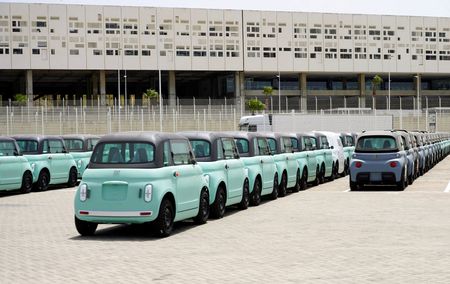
Fiat has entered the U.S. market with its miniature electric vehicle, the Topolino, priced starting at $13,995. The Stellantis-owned brand announced Tuesday that the two-seat, fully electric compact car offers a driving range of up to 46 miles on a single charge.
At just over 1,000 pounds and roughly 8 feet in length, the Topolino is a small but nimble vehicle. In its current form, it is intended for use within private communities, resorts, and golf courses, with a top speed of 19 mph.
Fiat says that beginning in late summer, owners will have the option to purchase an upgrade kit that converts the Topolino into a federally regulated Low-Speed Vehicle (LSV). That upgrade would boost the top speed to 25 mph and open up access to certain public roads.
“Fiat continues to stand apart by embracing its legacy in small cars,” said the brand’s CEO Olivier Francois.
The Topolino was first introduced in Europe in 2023, bringing back a name with deep roots in Fiat’s history. The original Topolino was a beloved model from the 1930s — the name translates from Italian as “Mickey Mouse,” a nod to Walt Disney’s iconic cartoon character.
The new U.S. launch expands Fiat’s North American electric lineup, which already includes the 500e city car. Under the hood — or rather, in the floor — the Topolino runs on a 5.4-kilowatt-hour lithium-ion battery that takes approximately five hours to fully charge.
Getty Images formally notified Shutterstock on Tuesday that it is abandoning the proposed $3.7 billion merger between the two companies, citing its unwillingness to meet a condition set by the United Kingdom’s antitrust authority.
In an official filing, Getty confirmed it had “delivered a written notice to Shutterstock terminating the Merger Agreement,” a deal that had been unveiled last year with the goal of forming a major powerhouse in the visual content industry.
Britain’s Competition and Markets Authority had given the merger its approval following a review, but only under the condition that Shutterstock’s editorial division be offloaded to an approved third-party buyer. The regulator expressed concern that allowing the two companies to combine without that requirement would significantly reduce competition, ultimately leaving UK media outlets with fewer options and higher costs.
Getty’s board took a unanimous vote last week to walk away from the transaction entirely rather than agree to divest Shutterstock’s editorial operations.
According to the CMA, both companies provide licensing for a wide range of content — including photographs, illustrations, music, and video footage — to major British media organizations, advertisers, publishers, designers, and small and medium-sized businesses in the creative sector.
Following the news, Getty Images shares dropped 6.8% in morning trading, while Shutterstock shares declined 2.4%.
Americans are growing more anxious about inflation in the short term, even as they see some relief ahead on gas prices and feel better about their own financial health, according to a Federal Reserve Bank of New York report released Tuesday.
The bank’s Survey of Consumer Expectations found that respondents in June anticipated inflation one year from now would reach 3.7%, up from 3.5% in May. That marks the highest level recorded since September 2023.
Looking further out, three-year inflation expectations rose to 3.3% from 3.1% in May — the highest that reading has been since June 2022. The five-year inflation outlook, which central bank officials pay the closest attention to, stayed flat at 3%.
The uptick in near-term concerns comes against a backdrop of elevated inflation driven in large part by a surge in energy costs tied to the ongoing Middle East conflict. The overall personal consumption expenditures price index rose 4.1% in May compared to the same month a year earlier, accelerating from April’s 4.8% gain. The conflict disrupted the movement of key energy supplies and other goods, pushing up prices for gasoline and diesel on top of inflation that was already running above the Federal Reserve’s 2% target.
However, there are signs that the worst may be over. The most intense phase of the conflict appears to have subsided, and energy prices have begun to pull back. Speaking in a television interview Tuesday, New York Fed President John Williams acknowledged that “inflation is still too high,” but added, “I do feel a little bit more positive about the near-term inflation outlook because of the energy price declines that we’re going to see.”
Fed officials pay close attention to public inflation expectations because they believe consumer sentiment about future prices has a direct influence on where prices actually go. Officials have taken some comfort in the stability of longer-term expectations, which suggests most Americans still believe inflation will eventually return to the Fed’s target.
At his first press conference as Fed Chairman, Kevin Warsh said last month, “I am pleased to report that members of the [Federal Open Market Committee] are unambiguous and unanimous: This Committee will deliver price stability.”
The Fed held its benchmark interest rate target steady at its June meeting, keeping it in a range between 3.5% and 3.75%. Still, several central bank officials indicated they may support rate increases later in the year if inflation pressures persist.
On a more encouraging note, the New York Fed survey found that consumers’ expectations for gasoline price increases have eased, falling to a level not seen since August 2022. Respondents also reported improved views on the job market and expressed greater optimism about both their current and future personal finances, though opinions on credit availability were more mixed.
A Bank of Japan board member who cast the only dissenting vote against the central bank’s June interest rate increase says he wants clear evidence of demand-driven inflation before he will back any future rate hikes — though he acknowledged that rising costs are spreading through the economy faster than expected.
Toichiro Asada, speaking to Reuters on Monday in his first interview since joining the BOJ board, said he opposed the June decision to lift rates to 1% — a 31-year high — partly because of uncertainty surrounding Middle East developments and their potential effect on output and employment.
Asada was appointed to the board by Prime Minister Sanae Takaichi, who is regarded as a supporter of loose monetary policy. Analysts have interpreted both Asada’s appointment and that of another new dovish board member, Ayano Sato, as an effort by the Takaichi administration to encourage the BOJ to keep rates low in support of its large spending agenda.
For Asada to back a rate increase in the future, he said Japan would need to be on a sustainable path toward the BOJ’s 2% inflation target. Crucially, he wants that progress to be powered by the economy itself — not just external cost pressures.
“Moreover, I believe it is necessary to confirm that such achievement is being supported by endogenous economic forces, such as rising wages and demand,” he said, noting those forces are not yet strong enough to justify tightening.
Still, Asada made clear he is not categorically against rate increases. “I am not always opposed to rate hikes. I voted against one this time, but I intend to make decisions based on an assessment of prevailing conditions at each point in time,” he said.
He noted that while crude oil prices are declining and consumer inflation is easing somewhat, the pass-through of higher oil prices to a broad range of goods has been occurring at a “relatively rapid pace” — a development that could eventually push prices higher across the economy.
On the question of how the BOJ should approach future decisions, Asada emphasized flexibility over any fixed schedule. “The BOJ should respond flexibly to changes in economic, price and financial conditions and conduct monetary policy appropriately,” he said. “The pace of any tightening should likewise be determined after carefully assessing domestic and overseas economic, price, and financial developments.”
The BOJ raised rates in June and has signaled it is prepared to continue hiking as inflation has remained near its 2% target for four consecutive years. A Reuters poll of analysts found that most expect another rate increase sometime between October and December.
Asada also weighed in on Japan’s so-called neutral interest rate — the level at which monetary policy neither stimulates nor restrains the economy. He described it as “rather low” but said pinpointing an exact figure is difficult. BOJ staff estimates place Japan’s nominal neutral rate somewhere between 1.1% and 2.5%.
“The neutral rate should not become an objective in itself. Policy should remain anchored to the goal of price stability,” he said.
Asada called for closer coordination between fiscal and monetary policy, arguing that monetary tools alone have limits when it comes to addressing weak demand or supply-side constraints. He pointed out that many businesses cite labor shortages and rising material costs as barriers to investment, even as the government pushes efforts to encourage it.
Wholesale inflation in Japan accelerated in May at its fastest pace in three years, driven largely by a weak yen that has pushed up import costs, compounded by rising fuel prices tied to the ongoing Middle East conflict.
“Given these circumstances, achieving price stability through appropriate monetary policy is important as a foundation for expanding growth-oriented investment,” Asada said. He also noted that while monetary policy does not directly target currency exchange rates, it “does take inflation and employment into account.”
On the subject of the BOJ’s bond-buying program, Asada said the central bank’s recent decision to pause its gradual reduction of bond purchases — a move analysts viewed as an attempt to keep bond yields from rising too sharply — could help protect investment by limiting the negative effects of excessive yield increases.
Looking further ahead, Asada said the BOJ will eventually need to have a broader conversation about the ideal size and makeup of its balance sheet, which is currently shrinking as bond redemptions outpace monthly purchases. He suggested the BOJ should focus on how far the ratio of its government bond holdings to nominal gross domestic product should fall from its current level of around 80%.
“Once the ratio has fallen to a level considered appropriate, I believe the size of the BOJ’s balance sheet should thereafter grow broadly in line with nominal GDP growth,” he said.
New research published Tuesday by the New York Federal Reserve suggests that the underlying financial health of a bank is the critical factor that determines whether a bank run spirals into a serious crisis.
Researchers at the New York Fed wrote in a blog post that available data provide “little support” for the notion that small shocks are capable of triggering “widespread” banking panics on their own.
“Poor bank fundamentals are necessary for bank runs to translate into failure and for bank distress to generate severe economic distress,” the researchers stated. They added that “although runs can occur in both weak and strong banks, poor fundamentals are necessary for runs to result in bank failures.”
The study draws on a newly developed database built using artificial intelligence tools. “We use large language models … to extract information on bank runs from millions of digitized historical newspaper pages, creating the most comprehensive database of bank runs in U.S. history,” the researchers explained.
The blog post also highlighted why it matters to correctly understand how bank runs work. A bank run occurs when falling confidence in a financial institution causes depositors to rush to withdraw their money all at once. “Runs should thus be seen as a trigger for bank failures and crises, but insolvent banks are necessary for this trigger to devastate the banking system and the economy,” the researchers wrote.
WASHINGTON — The gap between what the United States imports and exports grew dramatically in May, fueled in large part by a boom in artificial intelligence spending that pushed capital goods imports to their highest level ever recorded.
According to figures released Tuesday by the Commerce Department’s Bureau of Economic Analysis and Census Bureau, the trade deficit surged 42.2% to reach $77.6 billion. Economists surveyed by Reuters had projected the deficit would come in at $78.5 billion.
Total imports climbed 3.3% to $395.3 billion for the month. Within that figure, imports of capital goods — things like machinery and equipment — soared to a record $128.0 billion, driven heavily by business investment in artificial intelligence infrastructure, which depends significantly on imported components.
On the other side of the ledger, exports fell 3.2% to $317.7 billion. One bright spot was petroleum shipments, which hit their highest level on record, partly due to the ongoing conflict in the Middle East. The United States is currently a net exporter of oil.
The trade data adds to a pattern that has weighed on the country’s gross domestic product. Trade has now subtracted from GDP for two consecutive quarters. The Atlanta Federal Reserve’s economic forecasting model currently projects GDP will grow at an annualized rate of 1.2% in the second quarter — a slowdown from the 2.1% pace recorded in the January through March period.
A biotechnology company targeting obesity and related metabolic conditions has made a move toward listing on U.S. public markets. Kalohexis, which focuses on clinical-stage drug development, submitted a confidential filing on Tuesday for an initial public offering, contributing to a growing surge of activity in the IPO space.
The company has not yet disclosed the financial terms of its planned offering.
Here is what is known about Kalohexis and its work:
The company was spun out of Endevica Bio in March and is led by the same leadership team that ran Endevica Bio. Its mission is to push forward the clinical development of its portfolio of drug candidates.
Kalohexis is working to treat metabolic disorders by focusing on the body’s melanocortin system — a natural mechanism that helps regulate metabolic balance. The company is building a pipeline of specialized peptides designed to safely interact with these key regulatory receptors in the body.
Its primary drug candidate, known as 710GO, is taken orally and is designed to activate both MC3 and MC4 receptors. The goal is to produce lasting weight loss in people living with general obesity.
The company is also developing a drug called mifomelatide, which works differently by blocking MC3R and MC4R receptors. This treatment is aimed at combating cachexia — a dangerous and potentially life-threatening wasting condition that can affect patients battling advanced cancers.
Amazon is looking to pull in at least $25 billion through a bond sale in U.S. dollars, Bloomberg News reported Tuesday, as the company continues pouring money into artificial intelligence development.
Across the tech industry, major companies have been turning to debt markets and stock sales to pay for the enormous cost of building out AI infrastructure. Amazon, along with Alphabet, Microsoft, and Meta, are among the Big Tech firms collectively expected to pour more than $700 billion into AI spending this year.
Bloomberg, citing sources with knowledge of the situation, noted that the final size of Amazon’s bond offering could climb higher based on investor interest. Amazon had not responded to a request for comment at the time of the report.
An earlier regulatory filing from the company revealed that Amazon has submitted paperwork for an eight-part offering consisting of both floating-rate and fixed-rate notes.
This turn toward bond and equity markets represents a notable change for Silicon Valley’s biggest players, who have historically relied on their own cash reserves to bankroll major investments. Recent debt offerings from tech companies have attracted strong demand from investors.
Last month, Alphabet — the parent company of Google — announced it would raise approximately $85 billion through an expanded equity sale. Earlier this year, Meta, which owns Facebook, sold $25 billion in investment-grade bonds. That followed a $30 billion bond sale Meta completed in October, which stood as the company’s largest ever.
According to Amazon’s exchange filing, Barclays, Goldman Sachs, J.P. Morgan, and Morgan Stanley are serving as the joint book-running managers for the new offering.
Back in March, Amazon completed an 11-part bond sale targeting $37 billion that was heavily oversubscribed by investors.
Delaware Governor Matt Meyer has put his signature on a trio of banking bills that represent the most sweeping update to the state’s financial regulations in more than 40 years.
The legislation, made up of Senate Bills 16, 18, and 19, is designed to modernize Delaware’s banking laws and strengthen the state’s position as a leader in financial services going forward.
The bills were sponsored by Senator Spiros Mantzavinos and Representative Bill Bush.
State officials say the package is intended to set Delaware up to lead the next generation of financial innovation, building on the state’s long-standing reputation as a hub for the banking and financial services industry.
Nuclear fuel manufacturer Standard Nuclear has announced plans for a U.S. initial public offering, with the company seeking a valuation of as much as $3.55 billion.
The company announced Tuesday that it hopes to generate up to $383.25 million through the offering, which involves 18.25 million shares priced in the range of $18 to $21 per share.
The move comes as the broader IPO market finds its footing again, driven by easing geopolitical tensions, steady equity markets, and growing appetite from investors — all of which are encouraging more companies to move forward with their listing plans.
Standard Nuclear specializes in producing advanced nuclear fuel and radioisotope power systems. The company has placed particular emphasis on expanding domestic manufacturing to strengthen U.S. energy security.
Standard Nuclear plans to trade on the New York Stock Exchange under the ticker symbol “STDN”. BofA Securities, Goldman Sachs, Barclays, and UBS Investment Bank are listed among the underwriters for the offering.
Amazon’s speedy delivery service is gaining traction in Brazil, and fresh food is largely driving that momentum, according to a company executive.
The service, called Amazon Now, originally launched in the United States with a promise of delivering orders within 30 minutes in select major cities. Amazon has since taken the concept international, rolling it out in markets including Mexico, India, Japan, and Britain, focusing on everyday essentials and groceries.
In Brazil, the service operates with an even faster 15-minute delivery window, and the reception has exceeded expectations — particularly when it comes to fresh and frozen food, which Amazon had never offered Brazilian customers before.
“We are very positively surprised by fresh food acceptance, which we hadn’t sold before,” said Fernanda Grumach, the shopping experience director at Amazon’s Brazilian operations, in an interview with Reuters.
Amazon initially rolled out Amazon Now with grocery deliveries in portions of eight Brazilian cities and has continued expanding its reach, including into Osasco, located in the greater Sao Paulo metropolitan area, Grumach noted. Since the Brazilian launch, the product selection available through the service has grown by 15%, with a notable increase in fruits and vegetables. Amazon declined to share specific sales figures.
The company faces stiff competition in Brazil from Uruguay-based e-commerce platform MercadoLibre and Shopee, which is owned by Singapore’s Sea. Amazon may also find itself going head-to-head with iFood — a meal delivery app owned by Dutch investment group Prosus that holds a dominant position in Brazil’s food delivery market.
For its Amazon Now operations in both Brazil and Mexico, Amazon has teamed up with Colombian delivery app Rappi, sharing logistics hubs as part of the partnership. The service launched in Mexico late last year.
Grumach also noted that the ongoing World Cup has given demand a boost in Brazil, with customers ordering items like soccer stickers, snacks, and beverages. That observation came before Brazil’s five-time soccer champions suffered a shocking loss to Norway on Sunday.
According to Grumach, there is no universal strategy for Amazon Now since what drives demand can differ significantly by market. However, some markets can serve as useful previews for others.
“For example, Mexico debuted in the World Cup earlier than Brazil, so we closely monitored demand for Amazon Now there and thought, ‘Well, we better be prepared for that here,’” she said.
BlackRock announced Tuesday that it plans to introduce a new exchange-traded fund tied to the technology-heavy Nasdaq-100 index, aiming to capture growing investor interest fueled by the artificial intelligence-driven surge in stock markets.
The new fund, called the iShares Nasdaq 100 ETF, comes from the world’s largest asset manager and will begin trading under its ticker symbol on Thursday. The launch comes just months after the Nasdaq updated its eligibility rules to speed up the addition of newly listed companies, including SpaceX.
The new offering puts BlackRock in direct competition with Invesco, whose Nasdaq-100 products — the QQQ Trust Series 1 and Nasdaq 100 ETFs — have long been the go-to options for investors looking for exposure to large-cap, technology-focused stocks. Last month, State Street also entered the space with its own Nasdaq 100 ETF.
Elise Terry, U.S. head of iShares at BlackRock, explained the rationale behind the launch: “IQQ enhances our ability to offer investors access to the Nasdaq-100 with iShares ETFs — providing complementary strategies that allow them to align their portfolios with their objectives.”
Investor appetite for large-cap and tech-focused stocks has been strong, helping the Nasdaq 100 post its best quarterly performance since April 2020 during the three months ending in June. The index follows the top 100 non-financial companies listed on the Nasdaq stock exchange.
BlackRock’s new fund will open with an initial net asset value of $24 per share — a significant contrast to Invesco’s competing funds, which carry net asset values of $722.45 and $297.45, respectively.
BlackRock already manages more than $41 billion in assets through its existing Nasdaq 100-related strategies, which include the iShares Nasdaq Top 30 Stocks ETF and the iShares Nasdaq Premium Income Active ETF.
A rebound in U.S. semiconductor stocks on Monday quickly ran out of steam as Asian markets took a sharp turn lower on Tuesday, raising fresh doubts about whether the artificial intelligence chip boom can keep delivering gains for investors.
Samsung Electronics saw its shares plunge nearly 7% on Tuesday, a surprising reaction given the South Korean tech giant had just reported a staggering 19-fold increase in second-quarter operating profit. Rival chipmaker SK Hynix also fell sharply, pulling South Korea’s chip-heavy KOSPI stock index down roughly 5%.
The Monday rally in U.S. chip stocks appeared to be fueled by news that Broadcom had extended a deal with Apple to supply the iPhone maker with custom-built chips through 2031. That positive sentiment lifted both the S&P 500 and the Nasdaq to higher closes. By Tuesday morning, however, Nasdaq futures were down more than 1% ahead of the opening bell, reflecting the turbulence overseas.
Analysts note that the Tuesday selloff in Asian tech stocks could be a signal that investors already have the benefits of surging chip demand baked into current prices. It’s also worth noting the dramatic run-up these stocks have already seen — Samsung’s share price had more than doubled so far this year, while SK Hynix had more than tripled.
In other technology news, Microsoft shares slipped nearly 1% on Monday after the company announced it would be cutting approximately 4,800 jobs as part of a restructuring of its gaming division. The announcement came after the company’s stock had already fallen roughly 20% during the first six months of 2026.
On the currency front, Japan’s yen edged slightly stronger on Tuesday but remained near 40-year lows, hovering around 162 yen per dollar. Traders continued to watch closely for any sign that Japanese authorities might step in to support the currency.
Oil markets moved higher following reports that Iran launched missiles at commercial vessels in the Strait of Hormuz on Monday. Brent crude was trading at close to $73 per barrel in the wake of those reports.
On the diplomatic stage, the NATO summit opened Tuesday in Ankara, Turkey, with European defense spending expected to dominate discussions. Leaders are under pressure to show how they plan to meet higher NATO spending targets that President Donald Trump has been pushing for. Several NATO member nations began announcing multi-billion dollar arms agreements at the summit’s opening.
NATO Secretary General Mark Rutte said Monday that European nations had made what he called “staggering” increases in defense spending, driven both by fears of Russia following Moscow’s 2022 invasion of Ukraine and by what he described as President Trump’s “forceful” push for greater contributions.
Also drawing attention is a planned meeting on the sidelines of the summit Wednesday between President Trump and Ukrainian President Volodymyr Zelenskiy. Trump on Monday again suggested that a resolution to the war in Ukraine could be within reach.
Key events to watch Tuesday include the release of the U.S. May trade balance at 8:30 a.m. EDT, a 3-year Treasury note auction at 1 p.m. EDT, and SpaceX’s addition to the Nasdaq 100 index.
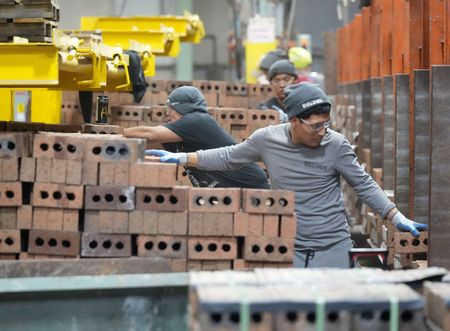
For many years, electricity costs at the Belden Brick Company in Sugarcreek, Ohio, remained fairly predictable. Then last year, those bills shot up by 90% — a surge driven largely by the growing appetite for power from data centers moving into the region.
The brick manufacturer, which has been in business for 141 years and whose products appear in landmark structures including the Texas Alamo and Notre Dame University, has seen its monthly capacity charge balloon from $1,600 to $12,000.
Belden Brick is far from alone. Factories throughout America’s industrial heartland are grappling with climbing electricity costs as data centers built to support the artificial intelligence industry spread across the same regions where manufacturing has long been rooted.
A Reuters review of federal energy data and conversations with nearly a dozen manufacturers and industry advocates found that factory electricity bills — a fundamental operating expense — are climbing faster than those for most homes and other types of businesses.
Governments at the federal, state, and local levels, responding to both public frustration and concerns about grid stability, are pushing technology companies to shoulder more of the financial burden tied to their expected electricity demand. However, some of the proposals being considered would group smaller factories together with tech giants like Meta and Amazon, even though those companies’ power consumption can exceed that of even large manufacturers by a factor of 50. Meta declined to offer a comment, and Amazon did not respond to a request for one.
Capacity charges are fees designed to compensate power generators for maintaining enough electricity on the grid during periods of peak demand and to encourage the development of new energy supply. These charges typically make up about 10% of a residential electricity bill, but for manufacturers they can account for as much as three times that share, according to manufacturers, attorneys, and energy experts.
Those fees have climbed steeply in the 13-state territory managed by grid operator PJM Interconnection, where supply has stagnated while data centers — each of which can consume as much electricity as a mid-sized town — have multiplied.
A wave of trading activity, fueled in part by the massive SpaceX initial public offering, is expected to deliver impressive second-quarter results for the biggest names on Wall Street, according to analysts and data from LSEG.
Five of the six largest U.S. banks — JPMorgan Chase, Bank of America, Citigroup, Wells Fargo, and Goldman Sachs — are scheduled to release their quarterly earnings on July 14, with Morgan Stanley following a day later on July 15.
Trading has remained a reliable source of income throughout 2026, as ongoing geopolitical tensions and uncertainty tied to artificial intelligence disruption have kept market volatility elevated.
Angad Chhatwal, head of fixed income, currencies, and commodities at Coalition Greenwich, a global analytics and data provider for the financial services industry, said market revenue for the world’s largest banks is expected to climb at least 15% compared to the same period last year.
Jamie Vickers, head of equities at Coalition Greenwich, pointed to stocks as the key growth driver. “Equities is set to be the primary engine of growth across global markets. The SpaceX IPO will have generated significant revenues in banking but also for certain cash-equities desks during the quarter,” Vickers said.
Goldman Sachs and Morgan Stanley, both of which played major roles in the nearly $86 billion SpaceX IPO, are expected to lead the pack in equities performance, according to Morningstar analyst Sean Dunlop. Banks involved in the SpaceX deal reportedly collected around $500 million in fees combined.
Dunlop did offer a note of caution, however, saying that while second-quarter trading revenue remains solid, it may not match the exceptional pace of the first quarter. That earlier period was driven by unusually intense volatility stemming from the initial Iran war shock and related inflation and interest rate shifts.
Investment banking has also been a standout performer, with large-scale equity offerings and multibillion-dollar transactions pointing to the most active deal-making climate in years. Global investment banking revenue reached $61.4 billion in the first half of 2026, a 24% increase over the same stretch a year ago, according to Dealogic data. JPMorgan held the top spot globally for investment banking revenue, while Goldman Sachs led in merger and acquisition advisory work.
Among the quarter’s notable transactions were chip designer Cerebras’ $6.4 billion IPO and a massive $85 billion share sale by Alphabet, the parent company of Google.
LOAN GROWTH ADDS TO THE PICTURE
Banks are also expected to benefit from stronger loan activity and wider net interest margins — a measure of the difference between what banks earn on loans and what they pay out on deposits.
Federal Reserve data indicates that loan growth picked up speed in the second quarter, particularly in commercial and industrial lending, analysts noted.
Jefferies analyst David Chiaverini highlighted a shift in business sentiment: “While some uncertainty persists from geopolitical factors and market volatility, many banks are reporting that clients are increasingly viewing the current environment as the ‘new normal’ and continuing to move forward with investment plans.”
Investors are expected to closely watch executive commentary on the economic outlook for the remainder of 2026, especially as inflation continues to weigh on consumers. Morningstar analyst Austin Taggart noted that credit quality and overall loan demand will be critical factors in sustaining the recent rally in bank stocks through the second half of the year.
WHAT THE BANKS ARE SAYING
JPMorgan Chase CEO Jamie Dimon told investors at a conference in May that the bank’s investment banking fees could grow by 10% or more in the second quarter.
Bank of America Co-President Jim DeMare said in June that the bank may surpass an earlier projection of 15% growth in second-quarter markets revenue, driven by its equities business.
Citigroup Chief Financial Officer Gonzalo Luchetti said at an investor conference in June that trading revenue is expected to rise in the high-single to low-double digit range for the quarter, with investment banking revenue projected to climb by a mid-teen percentage.
Wells Fargo CFO Mike Santomassimo said in June that the bank’s net interest income is expected to “step up” in the second quarter.
Goldman Sachs announced in a LinkedIn post on June 16 that it has advised on more than $1 trillion in announced mergers and acquisitions so far in 2026, citing Dealogic data — a record pace for any investment bank within a half-year period.
Morgan Stanley CEO Ted Pick said last month that it was “a pretty good time to be in the capital markets business,” adding that there is a lot of core investment banking activity underway.
Below are second-quarter 2026 earnings-per-share estimates compared to the same quarter last year, based on LSEG data as of June 30:
JPMorgan Chase: estimated $5.70 vs. $5.24 in Q2 2025
Bank of America: estimated $1.11 vs. $0.89 in Q2 2025
Citigroup: estimated $2.68 vs. $1.96 in Q2 2025
Wells Fargo: estimated $1.71 vs. $1.60 in Q2 2025
Goldman Sachs: estimated $13.91 vs. $10.91 in Q2 2025
Morgan Stanley: estimated $2.84 vs. $2.13 in Q2 2025
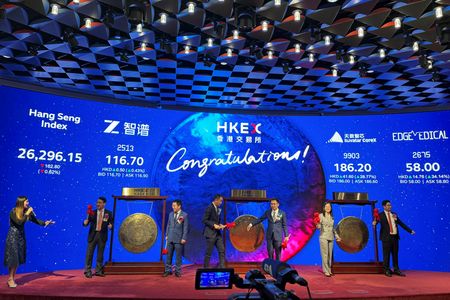
Luxshare Precision Industry, a China-headquartered manufacturer and major supplier to Apple, announced Tuesday that it has priced its Hong Kong stock listing at the highest point of its advertised range, bringing in roughly HK$24.27 billion — or about $3.09 billion in U.S. currency.
The company, which is already listed on the Shenzhen stock exchange, set its offer price at HK$63.28 per H-share and plans to sell 383.5 million shares in total.
According to its prospectus, Luxshare intends to put the funds raised toward several goals: growing its manufacturing operations in automotive and consumer electronics, upgrading its factories with artificial intelligence technology, making acquisitions, paying down debt, and covering general business expenses.
A notable share of the proceeds will go toward expanding the company’s automotive electronics division — a sign that Luxshare is pushing beyond its traditional consumer electronics roots and positioning itself more firmly within the rapidly expanding intelligent vehicle supply chain.
The company said it anticipates releasing information about investor demand for its international offering, along with allocation results, on July 8. Shares are then expected to begin trading on the Hong Kong Stock Exchange at 9:00 a.m. local time on July 9.
Luxshare was founded by Chinese billionaire Wang Laichun and has grown into one of Apple’s largest manufacturing partners. The company produces a range of electronic products, including routers, wireless charging modules, and video conferencing equipment.
(Exchange rate reference: $1 = 7.8425 Hong Kong dollars)
SpaceX is set to become part of the Nasdaq 100 index on Tuesday, a milestone that analysts expect will generate billions of dollars in new demand for the company’s shares as investment funds scramble to realign their portfolios.
The rocket and satellite company made its stock market debut on June 12, and its entry into the Nasdaq 100 just 15 days later ranks among the quickest index inclusions on record. The fast-track addition was made possible by updated Nasdaq rules that allow newly listed companies to qualify for widely followed benchmarks more quickly than before.
When a company enters an index like the Nasdaq 100, funds designed to mirror that index must purchase its shares to stay in sync. With more than $587 billion currently invested in funds that track the Nasdaq 100 — including Invesco’s QQQ and QQQM — the demand for SpaceX shares is expected to be substantial. J.P. Morgan estimated last month that the index inclusion could bring in approximately $4.3 billion in passive investment flows.
Tuesday also marks the end of the mandatory quiet period for analysts at the banks that led SpaceX’s blockbuster initial public offering — Goldman Sachs, Morgan Stanley, BofA Securities, Citigroup, and J.P. Morgan. That means Wall Street is now free to publish its first formal valuations of the company.
Both Goldman Sachs and Morgan Stanley launched coverage of SpaceX on Tuesday with their highest ratings. Morgan Stanley gave the company the notable label of “AI’s final frontier.”
Goldman Sachs analysts expressed confidence in the company’s direction, saying, “We see the company as well-positioned to scale its differentiated advantages across space, connectivity, and AI,” and projected that each of those markets could grow into multi-trillion-dollar opportunities over a five-year-plus timeframe.
Brokerages RBC, Bernstein, and Stifel also initiated coverage with top ratings, focusing heavily on Starship — SpaceX’s next-generation rocket engineered to be fully reusable. RBC analysts described the vehicle as the engine behind the company’s broader ambitions, saying, “The Starship is the flywheel that powers SpaceX’s ambitions.”
Earlier this month, Oppenheimer became the first brokerage to start coverage of SpaceX, assigning it an “outperform” rating.
Much of the investor enthusiasm is tied to SpaceX’s potential as an artificial intelligence infrastructure company. Analysts believe the firm could use revenue generated from its existing operations to fund the development of Grok, an AI product competing against OpenAI’s GPT models and Anthropic’s Claude. Investors also see room for Starlink, SpaceX’s satellite internet service, to further cement its position in the global communications market.
Not all analysts share the optimism, however. Morningstar placed SpaceX’s value at roughly $780 billion — far below its current market capitalization of $2.1 trillion — citing uncertainty surrounding its AI ventures, including xAI and social media platform X.
At $2.1 trillion, SpaceX currently ranks as the sixth-largest company in the United States, and its CEO is recognized as the world’s first trillionaire.
SpaceX’s stock has climbed more than 6% since its debut, though the ride has included typical post-IPO swings in share price.
FTSE Russell added SpaceX to its U.S. indexes last month, with funds such as the iShares Russell 1000 ETF already offering investors exposure to what has been called the largest IPO in U.S. history. However, S&P Global chose not to create a similar fast-track process for the S&P 500 in June, meaning it could be at least a year before SpaceX appears in the world’s most closely watched stock index.
Asian stock markets fell sharply Tuesday even as a surge in artificial intelligence-related stocks pushed Wall Street’s S&P 500 close to a historic record the day before.
South Korea’s Kospi index dropped 7.6%, settling at 7,444.13. Shares in both Samsung Electronics and SK Hynix each fell 8.7% — a steep decline that came despite Samsung reporting its operating income jumped 19 times over to 89.4 trillion won, equivalent to $58.7 billion, in the most recent quarter. The company’s revenue also more than doubled during that period.
Stephen Innes of SPI Asset Management offered a striking take on the situation. “The first proper AI stress test may not have arrived with weak demand, a capex warning, or some sudden crack in the data center story. It may have arrived with Samsung posting an extraordinary quarter and the stock falling anyway,” he wrote in a commentary.
AI stocks have been swinging wildly amid growing concerns that valuations have climbed too high, with investors questioning whether the massive spending on AI chips and data centers can generate enough returns to justify the investment.
SK Hynix is looking to raise $28 billion this week by listing shares on the Nasdaq in the United States, which would rank it among the largest U.S. stock offerings ever — second only to SpaceX’s IPO last month, which raised $75 billion. SK Hynix’s stock in Seoul has more than tripled this year due to the AI boom, even after recent sharp losses.
Other Asian markets also declined. Tokyo’s Nikkei 225 dropped 1.8% to 68,493.52, with computer chipmaker Tokyo Electron losing 3.4% and Kioxia Holdings falling 10.7%. Hong Kong’s Hang Seng slipped 0.4% to 23,517.70, while China’s Shanghai Composite fell 1% to 3,999.03. Taiwan’s Taiex also lost 1.8%. Australia’s S&P/ASX 200 edged down 0.3%, while India’s Sensex managed a slight gain of 0.1%.
Back in the United States on Monday, the S&P 500 gained 0.7% to close at 7,537.54, landing within 1% of its record high even though most individual stocks within the index actually finished lower. The tech-heavy Nasdaq composite climbed 1.1% to 26,121.16, and the Dow Jones Industrial Average rose 0.3% to 53,055.91, setting a new record.
Broadcom was among the biggest drivers of the S&P 500’s gains, rising 3.7% after announcing long-term deals to supply silicon products to Apple. That came after two consecutive losses exceeding 2% the previous Wednesday and Thursday, before the Friday holiday ahead of the Fourth of July.
SpaceX, which is set to join the Nasdaq 100 index of the largest non-financial Nasdaq stocks, gave up an early gain and ended the day down 1%. Its inclusion in the index will require funds that track the Nasdaq 100 to purchase SpaceX shares.
Also in the AI space, TeraWulf jumped 4.9% after announcing that Anthropic agreed to a 20-year deal to use its data center located in Kentucky. TeraWulf expects the arrangement to generate roughly $19 billion in revenue. The company is currently shifting its focus away from bitcoin mining and toward high-performance computing.
In oil markets, Brent crude — the international benchmark — rose 52 cents to $72.51 a barrel, approaching the level it was at before the United States and Israel struck Iran in late February, which had caused prices to spike. U.S. benchmark crude added 43 cents, reaching $68.98 a barrel.
Uncertainty over oil supplies grew after a tanker traveling near the coast of Oman in the Strait of Hormuz caught fire early Tuesday after being struck by a projectile, according to the British military. The attack was the latest against a vessel passing through the narrow entrance to the Persian Gulf, a waterway through which one-fifth of all globally traded oil and natural gas once flowed during peacetime. Iranian state television said the liquefied natural gas tanker was targeted after failing to heed warnings, though it stopped short of claiming direct responsibility for the assault.
In currency markets, the U.S. dollar dipped to 161.73 Japanese yen from 162.09 yen, and the euro edged slightly lower to $1.1439 from $1.1442.
South Korea’s Samsung Electronics delivered a jaw-dropping earnings forecast Tuesday, projecting a second-quarter operating profit nearly 19 times higher than the same period a year ago — a figure that also surpasses the company’s total combined earnings over the past three years.
Despite the remarkable numbers, investors were not impressed. Samsung shares tumbled more than 8%, and South Korea’s main benchmark stock index fell 6.7%, as traders grew skeptical about whether the surge in artificial intelligence demand powering those results can continue at the same pace.
The sell-off spread across the region, with MSCI’s broadest measure of Asia-Pacific stocks outside Japan declining 1.7%, taking its cues from the South Korean market’s sharp retreat.
Market strategist Michael McCarthy of Moomoo Australia explained the mixed reaction this way: “Investors still want to be exposed, but they are very nervous about valuations.”
The market swings serve as a warning sign about the instability running through stock markets as the AI investment wave expands beyond just semiconductor and chip-equipment companies into energy firms, copper mining operations, and lithium producers.
Early European market futures showed a mixed picture Tuesday morning. The pan-region Euro Stoxx 50 futures were down 0.34%, German DAX futures slipped 0.3%, while FTSE futures edged 0.15% higher. U.S. S&P 500 e-mini futures were slightly positive, up 0.07%.
On the diplomatic front, U.S. President Donald Trump is traveling to Turkey to attend a NATO leaders summit. Before his arrival, European government leaders were preparing to announce arms deals valued at tens of billions of dollars, signaling their increased commitment to regional defense.
In currency markets, Japan’s yen strengthened slightly against the U.S. dollar, gaining 0.15% to trade at 161.83 per dollar and pulling back from the weaker 162 level, with traders remaining watchful for any official intervention.
Key economic events scheduled to influence markets include the Bank of England’s financial stability report, German industrial output figures for May, British Halifax housing data for June, Canadian leading index and trade balance figures, and U.S. trade data for May.
Two passengers can board the same flight headed to the same city and have experiences that feel worlds apart — and that gap is growing by design.
Picture one traveler gliding through a priority security line, settling into an exclusive lounge with handcrafted cocktails and chef-prepared food, then stepping onto the plane early to be greeted with champagne and a warm towel before sinking into a roomy seat up front.
Now picture another traveler waiting in line at every turn — security, a terminal café charging $16 for a sandwich, a packed gate — then boarding among the last group, hoping to squeeze a carry-on into an overhead bin before wedging into a middle seat. Sleep comes in broken stretches, and a travel pillow barely helps.
None of this is by chance. Since the COVID-19 pandemic, the country’s major airlines have made a deliberate push to attract high-spending travelers willing to pay for comfort and exclusivity. Budget flyers are increasingly noticing the widening divide between the front and back of the plane as carriers build their business models around first-class, business-class, and premium-economy seating.
“We can’t win by trying to provide the cheapest. We have to be able to win by providing the best,” Delta Air Lines CEO Ed Bastian said during a recent Fortune podcast interview.
Delta, along with rivals American Airlines and United Airlines, has embraced this approach — a significant shift for an industry that spent decades making flying more affordable and accessible. The nation’s largest carriers are now reconfiguring planes to add more premium seats, designing new aircraft with bigger luxury cabins, and spending billions on amenities that extend the high-end experience beyond the flight itself.
United’s CEO Scott Kirby, however, has pushed back against the notion that airlines are only chasing big spenders. He argued that United’s premium investments are part of a wider effort to improve the experience for all passengers, pointing to things like seatback entertainment screens and upgrades to the airline’s app.
“We’re investing nose to tail for all customers,” Kirby said last month on financial firm Morgan Stanley’s Exceptional Leaders podcast.
This shift didn’t happen overnight. Airlines used to fill empty first-class seats largely by giving free upgrades to their most loyal frequent flyers. Delta changed the game in the early 2010s by using advanced pricing tools to offer those seats to coach passengers willing to pay a bit more, according to Henry Harteveldt, president of travel advisory firm Atmosphere Research Group.
That move revealed demand airlines hadn’t fully tapped into, encouraging more travelers to upgrade and setting the stage for today’s broader premium push.
“Travelers could and would pay for noticeably more comfort, noticeably better service, noticeably more amenities, if the price was right,” Harteveldt said.
Then the pandemic hit. When corporate travel dried up and video calls replaced business trips, industry analysts wondered if airlines would have to lure passengers back with deeply discounted fares. Instead, leisure travelers proved eager to spend on premium seats and perks — convincing airlines that the appetite for luxury extended well beyond the traditional business traveler, Harteveldt said.
That confidence has only strengthened over time. Premium revenue has become a regular talking point on quarterly earnings calls, with airline executives frequently highlighting it as they compete for higher-spending customers.
“When you think about what’s different and what’s changed over the last 10 or 15 years, the premium products used to be loss leaders, and now they’re the highest-margin products,” former Delta President Glen Hauenstein said last summer. “That’s really the headline.”
Analysts note that premium cabins — a category that grew with the addition of premium economy seats offering extra legroom and perks at a lower price point — now generate a disproportionately large share of airline revenue relative to the physical space they occupy on a plane.
On busy transatlantic routes, business-class tickets can bring in nearly as much revenue as all the fares and fees collected from the far larger economy cabin, according to an analysis by consulting firm McKinsey & Company.
The luxury makeover of air travel is hard to miss, even for those who only catch a glimpse through a lounge door or while walking down the aisle.
Delta’s new first-class lounges look more like upscale restaurants, complete with open kitchens, cocktail bars, soundproof relaxation pods, and outdoor decks overlooking the runway. American has updated its premium cabin menus with “globally inspired dishes” — including crispy maitake mushroom and fried chicken bao topped with yuzu aioli — developed in partnership with the James Beard Foundation. The airline also redesigned its newest Boeing 787-9 Dreamliners for long international flights, featuring private business-class compartments with sliding doors, lie-flat seats longer than a standard twin mattress, and amenity kits that may include a celebrity facialist’s line of sheet masks and under-eye patches.
United’s newest business-class suites come with oversized 27-inch entertainment screens, caviar service, luxury skincare products, and multi-course meals on long-haul international flights. The airline said its revamped menus “feature flavors and dishes” inspired by cities throughout its network.
“Marie Antoinette would feel very comfortable on any of the big three airlines these days,” said William J. McGee, senior fellow for aviation at the American Economic Liberties Project. “But instead of saying, ‘Let them eat cake’ in the back of the plane, she would say, ‘Let them eat Biscoffs.’”
The airlines show no signs of slowing their pursuit of premium passengers. On Delta’s next-generation Airbus A350-1000 aircraft, set to arrive in 2027, nearly half the cabin will be devoted to premium seating. American has announced plans to expand its premium cabins by 50% before the end of the decade.
Yet this new era of in-flight luxury is playing out against a very different reality for many travelers, as inflation has squeezed household budgets across the country.
New York-based travel advisor Mary Auteri said more of her clients are “experiencing sticker shock” as fares and added fees have climbed since the Iran war began and pushed up the price of jet fuel — one of the biggest operating costs for airlines.
A group of friends in their 20s recently asked Auteri to find flights to the beaches of Punta Cana, a resort destination in the Dominican Republic. After she sent them an itinerary, they said they had spotted what appeared to be the same flights on Google Flights for more than $100 less.
But those cheaper fares were basic economy tickets that didn’t include seat assignments, checked bags, or the flexibility to change plans. Once those costs were factored in, the trip no longer fit their budget.
Add-on costs like checked-bag fees and seat-selection charges hit economy travelers the hardest, McGee said. For wealthier passengers, those fees are little more than a minor inconvenience. For travelers watching their spending, they can be the deciding factor in whether a trip happens at all.
“The idea that we’re all created equal? Not in the airlines’ eyes,” McGee said. “Not by any means.”
Smartphone sales in China took a significant hit during the country’s 618 shopping festival, falling 13% compared to the same period last year, according to new figures from Counterpoint Research.
The decline covered the period from May 26 through June 21, with nearly every major Chinese smartphone brand suffering double-digit drops. Honor saw its sales plunge 33%, while Xiaomi recorded a 24% decrease. The culprit, analysts say, was a combination of higher device prices and fewer aggressive promotions than shoppers saw during last year’s event.
The reason behind the pullback on discounts traces back to the cost of memory chips. The rapid expansion of artificial intelligence infrastructure has driven up memory prices, squeezing smartphone makers and leaving them with little room to slash prices during what is traditionally one of China’s biggest retail moments.
Ivan Lam, a senior analyst at Counterpoint Research, explained the situation this way: “Some older and newer models from Chinese smartphone brands were priced higher than comparable models a year earlier, while discounts during this year’s 618 festival were generally less aggressive, both in terms of the size of price cuts and the range of products covered.” He added, “Apple’s prices were broadly unchanged, but its discounts were also smaller.”
Huawei Technologies stood out as the clear exception, capturing a 21% market share and posting a 19% increase in sales year-over-year. Its Enjoy 90 Pro Max was its top-selling device, and the Mate 80 also performed well thanks to promotional support.
Apple, meanwhile, saw its sales slip 9% from a year ago, despite moving up to the second-place position in the market. The company had rolled out incentives roughly a month before June 18, offering savings of as much as 2,000 yuan — approximately $295 — on the iPhone 17 Pro series through a combination of official price reductions, platform subsidies, and trade-in offers. Even so, Apple’s numbers trailed last year’s figures, partly because promotions for the iPhone 16 series were more substantial during the same stretch in 2024.
The 618 festival traces its origins to a single-day event commemorating JD.com’s founding on June 18, 1998. Over the years, it has expanded into a month-long retail campaign, with e-commerce platforms competing intensely for consumer dollars.
In recent years, though, China’s major shopping festivals have lost some of their former energy. Extended discount windows and cautious consumer spending have dampened enthusiasm for big purchases, even when prices are reduced.
Counterpoint noted that the festival did help smartphone sales rebound in June compared to May. However, the research firm cautioned that the market is likely heading into a seasonal lull and could see shipments fall by double digits for the full year.
Asian stock markets retreated on Tuesday despite an extraordinary profit forecast from South Korea’s Samsung Electronics, while the Japanese yen continued to struggle near levels not seen in four decades.
Samsung Electronics, recognized as the world’s largest manufacturer of memory chips, projected operating profit for the April-through-June quarter at 89.4 trillion won — equivalent to roughly $58.44 billion. That figure represents a nearly 19-times increase over the same period last year and marks a third consecutive quarter of record operating profit for the company.
Despite the impressive forecast, South Korean shares dropped sharply, falling 4.1%. The MSCI’s broadest measure of Asia-Pacific stocks outside Japan slid 0.73%, and Japan’s Nikkei index declined 1.08%.
Toru Suehiro, chief economist at Daiwa Securities, offered an explanation for the unusual market dynamic, saying the recent surge in AI-related stocks has likely been fueled by economic and inflation concerns, with investors seeking shelter in that sector amid worries about the broader outlook — including rising tensions involving Iran.
“While it would be healthier for share prices to move in line with the economy and the real economy, those conditions do not change that rapidly,” Suehiro wrote, adding that markets were therefore likely to stay range-bound for the time being.
On Wall Street the night before, all three major U.S. stock indexes finished in positive territory, driven by expectations that artificial intelligence will power a strong second-quarter earnings season. The Dow Jones Industrial Average gained 0.29%, the S&P 500 climbed 0.72%, and the Nasdaq Composite rose 1.12%.
In other corporate news, South Korean chipmaker SK Hynix launched a U.S. share sale on Monday aimed at raising 43 trillion won, or about $28.07 billion, drawing interest of up to $7 billion from major investors. Separately, Broadcom announced an expanded partnership with Apple to develop and supply custom chips through 2031.
On the currency front, the yen remained pinned to the weaker side of 162 per dollar in early Asian trading on Tuesday, and fell to nearly its lowest level against the British pound since 2007, touching 217.09. Traders have grown increasingly bold in pushing the yen lower, as Japanese authorities have yet to step in — though the possibility of a surprise intervention continues to limit how far the currency falls.
A senior analyst at MUFG Bank, Akihiko Yokoo, noted that Japan is scheduled to hold an auction of 30-year government bonds Tuesday. A weak auction result could push government bond yields higher and accelerate further selling of the yen, he said.
The dollar index, which tracks the U.S. currency against a range of peers including the yen and euro, edged up 0.03% to 100.89. The euro dipped 0.01% to $1.1439.
Oil prices ticked higher but gains were modest as traders shifted focus to potential supply increases and questions about future demand, following a drop to pre-Iran war price levels on Monday. U.S. crude rose 0.54% to $68.92 per barrel, while Brent crude climbed 0.49% to $72.34 per barrel.
President Donald Trump said Monday that the United States would either reach a deal with Iran or “finish the job,” renewing his threat of military action as Tehran expressed defiance following the funeral of former Supreme Leader Ayatollah Ali Khamenei.
Trump is set to attend a NATO meeting in Turkey this week. Federal Reserve watchers will also be paying close attention Wednesday when the Federal Open Market Committee releases its minutes — the first under new Chair Kevin Warsh.
The yield on the benchmark U.S. 10-year Treasury note edged up slightly to 4.483%, compared with 4.479% the previous session.
In commodity markets, gold fell 0.49% to $4,143.59 per ounce. Silver dropped nearly 1% to $61.47 per ounce, and copper slipped 0.21% to $13,375.00 per ton.
Australian logistics software firm WiseTech Global announced Tuesday that co-founder Richard White has stepped down from his role as executive chair, effective immediately. In his place, Raelene Murphy has been named the company’s new independent chair.
Murphy joined the WiseTech board at the beginning of this year and was designated lead independent director back in May before assuming her current position.
Following the announcement, WiseTech shares climbed as much as 10.6%, reaching A$39.12 as of 0028 GMT — their highest point since June 15. The stock became the top gainer in the S&P/ASX 200 benchmark index.
White addressed the situation directly, stating that “recent personal media attention is creating an unnecessary distraction from the strength of WiseTech’s business.” He added that he “strenuously and unequivocally” denies the allegations that have appeared in recent media coverage.
Reports that surfaced in late June indicated that the Australian Federal Police had launched an investigation into White over allegations that he exploited a woman’s immigration status for sexual purposes and submitted false information in a visa application.
White also expressed concern about the financial impact of the coverage, saying, “I am conscious that personal attacks on me in the media that are unconnected to the performance of the Company nevertheless have the potential to encourage short-selling activity.”
Murphy offered her own perspective on White, saying, “My personal experience working with Richard is totally at odds with media reports.”
In an official statement, WiseTech said, “As always, the Board and its advisers will continue to monitor and consider any developments on matters reported in the media.”
The company’s stock has shed nearly 70% of its value since allegations surrounding White’s personal life first emerged in late 2024.
WiseTech had previously stated in June that any alleged investigation pertained to White in a personal capacity and that the company itself had no knowledge of an investigation as described in media accounts.
Analysts at RBC Capital Markets noted that while the board changes are a step in the right direction, “the market will likely want to see evidence that the refreshed board, CEO, and Chief Innovation Officer, operate independently before attributing any meaningful re-rating.”
Australian stocks were essentially unchanged on Tuesday, with losses in gold, mining, and consumer sectors canceling out gains made by banks and technology companies. Adding a bright spot to the session, software giant WiseTech Global climbed to its best level in almost three weeks following the announcement of a new chairperson.
The S&P/ASX 200 index dipped 0.1% to 8,824.70 by 0012 GMT, following a 0.2% decline the previous Monday. U.S. markets surged overnight, and oil prices settled back near levels seen before recent Iran-related tensions.
Traders were closely monitoring ongoing discussions between the United States and Iran regarding the future of shipping through the Strait of Hormuz, along with the pace of recovery in Gulf oil exports.
Attention was also focused on the upcoming release of minutes from the U.S. Federal Reserve’s June meeting, scheduled for Wednesday, which could offer insight into the interest rate outlook under Chairman Kevin Warsh.
In Sydney, gold-related stocks dropped 1.5% as bullion prices softened. Northern Star Resources, Australia’s largest publicly listed gold miner, fell 1.2%.
The broader mining sector lost 0.7%, with iron ore heavyweight Rio Tinto sliding 0.9%. Consumer staples edged down 0.1%, with supermarket chains Woolworths and Coles slipping 0.4% and 0.5%, respectively.
Financial stocks helped cushion the overall losses, gaining 0.4%. The country’s four major banks each rose between 0.2% and 0.3%.
Technology shares advanced 0.7%, following the lead of overnight gains on the Nasdaq, putting the sector on pace for a third consecutive session in positive territory.
WiseTech Global surged as much as 8.1% after the company named Raelene Murphy as its new independent chair. Co-founder Richard White will continue in his dual roles as executive director and chief innovation officer.
Healthcare stocks gained 0.7%, reaching their highest point in roughly two and a half months, driven by investors shifting money into the previously beaten-down sector.
Across the Tasman Sea, New Zealand’s benchmark S&P/NZX 50 index climbed 0.2% to 13,797.33, also on track for a third straight session of gains.
Attention in New Zealand is now turning to the Reserve Bank of New Zealand’s policy meeting on Wednesday. Economists surveyed by Reuters widely expect policymakers to raise interest rates for the first time in more than three years.
The way investors think about Chinese assets is undergoing a notable shift. Steady returns during the turmoil surrounding the Iran war and the global AI investment boom have demonstrated that China’s markets are moving to their own beat — making them an increasingly attractive hedge against worldwide volatility.
That change in perception has pushed money into China’s bond market and led investors to seek out Chinese stocks whose performance is tied to factors separate from global trends.
“The role of China in portfolios is evolving from a simple emerging-market growth allocation toward a more nuanced source of diversification,” said Christopher Hamilton, head of client investment solutions for Asia Pacific ex-Japan at Invesco, a firm managing roughly $2.2 trillion in global assets. “Diversification is ultimately about combining exposures that respond differently to economic and market conditions, and China is increasingly being assessed through that lens.”
Since the Middle East conflict broke out at the end of February, China’s bond market has outperformed every other in the world. The yuan has also stood apart as the only major currency to have strengthened against the U.S. dollar during that same stretch.
Those currency gains helped mainland blue-chip Chinese stocks post a nearly 11% increase in dollar terms during the first half of the year. That performance trailed the roughly 13% gain in the S&P 500 and fell well short of the remarkable 110% surge in South Korea’s KOSPI, but it was achieved without the same dependence on AI enthusiasm or sensitivity to U.S. interest rate movements that have driven other markets.
“It means that when we allocate to, and assess, Chinese assets, it is no longer determined by short-term valuations, trading sentiment or changes in the Federal Reserve’s interest rates,” said Liu Gongrun, executive deputy director at the CEIBS Lujiazui International Institute of Finance, a Shanghai-based think tank.
Analysts point to several reasons why China’s markets have become more insulated from global forces. The country’s economy is out of sync with the inflationary cycles seen elsewhere in the world, and its stock market is heavily driven by individual retail investors whose priorities differ sharply from those of global fund managers.
Chinese regulators, state-owned banks, and government-backed investors have also made market stability a clear policy priority — a stance analysts say has been a key factor behind the yuan’s impressive performance.
The Chinese currency has climbed 5.4% against the dollar over the past 12 months, even as the dollar has broadly strengthened and Chinese bond yields have remained extremely low. Strong export activity and a deliberate government push for a slow, gradual currency appreciation have both played a role.
Forecasters expect the yuan to climb further. Global banks have revised their year-end projections upward, anticipating gains beyond June’s 3-and-a-half-year high of 6.7522 per dollar.
“Yuan strength is sort of detached from traditional bog-standard long-run drivers like how the economy is doing,” said Kelvin Lam, senior economist at Pantheon Macroeconomics. “Instead, it is policy driven — the intention from the authorities to project currency stability at a time of global chaos.”
The shift in sentiment has brought major global asset managers back to Chinese markets — a remarkable turnaround for a market that some investors had labeled “uninvestable” just a few years ago.
“There has been renewed demand for China bonds, which we believe was driven by relative safety and low volatility,” said Wee Khoon Chong, Asia-Pacific macro strategist at BNY.
China’s benchmark 10-year government bond yields have dropped nearly 10 basis points to 1.73% since the Iran war began, while U.S. 10-year yields have risen by 51 basis points over the same period. The Chinese bond market recorded net foreign inflows for the first time in more than a year during May, the most recent month for which figures are available.
Foreign ownership of onshore Chinese A-shares also grew, rising from 3.67 trillion yuan — about $541 billion — at the close of last year to more than 4 trillion yuan, according to Liu Haoling, vice chairman of China’s securities regulator, who shared the figures at a forum in late May. China stopped releasing regular equity capital flow data in 2024.
Not everyone is convinced, however. Manulife John Hancock Investments has maintained a neutral to underweight stance on Chinese stocks in some of its strategies, citing weaker earnings growth compared to markets like South Korea or Taiwan, according to co-chief investment strategist Matthew Miskin. Others point to China’s sluggish consumer spending and its prolonged property market slump as reasons for caution.
“We aren’t thinking of it as a safe haven,” said Tom Graff, chief investment officer at Facet in Phoenix, Maryland. “We certainly want to find assets that are less correlated to U.S. markets, but in doing so we’re primarily thinking about risks around the AI trade and the U.S. dollar. Developed markets and some non-China emerging markets can serve that purpose just fine.”
Still, many investors find themselves drawn to the unique characteristics behind China’s divergence from global market trends.
“We’ve long seen China’s market, especially onshore-listed China A-shares, as a rare source of diversification,” said Phillip Wool, head of portfolio management at Rayliant Investment Research. “Now, in addition, you’ve got an actual economic decoupling that’s happening.”
Oil prices nudged upward on Tuesday, though the rally was modest as traders moved past recent geopolitical concerns in the Middle East and set their sights on rising supply levels and the broader demand picture.
Brent crude futures climbed 28 cents, or 0.39%, reaching $72.29 per barrel, while U.S. West Texas Intermediate crude rose 29 cents, or 0.26%, to $68.84 a barrel as of 0046 GMT. Both benchmarks had settled near pre-Iran war levels on Monday.
Tim Waterer, chief market analyst at KCM Trade, described the current mood in the market: “The steps towards recovery in supply have eased the immediate risk premium, but the market remains wary of putting too much faith in the stability of the current truce given the on again-off again nature of U.S.-Iran relations.”
On Monday, President Donald Trump renewed his threat of military action, saying the United States would either reach a deal with Iran or “finish the job.” The statement came as Tehran signaled defiance following the funeral of former Supreme Leader Ayatollah Ali Khamenei.
Market participants have been closely monitoring diplomatic discussions between Washington and Tehran over the status of shipping lanes through the Strait of Hormuz, while also keeping tabs on the rebound in oil exports from Gulf nations.
According to Reuters estimates, the United Arab Emirates boosted crude production above 3.8 million barrels per day in June — the highest level since April 2020 and above pre-Iran war output — after stepping outside OPEC+ production quotas in May.
Waterer offered a cautious outlook on what comes next, saying: “We will be watching for early signs of demand response, particularly from China. The market has priced in a lot of the positive supply news, so the next leg in oil prices will depend on whether physical reality matches the optimistic headlines.”
Adding further downward pressure on prices, the Organization of the Petroleum Exporting Countries and its allies, including Russia, agreed Sunday to raise output targets by an additional 188,000 barrels per day starting in August — building on similar increases already set for June and July.
Saudi Arabia also announced a significant price cut, lowering its August official selling price for Arab Light crude to Asia to $1.50 below the Oman/Dubai average. That represents an $11 reduction from the prior month and marks the steepest price drop in more than two decades, according to a pricing statement from Saudi Aramco released Monday.
The Japanese yen slipped further on Tuesday as currency traders, seeing no action from Japanese officials to prop up the currency, pushed it even lower — though the lingering possibility of a surprise move by Tokyo kept the losses from spiraling out of control.
During early Asian trading, the yen was struggling on the weaker side of 162 against the U.S. dollar. Against the British pound, the yen sat near its lowest point since 2007, trading at 217.09. The euro, meanwhile, was buying 185.47 yen after climbing about half a percent in the prior session.
Lee Hardman, a senior currency analyst at MUFG, explained the situation: “There had been speculation at the end of last week that Japan could intervene again to support the yen during the U.S. holiday when trading conditions were less liquid, but no action has been taken, contributing to the yen giving back some of its recent gains.”
Late last week, the yen had found some footing as traders grew cautious about a possible change in Japan’s approach to currency intervention. However, analysts noted that a sharp jump in the yen on Thursday was not believed to be the result of official government action.
On the broader currency stage, the U.S. dollar was on uncertain ground. Investors have been pulling back their expectations for American interest rate increases this year after a jobs report came in well short of forecasts. The euro inched up to $1.1442, building on overnight gains, while the British pound climbed to a more than two-week high of $1.34005. Measured against a basket of global currencies, the dollar stood at 100.86.
Markets are currently pricing in approximately 29 basis points of Federal Reserve rate increases by December — down from around 38 basis points just one week ago.
Carol Kong, a currency strategist at Commonwealth Bank of Australia, offered her take: “I think current market pricing is probably a little bit underpriced… we still think that the FOMC will have to start tightening from December… markets are thinking that the rate-hiking cycle will start a little bit sooner than we expect, but the extent of the (hikes) is still below our expectations.”
Attention is now turning to the release of minutes from the Federal Open Market Committee’s June meeting on Wednesday, which investors hope will shed light on where interest rates are headed.
Kong added a note of caution about how revealing those minutes might be: “We know that (Chair Kevin) Warsh doesn’t like providing forward guidance, so I think the minutes tomorrow will probably be less informative than previous minutes.”
Elsewhere in currency markets, the Australian dollar held steady at $0.6955, while the New Zealand dollar edged up 0.02% to $0.5702.
Several major American banks, among them JPMorgan and Bank of America, have reportedly been holding early-stage conversations about acquiring a network owned by financial technology company Fiserv, according to a report published Monday by the Wall Street Journal.
The Journal cited sources familiar with the matter in its reporting. Reuters, which first picked up the story, noted it was unable to independently confirm the details at the time of publication.
Word of the potential deal had an immediate effect on the market — Fiserv’s share price climbed 4.3% in after-hours trading following the report’s release.
SEOUL — Samsung Electronics announced Tuesday that it expects its operating profit for the second quarter to soar by 1,810% compared to the same period one year ago, driven largely by growing demand for memory chips tied to artificial intelligence technology.
The world’s largest memory chipmaker projected its April-through-June operating profit at 89.4 trillion won — the equivalent of approximately $58.44 billion — according to a regulatory filing. That figure came in above an LSEG SmartEstimate of 87.3 trillion won, and represents a dramatic increase from the 4.7 trillion won the company reported in the same quarter a year earlier.
The sharp rise in profits reflects a broader trend in the semiconductor industry, where AI-related demand has been pushing memory chip prices steadily upward.
Semiconductor and software company Syntiant Corp took a major step Monday, submitting its filing for an initial public offering in the United States.
The move adds Syntiant to a growing list of artificial intelligence-related companies that have gone public this year, as a wider resurgence in the U.S. IPO market continues to take shape. Investors have shown increasing confidence, fueling demand for new stock offerings across the tech sector.
According to a note from J.P. Morgan, more than $260 billion in equity issuance is anticipated to hit the market this year.
Syntiant intends to list its shares on the Nasdaq Global Market, where it will trade under the ticker symbol “SYTN.”
Citigroup, BofA Securities, UBS Investment Bank, and Needham & Company are serving as underwriters for the offering.
Wall Street finished Monday in positive territory, driven largely by a comeback in semiconductor stocks that gave the Nasdaq its biggest percentage gain among major indexes. At the same time, oil prices edged lower as traders braced for a potential surge in crude supply following recent conflict.
Here is a look at the key stories shaping the markets today:
1. The U.S. services sector showed signs of slowing momentum, though employment figures within the sector improved.
2. Microsoft announced plans to cut 4,800 positions, representing roughly 2.1% of its total global workforce.
3. Broadcom announced it would extend its chip development partnership with Apple through 2031.
4. South Korean chipmaker SK Hynix launched a share offering in the United States aimed at raising approximately $28 billion, capitalizing on the growing demand for artificial intelligence technology.
5. German industrial orders came in stronger than expected in May as concerns over supply chain disruptions eased.
6. Lockheed Martin announced it will acquire naval defense firm Ultra Maritime from private equity company Advent for $3.45 billion, amid rising global demand for military technology.
Monday’s Market Snapshot:
Stocks: All major U.S. indexes gained ground, with the tech-heavy Nasdaq leading the way. Europe’s STOXX 600 index retreated from a record high it had recently set.
Sectors and Shares: Chip companies were the standout performers. AMD, Qualcomm, and Taiwan Semiconductor each posted gains exceeding 4%. Real estate, housing stocks, and homebuilders were among the weakest performers of the day.
Currency: The U.S. dollar saw little movement overall, while the Japanese yen drifted toward levels that could prompt government intervention, keeping investors on edge.
Bonds: U.S. Treasury yields held relatively steady following last Thursday’s weaker-than-expected jobs report, which had tempered expectations for future interest rate increases.
Commodities: Both front-month WTI and Brent crude oil futures settled down 0.2%. Gold pulled back slightly after reaching a two-week high.
Key Talking Points:
Iran Funeral Processions: Iran is holding a week of large-scale funeral ceremonies for Supreme Leader Ayatollah Ali Khamenei, who was killed along with several family members in an airstrike shortly after the United States and Israel declared war on February 28. Iranian President Masoud Pezeshkian was seen among mourners on the streets of Tehran. However, Mojtaba Khamenei — the son who succeeded his father as leader and was wounded in the same attack — has not been seen publicly.
Euro Zone Recession Risk: The European Stability Mechanism warned that renewed conflict in the Middle East and a potential selloff of U.S. assets represent the two greatest threats to the euro zone economy. If both occur simultaneously, the ESM cautioned, the region could slide into recession and see inflation climb toward 5%. The ongoing Iran conflict and the economic disruption caused by the closure of the Strait of Hormuz — a critical global shipping route — have already rattled financial markets worldwide. As the ESM’s report stated, “Rising political uncertainty, longer-run fiscal sustainability concerns, and stretched equity valuations built on artificial intelligence-related earnings expectations create the potential for a sudden asset price correction emanating from the U.S.”
China Missile Test: China’s military launched a missile from a nuclear-powered submarine into the Pacific Ocean, according to the state-run Xinhua news agency. The move drew sharp condemnation from Japan, Australia, New Zealand, and Taiwan. While Xinhua did not identify the specific missile type, state-controlled outlet the Global Times, citing a military expert, reported it was likely the JL-3 — China’s most advanced submarine-launched missile, which made its public debut at a military parade last year. According to a Pentagon report, the JL-3 has the range to reach the continental United States from Chinese coastal waters.
What Could Move Markets Tomorrow:
Investors will be watching for further developments in the Middle East, any social media posts from Trump, and testimony from Federal Reserve Chair Kevin Warsh before the House Financial Services Committee. Economic data releases will include the U.S. trade balance for May, France’s trade balance for May, and industrial output figures from Germany, Finland, Norway, and Denmark. Inflation data from the Netherlands, Estonia, Hungary, and the Czech Republic are also due. Traders will also be monitoring the possibility of yen intervention by Japanese authorities.
President Donald Trump announced Monday that Walmart has agreed to reduce prices across many of its products, following a request from his administration tied to the country’s 250th anniversary celebration.
Among the specific price cuts Trump highlighted, he said the retail giant will be lowering the cost of a pound of ground beef by “almost” 15%.
Trump took to his Truth Social platform to celebrate the announcement, calling it a significant moment for American shoppers. “This is a huge deal for the many millions of Americans who, smartly, shop at Walmart, which is a truly patriotic Company who loves the U.S.A.,” he wrote.
Goldman Sachs announced Monday that Evan Kotsovinos has come aboard as a new partner and head of asset and wealth management engineering, making the move from tech giant Google to the prominent banking firm.
According to the bank, Kotsovinos will collaborate with teams throughout the asset and wealth management division, as well as GS Engineering, focusing on investment performance, the client experience, risk management, and everyday operations.
Prior to joining Goldman Sachs, Kotsovinos held the role of head of privacy, safety and security at Google, where his responsibilities included overseeing artificial intelligence safety and data protection efforts.
His professional background also includes leading technology infrastructure at American Express, and he previously held engineering leadership positions at Morgan Stanley across both Europe and Asia.
Microsoft has announced plans to cut 4,800 jobs — approximately 2.1% of its worldwide workforce — with a substantial number of those positions coming from its Xbox video game division, the company revealed Monday.
Among those losing their jobs are 1,600 Xbox employees, and the company has signaled that additional cuts are on the way as part of a wider reorganization aimed at giving the gaming brand a fresh start. The Redmond, Washington-based tech giant described the move as a necessary “reset” for Xbox as it navigates an increasingly competitive marketplace.
Xbox CEO Asha Sharma, who stepped into her role leading the gaming division earlier this year, addressed the situation directly in an internal memo. “Our business today is not healthy,” Sharma wrote, adding that the division is “operating at margins that are 3-10x lower than comparable platform and publishing businesses.”
Sharma also pointed to a broader challenge affecting the entire gaming hardware industry, describing it as a severe “hardware crisis” driven by skyrocketing costs for console components. Xbox competes directly with Sony’s PlayStation and Nintendo’s Switch in the gaming console market.
Bitcoin mining company TeraWulf announced Monday it has entered into a 20-year lease agreement with artificial intelligence company Anthropic, a deal the company says is expected to generate approximately $19 billion in contracted revenue. The announcement pushed TeraWulf’s stock up more than 10% during early morning trading.
The agreement represents a major step in TeraWulf’s ongoing effort to reduce its dependence on bitcoin mining and build a more stable revenue base through AI customers — a strategic shift the company first signaled in May.
Here are the key details of the deal:
The Anthropic lease is tied to a purpose-built AI infrastructure campus located at TeraWulf’s Justified Data site in Hawesville, Kentucky. The facility is designed to support approximately 401 megawatts of critical IT load. Initial capacity is expected to come online during the second half of 2027, with the campus reaching full capacity by early 2028.
In a separate but related move, TeraWulf also announced it has agreed to sell its 50.1% ownership stake in the Abernathy joint venture to an investor group led by partner Fluidstack. The company said the sale will recoup its roughly $450 million investment at a premium over what was originally put in, while also freeing up capital to invest in AI infrastructure projects it fully owns.
Prior to Monday’s surge, TeraWulf shares had already climbed about 85% so far this year.
Abu Dhabi Commercial Bank, ranked as the United Arab Emirates’ third-largest financial institution by assets, announced Monday that it has successfully resolved a technology-related disruption that had been impacting select banking services over the previous week.
The bank did not disclose the root cause of the problem, but described it as something that “affected the ability of certain customers to access services through our mobile banking app, most notably payments and transfers.”
According to the bank, the disruption was not constant — it occurred intermittently, lasting only a few hours on the days when customers were affected. Officials emphasized that at no point during the outage were customer data or account balances placed at risk.
The bank clarified that only a portion of its retail “Aspire” customer base experienced the issue. Services for corporate clients and other banking systems had remained fully functional and stable for the four days leading up to the announcement.
Abu Dhabi Commercial Bank is primarily owned by the Abu Dhabi government, through its sovereign wealth fund, Mubadala Investment Company.
COPENHAGEN — Two major global shipping companies are taking their first steps back toward the Suez Canal trade route, more than a year after militant attacks in the Red Sea pushed them off course.
Maersk announced Monday that it and fellow shipping group Hapag-Lloyd will restart some voyages through the Suez Canal as part of their shared Gemini network. The news sent shares of both companies lower, as investors worried about the potential downward pressure on freight rates.
Most major shippers abandoned the Asia-Europe corridor through the Suez Canal after Yemen’s Houthis began attacking vessels in the Red Sea. Companies were forced to reroute ships around Africa’s Cape of Good Hope — a significantly longer journey that drove up shipping costs and made freight more expensive worldwide.
“This joint decision with Hapag-Lloyd comes after thorough assessments of the security situation in the Red Sea area and marks a step towards a gradual return to the trans-Suez corridor,” Maersk said in a statement.
The change involves the AE15 service, which links Asia, the Mediterranean, and Europe. A Hapag-Lloyd spokesperson said the shift will cut the length of the journey by four weeks.
Before the Houthi attacks began, the Suez Canal and Red Sea route was the fastest connection between Europe and Asia and handled roughly 10% of all global ocean trade, according to data from Clarksons Research.
Maersk said the two companies have no plans to adjust any other Gemini services at this time and will continue watching developments in the Middle East closely. “Any alteration to services within the Gemini Cooperation will remain dependent on the ongoing stability in the Red Sea area and absence of any escalation in conflicts in the region,” the company stated.
Maersk shares fell 5.8% and Hapag-Lloyd dropped 2.7% as of 1251 GMT Monday.
Jyske Bank analyst Haider Anjum described the move as a significant signal of what may come next. “We view this as the first step that will pave the way for a full return to the Red Sea by the end of this year,” Anjum wrote in a note to clients. “A full return, and thus more efficient capacity management, combined with the prospect of new ships being delivered in 2027 and 2028, should put pressure on freight rates and, consequently, on shipping companies’ earnings.”
The two companies had previously resumed their joint ME11 service — which connects India and the Middle East with the Mediterranean via the Suez Canal — back in mid-February, with ships traveling under naval escort. However, those Red Sea transits were suspended again in late February following the outbreak of the Iran war, Maersk said in a separate statement Monday.
Broadcom announced Monday that it has reached an agreement to extend and expand its partnership with Apple through 2031, covering the development and supply of custom chips. The news sent Broadcom’s stock climbing nearly 4% in premarket trading.
The chipmaker has long been a key supplier to Apple, providing radio frequency chips that allow iPhones to connect to cellular networks, as well as Wi-Fi, Bluetooth, and other networking semiconductors.
According to analysts, Apple makes up roughly 20% of Broadcom’s yearly revenue, placing it among the chipmaker’s most important customers. Even as Apple has developed some of its own chips — including the C1 modem — it continues to depend on Broadcom for wireless and radio-frequency components.
The deal reflects Apple’s broader strategy of securing long-term supply agreements with critical chip manufacturers to strengthen its supply chain. The two companies had previously announced a multibillion-dollar agreement in 2023 for Broadcom to develop and manufacture 5G radio frequency components.
The growing demand for custom chips has been driven in part by the boom in AI inference — the process through which AI models generate responses to user questions — which has intensified competition among chip suppliers and increased orders for advanced processors.
For its in-house processors, including the M-series chips used in Mac computers and the A-series chips found in iPhones, Apple relies on Taiwan’s TSMC, the world’s largest contract chipmaker. However, TSMC has been stretched by surging demand from AI chip companies such as Nvidia — a situation Apple’s CEO noted in April had affected iPhone sales.
Apple is also reportedly in talks with Intel to produce some chips domestically, though analysts say large-scale production is unlikely to begin before late 2027.
The company was also forced to raise prices on its MacBooks and iPads in June after memory chip costs surged by as much as 98% in early 2026, a spike driven by demand from AI data centers.
Defense contractor Lockheed Martin has reached an agreement to acquire Ultra Maritime, a company specializing in naval defense, in a deal worth $3.45 billion.
Private equity firm Advent, which currently owns Ultra Maritime, announced the transaction on Monday.
Volkswagen CEO Oliver Blume is facing what may be the defining moment of his tenure this week, as he attempts to convince the German automaker’s supervisory board to approve a sweeping round of job cuts and factory closures aimed at keeping pace with fast-moving Chinese competitors.
Board members are set to gather at the company’s headquarters in Wolfsburg on July 9 to weigh what analysts are calling potentially the most sweeping structural transformation in the history of the world’s second-largest automaker.
The proposed overhaul faces fierce resistance from unions and key shareholders who hold enough influence to block it. If it moves forward, it would represent a turning point for Blume, 58, as Volkswagen grapples with growing pressure from Chinese rivals, shrinking profit margins, and heavy tariffs on vehicles entering the United States.
“He has to get this done. With the market becoming hyper competitive there is no other option,” said independent auto analyst Matthias Schmidt, who put Blume’s odds of success at 50-50. Schmidt suggested a possible middle-ground outcome involving the closure of two of the four proposed plants rather than all four.
According to sources familiar with the plan, it calls for significant cost reductions, the closure of four factories, and approximately 50,000 additional job cuts — a scope that goes well beyond a restructuring deal reached less than two years ago. Those cuts would come on top of 50,000 reductions already planned across the broader group, highlighting the mounting pressure on Blume to pursue deeper change at Europe’s top automaker by sales volume. The company’s shares are currently trading near their lowest levels in 16 years.
The 2024 restructuring agreement — which called for eliminating 35,000 positions by 2030 — was seen at the time as a win for unions, since it avoided factory closures and forced layoffs until the end of the decade.
Blume is also feeling pressure from Porsche SE, Volkswagen’s largest investor, which has absorbed tens of billions of euros in writedowns tied to its core stake in the automaker. Porsche SE has argued that cost-cutting measures alone are insufficient and that the company’s overall business model needs to be rethought.
The broader challenge reflects a longstanding tension at Volkswagen: unions hold no ownership stake in the company, yet they carry substantial sway over major strategic decisions through their representation on the supervisory board. That dynamic has proven costly for previous leaders — union opposition played a key role in ending the tenures of both Herbert Diess in 2022 and Bernd Pischetsrieder in 2006.
“Blume is simply the one who’s in charge now, so it’s fair to hold him accountable for the strategies he proposes and whether they’re effective,” said Marc Liebscher of SdK, a group that represents smaller Volkswagen shareholders. “Cost cuts are not a strategy… They’re just delaying the inevitable decline.”
Blume, who took over as CEO in September 2022, has built a reputation for seeking compromise and managing the competing interests of Volkswagen’s many stakeholders — including the Porsche and Piech families, the nation of Qatar, and the German state of Lower Saxony.
His task has grown more complicated following the unexpected resignation last month of shareholder representative Susanne Wiegand from the supervisory board. Her departure left labor representatives holding 10 of the board’s 19 seats, which effectively strips Chairman Hans Dieter Poetsch of his ability to cast a tiebreaking vote — a power he can only use when shareholder and labor sides are deadlocked.
“Without the labor union, you can’t take any action,” said German automotive industry analyst Ferdinand Dudenhoeffer, who described the core problem as a clash between higher-cost German manufacturing and cheaper, more agile production operations in China. “VW has to be reformed, but the biggest problem of VW is Germany. This is a pretty serious problem and the question is whether the future of VW lies in Wolfsburg or Anhui (province in China),” he added.
Hendrik Schmidt of DWS, one of the ten largest shareholders in the company, called for a harder look at Volkswagen’s portfolio of brands and suggested that Blume has been too consumed by managing crises to focus on the company’s long-term direction. Even so, Schmidt noted that the controlling families believe replacing Blume at this moment would only create more turmoil. “So whilst they may be watching the way forward with gritted teeth, they are also aware that there are no immediate alternatives at this stage,” he said.
U.S. stock futures were trending upward Monday morning, continuing the momentum from last week’s strong performance as chip stocks found their footing and investors prepared for a busy week of economic data and corporate earnings.
The Dow Jones Industrial Average closed at an all-time high last Thursday during a holiday-shortened trading week, bringing it close to the 53,000 mark — a level the index has never reached. The major indexes each gained roughly 2% over the course of the week.
Those gains came even as semiconductor stocks — which have been among the market’s biggest movers this year — began losing steam. Investors have found reassurance in recent strength from the healthcare, industrial, and financial sectors, viewing it as a possible sign that the broader market rally is expanding beyond chip and artificial intelligence stocks.
“This week, investors will continue to question technology valuations: whether they have gone too far, whether they make sense, or whether this is another great bubble — like railways or dot-com — waiting to burst,” said Ipek Ozkardeskaya, a senior analyst at Swissquote Bank.
Chip stocks showed signs of recovery before Monday’s opening bell. Memory-chip manufacturers Western Digital, Seagate, and Micron Technology posted premarket gains of 3.2%, 2.2%, and 2.3%, respectively.
As of 7:24 a.m. Eastern Time, Dow E-mini futures slipped 23 points, or 0.04%, while S&P 500 E-mini futures climbed 33.5 points, or 0.44%, and Nasdaq 100 E-mini futures jumped 324.25 points, or 1.1%.
South Korean chipmaker SK Hynix is set to launch a U.S. stock listing on Monday, aiming to raise approximately $28 billion, according to regulatory filings. The move is seen as another gauge of investor enthusiasm for companies tied to artificial intelligence.
SpaceX rose 1.7% in premarket trading ahead of the company’s scheduled addition to the tech-focused Nasdaq 100 index on Tuesday.
Second-quarter earnings season is set to gain traction later in the month, presenting another key test for the markets. Delta Air Lines and PepsiCo are among the companies expected to release results later this week. According to data from LSEG, S&P 500 companies are projected to report earnings growth of 24.4% compared to the same period last year.
Federal Reserve interest rate policy remains a central focus for investors, who are reassessing expectations for future rate moves. Bets on a rate hike eased somewhat last Thursday following a jobs report that came in cooler than anticipated.
According to CME’s FedWatch tool, traders currently see a 24% probability of a 25-basis-point rate hike at the Fed’s July 29 meeting, down from roughly 30% the week prior. For September, markets are pricing in approximately a 44% chance of a quarter-point increase, compared to 48.3% a week ago.
Expectations for rate hikes had risen following last month’s Federal Reserve meeting, the first chaired by new Fed Chair Kevin Warsh. Minutes from that meeting are expected to be released Wednesday.
Fed Governor Christopher Waller is scheduled to speak in Rome later Monday, and New York Fed President John Williams is expected to offer commentary Thursday. The Fed chair is set to testify before the House Financial Services Committee the following week.
A closely watched survey of the services sector — the ISM services index — is due out Monday and is expected to show a modest dip to 54.0, still considered a healthy reading.
Italian defense company Leonardo is moving to boost its ownership in the country’s national cloud operation by purchasing a 10% stake from state-owned technology firm Sogei, according to sources who spoke with Reuters.
Leonardo currently holds a 25% share in the National Strategic Hub, commonly referred to as PSN, and the additional acquisition would bring its total ownership to 35%. Sources familiar with the situation indicated the deal could be formally announced before the end of this month.
PSN sits at the center of Italy’s effort to shift sensitive government data and public sector services onto secure cloud infrastructure. That initiative is supported by approximately €2 billion — equivalent to about $2.3 billion — drawn from the European Union’s post-pandemic Recovery Fund.
According to Sogei’s 2025 financial statements, the company carried its stake in the cloud venture at just €7 million on its books. While the transaction itself is relatively modest in financial terms, it is part of a larger reorganization of PSN’s ownership structure designed to concentrate control among shareholders with a clear purpose in the sector, one source explained.
State-backed conglomerate Poste Italiane is also a key player in the reshuffle. Earlier this year, Poste’s Chief Executive Matteo Del Fante announced the company would be acquiring a 20% stake in PSN from state lender CDP.
Looking further ahead, Poste has set its sights on controlling 65% of the cloud company. That goal is connected to Poste’s ongoing takeover bid for TIM, which is currently PSN’s largest single shareholder with a 45% ownership stake.
The restructuring is expected to facilitate the departure of shareholders who originally joined the cloud project as financial backers or without specialized expertise in the industry, a source noted.
Discussions are also continuing around how the company will be governed going forward. Under the arrangement currently being considered, Poste would have the authority to name the chief executive, while Leonardo would select the chairperson, sources said.
Leonardo, Poste, and TIM all declined to provide comment. CDP and Sogei were not immediately reachable for a response.
A senior official at Britain’s Financial Conduct Authority is urging the agency to examine whether widely used AI chatbots should be brought under formal financial regulation, as more consumers turn to these tools for money-related guidance.
Financial Conduct Authority Executive Director Sheldon Mills raised the concern on Monday, noting that the existing regulatory framework will need to be updated as financial firms grow increasingly dependent on a small number of major technology providers — a trend he warned could create system-wide vulnerabilities.
Mills’ assessment of AI’s impact on the financial sector comes at a time when regulators around the world are grappling with a range of AI-related challenges, from cybersecurity and operational risks tied to cutting-edge AI models — including Anthropic’s Mythos — to the complications posed by so-called agentic systems that can operate with minimal human oversight.
Central to his findings is the rising use of general-purpose large language models by everyday consumers. The review revealed that more than one in four UK consumers place their trust in tools such as OpenAI’s ChatGPT, Anthropic’s Claude, and Google’s Gemini when seeking financial advice. Many of those users are reportedly unaware that the consumer protections that apply to regulated financial services do not cover these AI platforms.
OpenAI, Anthropic, and Google did not respond to requests for comment.
Mills recommended that the FCA take action within the next three to six months to evaluate whether it should “secure and adapt” its regulatory boundaries by assessing the reach, nature, and effect of general-purpose AI models that currently fall outside its jurisdiction.
FCA Chair Ashley Alder backed the call for action, stating: “We need to keep pace with a rapidly changing environment and the principles-based, outcomes focussed approach we’ve taken on AI.”
The review also pointed to broader industry trends. A recent survey found that 81% of financial firms worldwide have adopted AI at some level, with 40% already in more advanced phases of scaling or transformation.
While most AI applications in the financial sector are still concentrated in lower-risk back-office operations, British firms are increasingly putting AI to work in customer-facing roles — including managing complaints and offering investment guidance.
Mills also cautioned that if the financial industry continues to rely heavily on AI, firms could end up dependent on a very limited pool of technology providers for critical functions. That shared dependence on the same models, cloud services, or tech infrastructure could lead to similar behavior across firms, create herd-like tendencies, and produce common points of failure throughout the financial system.
South Korean chipmaker SK Hynix officially launched a U.S. share offering on Monday, seeking to raise 43 trillion won — roughly $28.07 billion — as the company looks to capitalize on the worldwide boom in artificial intelligence technology.
Three major investment firms — Baillie Gifford Overseas, investment funds run by Coatue Management, and Situational Awareness Partners — have each separately indicated they are interested in purchasing a combined total of up to $7 billion worth of SK Hynix’s American depositary receipts, known as ADRs. None of the three firms responded to requests for comment.
SK Hynix plans to sell 17.79 million new shares through ADRs listed on the Nasdaq. Under the structure, every 10 ADRs will represent one common share. A filing submitted Monday set a reference price of 242,500 won per ADR, based on the company’s closing stock price in Seoul on July 3.
The offering arrives at a time when Asian semiconductor companies are moving to tap into strong global appetite for AI-driven stocks. Taiwan’s Unimicron Technology is also pursuing a roughly $1.4 billion share sale through global depositary shares.
SK Hynix’s stock in Seoul fell 3.4% on Monday to close at 2,343,000 won, though shares have still gained approximately 260% so far this year. South Korea’s broader KOSPI index was down 0.5% on the same day.
Memory chip stocks have experienced significant price swings in recent trading sessions, partly due to growing investor uncertainty about how much longer the current boom will continue.
Di Zhou, a portfolio manager at Thornburg Investment Management — a Santa Fe, New Mexico-based firm with $60 billion in assets that holds SK Hynix’s Korean ordinary shares — described the current environment as a major industry milestone. “We are in the midst of a memory super cycle, with all three major suppliers — Samsung, SK Hynix, and Micron — riding the AI driven demand wave,” Zhou said. She added that the ADR listing was a positive development because it would expand the company’s investor base and could potentially close the valuation gap between SK Hynix and its U.S. rival Micron.
Albert Yong, a managing partner at Petra Capital Management, expressed confidence in the offering despite recent turbulence. “While market volatility has been quite high recently, I would expect demand for SK Hynix shares to remain relatively robust,” he said.
The listing comes just days after South Korea unveiled a sweeping national strategy focused on semiconductors and AI, including a $576 billion chip investment program in the country’s southwest. The South Korean government said SK Hynix and Samsung Electronics will serve as anchor participants in that investment effort.
South Korean President Lee Jae Myung on Monday directed officials to move swiftly on the major chip and AI initiatives announced last week, warning that delays in permitting, land acquisition, and securing power and water supplies could jeopardize the country’s ambitions to lead in advanced industries.
SK Hynix has emerged as one of the biggest beneficiaries of the global AI investment surge, outpacing rivals Samsung and Micron in recent performance.
Dave Mazza, the chief executive officer of Roundhill Investments in New York — which manages an exchange-traded fund that tracks DRAM manufacturers and is among the most common ways U.S. investors access SK Hynix stock — said the listing carries broader significance. “This is more than a liquidity event,” Mazza said. “SK Hynix has been one of the most important companies in the world that most U.S. institutions could not easily own.” He added: “The listing removes an accessibility discount, not a quality discount.”
Steve Sosnick, chief strategist at Connecticut-based Interactive Brokers, said the U.S. listing would primarily benefit individual investors and smaller institutions rather than large ones. “The new listing will make it easier for capital-hungry Hynix to directly access a new group of momentum-hungry investors,” Sosnick said.
SK Hynix said money raised through the ADR listing will go toward constructing chip manufacturing facilities in South Korea and purchasing chipmaking equipment, including an extreme ultraviolet scanner produced by Dutch equipment maker ASML.
The final price for the New York listing is set to be determined on Thursday, with trading expected to begin on Friday, according to regulatory filings. Company leadership will be meeting with global investors throughout the week as part of a roadshow.
The deal is projected to become the second-largest share sale on record, trailing only a record $85.7 billion initial public offering by SpaceX last month. It would surpass Saudi Aramco’s $25.6 billion IPO in 2019 and a similarly sized offering by Alibaba in 2014.
Some investors have raised concerns that rising memory chip prices could eventually slow spending on AI infrastructure, mobile devices, and personal computers. “We expect better access, but timing of the memory cycle is equally important,” said Sundeep Gantori, Standard Chartered’s chief investment officer of equities. “We believe memory cycle is beyond the early phase and now in the mid-cycle stage.”
SK Hynix is a critical supplier of high-bandwidth memory chips used in AI systems by major technology customers including Nvidia and Alphabet’s Google. Analysts say the company is expected to be added to the chip-heavy Philadelphia SE semiconductor index, a move that could trigger a significant wave of passive investment into the stock.
Last month, HSBC announced it would raise its valuation of SK Hynix by applying a 20% premium to its previous price-to-book multiple of 2.8 times, bringing it to a multiple of 3.4 times, citing “more proactive shareholder-friendly initiatives and improved accessibility to global investors.”
Financial markets kicked off the new week with a mixed performance Monday, as Asian stocks dipped while U.S. futures edged higher ahead of the first round of second-quarter corporate earnings reports.
Investors coming back from the July 4th holiday weekend and the nation’s 250th anniversary festivities are now turning their attention to company profits, while also processing last week’s surprisingly weak U.S. jobs report. That report helped dial back expectations for interest rate increases and pushed global stocks to their best weekly showing in two months.
Tech stocks and the ongoing artificial intelligence boom remain a central focus for Wall Street this week as trading returns to normal. Chip stocks, which had surged in the first half of the year even as the broader group of top tech companies struggled, got caught up in last week’s tech selloff and could face additional pressure in the days ahead.
The chip-heavy KOSPI index slipped 0.5% Monday ahead of Samsung Electronics reporting earnings on Tuesday. The South Korean tech company is expected to show an 18-fold increase in profit, driven by soaring demand for AI memory chips — though large bonus payouts to employees could put a dent in those results.
In other tech developments, rival chipmaker SK Hynix is moving forward with a U.S. stock listing Monday, aiming to raise $28 billion, with shares expected to begin trading on the Nasdaq on Friday. Additionally, Elon Musk’s SpaceX is set to join the Nasdaq on Tuesday.
The broader earnings season is getting underway, with companies in the S&P 500 expected to report profit growth exceeding 24% for the second quarter. Among the first major U.S. companies to release results later this week are Delta Air Lines and PepsiCo — both considered useful indicators of how American consumers are holding up financially.
That consumer health check takes on added significance following last week’s headline market story: a June jobs report that came in well below expectations. Nonfarm payrolls rose by just 57,000 jobs — far fewer than the 110,000 analysts had predicted. Payroll numbers for April and May were also revised downward by a combined 74,000 jobs.
The disappointing employment figures led investors to scale back their expectations for Federal Reserve rate increases as early as September. U.S. stocks received some lift Thursday as a result, though continued weakness in tech stocks kept pressure on the Nasdaq. Globally, stocks posted their strongest weekly performance in two months, with a broad international index climbing roughly 2%.
Notes from the Federal Reserve’s June meeting, which took a more aggressive tone on rates, are due out Wednesday. These could give investors additional insight into policymakers’ thinking, though the comments largely predate recent changes in oil flows through the Strait of Hormuz.
On the energy front, oil prices fell further to below $72 a barrel Monday morning. Prices were relatively flat last week as concerns about supply eased with oil flows returning through the Strait of Hormuz. That picture was further supported by OPEC+ announcing a new production quota increase on Sunday.
Whether that increased output actually materializes depends on tankers continuing to safely pass through the strait — which in turn hinges on ongoing negotiations between the U.S. and Iran toward a lasting peace agreement.
In currency markets, the U.S. dollar lost some of its recent strength following last week’s jobs report but nudged higher again early Monday. Gold, which tends to benefit when interest rates are lower, recovered some ground last week but eased slightly Monday as the dollar strengthened. The Japanese yen continued to weaken toward 40-year lows, moving past 162 per dollar, keeping traders on alert for possible government intervention.
On the geopolitical front, Turkey is hosting a NATO summit Tuesday and Wednesday. President Trump is expected to meet with Ukrainian President Volodymyr Zelenskiy in an effort to push forward a resolution to the nearly four-and-a-half-year-old conflict. Ukrainian drone strikes have continued to damage Russia’s oil refining infrastructure, forcing the world’s third-largest oil producer to import gasoline. Russia has also carried out two deadly attacks on the Ukrainian capital of Kyiv within the span of less than a week.
Key events to watch Monday include the U.S. ISM services index for June at 10 a.m. Eastern time, and remarks from Federal Reserve official Christopher Waller.
American families are jumping on back-to-school sales earlier than ever this summer, scooping up deals on backpacks, electronics, and other school necessities even as rising food and gas prices leave many households feeling the pinch.
Amazon.com, Walmart, Target, and Best Buy have all launched their back-to-school promotions ahead of their usual schedules, stretching what used to be a late-summer shopping window into a full summer sales season. Events similar to Amazon Prime Day have become an unofficial starting gun for back-to-school spending, with retailers aggressively competing for shoppers watching their wallets.
The early bargain hunting reflects growing stress among households dealing with higher everyday costs and increasingly expensive school supplies.
Parents are looking for discounts on the basics while still budgeting for trend-driven items — from customizable pencil cases, erasers, and bento lunch boxes to JanSport and North Face Borealis backpacks, Stanley and Owala water bottles, and dorm accessories trending on TikTok and Instagram.
Julie Kelley, founder of a media consulting company in Vermont and mother of an 11-year-old, described how rising costs are shaping her spending habits. “With the kind of higher gas prices and higher food prices, I am definitely more aware of how I am going to spend my money heading toward back-to-school. I tend to be a consumer who chooses wisely versus just shops for a lot of things,” she said.
According to PwC, families are expected to spend an average of about $922 on back-to-school shopping this year — roughly 47% more than in 2025, with part of that increase tied to higher prices linked to the Iran war. The back-to-school season accounts for about 2.3% of all annual U.S. retail sales, with approximately $128.2 billion spent in 2025, according to the NRF.
Children’s input is also playing a bigger role in what ends up in the shopping cart. Kelly Pedersen, PwC’s global retail leader, noted that about 61% of households plan to let their children add products directly to online carts after finding them on social media.
Target said its June sales event gave shoppers a head start on trending back-to-school items. Amazon confirmed it had deals in its back-to-school and college categories but did not provide additional details.
Shoppers were also purchasing higher-priced electronics and clothing, where discounts were steepest during late June Prime Day promotions, according to Adobe Analytics. Those categories have faced inconsistent demand as household budgets have tightened.
The move toward online shopping continues to grow, with Amazon and Walmart leading the way. PwC expects the share of consumers planning to shop in-store for back-to-school items to drop to about 70% this year, down from 79% last year.
Together, the two retail giants captured about 71 cents of every new dollar spent online in 2025, according to Morgan Stanley, as both expanded delivery options and product selections to attract shoppers.
Walmart’s four-day deals event last month featured small appliances aimed at college students in dorms and bulk classroom supplies for teachers. The retailer said it will also stock back-to-school supplies closer to the actual start of school, from mid-August through early September.
Jeffrey Degner, a research fellow at the American Institute for Economic Research, explained what that timing means for retailers. “That’s the time then for retailers to make a value play on the less trendy items,” he said. “We’re going to see a lower-margin timeframe when it comes to August and September.”
Markets took notice earlier this year when sugar and ethanol producer Raizen pursued the largest out-of-court debt restructuring in Brazilian history, valued at $12.5 billion. But as it turns out, Raizen was far from the only company heading down that road.
After enduring years of crushing interest rates that rank among the steepest anywhere on the globe, a rising tide of Brazilian businesses are negotiating directly with their creditors to get out from under heavy debt loads — all while sidestepping the expense and complexity of formal bankruptcy court proceedings.
According to the Brazilian Out-of-Court Restructuring Observatory, known as Obre, the number of out-of-court restructuring filings climbed from just 16 in 2021 to 84 last year, touching industries that include manufacturing, mining, retail, agribusiness, and logistics. Another 33 companies have already taken the same step so far this year.
Much of this activity stems from the pressure of a 14.25% benchmark interest rate, known as the Selic rate, which has hit companies especially hard — particularly those that took on large amounts of debt during the pandemic, when that same rate had fallen to a record low of 2%.
But the spike in out-of-court filings is also tied to a 2020 legal reform that strengthened the process in Brazil. Obre director Juliana Biolchi described the change as producing “a cultural shift” in how companies approach financial distress.
Luiz Fabiano Saragiotto, managing partner at Journey Capital, explained that the reform made out-of-court restructurings more adaptable, letting companies leave certain groups of creditors out of negotiations and prompting businesses to address debt problems earlier — before a court-supervised process becomes unavoidable.
Saragiotto said formal, in-court restructuring carries heavy drawbacks because “it involves all creditors, can limit access to financing, damage a company’s reputation and disrupt operations.” He added, “Once a court accepts a restructuring filing, that label tends to stick.”
The out-of-court approach lets struggling companies work directly with select groups of creditors. Once a simple majority approves a restructuring plan, it becomes binding on all creditors in those categories, which prevents individual holdouts from derailing the agreement.
Biolchi noted that this streamlined process has made out-of-court restructuring “increasingly associated with less severe financial distress” compared to the formal court route.
The tool gained significant attention in Brazil in 2024 when retailer Casas Bahia received court approval for an out-of-court restructuring covering approximately 4.1 billion reais, the equivalent of about $784 million. The company stated that the plan had no impact on suppliers, business partners, customers, or employees.
That high-profile case was followed by several others, including furniture retailer Tok&Stok, also in 2024. More recently, retail group GPA filed in March seeking court approval to reorganize roughly 4.5 billion reais in debt. Companies in agriculture, currently carrying heavy debt burdens, have also embraced the approach.
Boosted by Raizen’s massive deal, the combined debt of companies pursuing out-of-court restructurings has surpassed 109 billion reais in 2026 — up sharply from 41.5 billion reais in 2024 — and financial markets have felt the effects.
Caio Viggiano, managing director for fixed income at investment bank Itau BBA, said that “investors today are more concerned about credit risk,” pointing to global conflicts, elevated interest rates, and the surge in corporate restructurings as contributing factors.
Analysts expect the number of out-of-court restructuring cases to keep climbing in the months ahead. Among those reportedly considering the option is Oncoclinicas, described as Latin America’s largest oncology treatment provider, according to local media reports and a source familiar with the discussions. Oncoclinicas declined to comment on the matter.
India’s biggest information technology companies are bracing for yet another underwhelming quarterly performance, as the rise of artificial intelligence, cautious client budgets, and ongoing geopolitical instability continue to drag on the sector, according to nine brokerages.
The April-through-June period is traditionally one of the stronger quarters for India’s $315 billion IT industry, typically boosted by more billing days and the launch of new projects. However, analysts are now warning that a slow start to the fiscal year could push any meaningful recovery further down the road.
Tata Consultancy Services, India’s largest IT services company, is scheduled to kick off the earnings season on Thursday, with fellow tech giants Infosys, HCLTech, and Wipro set to follow later in the month.
India’s top six IT firms are projected to show roughly 14% year-over-year revenue growth in rupee terms, with net profits climbing 12% to 13%. However, analysts caution that those figures are largely inflated by a sharp drop in the value of the rupee. When exchange rate effects are removed, the actual revenue growth in constant-currency terms is expected to be just 2.8%.
Citi is forecasting a fourth consecutive year of sluggish growth for the sector, while JPMorgan has warned that revenue growth is likely to remain below 3% to 4% for the “foreseeable future.”
The broader IT industry is scrambling to keep pace with shifting client demands, as businesses around the world increasingly turn to AI tools and automated agents to reduce costs and speed up software development.
Hiring across the sector has slowed considerably. TCS Chairman N Chandrasekaran noted that the “day is not far” when his company would have as many AI agents working alongside it as human employees.
Investment firm Nomura described Indian IT companies as being caught in a “perfect storm,” with uncertainty stemming from Middle East conflict adding to the pressure already created by AI-driven pricing changes.
Concerns that AI could upend the IT sector’s traditional labor-heavy business model sent the Nifty IT index down 9.5% during the June quarter, even as India’s broader Nifty 50 benchmark rose 6.9% over the same period. The IT index has now fallen approximately 28% so far in 2026, making it the worst-performing major sector in the country.
According to PL Capital, the effects of AI disruption and reduced client spending will be felt broadly across consumer, high-tech, and telecom segments. The brokerage noted in a recent report that “slower decision-making and elongated sales cycles are leading to delays in revenue conversion and execution.”
Annual revenue guidance will be closely watched by investors this earnings season. Several brokerages believe Infosys and HCLTech may scale back or narrow the upper end of their full-year forecasts.
Adding further uncertainty, the possibility of higher interest rates in the United States — which accounts for roughly 60% of Indian IT firms’ total revenue — continues to loom over the sector’s outlook.
Shares of easyJet climbed sharply in early Monday trading after the British low-cost carrier gave its backing to a £5.5 billion — roughly $7.34 billion — acquisition proposal from U.S. investment firm Castlelake, which was announced over the weekend.
The airline indicated Sunday that it was willing to accept Castlelake’s revised offer of £6.90 per share, a move that could bring an end to drawn-out negotiations and potentially transform the European airline industry. By 7:20 a.m. GMT Monday, easyJet’s stock had climbed 10.9% to £6.18.
The proposed bid represents a premium of nearly 24% above where easyJet’s shares closed the previous Friday.
The potential deal, which would take the airline private and includes a partial equity option for shareholders, arrives at a difficult moment for the aviation sector. Airlines are currently dealing with significantly elevated fuel costs and tightening profit margins tied to tensions surrounding the Iran conflict.
Analysts at JPMorgan raised questions about how Castlelake — an investment firm focused on aviation — and easyJet’s board would navigate European Union ownership rules and settle on a governance arrangement. The position of founder and major shareholder Stelios Haji-Ioannou also remains uncertain.
On Sunday, easyJet confirmed that Castlelake had committed to a “best endeavours” pledge to secure all necessary regulatory approvals.
Castlelake has previously stated it would hold a 49% stake in the acquiring entity, with the remaining shares held by two EU nationals: Peter Bellew, a former CEO of Malaysia Airlines and former chief operating officer of easyJet, and senior industry figure Mark Breen. The arrangement is designed to satisfy EU regulations requiring that airlines flying within the bloc be majority-owned and controlled by EU nationals.
JPMorgan’s analysts also cautioned that while the proposed price aligns closely with investor expectations, shareholder approval is far from certain. The door also remains open for a competing offer, or for other carriers to pursue portions of easyJet’s business.
This latest bid marks the fifth attempt by Castlelake. EasyJet had previously turned down four earlier proposals, dismissing them as opportunistic efforts to acquire the airline at a discount and expressing reservations about the proposed governance structure.
Under British takeover regulations, Castlelake must either formalize its offer or withdraw by August 3.
Solstice Advanced Materials, a company spun off from Honeywell last year, is reportedly in merger discussions with Element Solutions in a deal that could create a combined chemicals company worth roughly $27 billion including debt, according to a report from the Financial Times published Monday.
The two firms are exploring a merger of equals, with the transaction expected to consist mainly of stock along with some cash. According to the Financial Times, which cited people familiar with the discussions, a deal could potentially be finalized as early as this week.
However, the report noted that no formal agreement has been reached and the talks could still collapse without a deal being struck. Neither company provided a response to requests for comment made outside of normal business hours.
The driving force behind the potential combination is booming demand for specialty chemicals used in artificial intelligence data centers and semiconductor manufacturing — two of the fastest-growing sectors in the technology industry.
Solstice makes specialty chemicals and materials serving a range of industries, including semiconductors, refrigeration, nuclear power, and healthcare. The company noted in May that rising demand for its thermal management and refrigerant products — particularly from AI-powered data centers — along with growing needs in semiconductor electronics, has been fueling its business growth.
Element Solutions, which focuses primarily on supplying specialty chemicals for electronics manufacturing, posted more than 40% growth in first-quarter revenue this year, with AI-related demand cited as the main driver.
According to data from LSEG, Solstice carries a market value of approximately $12.73 billion, while Element Solutions is valued at around $10.63 billion. Both companies have seen their stock prices climb sharply in 2025, with Element Solutions shares up nearly 75% and Solstice shares gaining about 65%.
Boeing has put its newest 737 MAX assembly line into operation at its Everett, Washington facility, marking a significant step in the company’s effort to build more of its best-selling narrow-body aircraft.
The new production line, referred to within Boeing as the North Line, began loading its first aircraft on July 6. Boeing CEO Kelly Ortberg announced the milestone in June, describing the Everett line as essentially a replica of the three existing 737 final assembly lines located at Boeing’s Renton facility, south of Seattle.
The launch is happening as Boeing ramps up 737 production from 42 to 47 jets per month, a move coordinated with the Federal Aviation Administration. However, the North Line itself is not expected to contribute to any production rate increases until early 2027, when Boeing is targeting an output of 52 aircraft per month. The company is also exploring the possibility of pushing production as high as 70 jets per month down the road.
Boosting 737 output is critical for Boeing as it works to stabilize its finances after years of manufacturing setbacks, safety controversies, and supply chain difficulties. The FAA placed production caps on the 737 program following a January 2024 incident in which a door plug blew out mid-flight on a nearly new Alaska Airlines 737 MAX 9. That alarming event led to heightened scrutiny of Boeing’s manufacturing practices and forced the company to scale back production while it worked to correct quality control problems.
The Everett plant holds the distinction of being the largest building in the world by volume. While it once hosted production lines for the 747, 767, 777, and 787 jets, significant factory floor space opened up after 747 production ended and 787 assembly was consolidated at a facility in South Carolina.
The 737 MAX goes head-to-head with Airbus’ A320neo family in the competitive single-aisle jet market, where airlines around the world are facing multi-year waits for new aircraft deliveries.
PARIS — Airbus has quietly set an internal delivery target of 900 aircraft for this year, even as the company’s official public guidance remains at 870 jets, according to industry sources familiar with the matter.
The European aircraft manufacturer delivered 89 planes in June, reflecting a growing momentum as the company works through a backlog of delayed deliveries to China and sees some relief from ongoing disruptions in engine supply chains, the sources said.
Bloomberg separately reported that Airbus handed over roughly 90 jets during the month of June.
Airbus did not respond when contacted for comment on the internal goal or its delivery outlook.
Workers employed in Samsung Electronics’ smartphone, television, and home appliance operations are preparing to hold a protest rally later this month, upset over the dramatically higher bonuses recently secured by the company’s semiconductor employees.
The rally is scheduled for July 16 and will take place near Samsung’s headquarters in Suwon, according to the union representing workers in the company’s mobiles and consumer electronics division. That union has approximately 28,000 members.
The semiconductor division’s workers recently reached a wage agreement through a separate union, and the disparity in compensation has sparked outrage among non-chip employees. According to Yonhap News Agency, workers in the appliance and electronics division are expected to receive a bonus of 6 million won — roughly $3,900 — in treasury shares for 2026. By contrast, workers in the semiconductor division could receive bonuses of up to 600 million won.
Yonhap reported that between 2,000 and 3,000 workers are expected to take part in the demonstration.
Meanwhile, Samsung is anticipated to report that its operating profit surged approximately 18 times higher than the same period a year ago when it releases its earnings estimate for the April-June quarter on Tuesday.
LONDON — British broadcaster ITV announced Monday that it has reached an agreement to sell its media and entertainment division to Sky, which is owned by Comcast, in a deal valued at £1.6 billion, or approximately $2.13 billion.
Under the terms of the agreement, ITV will receive £1.2 billion in cash upfront. The deal also includes a potential additional payout of up to £200 million, which depends on advertising performance during the 2027 financial year. As part of the arrangement, ITV will also receive Love Productions — the company behind “The Great British Bake Off” — which will become part of ITV’s remaining studio operations.
Sky CEO Dana Strong described the transaction as a “defining moment” for the British media industry.
The combination of the UK’s largest free-to-air commercial broadcaster with pay-TV provider Sky would have seemed impossible just a few years ago. However, the explosive growth of platforms like YouTube and streaming services including Netflix, Amazon, and Disney has forced long-established broadcasters to seek greater scale in order to remain competitive.
“Bringing Sky and ITV Media and Entertainment together combines the very best of free-to-air television, pay TV and streaming, ensuring viewers across the UK continue to enjoy outstanding British programming in a rapidly changing world,” Strong said.
Strong added: “ITV will remain a public service broadcaster at the heart of British life, and we’re excited about the future we can build together.”
Once the transaction is complete, ITV will operate solely as a production company, creating content for the newly merged ITV-Sky entity as well as other broadcasters and streaming platforms around the world.
The combined ITV Media and Entertainment and Sky operation has pledged to invest a minimum of £2.1 billion in content between 2028 and 2032.
ASM International, the second-largest semiconductor equipment manufacturer in Europe, announced Monday that it intends to nominate Chris Figee for the position of chief financial officer.
The Netherlands-based company said the nomination will be put to shareholders for a vote at an extraordinary general meeting, which is anticipated to take place in March 2027.
Figee currently holds the role of chief financial officer and serves on the board of management at Dutch telecommunications company KPN. He is scheduled to begin his new role at ASM on December 1st of this year.
Figee will take over from Paul Verhagen, who had already announced plans to retire at the conclusion of his current term. Once the shareholder meeting takes place, Verhagen will step down from the CFO position but will continue with ASM in an advisory capacity through the end of his contract.
Artificial intelligence is quietly changing the way some of the world’s most recognizable consumer products are developed — from the shampoo on your bathroom shelf to the cookies in your pantry.
French cosmetics giant L’Oreal began incorporating AI into its laboratory work four years ago, and the results have been significant. The company is now able to develop new products four times faster than it previously could, according to Fabrice Megarbane, president of L’Oreal’s consumer products division.
Megarbane explained that AI has allowed the company to identify molecules originally used in skincare formulas and find new applications for them in hair care. One recent example: a shampoo that uses collagen to add lift and body to hair, developed by repurposing molecules from existing skincare lines.
“You can really go much faster by imagining … new associations of molecules and new benefits of molecules,” Megarbane said during the Consumer Goods Forum’s Global Summit held in Vienna in late June.
L’Oreal’s CEO launched a “beauty stimulus plan” last year aimed at driving innovation after the company reported its slowest sales growth in years.
Other major consumer brands are following a similar path. Chocolate and snack maker Mondelez — the company behind Cadbury and Toblerone — has embraced AI as a tool for recipe development. Chief Information and Digital Officer Filippo Catalano called the combination of human creativity and AI a “game-changer.”
Catalano said the technology can generate recipe concepts, including unconventional ideas, which human experts then review and evaluate. AI has already played a role in creating Gluten Free Golden Oreo cookies and updating the recipe for Chips Ahoy cookies. In the biscuit category alone, 60% of recipes developed with AI assistance showed improvements in nutrition, sustainability, and cost.
“You can optimise how you develop your recipes,” Catalano said, noting that AI also helps reduce reliance on single suppliers and allows companies to adapt formulas as consumer preferences shift.
“(AI capabilities are) accelerating things you could do already, but compressing the time from months to weeks or years to months,” he added.
Nestle, the company behind Nescafe, and Haleon, the maker of Sensodyne toothpaste, are also among the consumer goods companies now using AI in their product innovation efforts, executives said. The broader push reflects growing pressure on consumer companies to move faster and operate more efficiently in a rapidly changing marketplace.
Asian stock markets and U.S. futures were moving in different directions Monday, coming off a long holiday weekend for Wall Street, with technology stocks dragging down markets in Tokyo and Seoul.
Oil prices dropped after OPEC+ revealed Sunday that seven of its member countries plan to collectively boost crude production by 188,000 barrels per day in August. This marks the fifth month in a row that the group has agreed to increase output.
The seven nations moving forward with higher production are Saudi Arabia, Russia, Iraq, Kuwait, Kazakhstan, Algeria, and Oman.
Supply uncertainty remains in the market, however, as negotiations with Iran over fully reopening the Strait of Hormuz appear to be stalled. The pause comes as funeral ceremonies for Ayatollah Ali Khamenei are expected to continue for several more days.
In early Monday energy trading, Brent crude — the international benchmark — slipped 25 cents to $71.87 per barrel. The U.S. benchmark crude price fell 10 cents to $68.59 per barrel.
Japan’s Nikkei 225 index dropped 0.4% to 69,468.17. Technology firm SoftBank Group Corp. fell 3.4%, while chipmaker Tokyo Electron declined 1.4%. South Korea’s Kospi index fell 0.8% to 8,027.12.
Hong Kong’s Hang Seng index rose 0.8% to 23,542.97, and the Shanghai Composite edged up 0.1% to 4,046.71. Australia’s S&P/ASX 200 dipped slightly, down 0.1% to 8,833.20.
In currency markets, the U.S. dollar climbed to 161.92 Japanese yen, up from 161.34 yen. One year ago, the dollar was trading near the 140 yen level. The euro was valued at $1.1432, a slight decline from $1.1440.
U.S. markets were closed Friday, July 3, in observance of Independence Day, since the July 4th holiday fell on a Saturday this year.
Global financial markets got off to one of their calmest weekly starts in recent memory on Monday, with no major geopolitical flare-ups or new trade measures dominating headlines, as much of the world turned its attention to international soccer.
On the geopolitical front, no new progress has been reported in U.S.-Iran peace negotiations. However, the Strait of Hormuz remains partially open to shipping traffic. The United Kingdom Maritime Trade Operations reported 160 vessels passing through the waterway between Monday and Saturday of last week, including 98 tankers. While that figure remains well below the pre-war daily average of 138 transits, the gradual resumption of traffic is seen as a positive sign.
Over the weekend, OPEC+ reached an agreement to increase oil output quotas by 188,000 barrels per day beginning in August. That brings the total production increase since April to nearly 800,000 barrels per day.
Oil prices slipped following that announcement. Brent crude futures are hovering around $72.50 per barrel through December, a sign that traders believe prices have stabilized for now.
Stock markets across Asia posted modest declines, likely driven by investors locking in profits ahead of the upcoming earnings rush. The pullback comes after remarkable gains — South Korea’s primary stock index has surged nearly 90% this year, Taiwan’s market is up 62%, and Japan’s has climbed 37%.
All eyes will be on Samsung Electronics on Tuesday, when the world’s top memory chip manufacturer by sales is expected to report a stunning 18-fold increase in profits. According to an LSEG SmartEstimate, the company is forecast to post an operating profit of 86 trillion won — roughly $56.35 billion — for the April through June quarter.
On Wall Street, Delta Air Lines and PepsiCo are set to release their results ahead of the bigger earnings wave from major banks expected next week. Overall, analysts are projecting earnings-per-share growth of 25% compared to the same period last year, with semiconductor and energy companies expected to account for roughly half of that growth.
Futures tied to the S&P 500 and Nasdaq edged slightly higher after the holiday break, while European futures were little changed following solid gains the previous week.
U.S. Treasury yields dipped slightly as investors grew more confident that the Federal Reserve will hold interest rates steady at its meeting later this month, following a weaker-than-expected jobs report.
Minutes from the Fed’s most recent meeting are due out Wednesday and are expected to reflect a hawkish tone, given that nine members indicated support for at least one rate increase this year. However, that meeting took place before the recent decline in oil prices. Markets currently price in a 22% probability of rates staying unchanged at the July 29 meeting, but a 60% chance of a hike on September 16.
Fed Governor Christopher Waller is scheduled to speak in Rome later Monday. New York Fed Governor John Williams is set to appear Thursday. Those appearances come ahead of Fed Chair Kevin Warsh’s planned testimony before the House Financial Services Committee next week.
The ISM Services survey is also due Monday afternoon, with forecasters expecting a slight dip to 54.0 — still considered a healthy reading.
Key events and data releases to watch Monday include remarks from Fed Governor Christopher Waller, European Central Bank Board members Isabel Schnabel and Philip Lane, ECB President Christine Lagarde, and Riksbank Deputy Governor Anna Seim. On the data side, investors will also be watching EU retail sales and producer prices for May, German industrial output for May, and the U.S. ISM services survey for June.
The U.S. dollar held steady near a two-week low on Monday as investors dialed back their expectations for a Federal Reserve interest rate hike this year. At the same time, Japan’s yen remained pinned close to a 40-year low, leaving markets anxious about what Japanese authorities might do in response.
The euro was trading at $1.1435, not far from its strongest point in two weeks, while the British pound was last changing hands at $1.3351. The dollar index, which tracks the U.S. currency against six others, sat at 100.9 during early trading.
Japan’s yen stood at 161.57 per U.S. dollar, just above the 1986 low of 162.84 it reached last week. Traders remain on alert for potential government intervention after a sudden burst of buying briefly pushed the currency higher on Thursday.
In South Korea, the won gained slightly on the first day of the country’s landmark 24-hour onshore spot dollar-won trading session, trading at 1,534 per dollar.
The dollar posted its largest weekly decline since April last week after the U.S. payrolls report revealed that job growth slowed significantly in June, reducing market expectations that the Fed would raise rates.
However, strategists at OCBC noted that a drop in the unemployment rate suggests the labor market is still tight, which could keep pressure on the Fed to maintain its tightening stance. “The broader USD outlook remains constructive,” they said, holding to their forecast of a moderate 2-3% rise in the dollar during the second half of 2026.
Falling oil prices have helped calm some inflation worries. Investor attention this week is focused on the minutes from the Fed’s June meeting, which could offer insight into how policymakers are thinking about future rate decisions.
Strategists at Commonwealth Bank of Australia cautioned that the minutes might be shorter or less informative than usual, given that Fed Chair Kevin Warsh has expressed the view that the central bank has offered too much forward guidance in the past.
Japan’s yen remains a central focus in currency markets, hovering near its lowest level in four decades. The possibility of official intervention is keeping traders nervous, even though many analysts doubt any such action would produce lasting results.
According to OCBC strategists, intervention risk is more likely to spark short-term volatility and temporary price corrections than any permanent reversal in the dollar-yen exchange rate. “Without a meaningful shift in underlying macro fundamentals, verbal warnings and outright intervention alone are unlikely to change the broader direction of the pair,” they said.
Investors are also paying close attention to signals that Japanese officials may be shifting away from their usual practice of openly warning markets, instead suggesting a more targeted effort to squeeze speculators and make it more costly to bet against the yen.
Marc Chandler, chief market strategist at Bannockburn Global Forex, weighed in on the situation. “The market knows it risks intervention,” he said. “We continue to see signs in the options market that some large pools of capital have bought short-dated dollar puts to protect long dollar positions in the case of intervention.”
Asian stock markets were mostly in positive territory Monday, with Wall Street futures also starting the week on an upbeat note as investors looked ahead to a promising corporate earnings season. Meanwhile, declining oil prices offered some relief from ongoing inflationary concerns.
On the geopolitical front, no new developments emerged in the ongoing U.S.-Iran peace negotiations, though shipping traffic through the Strait of Hormuz continued normally, with 160 vessels reported passing through from Monday to Saturday of last week.
Adding to the downward pressure on energy prices, OPEC+ agreed to boost output targets by an additional 188,000 barrels per day beginning in August, following similar increases already put in place for June and July. Brent crude slipped 0.6% to around $71.70 per barrel — near four-month lows — while U.S. crude fell 0.5% to $68.38 per barrel.
The combination of cooling energy costs and a weaker-than-expected U.S. jobs report led investors to reduce their bets on a Federal Reserve rate increase in the near term. Futures markets now put the odds of the Fed holding rates steady at its July 29 meeting at 78%.
Minutes from the Fed’s most recent meeting are scheduled for release Wednesday, which could shed light on why some board members recently took a more hawkish stance — though that shift came before the latest drop in oil prices.
Richard Yetsenga, head of research at ANZ, offered his take on the situation: “Even if you thought there was a risk the Fed might move soon, I think we’re safe at least for another month.”
He added, “Our view overall still is the Fed won’t do anything, but clearly we’ve been above target on the Fed’s preferred inflation measure for five years. There is some risk that the Fed just runs out of patience.”
With a rate hike this month looking less likely, investors are expected to turn their attention to the approaching earnings season, where the artificial intelligence boom is anticipated to drive strong profits in the technology sector.
This week features just Delta Air Lines and PepsiCo as early reporters, but Samsung Electronics is expected to make a big impression Tuesday. Analysts are forecasting an 18-fold jump in the company’s profits.
Samsung, the world’s largest memory chipmaker by sales, is projected to report an operating profit of 86 trillion won — roughly $56.35 billion — for the April through June quarter, according to an LSEG SmartEstimate.
South Korea’s stock market, which had cooled slightly last week, remains up 92% for the year as AI demand and limited supplies continue to push chip prices higher. The index added another 2.25% on Monday, while Japan’s Nikkei edged down 0.1%.
The MSCI index tracking Asia-Pacific shares outside Japan gained 0.4%. In Europe, EUROSTOXX 50 futures were flat, DAX futures rose 0.2%, and FTSE futures dipped 0.2%. S&P 500 futures gained 0.5%, while Nasdaq futures climbed 1.4%, building on a 2.1% advance from last week.
On the economic data front, the U.S. ISM Services survey is due later Monday, with analysts expecting a slight dip to 54.0 for June — still considered a healthy reading.
Several central bank officials are scheduled to speak at a European Central Bank conference later in the day, including Fed Board Governor Christopher Waller. ECB President Christine Lagarde is also set to address an audience in Paris.
New Zealand’s central bank is also meeting Wednesday, and markets are betting the bank will raise its 2.25% cash rate by a quarter of a percentage point — what would be the country’s first rate hike since mid-2023. However, the recent slide in oil prices introduces some possibility the bank could opt to hold rates steady instead.
In currency trading, the U.S. dollar index steadied at 100.880 following a dip tied to the disappointing jobs report. The euro held flat at $1.1445, just above its recent 13-month low of $1.1325. The dollar remained at 161.45 yen, not far from 40-year highs of 162.84, as traders remain cautious about potential intervention by Japanese authorities.
Gold prices were little changed at $4,177 per ounce after bouncing about 2% last week.
Oil prices slipped slightly Monday following a weekend decision by OPEC+ to push production targets even higher starting next month, while exports from major oil-producing nations through the Strait of Hormuz continue to recover — a combination that could add more supply to global markets.
Brent crude futures dropped 24 cents, or 0.33%, to $71.88 per barrel as of 0010 GMT on Monday, after closing 0.45% higher on Friday. U.S. West Texas Intermediate crude fell 11 cents, or 0.16%, to $68.58 a barrel. WTI had no official Friday closing price because U.S. markets were shut ahead of the Independence Day holiday on Saturday.
Both oil benchmarks finished last week with little movement overall. Prices had been mostly declining in recent weeks as investors closely watched ongoing negotiations between the United States and Iran over tanker access through the Strait of Hormuz, while also monitoring the gradual return of Gulf oil shipments.
On Sunday, the Organization of the Petroleum Exporting Countries and its allies — including Russia — voted to add another 188,000 barrels per day to their output targets beginning in August. That decision comes on top of comparable increases that were already approved for June and July.
Despite the announced increases, actual production gains have been limited. The U.S.-Israeli war with Iran effectively shut the Strait of Hormuz to tanker traffic, cutting off key OPEC members — including Saudi Arabia, Kuwait, and Iraq — from moving their oil, which kept real output in check.
IG market analyst Tony Sycamore said the latest decision was largely expected. “The number was largely in line with expectation,” he said. “With UAE leaving and when quotas are probably still not being met due to production still ramping up after the conflict — I’m not sure they mean much at the moment.”
The United Arab Emirates formally withdrew from OPEC as of May 1.
Gulf producers have been working to restore supplies that were shut down during the Iran conflict, and exports are gradually climbing. A Reuters survey found that OPEC’s total oil output in June rose by 3.3 million barrels per day compared to May, reaching 19.43 million barrels per day — a recovery from the lowest production levels seen in more than two decades.
Gulf oil exports in June surged by more than 3 million barrels compared to May, topping 10 million barrels per day. However, that figure still sits roughly 40% below the levels seen before the war began.
Meanwhile, crude shipments out of Russia’s western ports hit a record high in June and are expected to hold at that level through July. Industry sources say Ukraine’s drone attacks on Russian refineries have forced Moscow to redirect more crude oil to export rather than domestic processing.
SEOUL — South Korea took a significant step in global finance on Monday, rolling out a round-the-clock onshore spot trading system for the dollar-won currency pair in what officials are calling a historic development for the country’s financial markets.
The domestic trading market came online at 6 a.m. Monday local time — 21:00 GMT on Sunday — and is set to operate continuously through 6 a.m. Saturday without interruption.
The initiative is part of South Korea’s broader strategy to expand the convertibility of its currency and position itself for an upgrade to developed market status on the MSCI global index, one of the most closely watched benchmarks in international investing.
Finance Minister Koo Yun-cheol marked the occasion with a visit to the foreign exchange dealing room at Hana Bank in Seoul. According to the ministry, he described the launch as the “starting point for the won’s global leap.”
Hong Kong’s stock market is bracing for an unprecedented surge of newly available shares this week, as lock-up periods expire for some of the city’s most talked-about recent initial public offerings — a development that brokers warn could add further strain to an already sluggish market.
Among the companies affected is Knowledge Atlas Technology, a Chinese artificial intelligence developer whose stock has skyrocketed more than 1,200% since it began trading. On Wednesday, roughly 25.6 million shares — nearly 6% of the company’s total outstanding stock — will be freed from a six-month cornerstone investor lock-up restriction.
Two other notable companies facing lock-up expirations this week are MiniMax and Shanghai Iluvatar CoreX Semiconductor. When their restrictions lift, 45% and 4.3% of their respective outstanding shares will become available for trading. In total, six companies are facing these expirations during the week.
The strong performance of recent new listings may be adding to concerns about profit-taking. According to EY, the average return on the first day of trading for Hong Kong IPOs during the first half of 2026 was 61% — a stark contrast to the broader market’s weak performance. Hong Kong’s benchmark Hang Seng Index has fallen 8.9% so far this year.
Analysts at Morgan Stanley noted in a research report that selling pressure from these share releases will be most concentrated in July and September. “These events can create liquidity headwinds even when fundamentals remain intact,” they wrote, citing this as one of the main reasons the bank is staying cautious about the Hong Kong market in the near term.
Meanwhile, Goldman Sachs has calculated that a record-high $274 billion worth of locked-up shares will be released into the Hong Kong market over the coming 12 months. Based on historical patterns, Goldman Sachs analysts said prices typically decline between 4% and 7% within three to six months of such releases.
South Korean chipmaker SK Hynix kicked off what is expected to be one of the world’s biggest stock offerings on Monday, launching an approximately $28 billion listing on the Nasdaq exchange, according to regulatory documents filed by the company.
The semiconductor giant plans to offer 17.79 million new shares through a depository receipt listing, a move that would place it among the most highly valued technology companies on the planet.
Each group of ten American Depositary Receipts will correspond to a single common share of the company. The price range for the offering was set to be announced Monday and will be tied to SK Hynix’s trading price on the Seoul stock exchange.
SK Hynix shares were up about 1% on Monday, and the stock has climbed roughly 273% so far this year — a dramatic rise fueled by booming investor appetite for companies tied to artificial intelligence. South Korea’s broader KOSPI index edged up 0.2% in early Monday trading.
The company has been one of the biggest winners of the global AI investment wave, outpacing major competitors including Samsung Electronics and Micron in recent performance.
According to regulatory filings, the final price for the New York listing will be determined on Thursday, with shares beginning to trade on Friday. Company executives are scheduled to meet with international investors during a roadshow throughout the week.
The offering is projected to rank as the second-largest share sale on record, trailing only last month’s record-breaking $85.7 billion initial public offering by SpaceX. It would surpass Saudi Aramco’s $25.6 billion IPO from 2019 and a similarly sized offering by Alibaba in 2014.
SK Hynix plays a critical role in the AI industry as a leading provider of high-bandwidth memory chips, supplying major technology companies including Nvidia and Google.
Last week, the company announced plans to invest 100 trillion won — equivalent to approximately $64.38 billion — in the construction of new semiconductor manufacturing facilities, including a plant dedicated to NAND flash memory. The investment is part of a large-scale South Korean initiative designed to distribute the economic benefits of the AI boom more broadly.
Samsung Electronics is on track to report that its operating profit soared roughly 18 times higher than it was a year ago during the second quarter, as the explosive growth of artificial intelligence continues to squeeze memory chip supplies and send prices upward.
According to an LSEG SmartEstimate drawing on projections from 30 analysts — weighted toward those with the strongest track records — the world’s top memory chipmaker by sales is expected to report an operating profit of approximately 86 trillion won, equivalent to about $56.35 billion, for the April through June period. That would be up sharply from 4.7 trillion won during the same quarter a year ago.
If confirmed, this would represent the third quarter in a row that Samsung has set a new operating profit record, a streak analysts attribute to a prolonged shortage of memory chips. The boom has been fueled by relentless demand for artificial intelligence infrastructure that continues to outpace what global memory manufacturers can produce.
Analysts believe the memory market will remain undersupplied at least through next year.
The surge in profits isn’t limited to high-bandwidth memory chips. Demand has also climbed for conventional DRAM and NAND products as AI applications — especially so-called agentic AI — spread into a wider range of computing tasks. Unlike earlier AI systems that focused primarily on training large models, agentic AI handles more complex, multi-step operations that require more memory for server processors and greater storage capacity to hold and retrieve information during use, analysts explained.
Samsung supplies memory chips to major technology companies including Nvidia, Google, and Apple.
Citi Research reported that average selling prices for DRAM and NAND climbed 44% and 53%, respectively, compared to the previous quarter during the second quarter. The ongoing shortage has also sparked a dramatic rally in memory chipmakers’ stock prices. Samsung Electronics, SK Hynix, and Micron have seen their shares rise 158%, 273%, and 242%, respectively, this year — pushing all three companies’ market valuations above $1 trillion.
Despite the strong financial picture, analysts warned that second-quarter results could miss expectations if Samsung sets aside more money than anticipated for employee bonuses. In late May, Samsung reached a wage agreement that averted a major strike. The deal sets aside 10.5% of the semiconductor division’s operating profit for special bonuses for chip workers. Some analysts estimate that Samsung’s total bonus provisions could top 40 trillion won, making the timing of when that money is recorded a critical factor in the quarter’s final results.
Samsung is expected to release detailed earnings figures later this month.
Looking further ahead, analysts identify a potential slowdown in AI infrastructure investment as the biggest threat to the current memory boom. JPMorgan noted in a recent report that while investors generally agree memory supply and demand remain tight, many are questioning whether the rapidly growing share of cloud service providers’ spending devoted to AI memory — estimated at 52% this year and projected to exceed 70% next year — can be sustained over time.
A pullback in AI spending could create serious problems for Samsung and SK Hynix, which recently committed to investing 3,200 trillion won, or about $2.07 trillion, to expand chip production capacity in South Korea. Samsung plans to make that investment between 2026 and 2040, while SK Hynix did not specify a timeline.
Investors are looking for clearer signs that advances in AI services will translate into faster growth in cloud computing revenues, which would help justify memory’s growing slice of AI infrastructure budgets, according to JPMorgan.
Samsung disclosed in April that it has signed multi-year binding contracts with customers seeking to lock in chip supplies, though it did not reveal the names of those customers or the terms of the agreements.
Nomura projected in a recent report that commodity DRAM prices will rise 24% quarter-over-quarter and NAND prices will increase 25% in the July through September period, supported by stronger demand for consumer memory products and chips used in both traditional and AI data centers.
On the consumer side, Samsung’s mobile division is feeling the squeeze from rising memory prices, which have increased component costs faster than recent smartphone price hikes can offset. Analysts said Samsung may need to raise handset prices again in the second half of the year. Rival Apple raised the prices of its iPads and MacBooks last month.
A U.S. investment firm has struck a deal to take over one of Britain’s most recognizable budget airlines in a transaction worth £5.50 billion — roughly $7.34 billion — marking a major turning point in the carrier’s three-decade history.
Minneapolis-based aviation investor Castlelake and British airline easyJet announced Sunday that they had reached an agreement in principle, with Castlelake set to acquire easyJet at £6.90 per share on a fully diluted basis.
Here is a look at how easyJet got to this point, from its humble beginnings to the blockbuster deal announced this week:
1995: Founder Stelios Haji-Ioannou launches the airline out of London Luton Airport, offering low-fare flights to Glasgow and Edinburgh in Scotland and taking aim at established carriers.
2002: The airline expands by purchasing rival Go Fly.
2007: easyJet grows further with the acquisition of rival GB Airways.
2011–2013: The carrier modernizes its fleet by purchasing 135 Airbus aircraft.
2020: The COVID-19 pandemic forces easyJet to cut 4,500 jobs and reduce the size of its fleet.
2021: easyJet turns down a takeover approach from Wizz Air and raises $1.7 billion from existing shareholders.
February–March 2026: Conflict involving Iran shakes the global aviation industry. easyJet warns passengers of higher fares and signals concerns about fuel shortages.
May 29, 2026: Castlelake publicly discloses that it is weighing a potential offer for easyJet.
June 12, 2026: Castlelake submits a private takeover proposal at £5.60 per share.
June 16, 2026: easyJet turns down the offer.
June 17, 2026: Castlelake comes back with a revised private bid of £6.00 per share.
June 20, 2026: easyJet’s board rejects the second proposal, and Castlelake responds by privately raising its offer to £6.25 per share.
June 21, 2026: easyJet rejects the third proposal, publicly describing the offer as
NEW YORK — Seven nations within the OPEC+ oil-producing alliance have agreed to modestly increase their oil output next month, adding more supply to global markets at a time when fuel prices have dropped to levels not seen since before the conflict between the U.S., Israel, and Iran.
The Organization of the Petroleum Exporting Countries and its allies, known collectively as OPEC+, announced Sunday that the combined production increase would total 188,000 barrels per day starting in August. This marks the fifth month in a row that the alliance has agreed to raise output levels.
The seven nations participating in Sunday’s agreement are Saudi Arabia, Russia, Iraq, Kuwait, Kazakhstan, Algeria, and Oman.
In a statement, the group said: “The countries will continue to monitor and assess market conditions, and in their continuous efforts to support market stability, they reaffirmed the importance of adopting a cautious approach.”
Over the past month, growing optimism in financial markets sent crude oil prices falling both before and after the U.S. and Iran reached a temporary agreement to halt hostilities. Under a broader memorandum of understanding, Iran agreed to allow vessels to pass freely through the Strait of Hormuz, while the U.S. agreed to lift its blockade of Iranian ports.
Commercial ship traffic through the strait has been increasing since the deal was reached. Before the war, the waterway served as a passage for roughly one-fifth of the world’s oil supply. However, ship movement has not yet returned to pre-war levels, and tensions remain. As recently as Thursday, Iran’s joint military command issued a warning that oil tankers traveling through the strait must follow its approved routes or face a “forceful response.”
Oil prices have kept falling as negotiators from Iran and the U.S. work toward a permanent peace agreement. Brent crude, the international oil benchmark, closed below $72 per barrel on Friday — close to where prices stood before the U.S. and Israel launched strikes on Iran in late February, and far below the peak of nearly $120 per barrel seen in March.
The conflict sparked an energy crisis across much of the world. With shipping largely blocked in the Strait of Hormuz, the modest production increases OPEC+ had pledged in previous months were not enough to offset the disruption to global oil supplies.
Early in the war, many major Middle Eastern oil producers were forced to cut output because they had nowhere to send their crude. A recent estimate from S&P Global Energy projected that Gulf oil production would not fully recover until at least the first quarter of 2027.
Energy analysts have repeatedly cautioned that fuel prices and the cost of everyday consumer goods are likely to remain high well after the conflict officially ends.
British low-cost airline easyJet announced Sunday that it has reached an agreement in principle with U.S.-based investment firm Castlelake on a revised takeover proposal worth £6.90 per share.
The updated offer puts easyJet’s total value at approximately £5.23 billion, which is equivalent to around $6.94 billion.
Castlelake had made an earlier approach at £6.50 per share, but easyJet rejected that proposal. The investment firm later returned with another improved offer worth £4.93 billion, which the airline also declined — though easyJet signaled a willingness to keep negotiations going by allowing Castlelake limited access to its commercial data.
The latest sweetened bid at £6.90 per share appears to have moved the two sides closer to a deal, with the airline now agreeing in principle to the terms.
The OPEC+ alliance of oil-producing nations is expected to approve yet another increase in production targets when members meet online this Sunday, according to sources with knowledge of the discussions.
In principle, the group has agreed to raise output quotas by 188,000 barrels per day beginning in August. That increase would follow similar production boosts already put in place for June and July, two sources familiar with OPEC+ thinking confirmed ahead of the Sunday meeting.
Seven of the group’s core members — Saudi Arabia, Russia, Iraq, Kuwait, Algeria, Kazakhstan, and Oman — have collectively raised their output quotas by nearly 800,000 barrels per day between April and July.
However, much of that increase existed only on paper. The U.S.-Israeli war on Iran forced the closure of the Strait of Hormuz to oil tankers, cutting off exports from some of OPEC+’s most significant members, including Saudi Arabia, Kuwait, and Iraq.
As a result, OPEC+ total output dropped sharply — from 42.77 million barrels per day in February to just 33.13 million barrels per day in May, according to OPEC data. Production began to rebound in June, aided by U.S. efforts to help the UAE and other OPEC+ nations resume exports, though output remains below what it was before the conflict began.
Despite ongoing supply disruptions, oil prices have retreated to pre-war levels. Analysts point to weaker Chinese imports, increased output from producers outside the Middle East, and a record release of global strategic reserves coordinated by the International Energy Agency as key factors pushing prices lower. A memorandum of understanding to end the war has also helped reassure traders that supply will eventually return to normal.
Brent crude was trading near $72 per barrel on Friday — down sharply from a recent peak above $120 per barrel and back in line with prices seen just before the U.S. and Israel launched strikes on Iran on February 28.
Beyond setting production targets, OPEC+ is grappling with additional complications. The United Arab Emirates departed the group, and Iraq has signaled it is seeking higher production quotas for itself.
The UAE exited the alliance in late April, citing a desire to align its production more closely with its actual capacity without the output restrictions the group imposed. The seven remaining core producers are currently unwinding a 1.65 million barrel-per-day production cut that was originally agreed upon in 2023, when the UAE was still a member.
Starting in August, those seven nations have approximately 379,000 barrels per day of that original cut left to restore to the market, according to Reuters calculations. At the current pace of increases, the group could fully unwind the remaining cut by the end of September.
Foxconn, the Taiwan-based company that holds the title of the world’s largest contract electronics manufacturer, announced a 39.8% increase in second-quarter revenue compared to the same period last year — a result that exceeded what market analysts had predicted, fueled largely by surging demand for artificial intelligence products.
The company, which serves as Nvidia’s top server manufacturer and Apple’s primary iPhone assembler, reported revenue of T$2.513 trillion, equivalent to approximately $78.71 billion, for the April through June quarter, according to a statement released Sunday.
That figure came in above the T$2.372 trillion estimate calculated by LSEG SmartEstimate, a forecasting tool that places greater emphasis on predictions from analysts with stronger track records of accuracy.
Foxconn credited strong AI-related demand for driving growth in its cloud and networking products division. Its smart consumer electronics segment, which includes iPhones, also saw what the company described as “significant” growth during the quarter.
Looking at June alone, monthly revenue climbed 52.1% year-over-year to T$821.8 billion — a record high for that particular month.
The company expressed optimism about the months ahead, indicating that operations are expected to expand both compared to the previous quarter and to the same period last year in the third quarter, with AI rack products continuing on a growth trajectory.
Despite the upbeat numbers, Foxconn struck a note of caution, stating that “it remains necessary to monitor the impact of the volatile global political and economic situation.” The company did not offer further details on that warning.
Foxconn, whose formal corporate name is Hon Hai Precision Industry, does not release specific numerical forecasts for future performance.
On the stock market, the company’s shares have risen 4.3% so far this year, a gain that falls well short of the broader Taiwan market’s 61.5% increase over the same period. Shares closed up 0.6% on Friday, just before the revenue figures were made public, while the benchmark index finished the day essentially unchanged.
(Note: $1 equals approximately 31.9260 Taiwan dollars)
Uber has put most of its European food delivery expansion plans on hold, just months after they were first unveiled, as the ride-sharing giant continues chasing a deal to acquire Delivery Hero, the Financial Times reported Sunday.
According to the report, Uber has scrapped plans to launch its food delivery service in five of the seven European countries it had originally targeted for growth this year. Among the countries no longer on the expansion list are Austria, Norway, and Greece.
Reuters, which cited the Financial Times report, was unable to independently confirm the details at the time of publication.
The economy and inflation have dominated the conversation over the past week, touching nearly every corner of American life. From trips to the grocery store to filling up at the gas pump, rising costs continue to weigh on families and shape decisions being made by both households and businesses alike.
Here is a look at the most significant economic data released over the past week and what it could mean for your wallet.
Americans are feeling marginally more optimistic about the economy this month, largely driven by a dip in gas prices — but the overall mood is still quite downbeat compared to historical norms.
The Conference Board announced Tuesday that its consumer confidence index ticked up 0.6 point to 91.2 in June. That number still trails the year-ago reading of 95.2. Consumer attitudes took a hit after the Iran war triggered a spike in oil and gas prices, accelerating inflation and shrinking Americans’ inflation-adjusted incomes. Before the pandemic, the same index routinely climbed above 120.
The data indicates that consumer confidence is bouncing back only gradually from the blow dealt by the Iran war.
American employers significantly slowed their hiring pace last month, adding just 57,000 jobs — fewer than half the number added the month before — signaling that many companies remain cautious about the economic road ahead.
The Labor Department reported Thursday that the unemployment rate edged down to 4.2% from 4.3% in May. However, much of that decline happened because a large number of out-of-work Americans stopped searching for jobs and were therefore no longer counted as unemployed.
The numbers paint a picture of businesses still wary of the economy’s direction, with inflation sitting at a three-year high and consumer confidence hovering near post-pandemic lows. Job gains that had initially been reported for April and May were also revised downward.
On a brighter note, the number of Americans filing new unemployment claims declined slightly last week, with layoffs still at historically manageable levels.
For the week ending June 27, new unemployment benefit applications dropped by 1,000 to 215,000, according to the Labor Department’s Thursday report. That came in below the 225,000 new filings that analysts surveyed by the data firm FactSet had predicted.
Weekly unemployment filings are closely watched as a near real-time measure of layoff activity and overall job market health.
The four-week moving average of jobless claims, which smooths out week-to-week swings, fell by 2,500 to 222,000.
Prospective homebuyers got a bit of relief this week as the average long-term mortgage rate dropped to its lowest point since mid-May.
Mortgage buyer Freddie Mac reported Thursday that the benchmark 30-year fixed mortgage rate slipped to 6.43% from 6.49% the previous week. That same rate stood at 6.67% one year ago.
Since the conflict between the U.S. and Iran erupted in late February, mortgage rates have largely hovered around 6.5%. The war disrupted the flow of crude oil out of the Persian Gulf, pushing oil prices sharply higher and helping fuel inflation, bond yields, and borrowing costs for homebuyers.
Despite the economic headwinds, U.S. job openings held at a surprisingly resilient 7.6 million in May, topping forecasts that had called for just 7 million openings.
Still, the job market’s strength has its limits. Layoffs increased in May, and the number of workers voluntarily leaving their jobs — often seen as a sign of confidence in finding something better — rose only slightly, according to data released Tuesday by the Bureau of Labor Statistics.
Employers are posting openings but not doing much actual hiring. Total gross hiring fell to 5.17 million in May from 5.26 million in April. During the post-pandemic hiring boom that ran from mid-2021 to mid-2023, gross monthly hiring routinely exceeded 6 million.
As the United States kicks off celebrations marking the 250th anniversary of its founding, the Trump administration is officially launching one of its signature financial initiatives — Trump Accounts — on Saturday, July 4th.
The program, which has been months in the making, is designed to encourage investing and financial education starting at birth. U.S. citizens born between 2025 and 2028 will automatically receive a government-funded investment account seeded with $1,000, giving families a starting point to build long-term savings.
Andy Blocker, head of policy, regulatory and government relations at financial services firm Edward Jones, called the initial contribution a meaningful step. “The $1,000 federal contribution at birth helps remove the barrier of having nothing to start with, which has historically been one of the biggest obstacles to saving,” he said. “If by year-end more families have a clear onramp to begin saving and investing for their children’s financial futures, that’s success.”
A number of major U.S. corporations have thrown their support behind the program, pledging employer matches or additional seed funding. Among the participating companies are payment giant Visa, technology firm Dell, and media and telecom company Comcast. Earlier this week, chipmaker Micron announced a $250 million commitment to support the accounts.
The program’s debut comes as the rising cost of living continues to weigh heavily on American families ahead of the November midterm elections. Across the political spectrum, policymakers have been pushing proposals aimed at helping households build wealth and strengthen their financial futures.
According to provisional data from the U.S. CDC, approximately 3.6 million children were born in the United States in 2025. While the $1,000 government contribution is reserved for U.S. citizens born during the current administration, parents can open a Trump Account for any child under 18 who has a valid Social Security number.
The Treasury Department is overseeing the program. Brokerage firm Robinhood and custodian bank BNY are serving as administrators. Treasury officials have urged families to stay alert to potential scams and fraudsters, and have published guidance on warning signs to watch for.
The accounts cost nothing to open. Parents, relatives, employers, and charitable organizations can contribute up to $5,000 per year on a pre-tax basis. All contributions are automatically placed into a low-cost index fund built for long-term growth. When account holders turn 18, they gain full control and can either withdraw the money or keep investing — though gains will be taxed at the time of withdrawal.
According to estimates on the Trump Accounts website, a child who receives the maximum $5,000 in annual contributions could accumulate roughly $271,000 by age 18, based on the historical average returns of the S&P 500. If those contributions continue, the account could potentially grow to around $13 million by age 55 — though actual results will vary based on market conditions.
At launch, all contributions will be directed into the State Street SPDR Portfolio S&P 500 ETF, a low-cost fund that tracks the U.S. stock market benchmark. The program’s broader investment lineup also includes ETFs from BlackRock and Vanguard, both of which offer wide exposure to U.S. equities.
Steve Quirk, chief brokerage officer at Robinhood, described the program’s underlying goal this way: “The thesis behind Trump Accounts is to have more people participate in the greatest wealth creation vehicle on the planet, which is the U.S. market.”
Not everyone is convinced the program will deliver on its promises. While supporters view Trump Accounts as a powerful tool for early investing, some policy experts are skeptical about whether it will meaningfully close wealth gaps. They argue that real-world results will depend heavily on families’ ability to make consistent contributions over many years, as well as sustained market performance over decades.
Adam Michel, director of tax policy studies at the Washington-based Cato Institute, was blunt in his assessment. “Government handouts have a long track record of failing to lift people out of poverty, and there’s little reason to think this one will be different,” he said. Michel also noted that employer matching contributions are likely to be concentrated among larger companies, adding, “The real benefit lands on families who already have steady jobs and the capacity to save.”
Here Now Health is not an artificial intelligence company — but without AI, it might never have gotten off the ground.
Michelle Turner, a first-time founder working out of her Virginia Beach home, used AI tools to teach herself about startup culture, draft a business plan, and sharpen her pitch for potential investors. The company officially launched in January 2025, and today it has 16 employees and is certified in three states to offer Medicaid-funded mental health counseling to children entering the foster care system — a gap Turner recognized through her own experience as a foster parent.
“A mom of six kids who’s a first-time founder, who’s a sole female founder, should not be able to raise (venture capital). I don’t have an MBA. I don’t have these things to back me up,” Turner said. She described using AI to develop her investor pitch as “like going to a master’s level class every day from the robot. It was my startup advisor.”
Turner’s rapid rise from nonprofit manager to company chief executive is drawing attention as AI continues to reshape the broader U.S. economy. Federal Reserve officials are closely watching the technology’s potential effects on productivity, economic growth, inflation, and employment. As part of a wide-ranging review launched by new Fed Chairman Kevin Warsh, one working group is focused specifically on AI and what it could mean for productivity — a force that can allow the economy to expand more quickly with less inflation, but that can also mean fewer workers are needed to produce the same results.
Some Fed officials have already raised the prospect of an AI-driven economy with persistently higher unemployment. Other analysts have pointed to a declining share of national income going to workers and questioned whether rising returns to capital could become a defining feature of the AI era — a question with serious social and political consequences.
The competition among AI models today draws comparisons to the early days of the internet, when brands like Yahoo! and America Online raced to connect users to the web. But today’s AI tools go far beyond browsing and shopping — they can perform complex tasks, write computer code, and solve problems that once required significant human effort.
Heavy investment in data centers is fueling economic growth while also pushing up energy and labor costs in some areas. Projections for where AI leads range from widespread prosperity to mass unemployment, with banks, government agencies, and the military all working to harness — and guard against — the new technology.
“Markets are confronted with dramatically different competing narratives,” said Jean Boivin, head of the BlackRock Investment Institute, speaking at a journalist seminar on Tuesday. “We are framing this as scarcity versus abundance… Scarcity is the story of the moment” — with the AI investment surge driving up certain costs and demand for capital — but, he added, “we are also talking about abundance… We are talking about AI that can lead to significant breakthroughs… Growth that might be breaking out of a 2% world.”
John Bailey, a nonresident senior fellow at the American Enterprise Institute and an adviser to one of the firms that invested in Here Now Health, says Turner’s story is becoming more common. He helped Turner from the beginning develop the AI tools she depended on.
For small business owners, Bailey said, “things that used to take too much time or cost too much — the price to access has fallen close to zero.” He added, “It is empowering entrepreneurs to scale faster and hire people. These are not AI companies. They are traditional companies trying to deliver services but do it faster, cheaper.”
Public discussion has largely centered on AI’s capacity to eliminate jobs, with waves of tech industry layoffs linked to the technology and evidence that companies are using it to shrink back-office and clerical workforces. But Bailey said he has grown more confident that AI will change and redistribute jobs rather than simply destroy them — much as earlier waves of technological change did.
Torsten Slok, chief economist at investment firm Apollo Global Management, credits AI with a recent uptick in new business formations, saying the technology is “dramatically reducing the cost and complexity of launching a company. As these firms scale, they will create jobs.”
How it all nets out may not be clear for years.
A recent surge in job creation has eased some concern that the U.S. was already entering a period when technology would replace workers fast enough to push unemployment higher — which would mark the first time a major new general-purpose technology proved, on balance, to be a net destroyer of jobs.
Richmond Fed President Thomas Barkin said in an earlier interview this year that he is grappling with the employment risks AI may bring, but he is also struck by reports from businesses that the technology is helping ease labor shortages in certain skilled fields.
“We are all quick to see the disasters, which is about jobs getting replaced,” Barkin said. But he noted that businesses in sectors like auto repair and manufacturing “are still in a world of saying they cannot get enough workers” and are turning to AI to make their existing staff more productive.
“It is still going to be a challenge. It is a ‘rust-belt risk’” for some white-collar occupations in particular, Barkin said. But “we are not an economy that has no shortages.”
The transition, though, could be painful for many workers. The spread of global trade in the 1990s wiped out long-established U.S. manufacturing communities, and programs designed to help displaced workers find new jobs largely failed. Over time, shrinking opportunity in parts of the Midwest and South is widely seen as having contributed to a rightward political shift and a rise in so-called “deaths of despair” tied to substance abuse.
Researchers warn a similar disruption may now be building for workers in clerical, administrative, and related roles — particularly those without college degrees who depend on work experience to advance. A study by the Brookings Institution and Opportunity@Work found roughly 23 million people whose most logical career step would take them into jobs highly exposed to AI replacement, effectively putting them at risk of being stuck in lower-paying positions.
“Disruptions in these roles can have outsized effects on workers’ ability to move into higher-wage work,” the researchers wrote, with the heaviest regional impacts expected in Florida, the Northeast, Texas, and California — a different geographic footprint than the manufacturing disruption of earlier decades.
For the Federal Reserve, both the ultimate outcome and the speed of the AI transition will matter, as near-term effects could look very different from long-run results — especially if a major productivity boom eventually materializes.
At his first press conference, Fed Chairman Warsh called AI the most significant economic shift “that we’ve had in my adult lifetime” and said the U.S. “is ultimately going to be better off” as a result.
But, he cautioned, “that certainly doesn’t mean it’s not going to be disruptive.”
Continental, the German automotive parts manufacturer, announced Saturday that it has reached an agreement to sell its ContiTech division — which produces rubber and plastic products — to private equity firm Lone Star Funds for €4 billion, or approximately $4.57 billion. The deal also includes the possibility of additional performance-based payments of up to €250 million in future years.
After standard financial adjustments, Continental anticipates receiving roughly €3.1 billion in cash from the transaction. Of that amount, the company plans to distribute approximately €2.5 billion back to its shareholders once the deal is finalized.
Company officials said the divestiture will allow Continental to sharpen its focus on its core tires business, which the company confirmed will not be affected by the sale.
Continental is still evaluating what impact the transaction may have on its financial outlook for the current fiscal year.
The ContiTech division has faced significant headwinds in recent months. In May, the unit eliminated 3,000 positions — including 1,600 jobs in Germany — as part of broader cost-cutting efforts. Continental had previously set a goal of saving €150 million per year by 2028 through reductions at ContiTech.
Reuters had reported on Friday, citing sources familiar with the matter, that the two companies were close to finalizing a deal for ContiTech, which manufactures rubber and plastic components primarily for industrial customers. The sale is expected to be completed by the end of 2026.
British clothing retailer Next is reportedly gearing up to make a takeover offer for the upscale department store chain Harvey Nichols, according to a report from Sky News published Saturday.
Reuters was unable to independently confirm the report, and neither Next nor Harvey Nichols responded to requests for comment.
According to Sky News, the potential acquisition is still in its early stages.
Harvey Nichols, which was established in 1831, carries a wide range of high-end products including cosmetics, fashion, food, and wine, as listed on its website.
The news comes on the heels of Next’s recent acquisition of footwear brand Russell & Bromley through an insolvency process, a deal that cost the retailer 2.5 million pounds, equivalent to approximately $3.34 million.
Small business owners at popular U.S. vacation spots are reporting a noticeable uptick in visitors this summer, as more Americans choose to stay closer to home rather than board a plane for an overseas adventure. Rising travel costs appear to be driving the shift, with families swapping international vacations for road trips, shorter stays, and home-cooked meals to stretch their budgets.
While the reports from business owners are largely anecdotal, the trend aligns with broader economic pressures. Higher airfares and gasoline prices have made getting away more expensive, and events like the FIFA World Cup soccer tournament and the United States’ 250th birthday celebrations are giving Americans extra reasons to explore their own backyard this season.
Motor club federation AAA projected that 72.2 million Americans would travel at least 50 miles from home between June 27 and this Sunday — a 0.5% increase over last year’s July Fourth travel window. However, nearly all of that growth is attributed to people choosing cruises, buses, and trains, with AAA forecasting essentially no change in the number of people driving or flying.
Tarik Dogru, an associate professor at Florida State University’s Dedman College of Hospitality, said a meaningful drop in overseas travel could actually benefit locally rooted businesses. When fewer Americans fly abroad or across the country, more of their vacation dollars stay in their own region, he explained.
“The current economic and tourism dynamics are likely to redirect spending toward small businesses, such as regional restaurants, local attractions, Airbnb hosts, and roadside businesses along drive routes that serve budget-conscious and close-to-home travel,” Dogru said.
If this pattern continues through the rest of the year, it could help narrow a travel and tourism trade deficit the U.S. has carried since the COVID-19 pandemic. According to the National Travel and Tourism Office, Americans have spent more on foreign travel than international visitors have spent on U.S. travel-related goods and services every year since 2020.
Morgan Kain, a teacher from Baltimore, said her family is feeling the financial pinch firsthand. She, her husband, and their three children typically take several trips each summer, including a week at a Virginia lake house. Last year, the family spent six weeks traveling through Italy. This year, the plans are much more modest.
“This summer, we’re still doing a couple overnights and the lake house, but nothing else,” Kain said. “Things are crazy expensive, from travel costs to food costs to gas.”
Despite fuel prices running higher than a year ago, AAA noted that 85% of Independence Day week travelers were still expected to drive to their destinations, since road trips generally remain cheaper than flying.
Near Lake Tahoe, which sits along the California-Nevada border, multiple businesses said they’ve been seeing more visitors arriving by car from West Coast cities.
Ron Williams, owner of Tahoe Sports, admitted he was nervous heading into the season that economic worries might keep customers away from renting boats and Jet Skis. The price of boat fuel climbed during the Iran war, adding to his concerns. But so far, Williams said he is “pleasantly surprised with how well the business is doing across the board,” with future bookings running 10% ahead of where they stood at this time last year.
“I think people are probably sticking close to home, and being in Lake Tahoe, we have such a huge drive-up market,” Williams said.
Jerry Bindel, who manages three Lake Tahoe area rental properties for Pyramid Global Hospitality, said the summer rebound came as a relief after a slow ski season caused by an unusually warm winter with little snowfall. He also noticed a sign that visitors are watching their wallets — more guests are bypassing restaurants and instead cooking their own meals using the kitchens in their rental units or firing up the outdoor barbecue grills.
“We’re seeing a lot of additional use on those items this summer,” Bindel said.
In Asheville, North Carolina, small business owners have been working to rebuild tourism since Hurricane Helene and severe flooding devastated the city’s landscape, buildings, and infrastructure in September 2024.
Aubrey Anderson, who owns a river tubing business in Asheville, cut her summer staff from 100 employees down to 25 in the aftermath of Helene. But after reservations began picking up earlier this year and she started seeing “a lot of new people coming into town,” she felt confident enough to bring her workforce back up to 50 for Zen Tubing’s current season.
Many of those new faces are day-trippers driving in from South Carolina, Tennessee, and other parts of North Carolina to spend a few hours floating down the French Broad River for around $30 per person, Anderson said. After tubing, many visitors from across the region stop for a meal, visit a brewery, shop locally, or check out other attractions before heading home — which Anderson called “a win for Asheville as a whole.”
“We’re definitely seeing a lot of locals, so to speak,” Anderson said. “People are maybe skipping the long drive to the beach this year, and they’re kind of doing just something close by so that they can save a little money and still enjoy a family outing.”
In Asheville, factory tours at French Broad Chocolate have seen a surge this summer, according to Jael Skeffington, the chocolate maker’s CEO and co-founder. Visitors frequently stop in the on-site cafe for ice cream or coffee and pick up chocolates before leaving.
“So it’s good for business, but it also seems to be what people are looking for is something to do, not just something to eat — something to experience,” Skeffington said.
Meanwhile, soccer fans have been flocking to Kansas City, Missouri, along with other North American cities hosting FIFA World Cup matches.
Made in KC, a chain of four cafes and 11 shops selling locally made sauces, Kansas City-themed gifts, and sports fan merchandise, has experienced “really noticeable spikes of traffic” at all its locations during the tournament, according to co-owner Keith Bradley. World Cup-related items, including $40 hats featuring the colors of competing teams, have been especially popular. Bradley also noted that American tourists from nearby Midwestern cities — Des Moines and Omaha are each within a three-hour drive — appear to outnumber visitors coming from farther away.
“We have a couple locations that are in tourist parts of Kansas City. … But then we also have little shops that are just in suburban neighborhoods in Kansas City, and those have also seen World Cup traffic of people going to watch parties, people coming in town to go to the games, and then tourists just exploring Kansas City on their own,” Bradley said.
Mollie Lothman, co-owner of McLain’s Bakery, a family-owned cafe with five locations, said she believes Kansas City’s relatively affordable food and lodging costs compared to larger or more well-known host cities have worked in the city’s favor.
“We’re one of the smaller markets who got the World Cup in Kansas City, but we’re also probably one of the least expensive markets, in terms of family budgeting, to try to come and experience the World Cup,” Lothman said. “So I think that’s been a huge draw for people.”
A small casino town sitting on the border between Nevada and California was teetering on the edge of extinction — but now there may be hope for its survival.
Primm, Nevada, once a bustling destination for gamblers and road-trippers, had been slowly dying. The town, which carries the name of a prominent local family, had seen better days, and its future looked increasingly uncertain.
Now, that same family — the one the town was named after — has decided to step in and take on the enormous task of bringing Primm back from the brink. Whether they can breathe new life into the struggling desert community remains to be seen, but their involvement marks a significant turning point for the area.
The challenge ahead is considerable. Reviving a town that has been in decline is no small feat, and observers are watching closely to see whether this family-led effort can reverse Primm’s fortunes and restore it to its former status as a destination worth stopping for.
Chinese automaker Chery has officially assumed control of a former Nissan manufacturing facility in Rosslyn, South Africa, following through on a deal that was first announced back in January. The handover took place on Friday, and company executives say they plan to pour millions of dollars into upgrading equipment and facilities before rolling out vehicles in mid-2027.
The company issued a statement outlining its ambition to make South Africa the centerpiece of its African operations, covering manufacturing, exports, research and development, and regional management.
Chery, which holds the distinction of being China’s largest car exporter, has pledged to keep all 692 workers currently employed at the plant. Vice President Charlie Zhang also indicated the project is expected to generate close to 3,000 total jobs — both direct and indirect — spanning manufacturing, supply chains, and related industries.
Speaking at a ceremony held at the former Nissan site — attended by executives, government officials, and industry representatives — Zhang laid out the company’s broader vision. “Our long-term goal is to turn the Rosslyn plant into a complete auto center with research and development, supply chain operations, and training, supporting Chery’s expanding presence and the goal of exceeding 100,000 annual vehicle sales in South Africa,” he said.
The move is part of a broader trend among Chinese automakers, who are facing intense competition and overcapacity at home and are increasingly looking abroad for growth opportunities, expanding both their manufacturing footprints and sales networks around the world.
Initially, the Rosslyn plant will be used to manufacture the Jetour T series lineup, which includes the T1, the Jaecoo J5, and the Chery Tiggo 4 SUVs. The Jaecoo J5 will be offered in both traditional internal combustion engine and new energy vehicle configurations.
Zhang told reporters that while Chery will invest millions in facility upgrades, he declined to give a specific dollar figure. During the production ramp-up period in the third and fourth quarters of 2027, the company expects output to reach 15,000 vehicles.
Chery has also launched an initiative aimed at sourcing 40% of its content locally during the initial phase of production and is currently evaluating tier-1 suppliers in the region. Additionally, Chery Auto Executive Vice President Zhang Guibing told reporters the company intends to bring in suppliers from China, particularly for components related to electric and intelligent vehicle technology.
Toby Neugebauer, the co-founder and largest shareholder of energy and data center development company Fermi, announced Friday that he is putting his proxy campaign on hold. The move came after a Texas Business Court judge stepped away from the case just before a scheduled hearing, throwing off the timeline for a planned strategic review.
Neugebauer said that more than 70% of the votes counted so far had supported his effort to call a special meeting. However, the unexpected judicial delay made it impossible to seat new board directors in time to oversee what he described as a “true dual-track process” aimed at addressing the company’s financial and leasing needs.
Despite suspending the campaign, Neugebauer said he intends to keep pressing the court to issue a ruling on Fermi’s 70% supermajority bylaw — a provision he has publicly criticized as a tool used to entrench the existing board.
The proxy effort had gained notable backing from advisory firms Glass Lewis and Egan-Jones, Neugebauer noted.
He also expressed continued confidence in Fermi’s ability to lock down its tenant group. The company supplies power to data centers during a period of surging demand driven by the artificial intelligence industry. Neugebauer said he believed a deal could be reached, provided that negotiations involve the same parties his team had been working with prior to his departure from the company.
A growing enforcement push against illegal vaping products is prompting major payment processors and fuel retailers to put their U.S. business partners on notice: stop selling unauthorized vapes or face serious financial consequences.
Payments platform Fiserv and service station companies including BP have sent warnings to their partners and store operators, according to documents reviewed by Reuters. The notices caution that dealing in illegal vaping products could result in heavy fines or other penalties.
The pressure is coming from a broad coalition of law enforcement officials at the state and city level. Attorneys general from California, Illinois, and Arizona, along with authorities from New York City, the District of Columbia, and Puerto Rico, have been pushing shippers, online marketplaces, and payment networks to choke off what some estimates put at a $9 billion-plus annual market in illegal vapes.
That effort has already produced results. E-commerce platform Shopify recently banned vapes from its platform, and Mastercard has told its partners it will investigate any transactions on its network that involve illegal vape sales.
BP’s warning to its gas station operators referenced Mastercard’s actions directly. “BP has learned that MasterCard has begun issuing… compliance violation notices to merchants throughout the industry for processing sales transactions for illegal electronic nicotine delivery system products,” the company wrote in an undated notice. BP also reminded operators that selling illegal vapes violates their agreement with the company.
Fellow fuel retailers Marathon Petroleum and Valero sent out comparable warnings. Those notices spelled out that Mastercard or similar companies could impose fines reaching into the mid-six figures for a single violation, or cut off card processing services altogether. Valero’s notice was dated June 17.
On the payments side, CardConnect — a payment technology company that operates as a subsidiary of Fiserv — notified its partners that any vape sales must comply with all applicable laws or face “corrective action.” CardConnect also said it would be sending a message to all merchants using its services, instructing them not to sell vaping products that have not received authorization from the U.S. Food and Drug Administration.
The FDA has approved only 45 vaping products for legal sale. Despite that narrow list, unauthorized vape brands are widely sold across the country — both online and in person at locations such as convenience stores and bodegas.
Fiserv, BP, Marathon, and Valero had not responded to requests for comment at the time of reporting. Friday was a federal public holiday in the United States.
Tesla announced Friday that its robotaxi service has arrived in Miami, as the electric vehicle company continues pushing to expand its autonomous ride-hailing network across the country.
The Miami launch underscores Tesla’s broader strategy to grow the use of its self-driving software — a technology central to CEO Elon Musk’s vision of shifting the company’s focus from electric vehicles toward artificial intelligence and robotics.
“Robotaxi now available in Miami,” Tesla’s official robotaxi account posted on X.
The announcement comes at a time when the robotaxi industry is picking up speed. Rivals including Alphabet’s Waymo and Amazon’s Zoox have also been ramping up their own expansion efforts in the autonomous vehicle space.
Tesla first rolled out its unsupervised robotaxi service — meaning no human safety driver is present — in Austin, Texas, in June. Earlier this spring, in April, the company said it planned to bring the service to Dallas and Houston as well.
Musk said in May that he expects fully self-driving vehicles, operating without human safety monitors, to become a more common sight on U.S. roads before the end of this year.
In other Tesla news, the company reported record-breaking vehicle deliveries for the second quarter on Thursday, surpassing Wall Street expectations. The strong numbers were driven in large part by a rebound in sales across Europe.
U.S. equity funds welcomed fresh investment dollars during the week ending July 1, as a combination of reduced U.S.-Iran tensions and renewed appetite for technology stocks boosted investor confidence — though caution ahead of an important jobs report kept overall buying in check.
According to LSEG Lipper data, investors directed a net $1.03 billion into U.S. equity funds for the week, partially making up for the $3.47 billion in net withdrawals recorded the week before.
A June employment report that came in below expectations — showing the economy created just 57,000 jobs last month — eased pressure on the Federal Reserve to raise interest rates before year’s end.
Technology sector funds were a standout, pulling in $3.42 billion as investor sentiment improved after the previous week saw a massive $19.97 billion in net sales from that sector. Financial and healthcare funds also attracted fresh capital, drawing $1.96 billion and $1.47 billion, respectively.
Not all fund categories fared well, however. U.S. small-cap funds saw $694 million in outflows, mid-cap funds lost $2.1 billion, and equity income funds shed $1.33 billion. Large-cap funds bucked that trend, pulling in $7.2 billion for the week.
U.S. bond funds continued their strong run, attracting a net $9.88 billion and extending their consecutive weekly inflow streak to eleven weeks. Short-to-intermediate investment-grade funds brought in $4.22 billion, while general domestic taxable fixed income funds added $3.53 billion. Short-to-intermediate government and Treasury funds moved in the opposite direction, recording $2.1 billion in outflows.
Investors also moved $47.82 billion into money market funds — the largest single-week allocation in the past four weeks.