Volkswagen is weighing a dramatic restructuring plan that could involve shutting down four of its German manufacturing facilities and eliminating as many as 100,000 positions — a move that would potentially go down as the most sweeping overhaul the auto industry has ever seen.
The automaker is under growing strain from aggressive competition out of China, steep tariffs on vehicles entering the U.S. market, and a sharp drop in consumer demand across Europe. Volkswagen has stated that these pressures have made its current business model impossible to sustain.
To put the potential scale of Volkswagen’s cuts in context, here is a look at some of the largest workforce reductions ever announced in the global auto industry:
General Motors — December 1991 Jobs cut: 74,000 General Motors announced it would eliminate 74,000 positions and shut down 21 production plants as the auto sector grappled with massive financial losses driven by sluggish sales and growing competition from Japanese manufacturers.
General Motors — 2006 to 2009 Jobs cut: 60,500 Over a three-year span, General Motors eliminated 60,500 factory jobs, which represented half of its entire manufacturing workforce. The company also announced plans to reduce its white-collar staff by 20%, though no exact number was given. Its salaried employee count had been 110,000 as of December 2005.
General Motors — February 2009 Jobs cut: 47,000 As part of a broader restructuring effort, General Motors announced it would eliminate 47,000 jobs over the course of the year. The company also revealed it would require $30 billion in government funding from taxpayers in order to remain viable.
Ford Motor — January 2002 Jobs cut: 35,000 Ford announced it would cut 35,000 jobs across its global operations, close five plants in North America, and reduce its production capacity by 16% as part of a wide-ranging restructuring initiative.
Volkswagen — January 1993 Jobs cut: 30,000 Volkswagen previously announced a plan to eliminate 30,000 jobs at plants around the world by the end of 1994. The cuts were part of a plan developed across its four brands at the time: VW, Audi, SEAT SA, and Skoda.
Former Meta Executive Sues Company Over Memoir Restrictions
A one-time Meta executive has taken the tech company to court, claiming it tried to silence her over her memoir titled “Careless People,” which offers a behind-the-scenes look at her time working at the social media firm. The lawsuit was filed Thursday in federal court in Northern California. She argues that a private arbitration order barring her from discussing the company or promoting her bestselling book should be thrown out. The suit also contends that the severance agreement she signed upon leaving Meta was made under duress.
Supreme Court Shields Roundup Maker from Cancer Lawsuits
The nation’s highest court ruled Thursday in favor of the manufacturer of Roundup weedkiller, effectively blocking thousands of lawsuits that claimed the product caused cancer without adequate warning to consumers. The ruling is considered a win for the Trump administration, though it may strain relationships with foreign allies pushing to reduce pesticide use. The court found that federal regulations — which concluded a cancer connection was unlikely — shield the company from lawsuits filed under state law. Roundup’s maker, Bayer, contests the cancer allegations but has set aside billions of dollars to resolve existing cases. Bayer called the ruling a positive development for science and agriculture. Attorneys representing affected individuals said the decision “wrongly slams the courthouse door on Americans sickened by pesticides.”
Apple Raises Prices on Macs and iPads
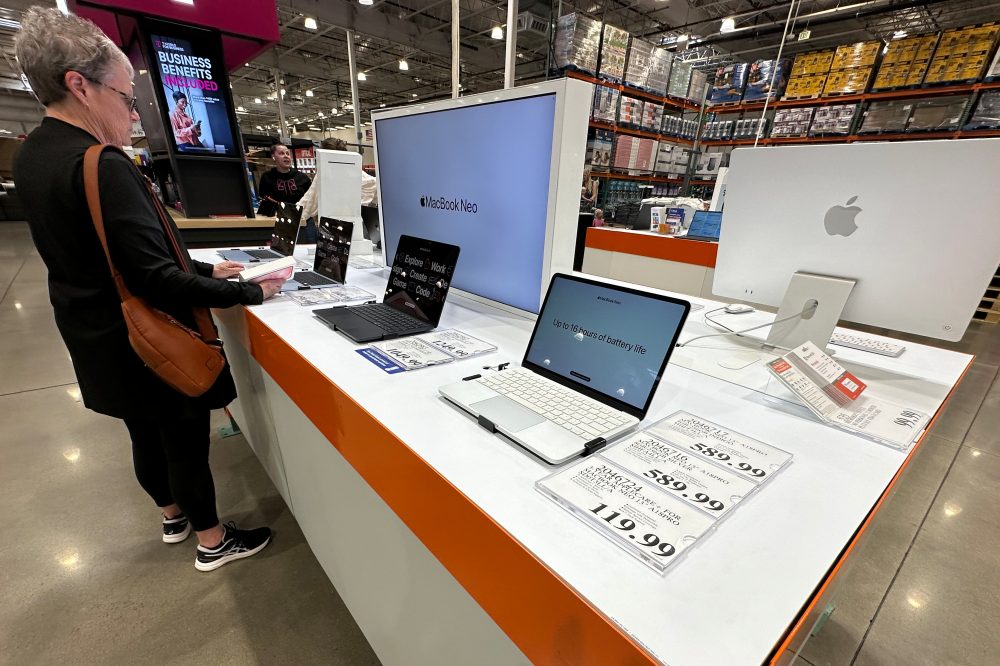
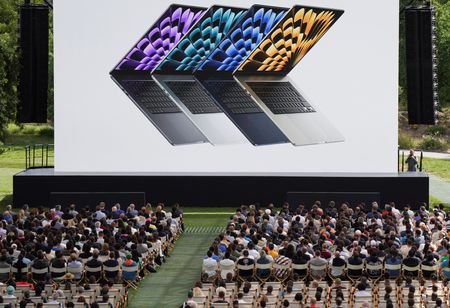
Apple announced Thursday that it is raising the cost of its Mac computers and iPad tablets, pointing to a shortage of memory chips driven by surging demand related to artificial intelligence. The company, headquartered in Cupertino, California, described the demand surge as an “unprecedented challenge” for the consumer electronics sector. Among the new prices: the entry-level MacBook Neo will now start at $699, up from $599; the 512-gigabyte MacBook Air climbs to $1,299 from $1,099; and the one-terabyte MacBook Pro rises to $1,999 from $1,699. On the tablet side, the 128-gigabyte iPad Air now costs $749, up from $599, and the 256-gigabyte iPad Pro Wi-Fi model jumps to $1,199 from $999. Industry analysts expect iPhone prices to follow suit later this year.
Billionaire Leon Black to Face Congressional Questions on Epstein Payments
Billionaire investor Leon Black is scheduled to answer questions from House lawmakers as part of their ongoing probe into Jeffrey Epstein and his influential associates. Black, who previously served as chief executive of Apollo Global Management, paid Epstein $158 million between 2012 and 2017 for tax and estate planning work, according to a 2021 internal review commissioned by Apollo. Black stepped away from the firm in 2021 following scrutiny over his relationship with Epstein. His closed-door testimony Friday before the House Oversight Committee makes him the latest prominent figure to appear in the investigation.
JPMorgan Chase Elevates Two Executives as Potential Successors to Dimon
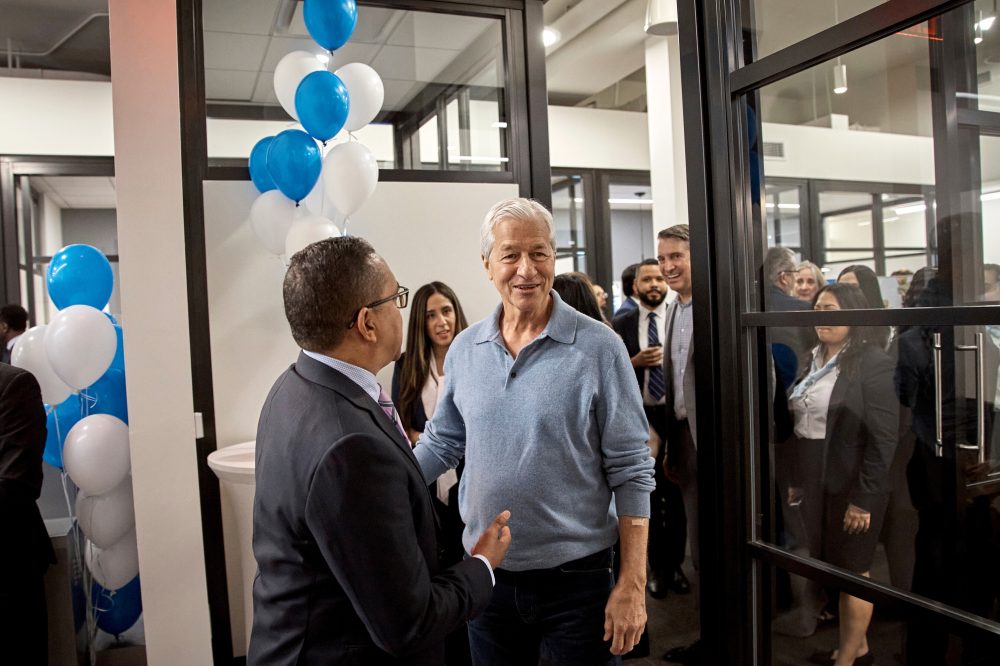
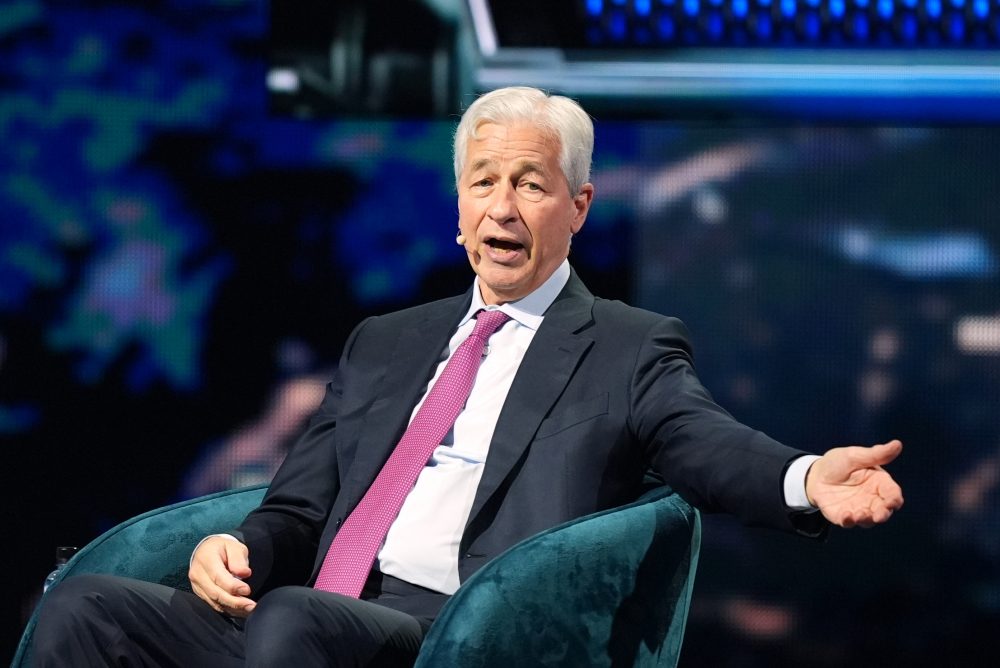
JPMorgan Chase has promoted Doug Petno and Troy Rohrbaugh to the role of co-presidents, positioning both men as possible future replacements for longtime CEO Jamie Dimon. Meanwhile, Marianne Lake, who had previously been seen as a contender for the top job, announced she will retire at year’s end. The bank’s board appears to be directing its succession focus toward its commercial and investment banking divisions. Petno has served in advisory roles while Rohrbaugh’s background is in trading. Dimon, who has led the country’s largest bank since 2006, has dealt with some health concerns but has indicated he intends to remain in his position.
California Governor Pushes National Billionaires’ Tax While Opposing State Version
California Gov. Gavin Newsom is advocating for a nationwide tax on billionaires and has suggested the federal government should hold an ownership stake in artificial intelligence companies. He warns that without swift reform, the growing concentration of wealth could threaten democratic institutions. Newsom’s stance puts him in line with the populist left wing of his party as he weighs a potential 2028 presidential campaign. His proposal would establish a minimum tax on individuals with a net worth exceeding $100 million and would close a loophole allowing wealthy individuals to borrow against stock portfolios without paying taxes. Notably, Newsom is opposing a similar measure being considered within California, arguing the matter should be handled at the federal level to keep wealthy residents from simply moving to other states.
Supreme Court Strikes Down Hawaii Gun Carry Restrictions
The Supreme Court ruled Thursday that a Hawaii law requiring individuals to obtain permission before bringing firearms into places like stores and hotels is unconstitutional. The decision marks the court’s most recent move to expand Second Amendment protections. The Trump administration had argued against the law, saying Hawaii had essentially banned guns from a broad range of public spaces. Hawaii defended its 2023 law as a measure intended to protect property owners’ rights. The ruling does not prevent private businesses from independently choosing to prohibit guns on their premises.
World Cup Uniforms Balance National Pride and Performance
As the World Cup gets underway in North America, apparel companies including Nike set out to design jerseys that reflect national identity while keeping athletes cool in the heat. With temperatures reaching around 90 degrees Fahrenheit at some venues, breathable materials were a central concern. The Associated Press toured Nike’s headquarters near Portland, Oregon, where designers work in a facility equipped with motion-capture cameras and temperature-controlled chambers to test their products.
Inflation Gauge Reaches Three-Year High
The Federal Reserve’s go-to measure of inflation climbed to its highest point in three years during May, driven largely by rising gas prices along with increased costs for semiconductors and other computer components in demand for AI infrastructure. The increase signals potential political headaches for President Trump as midterm elections approach. In response to persistent inflation, the Fed has held its benchmark interest rate steady this year — a shift from earlier expectations of two rate cuts. Some economic analysts now believe the central bank may actually raise rates before the year is out.
Volkswagen’s announcement that it may shut down factories in Germany and cut roughly 100,000 jobs — nearly double its earlier target — has renewed scrutiny of the 89-year-old automaker’s distinctive ownership arrangement and governing rules that shareholders have questioned for years.
The company, which has grown through decades of acquisitions and strategic moves, now controls a wide range of brands ranging from budget-friendly SEATs to high-end Lamborghinis. It also holds ownership stakes in sports car manufacturer Porsche AG and commercial truck producer Traton.
Where Did the ‘Volkswagen Law’ Come From?
The roots of worker influence at Volkswagen stretch back to before World War Two, when the Nazi regime constructed the company’s primary manufacturing facility in Wolfsburg using funds that were partly derived from assets seized from trade unions. Forced labor was also used in building the company’s financial foundation.
Following the war, British authorities, who held responsibility for the plant at that time, placed the company under public trusteeship. The German state of Lower Saxony, where Volkswagen is headquartered and where five of its six western German assembly plants operate, continues to hold a 20% voting stake to this day.
When Volkswagen was converted into a joint-stock corporation in 1960, lawmakers passed what became known as the Volkswagen Law, granting significant power to both Lower Saxony and workers as a shield against outside takeover attempts.
What Does the Law Actually Require?
The legislation contains two key provisions. First, decisions that typically need a three-quarters shareholder majority at an annual general meeting instead require approval from more than four-fifths of Volkswagen shareholders — a threshold that gives Lower Saxony an effective veto.
Second, any decision to build or relocate a production facility must receive approval from at least two-thirds of the 20-member supervisory board. Although the law does not explicitly address plant closures, this provision effectively allows the board’s 10 labor representatives to block sweeping decisions affecting factories.
Who Actually Owns Volkswagen?
The ownership picture is layered, largely because Volkswagen issues two types of shares: preferred stock, which is listed on Germany’s main DAX index, and common stock, which carries voting rights.
Porsche SE — the investment entity controlled by the Porsche and Piech families — holds the largest combined stake in the company at 31.9%, covering both share classes. The state of Lower Saxony owns 11.8% of total equity, while Qatar holds 10%.
Voting power tells a different story, however. Porsche SE commands a 53.3% voting majority, while Lower Saxony controls 20% of votes and Qatar holds 17%.
How Does This Shape the Way Volkswagen Is Run?
Investors have repeatedly criticized Volkswagen’s governance, arguing that its ownership arrangement gives Porsche SE disproportionate control over the company despite not owning a majority of all shares.
Volkswagen’s CEO Oliver Blume stepped down from his concurrent role as CEO of Porsche at the start of this year, following sustained criticism from some shareholders who objected to him simultaneously leading two large, closely related automotive groups.
Beyond market headwinds, governance concerns have weighed on Volkswagen’s stock price, which has fallen to around 16-year lows. Adding to investor uncertainty is the question of who will eventually take over leadership of the Porsche and Piech families, currently headed by Wolfgang Porsche, 83, and Hans Michel Piech, 84.
WASHINGTON — America’s trade deficit in goods took a dramatic turn upward in May, as businesses scrambled to bring in more imported products in an effort to get ahead of potential supply shortages and rising prices connected to the ongoing conflict in the Middle East.
According to data released Friday by the Commerce Department’s Census Bureau, the goods trade gap grew by 27.4%, reaching $105.8 billion for the month. That figure caught many analysts off guard — economists surveyed by Reuters had projected the deficit would come in around $85.0 billion.
Imports of goods climbed $10.9 billion to a total of $313.4 billion, while exports moved in the opposite direction, dropping $11.8 billion to $207.7 billion.
The widening deficit is significant because trade has already weighed on gross domestic product for two consecutive quarters. Current forecasts for second-quarter economic growth are clustering around a 2.5% annualized rate, though the new trade figures could push those estimates lower.
For context, the U.S. economy expanded at a 2.1% annualized pace in the most recent quarter, following a much slower 0.5% growth rate during the October through December period.
LONDON — Britain’s financial regulator unveiled proposed changes on Friday to the rules governing investment trust listings, with the goal of strengthening protections for shareholders following a wave of campaigns by U.S. activist investor Saba Capital.
The Financial Conduct Authority said the proposed reforms are designed to better manage conflicts of interest involving activist investors, a group that has ramped up its involvement in investment trusts over the past two years.
Saba’s activity in the sector has been significant — the firm successfully pushed out the board of Edinburgh Worldwide Investment Trust in April, installing its own chosen directors as replacements.
The FCA’s Friday statement did not mention Saba by name. The firm was not immediately available to respond to requests for comment.
Earlier this year, the then-chairman of Edinburgh Worldwide, Jonathan Simpson-Dent, publicly criticized the current regulatory framework. He argued it deserved a closer look, pointing out that holding just a 30% stake could be sufficient to remove an entire board.
Saba has defended its actions in the past, contending that they are necessary to address what it describes as underperformance among British investment trusts.
Back in March, the FCA acknowledged the ongoing debate about its role regarding investment trusts — without naming Saba directly — and indicated it would move up a planned review of the listing rules.
The regulator said its proposals are open for public feedback through August 16. Among the key changes, the FCA said the reforms would tackle conflicts of interest that arise when directors are put forward by a major shareholder, and would also ensure that minority shareholders are shielded in situations where large shareholders who also serve as managers get to vote on significant changes to investment policies.
“Strong shareholder rights and minimal conflicts of interest are crucial to well-functioning markets, including for investment trusts,” said Jon Relleen, the FCA’s director of infrastructure and exchanges.
The Association of Investment Companies, which represents investment trusts, expressed support for the FCA’s direction.
“These proposals would strengthen investor protection, particularly when a substantial shareholder like Saba Capital seeks to replace the board and become the manager,” said Richard Stone, the organization’s chief executive.
ZURICH — Financial institutions and their regulators must act swiftly to embrace new technology and close system vulnerabilities, as artificial intelligence continues to amplify cybersecurity threats across the globe. That warning came from a top Swiss financial watchdog in a recent interview.
Marlene Amstad, who serves as president of Swiss market regulator FINMA and chairs an international forum focused on supervisory technology, spoke with Reuters after an initial hackathon event designed to help market supervisors build new oversight tools.
Software vulnerability detection models have recently flagged a sharp rise in cyberattack and national security risks, with AI raising serious questions about safety and accountability within financial institutions.
“As hackers move faster, banks must adapt by patching vulnerabilities more rapidly,” Amstad said.
FINMA played a key role in establishing a forum within the International Organization of Securities Commissions — a global standard-setting body for market regulation — with the goal of encouraging watchdogs covering approximately 95% of worldwide financial markets to adopt AI tools.
Roughly 100 policy and technology specialists gathered this week for the hackathon, working together to develop tools specifically aimed at supervising cryptocurrency markets, Amstad noted. She added that regulators are also exploring the possibility of embedding safety measures directly into digital asset systems.
Amstad pointed to experience with models such as Anthropic’s Mythos as having revealed AI-related operational risks by exposing system vulnerabilities. This comes as the U.S. government this month ordered Anthropic to halt exports of its latest Mythos and Fable AI models, citing national security concerns.
Meanwhile, Chinese cybersecurity company 360 Security Technology announced this week that it has built a domestic alternative to Mythos.
“Switzerland must retain access to the most advanced AI models,” Amstad said, adding that AI will play a critical role in strengthening systems before they are put into use.
Solar energy developers nationwide are racing against the clock, rushing to secure federal subsidies before a July 4 cutoff that could dramatically increase the cost of renewable power for years to come.
The urgency stems from the phaseout of clean energy tax credits under President Donald Trump’s 2025 tax law — subsidies that have been in place for two decades and cover at least 30% of project costs. Once those credits disappear, analysts expect contract prices for wind and solar power to jump between 40% and 50%. Early figures out of Texas are even more alarming, with some deals already showing price increases of 120%, according to an analysis by energy firm LevelTen Energy.
President Trump has long maintained that wind and solar power are overly expensive, benefit from unfair government support, and are less dependable than fossil fuels because they rely on natural conditions. The White House did not respond to a request for comment on the tax credit changes.
Despite the looming deadline, the rush to qualify for credits has created an enormous backlog. Energy research firm Wood Mackenzie reports that more than 200 gigawatts of solar capacity has effectively secured tax credit eligibility — a figure that represents nearly double the entire current U.S. solar fleet. Solar remains the fastest-growing source of electricity in the country.
Developers have been using a strategy called “safe harboring” to preserve their eligibility before the July 4 cutoff. This can involve beginning construction at a site, purchasing major equipment, logging worker hours, or spending a set portion of project costs. Once those steps are taken, developers have four years to finish building the facilities — though many are still looking for buyers for the power those projects will generate.
“It should give caution to folks that are waiting on the sideline,” said Connor Valaik, a senior manager at LevelTen, which connects renewable energy sellers and buyers. “The future is not the rosiest with this tax credit cliff.”
Even so, some developers are finding reasons for optimism. Because electricity prices are already climbing sharply — driven largely by surging demand from data centers and artificial intelligence — renewable energy may still be cost-competitive even without the subsidies.
“We can initiate projects… at the same level of profitability in three years that we can today, because the price of energy has already escalated so dramatically in the areas that we’re doing business in, with no sign of slowing down,” said John Witchel, CEO of Durango, Colorado-based commercial solar developer King Energy.
Revel Energy, a commercial solar developer based in Irvine, California, has secured tax credits for roughly 10 projects, though the company typically completes 15 per year. Tyler Crossno, the company’s digital marketing manager, noted that customers going solar without the tax credit will likely take five to six years to break even on their investment, compared to about three years under current conditions.
A 2025 analysis by investment firm Lazard found that even without subsidies, large-scale solar and onshore wind remain the least expensive forms of electricity generation. Community and industrial solar installations are also cost-competitive with natural gas and nuclear plants.
The large pipeline of already-approved projects is expected to keep U.S. solar installations strong through the end of the decade. However, energy policy research organization Energy Innovation forecasts that new large-scale capacity will begin to shrink in the early 2030s.
“That is inevitably going to drive prices up,” said Jake Schueller, a partner with Woven Energy, which helps tribes develop energy assets.
U.S. equity funds faced heavy selling pressure during the week ending June 24, as worries about debt-driven spending in the technology industry and the prospect of a more aggressive Federal Reserve interest rate policy led investors to pull back from riskier assets.
According to data from LSEG Lipper, investors withdrew $3.53 billion from U.S. equity funds over the course of the week. That marked a significant reversal from the prior week, when investors had poured a net $37.63 billion into those same funds.
A major factor weighing on investor confidence was concern that technology sector valuations have become stretched, with large tech companies increasingly turning to bond markets to finance their spending. Elon Musk’s SpaceX became the latest high-profile name to tap debt markets, adding to growing unease that the tech industry’s investment surge is being built on borrowed money.
Adding to the cautious mood, investors are bracing for the possibility that the Federal Reserve could raise interest rates by 25 basis points later this year, as inflationary pressures continue to build.
Technology sector funds bore the brunt of the selloff, recording nearly $20 billion in outflows for the week — completely reversing the $21.46 billion in inflows seen the week before. Financial sector funds lost $1.06 billion, industrial funds shed $830 million, and consumer discretionary funds saw $733 million in outflows.
On the bond side, inflows into U.S. bond funds dropped to an eight-week low of $7.33 billion. Short-to-intermediate investment-grade funds drew $2.95 billion, general domestic taxable fixed-income funds attracted $2.03 billion, and municipal debt funds pulled in $633 million — all down from the previous week’s figures of $3.09 billion, $3.39 billion, and $1.19 billion, respectively.
Money market funds recorded net outflows of $25.74 billion for the week, marking their largest single-week exodus since April 15.
A growing majority of economists now believe the Federal Reserve will leave interest rates right where they are for the rest of this year, pushing back against financial market expectations for two rate increases, according to a new Reuters poll.
Inflation is currently running above 4% — the highest level in more than three years and twice the Fed’s stated target — even as the economy continues to grow and the job market shows improvement. However, oil prices have retreated to levels close to where they stood in February, before the U.S.-Israeli war with Iran got underway.
The central bank kept its benchmark rate steady at 3.50% to 3.75% at its most recent meeting, a move that was widely anticipated. Still, Fed Chair Kevin Warsh caught many observers off guard at his first press conference by making the return of inflation to the 2% target his central focus, with little attention given to employment conditions.
Despite that hawkish tone, most economists believe the Federal Open Market Committee will opt to leave rates unchanged in the months ahead.
“At the moment, holding rather than hiking is the most appropriate stance. The committee is effectively split right down the middle … there are a couple that would be swayed by this aggressive move in energy prices,” said Josh Hirt, senior U.S. economist at Vanguard, who had previously anticipated a rate cut.
Quarterly projections released last week by the Fed — not including Warsh, who abstained — showed that nine of the 19 policymakers now expect at least one rate hike before the end of 2026.
“If we continue to get data that moves in this direction, it’s going to be extremely difficult to justify not moving rates higher,” Hirt added.
For now, more than three-quarters of economists surveyed between June 23 and 25 expect the federal funds rate to stay put through the rest of 2026. That’s up from roughly 70% before the June meeting and just under half the month before. Survey medians now point to rates holding steady through the end of 2027, a reversal from expectations just weeks ago that called for cuts. Nearly 40% of respondents have raised their rate forecasts again after most had already done so earlier this month.
The recent spike in inflation is compounding existing price pressures tied to President Donald Trump’s broad import tariffs. The rising cost of living represents a political problem for Trump and his Republican Party heading into November’s midterm elections.
Trump made reducing inflation a central promise of his 2024 campaign and has repeatedly taken aim at Warsh’s predecessor, Jerome Powell, for not cutting rates.
“The public does not like higher interest rates but they dislike inflation even more,” said Alex Pelle, senior U.S. economist at Mizuho Securities USA. “There will always be politicians who have opinions on what the Fed should or should not be doing. But ultimately, the job is too big to let the political considerations dominate.”
Fifteen forecasters — including five primary dealers — now expect at least one rate hike this year, compared to nine who are forecasting cuts. It marks the first time since 2023 that the number of economists calling for hikes has exceeded those expecting cuts.
“We had expected only three people to write down hikes heading into the June meeting,” said Stephen Juneau, a U.S. economist at Bank of America, who now anticipates three rate hikes this year. “That’s a materially hawkish surprise and it does indicate the Fed’s reaction function has turned.”
Bank of America’s forecast was the most aggressive of any in the survey, while Citibank still projects two rate cuts this year.
A great deal will hinge on how the Fed communicates its decisions under Warsh, whose approach appears poised to become considerably more concise. At June’s meeting, the new Fed chief signaled a move away from forward guidance, releasing a streamlined policy statement that recalled the style used during former Chair Alan Greenspan’s tenure, and also announced a sweeping review of Fed operations.
Some economists are already expressing concern about such broad changes.
“The Fed still needs forward guidance to get its message across,” said Bank of America’s Juneau. “There are more pros than cons to maintaining some level of guidance and not going fully back to the early Greenspan years when it was much more opaque as to what the Fed was doing.”
Lululemon shareholders have voted to seat three board directors backed by company management, bringing a bitter governance battle with the brand’s founder to a close and giving the company’s next chief executive a cleaner slate heading into her tenure.
The directors approved in Thursday’s vote include former Levi Strauss chief Chip Bergh, Unilever marketing executive Esi Eggleston Bracey, and experienced finance leader Teri List. The trio brings expertise in brand development and corporate oversight to the Vancouver-based company as it prepares for a significant reset.
On Friday, the company also announced that two nominees put forward by founder Chip Wilson — Marc Maurer and Laura Gentile — have been appointed as independent directors, bringing the total board size to 11. A third mutually agreed-upon director is expected to join by October 1, in line with the truce the two sides reached last month.
Wilson, who holds roughly 8.6% of the company’s shares, has been publicly at odds with Lululemon’s leadership since December, a conflict that weighed on the stock and laid bare deep disagreements over strategy, leadership, and the brand’s future direction. As part of the settlement, Wilson has agreed to hold off on public criticism for 18 months.
The resolution gives former Nike executive Heidi O’Neill more room to work with as she steps into the CEO role in September.
The yoga-and-athleisure giant, known for its high-end leggings and workout wear, is attempting a comeback at a time when newer rivals — including Alo Yoga and Vuori — are aggressively competing for the same customers. The company’s stock has lost roughly half its value over the past year.
Earlier this month, Lululemon projected its first quarterly sales decline since the pandemic, while also warning of tighter margins due to heavier discounting and cost pressures tied to tariffs.
Last year, activist investor Elliott Investment Management built a stake valued at approximately $1 billion and pushed for leadership and strategic changes, including backing a former Ralph Lauren executive named Jane Nielsen as a potential CEO candidate. Elliott has not publicly addressed Lululemon’s settlement with Wilson.
Industry analysts say the company needs to win back its most loyal shoppers by refreshing its product lineup and sharpening how it presents itself in a more crowded marketplace.
Eyes are also on Lululemon’s $1.8 billion cash reserve and what the company plans to do with it. Observers widely expect the funds could be directed toward entering new product categories, upgrading retail locations, or speeding up growth in international markets.
Global technology stocks dominated financial headlines this week, with dramatic swings raising fresh questions about whether enthusiasm for artificial intelligence has gone too far — and whether markets could be heading for a larger correction.
Early in the week, major U.S. stock indexes fell as the biggest technology companies dragged them lower. Initially, analysts pointed to concerns over the enormous amounts of money being poured into AI infrastructure. But by Tuesday, the selling had spread to semiconductor stocks, with South Korea’s KOSPI index dropping nearly 10% and the SOX chip index losing roughly 8%.
A strong earnings report from memory chipmaker Micron Technology on Wednesday briefly steadied things. However, calm was short-lived. Apple announced Thursday that it would be increasing the prices of iPads and MacBooks, citing rising costs for memory and storage chips — a direct consequence of the AI spending boom. Apple’s stock dropped more than 6% overnight, triggering another wave of selling across Asian markets on Friday.
The turbulence has renewed debate over whether AI-driven market enthusiasm has crossed into irrational territory. SoftBank’s Masayoshi Son weighed in this week, calling any talk of an AI bubble “blasphemy against AI.” At the same time, a number of major Wall Street firms raised their year-end forecasts for the S&P 500, arguing the current rally still has room to continue.
The late Federal Reserve Chair Alan Greenspan, who passed away at age 100 this week, famously warned about “irrational exuberance” in markets decades ago. His phrase feels newly relevant as investors grapple with the same question today.
As for the current Fed leadership, newly appointed Chair Kevin Warsh appears unlikely to take direct aim at rising asset prices. His push to reduce Fed communication — including ending forward guidance — has contributed to wide disagreements between major banks over where interest rates are headed, a situation that could itself fuel market volatility.
On Thursday, the government released the personal consumption expenditures index — the Federal Reserve’s preferred measure of inflation. The index climbed 4.1% in the year through May, topping 4% for the first time in three years. Core PCE, which strips out food and energy, rose 3.4%. Both figures matched what economists had expected. After the report, bets on a rate hike at the Fed’s very next meeting eased somewhat, though markets still see roughly an 80% chance of a hike by the September meeting.
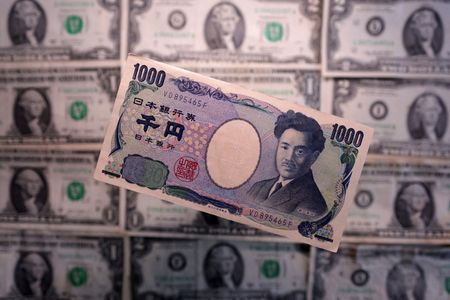
Expectations for higher interest rates have helped push the U.S. dollar to one-year highs against major currencies in recent weeks, though it pulled back slightly following Thursday’s inflation data. The Japanese yen remains especially weak, hovering near a 40-year low past 160 yen per dollar.
Across the Atlantic, Britain grabbed attention with Prime Minister Keir Starmer announcing his resignation on Monday following months of mounting pressure and the dramatic return to parliament of key Labour party challenger Andy Burnham. UK financial markets showed little reaction on the day. Attention has now shifted to Burnham, who is seen as Starmer’s likely successor and could take office as early as next month if no other candidates step forward. Investors are eager for clarity on how he would approach economic policy and who he might select as finance minister.
Analysts caution, however, that simply swapping one leader for another won’t address Britain’s deeper challenges — sluggish productivity growth and a large welfare spending burden. With seven prime ministers in a decade, the revolving door at 10 Downing Street risks reinforcing a perception that the country has become difficult to govern, which could deter investment and deepen existing economic problems.
Energy policy is expected to be a top priority for whoever takes charge, particularly given how the recent Iran conflict underscored the risks of depending heavily on imported energy. There is speculation that this could prompt a shift in British policy on oil and gas development in the North Sea.
Adding to the region’s challenges, much of the UK and Europe has been dealing with a dangerous heatwave this week, placing strain on power systems across the continent.
On the global energy front, oil prices continued falling throughout the week, touching pre-war levels on Thursday. Crude shipments through the Strait of Hormuz reached their highest volumes since the conflict began, as traders grew more confident that a temporary U.S.-Iran peace agreement would lead to a lasting deal and a return to normal energy flows. This optimism persisted even after reports emerged Thursday that a Taiwanese ship transiting the strait had been attacked.
While cheaper oil is bringing down prices at U.S. gas stations, it may also give consumers more money to spend — potentially heating up an already warm economy and complicating the Federal Reserve’s decisions on interest rates going forward.
Next week will be shortened due to Independence Day, but investors will still have significant economic data to digest, including the June nonfarm payrolls report, as the United States marks its 250th birthday.
Wall Street is heading into a critical week as investors await key jobs data that could shake up expectations for interest rate hikes — and add more turbulence to a stock market already rattled by wild swings in technology shares.
Major U.S. stock indexes are on track to finish out a strong first half of 2026, with the benchmark S&P 500 having gained more than 7% so far this year. June, however, has been a bumpier ride. Shares of semiconductor companies have seen dramatic price swings this week as investors try to gauge how much optimism over AI-driven profits is actually justified.
A Federal Reserve meeting earlier this month made clear that policymakers are laser-focused on keeping inflation in check. Investors say the monthly jobs report, due out Thursday, could intensify expectations for rate hikes if it points to a still-hot economy. U.S. financial markets will be closed Friday in observance of the Independence Day holiday.
“If we do get a really good jobs number, my guess is the market’s not going to treat that as good news,” said Doug Huber, deputy chief investment officer at Wealth Enhancement. “It’s going to treat it as the economy’s hot and it’s going to start to probably price in even higher risks of potentially a hike.”
The performance of technology stocks — and chip companies in particular — is expected to remain the dominant story on Wall Street. The Philadelphia SE Semiconductor Index has surged more than 90% since the market’s late-March low for the year, though it has pulled back this week as investors question whether the rally has gone too far.
Strong earnings results from memory chipmaker Micron Technology, released late Wednesday, offered some reassurance to the sector. Still, the tech-heavy Nasdaq Composite was on pace to finish the week in the red.
“The flavor of tech leadership for the last two months has been semiconductor-related names…concentrated in memory-related equities,” said Julia Hermann, global market strategist at New York Life Investment Management. “The live question is, are higher interest rates going to threaten the more cyclical and volatile component of market leadership at play?”
On the jobs front, the U.S. economy has now posted three consecutive months of solid employment growth, with payrolls climbing by 172,000 in May. Economists at Jefferies are forecasting that June will bring an additional 135,000 jobs.
At the same time, inflation has stayed well above the Federal Reserve’s 2% annual target. The central bank’s most recent meeting was viewed by investors as surprisingly aggressive in its stance. Data released Thursday showed inflation climbing past 4% for the first time in three years, driven in part by rising energy costs tied to the ongoing conflict in the Middle East.
“The Fed is very finely balanced,” said Brad Conger, chief investment officer at Hirtle & Co. Even without a dramatic surprise in the jobs numbers, he noted, the data “can tilt the Fed in one direction or the other… If jobs are strong, interest rates could go back up, and that challenges the market.”
According to LSEG data from Thursday, Fed funds futures are now showing better-than-even odds of a rate hike by the Fed’s September meeting — a stark reversal from the start of the year, when investors had been counting on rate cuts before year’s end.
“We’ve shifted from the sense that interest rate hikes were this less-than-ideal way to cope with a supply shock, energy specifically, to this sense that the Fed is now structurally engaging with its inflation mandate in a new way,” Hermann said.
Rising interest rates can create multiple challenges for stocks, including higher borrowing costs for businesses and consumers, which can slow overall economic growth.
Investors will also be watching earnings results from sportswear company Nike in the coming week. The broader second-quarter earnings reporting season kicks into higher gear later in July.
Developments in the Middle East are also being closely tracked on Wall Street. Oil prices have eased amid a ceasefire in the region, dropping to around $70 a barrel after sitting near $100 just a month ago.
“We are trying to evaluate: is there staying power to a truce in the Middle East and that impact on oil and the big knock-through effect on inflation,” Huber said.
Friday could be one of the most action-packed trading sessions yet for SpaceX, as investment funds that follow Russell indexes gear up to pour billions of dollars into Elon Musk’s rocket and internet company as part of a scheduled index update.
SpaceX made its stock market debut earlier this month with a high-profile initial public offering, and the ride since then has been anything but smooth. Shares rocketed 67% to an intraday peak of $225.64 on June 16, only to fall back to a closing price of $153 by Thursday.
Even after that pullback, the stock sits well above its IPO price of $135. Investors continue to wrestle with how to put a value on a company that posted a $4.9 billion loss last year, yet has strong supporters who believe it will come to dominate satellite internet, artificial intelligence, and commercial space launch — markets they see as central to global infrastructure over the next decade.
FTSE Russell announced it will officially add SpaceX to its Russell U.S. indexes after the close of trading on Friday, as part of its twice-yearly index reconstitution process. That means passively managed funds — such as exchange-traded funds that mirror Russell indexes like the iShares Russell 1000 ETF — will be required to add SpaceX shares to their portfolios. Fund managers are expected to make their purchases in a tight window near the end of the trading day, hoping to avoid what is known as “tracking error” — a performance gap that can occur when a fund buys in at a price different from the index’s closing price.
One complicating factor: while SpaceX carries a market capitalization of roughly $2 trillion — putting it in the same league as Amazon — only around $100 billion worth of shares are actually available for public trading. The rest are held by Musk, company insiders, and employees. According to an estimate from Jefferies, passive funds will need to acquire close to $3 billion in SpaceX shares to properly align with the Russell indexes they track. That limited supply could create a squeeze as the closing auction approaches on Friday, though options market activity has remained relatively quiet. Options contracts expiring Friday are priced to reflect an expected price swing of about 3.6% in either direction, according to data from Trade Alert.
Looking further ahead, SpaceX is also expected to be added to the Nasdaq 100 index in July — a move that would compel major index funds, including the Invesco QQQ ETF, to purchase its shares as well.
Despite its recent losses on the market, SpaceX is currently trading at 107 times its projected 2025 sales — a staggering valuation by any measure. For context, AI chip giant Nvidia recently traded at 21 times its sales.
SpaceX will not, however, be joining the S&P 500. S&P Global said this month it would not adjust its index eligibility rules to make room for large IPOs like SpaceX’s. Under the existing rules, a company must show a profit in its most recent quarter and across its four most recent quarters combined — a bar SpaceX currently cannot clear.
The last time a major Musk company joined a major index, it made headlines: Tesla’s addition to the S&P 500 in 2020 triggered a closing-day surge that pushed its shares up 6%.
Swiss watchmaker Swatch is pursuing $170 million in damages from Samsung, claiming the South Korean tech giant permitted third-party apps on its smartwatches that allowed users to create digital replicas of Swatch timepieces, according to a Financial Times report published Friday citing court documents.
London’s High Court ruled back in 2022 that Samsung was liable for trademark infringement after finding that apps available on Samsung smartwatches let users mimic popular watch designs from brands under the Swatch umbrella, including luxury names Omega and Tissot. A British judge is now expected to issue a ruling on the damages amount in the near future.
The legal dispute dates back to 2019, before the United Kingdom formally departed from the European Union, and the case also covers alleged infringement within the EU. The Financial Times also reported that the forthcoming damages decision is expected to pave the way for a separate Swatch legal claim against a Samsung subsidiary in the U.S.
In written statements submitted to the High Court as part of the damages proceedings, Swatch accused Samsung of conducting a “large-scale appropriation” of “valuable and carefully protected” trademarks. Samsung, for its part, pushed back, describing Swatch’s financial demands as “extravagant” and disproportionate.
A Swatch spokesperson declined to comment on the active legal proceedings, while Samsung had not responded to a request for comment at the time of the report.
The broader Swiss watchmaking industry has been feeling increasing pressure from the booming smartwatch market, with major technology companies including Samsung, Apple, and Huawei leading that segment. Swatch itself offers connected timepieces such as the SwatchPAY! but has not yet entered the smartwatch market. The company’s product lineup spans a wide range, from budget-friendly plastic watches to high-end luxury models that can cost tens of thousands of dollars.
Global stock fund investments slowed dramatically in the week ending June 24, as unease over debt-driven technology spending and a tough stance from the U.S. Federal Reserve took the wind out of investor confidence.
According to data from LSEG Lipper, investors put a net $7.51 billion into global equity funds during the week — a steep drop of roughly 86% compared to the $55.53 billion in net purchases recorded the week before.
The pullback was driven in part by growing concern over inflated technology stock values, with major tech companies coming under increased scrutiny for relying on borrowed money to fund their operations. Elon Musk’s SpaceX was among the high-profile names turning to the bond market for financing, adding to fears that the sector’s spending boom is becoming overly dependent on debt.
Investor confidence was further shaken by inflation data released Thursday by the Commerce Department, which showed the Personal Consumption Expenditures price index — a closely watched inflation measure — rose to 4.1% in May, its highest level since April 2023. That reading strengthened expectations that the Federal Reserve could raise interest rates by another 25 basis points later this year.
European equity funds attracted $6.28 billion in inflows during the week, down from $11.71 billion the previous week, while Asian equity funds drew $2.95 billion, compared to $3.82 billion the week before. U.S. equity funds, meanwhile, saw $3.53 billion flow out.
Technology sector funds recorded net outflows of $17.83 billion for the week, nearly wiping out the $21.5 billion in inflows seen the prior week. Financial sector funds and industrial sector funds also saw net outflows of $750 million and $1.04 billion, respectively.
On the bond side, investors added a net $10.85 billion to bond funds, marking the 12th consecutive week of net purchases. Global hard-currency bond funds, short-term bond funds, and dollar-denominated medium-term bond funds saw notable inflows of $3.1 billion, $2.42 billion, and $1.87 billion, respectively.
Money market funds experienced outflows of $42.8 billion during the week — the largest single-week withdrawal since April 15.
In the commodities space, gold and other precious metal funds posted a sixth straight week of outflows, with net sales totaling $545 million. Energy funds also recorded net sales of $81.9 million, ending a two-week stretch of inflows.
In emerging markets, equity funds continued a selling trend that has now stretched nine consecutive weeks, with $3.39 billion in net outflows. Emerging market bond funds, however, attracted $132 million — their first inflow in three weeks — based on data covering 28,875 funds.
Volkswagen CEO Oliver Blume is targeting a reduction of as many as 100,000 positions from the automaker’s global workforce over the next several years, according to a report published Friday by Manager Magazin.
The German business publication also reported that Blume plans to trim investment spending by roughly 15%, bringing the total down to just over €130 billion — approximately $148 billion — across the next five years.
According to the magazine, which cited unnamed sources, Blume and Chief Financial Officer Arno Antlitz are working toward a complete overhaul of the company’s structure.
As part of that restructuring, the report indicates that Volkswagen’s core VW brand and its parts manufacturing operations would be separated from the existing group framework and reorganized into independent entities.
Looking further ahead, the magazine reported that Volkswagen is considering shutting down production facilities in the German cities of Hanover, Zwickau, and Emden, along with a plant belonging to sister brand Audi located in Neckarsulm. All four facilities are in Germany. The closures would take effect once the vehicle models currently being built at those locations are phased out of production.
Volkswagen had not responded to a request for comment at the time of the report.
Italy’s competition watchdog announced Friday that it has opened a formal probe into Microsoft, targeting what it describes as potentially unfair business practices surrounding a price increase for the company’s Microsoft 365 subscription service.
According to the regulator, Microsoft failed to properly notify customers that its Microsoft 365 platform had been bundled with artificial intelligence features, specifically tools known as Copilot and Designer.
The authority said that rather than giving consumers a clear choice, Microsoft automatically shifted users to higher-priced subscription tiers. Customers who did not want the upgrade were required to actively opt out — and the watchdog said they were not given enough information to make an informed decision about whether to renew their subscriptions.
The regulator went further, stating that Microsoft’s approach could be classified as aggressive, arguing that it unfairly restricted consumers’ ability to freely choose their own plan.
Requests for comment directed to Microsoft were not returned before the time of publication.
Shares of Japanese memory chipmaker Kioxia tumbled 12% on Friday after a report surfaced that OpenAI — the company behind ChatGPT — is weighing a delay to its planned initial public offering, sending AI-linked stocks into a broad decline.
Kioxia, which was formerly known as Toshiba Memory and separated from Toshiba in 2018, is one of the world’s leading producers of memory chips. The company’s stock had been on a strong upward run fueled by surging investment in artificial intelligence, earning it the distinction of being the most valuable company on the Nikkei 225 index.
Friday’s sharp drop came after the New York Times reported that OpenAI is considering pushing back its IPO to next year, as CEO Sam Altman pursues a valuation of $1 trillion for the company.
Just a day earlier, on Thursday, Kioxia had announced it is exploring a stock split and intends to list American depositary shares on a U.S. exchange at the start of its next financial year, which runs through March 2028.
Speaking at Kioxia’s annual general meeting, Chief Financial Officer Yoshihiko Kawamura offered some insight into the timeline, saying: “Whether it’s April, May, or June is not yet clear, but we’re hoping to list… around that time.”
Kioxia is not alone in its push to tap U.S. investors. Chipmaker SK Hynix also announced this week that it plans to raise as much as $29.4 billion through a U.S. stock listing, reflecting a broader trend of Asian tech companies seeking to expand their American investor base.
One market analyst offered an optimistic read on Kioxia’s U.S. listing plans. “The timeframe to complete this offering suggests that (Kioxia) is highly confident of its ability to continue to produce outstanding results in the next 9-12 months,” wrote analyst Douglas Kim on the Smartkarma platform.
Stock markets across Asia fell sharply on Friday, with Japan and South Korea suffering the heaviest losses as investors moved to cash out on recent gains tied to the artificial intelligence boom.
U.S. futures also dropped during the session, and oil prices moved lower as well.
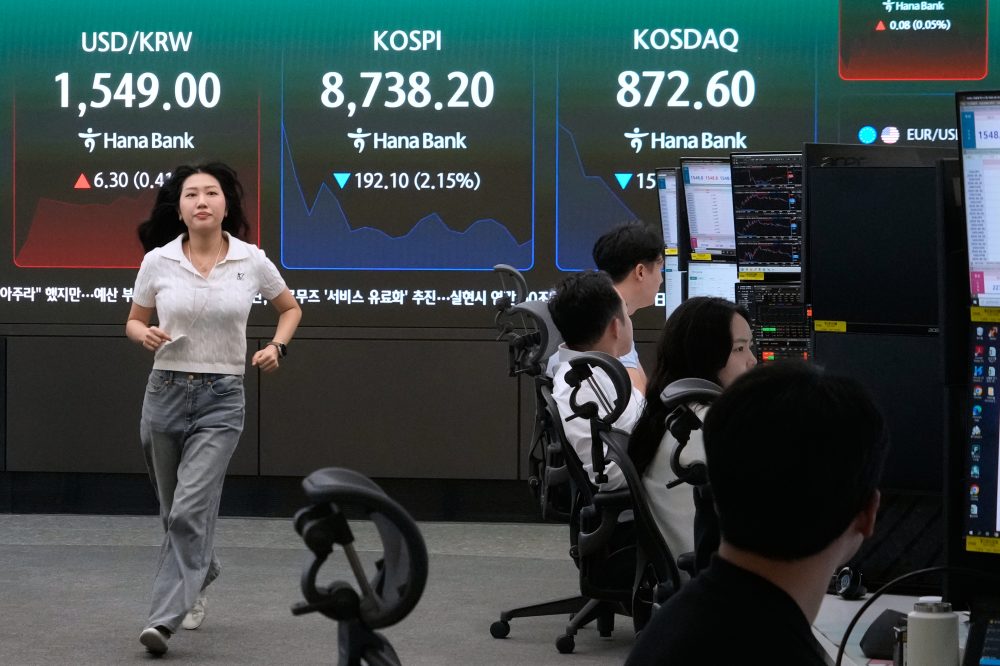
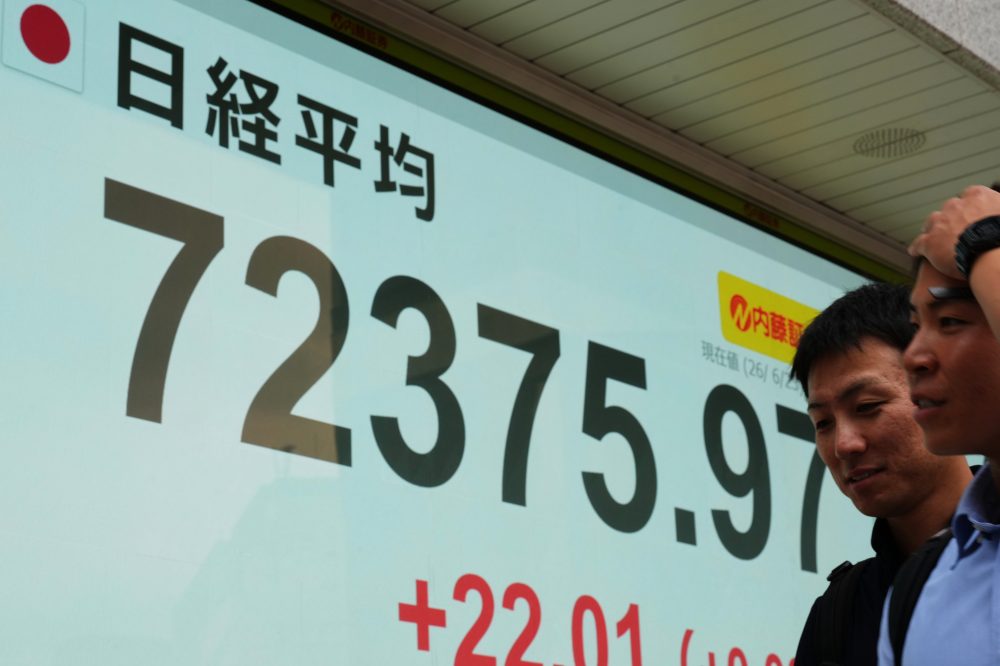
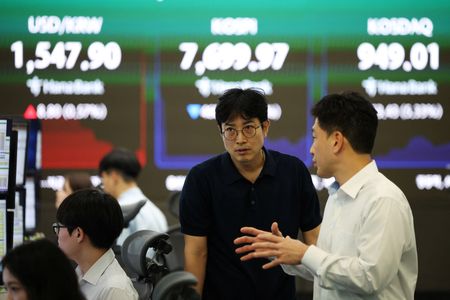
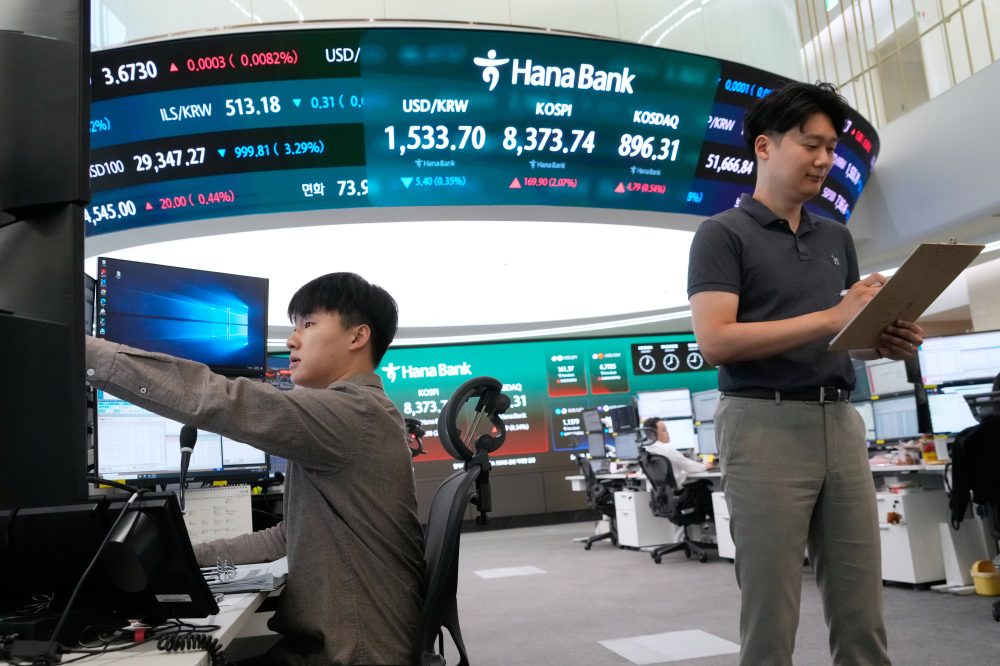
Tokyo’s Nikkei 225 dropped 5%, settling at 68,783.50, while Seoul’s Kospi tumbled a dramatic 8.4% to close at 8,182.54. Both indexes had reached all-time highs earlier in the week before Friday’s steep reversal.
Elsewhere in the region, Hong Kong’s Hang Seng index fell 1.9% to 22,644.49, and China’s Shanghai Composite slid 2.1% to 4,032.30. Australia’s S&P/ASX 200 held relatively steady, finishing nearly flat at 8,745.80, while Taiwan’s Taiex gave back 3.3%.
The dramatic swings are consistent with the kind of turbulence markets have been experiencing lately, as investors respond to the enormous flow of money pouring into AI data centers and related ventures.
On Thursday, U.S. markets ended with a mixed result after a rollercoaster session involving several AI-related stocks. Apple shares dropped 6.1% after the company announced higher prices on many of its products.
The S&P 500 closed virtually flat, slipping less than 0.1% after bouncing between gains and losses throughout the trading day. The Dow Jones Industrial Average added 71 points, a gain of 0.1%, while the Nasdaq composite dipped 0.5%.
One bright spot was Micron Technology, whose shares surged 15.7% after the computer memory manufacturer reported quarterly profits and revenues that far exceeded analyst expectations. The company also issued a stronger growth outlook for the current quarter than Wall Street had anticipated, helping ease concerns that its stock — which had already climbed 267% on the year heading into Thursday — had become overvalued.
Micron and other AI-related stocks have faced intermittent pressure in recent weeks over fears that their earnings growth cannot keep up with the massive run-ups in their share prices. Separately, chipmaker Qualcomm announced late Wednesday that the rapid advancement of the AI era is pushing the company to raise its own growth projections for the coming years.
SpaceX shares, meanwhile, slipped 1%, dropping below $153 to mark their lowest closing price since the company made its much-anticipated debut on the Nasdaq earlier this month.
A new inflation report showed price increases are tracking roughly in line with what economists had predicted, with inflation rising to 4.1% last month compared to 3.8% in April. Analysts are hopeful that a recent decline in oil prices could help bring inflation down further.
The international oil benchmark, Brent crude, fell 1.8% to $74.13 per barrel in early Friday trading. Prices have retreated from highs above $100 that were driven by the closure of the Strait of Hormuz during the Iran war, which disrupted the global flow of oil. U.S. benchmark crude dropped 2% to $70.46 per barrel.
In currency markets, the U.S. dollar eased to 161.64 Japanese yen from 161.80 yen, while the euro climbed slightly to $1.1376 from $1.1371.
A global market overview from analyst Ankur Banerjee paints a complicated picture for investors who thought the artificial intelligence rally still had plenty of room to run — Apple just delivered a sobering reminder that someone has to pay for it all.
iPhone prices are staying put for now, but expect to pay more for iPads and MacBooks. Apple says it can no longer absorb the rapidly climbing cost of memory and storage, costs being driven higher by the explosive demand from AI data centers. The situation was further highlighted by Micron’s strong earnings results this week, with customers committing to $22 billion worth of memory chip supply — a clear signal that markets are tightening and chip makers are gaining pricing power.
If Apple — the most valuable consumer electronics company in the world, with supply chain connections the rest of the industry envies — cannot escape a memory price surge, it raises a serious question about who can.
And it is not just Apple. Reports this week that Microsoft is considering raising Xbox prices added to the sense that tech consumers broadly are facing higher costs ahead.
Asian stock markets fell sharply on Friday, partly due to reports that OpenAI may delay its planned public stock offering until next year. South Korea’s KOSPI index, widely watched as a gauge of AI industry health, dropped 8% on Friday alone and fell 9% for the week — its steepest decline since early March when conflict first broke out involving Iran.
On the energy front, oil prices are easing but remain a concern. More tankers that had been stranded are now moving through the Strait of Hormuz, though a cargo vessel was struck near Oman, keeping the situation unsettled. Brent and WTI crude prices have given back nearly all the gains they saw following the outbreak of Middle East hostilities in late February. However, analysts suggest a recovery in demand and a gradual return to normal shipping could tighten oil markets again next year.
That modest relief in oil prices has not been enough to calm broader economic worries. U.S. inflation climbed above 4% in May for the first time in three years, keeping the possibility of another Federal Reserve interest rate hike very much alive.
The strength of the U.S. dollar continues to grow as a result, while Japan’s yen is struggling near a 40-year low as concerns about government intervention mount. The dollar index is on pace for a 2.6% gain this month, its best monthly performance in a year.
Finally, a deadly early summer heatwave has settled over much of Western Europe, with record-high temperatures for June recorded in Britain and Switzerland. The extreme heat is creating a surge in demand for air conditioning units, benefiting Asian manufacturers. Health officials are warning about the serious risks posed by prolonged exposure to extreme heat.
Key economic event to watch Friday: France releases its unemployment figures for May.
LOS ANGELES (AP) — While the entertainment industry was focused on the streaming wars, Emmy-nominated actor and producer Issa Rae was paying close attention to a completely different kind of storytelling format: microdramas.
Already familiar with building an audience online, Rae became fascinated by China’s rapidly expanding market for short, phone-first soap operas, recognizing the potential to cultivate new audiences and develop intellectual property.
This past May, Rae’s production company Hoorae Media released the thriller “Screen Time,” widely considered one of the first studio-caliber microdrama projects from an established Hollywood company. The TikTok-backed series racked up close to 75 million views within its opening week.
Rae sees the format as offering opportunities that traditional media simply cannot match. “Because the price point is lower than TV and film, there’s an opportunity to take risks,” she told The Associated Press. “The turnaround time is also a lot quicker than TV and film, which allows us the opportunity to be more topical and relevant.”
Microdramas — vertically filmed episodes that typically run between one and three minutes — have become one of the fastest-growing segments in all of entertainment. That growth is catching the attention of celebrities, independent creators, and major media companies eager to connect with viewers who increasingly turn to their smartphones for stories.
Rae also pointed to the interactive nature of the format as a major draw. “The communal experience is also amazing,” said Rae, whose web series “The Misadventures of Awkward Black Girl” helped launch her career. “You can see what other viewers think and engage with their commentary in real time.”
On the surface, the formula appears straightforward: bite-sized, bingeable episodes built around themes of romance, betrayal, and redemption — with titles like “The Double Life of My Billionaire Husband.” The first several episodes are typically free, with viewers paying to unlock additional content.
The model first took hold in China during the pandemic and has since exploded globally. Technology research and advisory group Omdia estimates worldwide microdrama revenues will reach $14 billion by the close of 2026 — and the American entertainment industry is taking notice.
Peacock has launched a dedicated microdrama hub. Fox Entertainment has invested in microdrama producer Holywater and pledged to produce hundreds of vertical titles. TelevisaUnivision is producing serialized short-form dramas for its ViX platform.
Kevin Hart’s HartBeat has moved into vertical comedy, Kim Kardashian is backing scripted mobile-first content through an investment in microdrama platform ReelShort, actor Taye Diggs has appeared in vertical series targeting smartphone viewers, and filmmaker Deon Taylor is developing the sports-focused vertical series “I Am Hoop.”
At this year’s MIP London television market, executives revealed that some of the largest microdrama platforms are channeling as much as 90% of their budgets into marketing as competition for viewers heats up.
Hoorae Media spent more than two years studying the format before launching “Screen Time,” ultimately concluding that microdramas represented a lasting shift rather than a fleeting trend.
“The connective tissue being the phone, and how much time people are already spending on their phone,” said Dzifa Yador, head of digital at Hoorae Media. “We’re meeting audiences where they are.”
Yador said the format also gives creators something increasingly hard to find in traditional Hollywood — the ability to test ideas, grow an audience, and hold onto ownership without waiting years for a studio to greenlight a project. “You definitely get rid of the gatekeepers,” she said. “You can greenlight your own show.”
Long before Hollywood took interest, independent creators were already demonstrating that audiences would spend hours following serialized stories on their phones. Among the most successful is Kountry Wayne, a Georgia native who pivoted from comedy sketches to an interconnected universe of relationship dramas after observing that the drama content had longer staying power.
Wayne, whose Amazon Prime Video stand-up special “Kountry Wayne: Nostalgia” debuted this year, said he now puts out 50 episodes per day. He recently shared that his content generated approximately 1.4 billion views on Facebook and another 100 million on YouTube over the course of a single month, though Meta and YouTube both declined to independently confirm those numbers.
As Hollywood’s appetite for vertical storytelling grew, Wayne said he turned down eight-figure deals to license or acquire his content, choosing to retain ownership instead. “If they get in, they’re going to try to control it,” he said. “I knew it was growing.”
The American Black Film Festival, one of the country’s leading showcases for Black film and television, has opened a door for emerging storytellers through the format. The festival launched its first-ever microdrama showcase this year, narrowing hundreds of submissions down to eight finalists.
Festival programmer Bobbi Broome said the overwhelming response showed just how quickly creators are embracing microdramas. “At least two or three of them said that they decided to try doing a microdrama because they saw the ABFF competition start,” Broome told AP.
For many of those filmmakers, Broome said, the showcase was about more than producing short content — it was a chance to test concepts that might eventually grow into larger projects. “I spoke with a couple of filmmakers who said that this was kind of like their proof of concept for a feature,” she said. “The industry is changing day in and day out.”
Rae remains confident the format has only begun to show what it can do. “We knew audiences will appreciate premium content that is free and easily accessible,” she said. “If the story is engaging, the acting is good and it generally feels made with them in mind, they will engage.”
For Wayne, the future of microdramas comes down to the same device that built his following. His videos are filmed on cellphones with minimal traditional editing, allowing his team to move fast while still delivering high-quality visuals. “The eyeballs are on the phone,” he said. “We still go to the theater. We still watch TV. But we’re on this phone.”
The U.S. dollar is entering the back half of 2026 on a remarkable upswing, buoyed by growing expectations for higher American interest rates and an insatiable global appetite for U.S. investments — a trend that analysts warn could put serious pressure on currencies around the world.
At the halfway mark of the year, the dollar has climbed 3%, making it the strongest-performing currency globally. That stands in stark contrast to the same point last year, when it had dropped more than 10% — its steepest first-half decline since the early 1970s — largely due to concerns over U.S. tariff policy.
Even as a potential ceasefire in the Iran conflict has helped bring energy prices and inflation fears down a notch, the U.S. economy continues to roar ahead, powered significantly by an artificial intelligence boom. As a result, investors are now betting that the next move in interest rates will be upward, not downward — a shift that continues to push the dollar higher.
Geopolitical tensions have added further fuel to the dollar’s rise. New Federal Reserve Chair Kevin Warsh has struck a hawkish tone, keeping attention squarely on inflation, which remains well above the Fed’s 2% target. Traders now anticipate at least one rate increase this year, with a 50-50 chance of a second hike — a significant change from expectations just weeks ago that called for no movement at all.
The dollar has climbed to 40-year highs against the Japanese yen, rattling officials in Tokyo, and is trading near yearly highs against the euro.
Stephen Jen, chief executive and chief investment officer of Eurizon SLJ Asset Management, acknowledged that while American goods are becoming pricier for foreign buyers, that may not be enough to slow the trend.
“The strong dollar is not welcomed by anyone in the world, including the United States,” Jen said. “But U.S. companies, and being in the U.S., are just too valuable (or) attractive. Foreign companies are investing heavily in the U.S. to have a foothold and that is also holding up the dollar.”
From Auckland to Zurich, policymakers are grappling with weakening local currencies that are driving up the cost of imports. While energy prices have eased, the price of food, travel, and other goods and services has climbed sharply. South Korea’s won has sunk to record lows, stoking a frothy stock market and worrying regulators. Meanwhile, emerging economies like India have been intervening to support their currencies or raising interest rates to defend against dollar strength.
INVESTORS PILE IN AT RECORD PACE
Market participants have been building up bets on a continued dollar rally faster than at any other first-half period on record, according to data from the Commodity Futures Trading Commission. Speculators currently hold a net long position worth roughly $30 billion — the largest since the beginning of Donald Trump’s second presidency. The net increase of $37 billion in those holdings is the fastest pace for any first half of the year since CFTC records began in 2012.
Joseph Purtell, a portfolio manager at Neuberger, said the near-term risk clearly points toward a stronger dollar. “I certainly think in the near term, the risk is that you get a stronger dollar because of this increase to real rates in the U.S.,” he said. “Can we break out of this range that we sort of held over (the last) six- to nine-month period? I think it’s likely.”
Purtell added, however, that his firm’s longer-term outlook calls for dollar weakness, citing structural concerns including the sustainability of U.S. government finances.
RECORD CASH FLOWING INTO U.S. MARKETS
U.S. economic data has delivered nearly continuous positive surprises since April, and corporate earnings growth has outpaced forecasts. Morgan Stanley flagged in a recent note that the euro could slip toward $1.10 in the near term if markets keep pricing in a more aggressive Federal Reserve. The euro is currently trading around $1.135.
The artificial intelligence frenzy — along with trillion-dollar initial public offerings, beginning with SpaceX — has drawn in record sums of money. Bank of America estimates that an unprecedented $341 billion has poured into U.S. equities so far this year, compared with $134 billion at the same point last year.
The United States is home to the major technology companies racing to construct data centers for the AI expansion, as well as leading quantum computing firms, giving some investors additional reasons to favor the dollar.
Mabrouk Chetouane, global head of market strategy at Natixis Investment Management, summed up the dynamic simply: a strong economy produces a strong currency. “If we think that growth tomorrow is a combination of calculation capacities, energy, and to some extent, labour, which country and which geography is in the best position to benefit from this environment?” he said. “It’s the United States — the winner takes it all.”
TOKYO — Honda Motor’s chief executive, Toshihiro Mibe, received shareholder support to remain on the company’s board at its annual meeting Friday, following a formal apology for the automaker’s troubled financial results.
The Japanese automaker has been working to rebound after reporting its first full-year loss in seven decades last month. The company took a hit of more than $9 billion in restructuring costs related to its electric vehicle operations, compounded by fierce competition from Chinese rivals.
At the opening of the meeting, Mibe addressed investors directly, saying: “I would like to express my deepest apologies to our shareholders for the significant concern and inconvenience caused by the net loss recorded in the previous fiscal year’s financial results.”
In addition to reappointing Mibe, shareholders gave their approval to Honda’s 10 other board nominees — nine of whom were seeking reappointment and one who was newly nominated to the board.
Payments technology company Airwallex announced Friday that it has raised $320 million in a new funding round, valuing the firm at $11 billion. That figure represents a nearly 38% increase over its valuation from a financing round conducted late last year.
With the latest infusion of capital, Airwallex’s total funding has reached $1.8 billion as of June, according to the company’s website.
The company said the money will be put to work quickly. “The investment will help Airwallex accelerate product development across autonomous finance and agentic commerce,” the firm stated.
Along with the funding announcement, Airwallex unveiled two new products: a platform designed to automate bookkeeping and compliance tasks for businesses, and a consumer-facing digital wallet.
The company has also been active on the acquisition front. Earlier this year, Airwallex purchased South Korea’s Paynuri, a move that gave the company local payments licenses and a foreign-exchange business registration, allowing it to operate directly within the country.
Airwallex reported strong financial momentum heading into this round. As of March, the company had reached $1.3 billion in annualized revenue — a 74% increase — along with $287 billion in annualized transaction volume, more than double the figure from the prior year.
Founded in Melbourne in 2015, Airwallex now maintains co-headquarters in San Francisco and Singapore. The company holds more than 85 licenses across multiple continents and serves more than 676,000 businesses worldwide.
The funding round was anchored by New York-based venture capital firms Addition, T. Rowe Price, and Hummingbird, among other investors.
Asian financial markets stepped back from record territory on Friday after Apple unveiled steep price increases for its iPad and MacBook product lines, casting a shadow over recent optimism surrounding the global chip industry.
Apple’s stock tumbled 6.1% after the company said it was raising prices to offset soaring costs for memory and storage chips. The sell-off wiped approximately $250 billion from Apple’s total market value. Meanwhile, Microsoft announced it would be increasing prices for its Xbox gaming consoles by as much as $150 in markets around the world.
Nasdaq futures dropped 0.6% during Asian trading hours, following a volatile overnight session on Wall Street.
The Apple news overshadowed an otherwise strong week for chipmakers. Micron reported a blowout earnings result, sending its shares soaring nearly 16% overnight to reach a record high. But the enthusiasm was short-lived once investors absorbed the implications of Apple’s pricing move.
Nigel Green, CEO of financial advisory firm deVere Group, put it bluntly: “Micron tells us where the profits are. Apple tells us where the inflation is.”
Green added that the surge in artificial intelligence development is fueling intense demand for advanced memory chips. “The race to build AI infrastructure has become so intense that demand for advanced memory is outstripping supply,” he said. “Apple’s decision to raise prices is an early warning that inflation is finding a new route into the economy.”
Market analysts noted that end-of-month and end-of-quarter portfolio adjustments may have also contributed to the choppy trading in large technology stocks, many of which have posted strong gains throughout the second quarter.
MSCI’s broadest measure of Asia-Pacific stocks outside Japan fell 1.7% on Friday, bringing its weekly decline to 3.4% — a sharp reversal after hitting an all-time high just four days earlier. The index was down 1.6% for the month but remained up 24% for the quarter.
Japan’s Nikkei index dropped 3% and was on track for a weekly loss of 1.3%, though it has gained 6% for the month and surged 38% over the quarter. South Korea’s KOSPI fell 3.5% and was down 5% for the week, despite a massive 70% gain during the second quarter. Chinese blue-chip stocks declined 1%, and Hong Kong’s Hang Seng index dropped 1.3%.
In oil markets, Brent crude futures slipped 0.5% to $74.89 per barrel. Prices had bounced 2% from four-month lows overnight after reports emerged that a vessel was attacked while leaving the Strait of Hormuz. Tehran has warned ships against using routes it has not sanctioned, though more oil tankers have since passed through the critical waterway under military escort, easing some concerns about supply disruptions.
On the currency front, Japan’s yen remained under pressure, hovering near 161.82 against the U.S. dollar — close to its weakest point in four decades. The 160 level is widely viewed as a threshold that Japanese authorities would not want to see breached. The yen found little support even as a U.S. inflation reading came in line with expectations and traders scaled back bets on a Federal Reserve rate hike in September.
Separate economic data revealed that the U.S. economy expanded faster than initially reported in the first quarter, aided by a downward revision to import figures. However, consumer spending nearly stalled during that period, raising questions about economic momentum heading into the second quarter.
The U.S. dollar index, which tracks the greenback against six major currencies, held steady at 101.46, near its strongest level since May 2025, and has risen 2.6% this month.
Treasury yields were relatively stable on Friday. Two-year yields held at 4.1250% after easing slightly the previous day, while ten-year yields were little changed at 4.4020%, having touched a nearly two-month low of 4.3627% in the prior session.
Precious metals continued to struggle. Spot gold fell 11% for the month to $4,020 per ounce, while spot silver dropped 24% to $57.30 per ounce.
Oil prices slipped on Friday morning and are headed toward sharp weekly declines as supply concerns eased with more oil tankers successfully passing through the Strait of Hormuz — even as a cargo ship came under attack near Oman the day before.
Brent crude futures dropped 19 cents, or 0.25%, to $75.07 per barrel as of 0055 GMT. U.S. West Texas Intermediate also declined, falling 13 cents, or 0.18%, to $71.79 per barrel.
Both major oil benchmarks had surged more than 2% on Thursday after a cargo vessel was struck by an unidentified projectile near Oman. The incident prompted the United Nations’ shipping agency to halt its voluntary evacuation program for the area.
Two U.S. officials confirmed to Reuters that Iran fired on the cargo ship as it attempted to navigate through the strait. Iranian authorities warned that the safety of vessels traveling outside of designated Hormuz shipping lanes could not be guaranteed.
IG analyst Tony Sycamore weighed in on the situation, saying: “With the geopolitical risk premium once again creeping back into prices, markets will be watching intently to see if tanker traffic resumes or if these latest hurdles force producers to tap the brakes on planned production increases.”
For the week overall, both Brent and WTI crude are on pace to lose close to 7% of their value.
Data released Thursday showed that crude shipments through the Strait of Hormuz climbed this week to their highest point since the U.S.-Israeli conflict with Iran began in February. A ceasefire agreement had reopened the critical waterway, and concerns about how long it would remain accessible also spurred increased trading activity.
Despite the uptick, overall vessel traffic through the strait remains a small fraction of the pre-conflict daily average of 125 ships that passed through before hostilities began on February 28.
Adding to global supply worries, earthquakes struck Venezuela on Thursday. Early assessments by workers examining the country’s oil, gas, and refining infrastructure indicated limited structural damage, as the most severely affected areas are located far from Venezuela’s major production zones, refineries, pipelines, and terminals.
However, widespread power outages have raised questions about whether Venezuela can maintain its pre-earthquake oil output level of approximately 1.2 million barrels per day, according to sources familiar with the situation.
The Japanese yen is hovering dangerously close to a 40-year low against the U.S. dollar, as currency traders scaled back their bets on Federal Reserve rate hikes following U.S. inflation figures that matched expectations and conflicting signals from central bank policymakers.
Early Friday in Asia, the yen was holding steady at 161.82 against the dollar, retreating slightly from Thursday’s two-year low of 161.95. Should the yen slip past 161.96, it would mark its weakest position since 1986. The currency showed little reaction after data released Friday revealed that core inflation in Tokyo picked up in June, meeting forecasts.
The dollar index, which tracks the greenback’s performance against six other major currencies, broke a three-day winning streak on Thursday, pulling back from its strongest point since May 2025. Despite the dip, the dollar remains on pace for its first consecutive weekly gain since the onset of the Middle East conflict in late February.
Analysts from Capital Economics noted the dollar’s recent fluctuation in a research report. “After a sharp rise in the wake of last week’s FOMC meeting, the dollar has dropped back a little today and may be due a pause in the very near term,” they wrote, referring to the Federal Open Market Committee.
The analysts added: “But we think that the emerging monetary policy divergence between the U.S. and Europe means that further gains for the greenback is on the cards for the second half of 2026.”
Thursday’s U.S. inflation report showed living costs continued to climb in May. The Personal Consumption Expenditures price index — the Federal Reserve’s go-to inflation gauge — rose 4.1% compared to a year ago, driven in part by higher energy prices tied to the Middle East conflict. The figure aligned with what economists had anticipated.
Federal Reserve officials offered differing takes on what the numbers mean for future policy. Chicago Federal Reserve President Austan Goolsbee acknowledged a “glimmer of hope” on services inflation on Thursday, while cautioning that underlying price pressures remain too elevated and are moving in the wrong direction.
Federal Reserve Bank of New York President John Williams echoed a cautious tone, saying inflation pressures are likely to ease this year but are still too high for comfort.
The comments nudged markets toward expecting the Fed to hold rates steady. According to the CME Group’s FedWatch tool, futures markets are now pricing in a 69% chance the central bank will keep rates unchanged at its next two-day meeting concluding July 29 — up from a 65.8% probability the day before.
In other currency moves, the euro slipped 0.1% to $1.1361, while the British pound held steady at $1.3187. The Australian dollar fell 0.2% to $0.6899, and the New Zealand dollar edged down 0.1% to $0.5646.
In cryptocurrency markets, Bitcoin gained 0.7% to reach $59,801.31, while ether climbed 0.7% to $1,569.09.
After 18 years trading currencies in Seoul, Namkoong Taehun has witnessed some of the most turbulent moments in global finance — the collapse of Lehman Brothers, the pound’s freefall following Brexit, and the South Korean won’s sharp decline after the country’s 2024 martial law decree.
Now, the 47-year-old faces what he calls his most daunting challenge yet: a shift to round-the-clock trading as South Korea prepares to open its long-restricted currency to a full 24-hour trading cycle beginning July 6. Banks began trialing the system Monday.
“When I first came to the market, it was a 9-to-3 game,” said Namkoong, who works on the 37-member foreign exchange trading team at Hana Bank in Seoul, the country’s largest forex bank by trading volume. “You could count the participating financial institutions on one hand.”
Surrounded by a dozen empty coffee cups and eight monitors displaying currency conversion orders, he added: “Now, the market has expanded exponentially. I’m seeing a significant increase in demand for won assets based on the many financial institutions that are inquiring about them. We are afraid that our workload will increase significantly.”
The move represents a complete reversal from South Korea’s approach three decades ago, when strict currency controls were put in place following the won’s collapse during the 1997 Asian Financial Crisis. Today, an open and accessible currency is considered essential for South Korea’s bid to earn index provider MSCI’s prestigious “developed market” designation — a status that would significantly boost the country’s appeal to global investors.
However, the transition carries real dangers. The won is already hovering near a 17-year low against the U.S. dollar, leaving it exposed to periods of thin trading activity that could amplify even modest currency flows into dramatic price swings.
Adding to the pressure, South Korea’s benchmark KOSPI share index has surged to record highs this year — a development that is paradoxically weakening the won, as overseas funds cash in on their gains or restructure their portfolios. Meanwhile, South Korean investors continue to pour money into U.S. stocks at an unprecedented rate.
To help manage the risks that come with around-the-clock trading, the government has introduced a series of safeguards. These include allowing offshore investors to hold and trade the won directly, establishing an offshore won settlement system, and implementing an overdraft policy.
“Previously, foreign financial institutions were only able to convert money,” said a government official overseeing foreign exchange policy. “But through the offshore won settlement system, they will be able to directly hold and utilize the won.”
For years, South Korea’s tight currency restrictions have frustrated investors and traders, forcing them to rely on complex derivatives contracts to manage their won exposure outside of regular trading hours. It was only two years ago that South Korea extended won trading hours to 2 a.m. to capture activity during the London market session.
“Roughly 20% of the spot volume now takes place during offshore hours, concentrated in the London morning,” said Shen Li, head of FX sales for APAC at State Street Hong Kong. “The extension to 24 hours could further enhance this whole liquidity scheme.”
The broader objective is to eliminate what is known as the “Korea Discount” — the persistent tendency for South Korean stocks to trade at lower valuations than their global counterparts, due in part to currency restrictions, unpredictable policymaking, and murky governance at the country’s powerful “chaebol” conglomerates.
However, MSCI announced Wednesday that it is keeping South Korea in the emerging market category, pointing to longstanding accessibility concerns and saying that onshore liquidity remains insufficient even with the extended trading hours. The next review is scheduled for one year from now.
In the meantime, banks are gearing up for the new reality by hiring additional staff and restructuring work schedules. Hana Bank, which already operates a three-shift system, plans to bring on three more employees. Woori Bank will double its London-based team to four people, Shinhan Bank will add one staff member in London, and KB Kookmin Bank has already added two.
The intensity of constant market monitoring was made clear to 35-year-old Hana Bank FX dealer Shin Jae-min, who described a recent surge in activity near the end of his shift. “Sometimes it gets intense all of a sudden, like the other day when orders flooded in after SpaceX went public,” he said while eating a delivery chicken kebab around 9 p.m. “Responding to such demand means no break even during some really odd hours.”
A woman who once held a top position at Meta has taken the company to court, accusing it of working to shut down her ability to speak about her explosive insider memoir, “Careless People.”
The lawsuit was filed Thursday in federal court in Northern California. It challenges a private arbitration order that prohibits Sarah Wynn-Williams and her legal team from speaking critically about Meta or promoting her book. The filing also argues that the non-disparagement clause in her severance agreement — which she signed when she departed the company — was agreed to under duress and should be thrown out.
Wynn-Williams held the title of director of global public policy at Facebook, which now operates under parent company Meta Platforms Inc. She worked there from 2011 until she was fired in 2017. Her memoir makes serious allegations about CEO Mark Zuckerberg and other company leaders, including claims about disturbing behavior and alleged efforts by Zuckerberg to curry favor with Chinese government officials. Meta has denied the book’s claims, saying Wynn-Williams broke her agreement and produced a work full of falsehoods.
According to the lawsuit, Meta is seeking $50,000 in penalties each time Wynn-Williams allegedly violates the non-disparagement terms — a financial threat she says has placed her under enormous pressure. She is asking a judge to lift the arbitration order and nullify her severance agreement entirely.
In a statement, Meta responded that its “former employee is trying to use the legal process to sell books, which an arbitrator already ruled broke the agreement she signed with the company when she accepted a large severance payment years ago. Her book is divorced from reality, disparaging and riddled with false claims.”
The lawsuit paints a picture of aggressive corporate surveillance. According to the filing, Meta obtained an emergency gag order blocking Wynn-Williams from criticizing the company or even promoting her own book. For more than a year following the book’s publication, the lawsuit claims, Meta had representatives attend her public appearances and photograph her — all to document that she stayed silent about the company and her memoir.
The lawsuit goes even further, claiming Meta objected to Wynn-Williams simply attending a U.K. arts and literary festival earlier this year, where she sat silently on a panel — solely because other participants were known critics of the company.
“Meta is pursuing Ms. Wynn-Williams at the expense of free speech and legal constraints not only because she refused to bow to the greed and power of Meta, Mr. Zuckerberg, and other executives, but also to strike fear into the heart of anyone else who dares to consider speaking the truth about Meta’s unlawful and abusive practices in the public interest,” the lawsuit states.
Samsung Group is preparing to announce a massive 10-year investment plan for South Korea valued at 1,000 trillion won, which equals approximately $647.53 billion, according to a media report released Friday.
The announcement is expected to be made official on June 29. Reports indicate the plan could include as much as 300 trillion won earmarked for the construction of chip manufacturing facilities in the southwestern part of the country.
Global markets painted a mixed picture on Thursday, with European and Asian stocks climbing while big-name technology companies dragged U.S. indexes lower. The dollar’s recent winning streak also came to a halt, and oil prices bounced back after recent losses.
A closer look at the first half of the year reveals wild price swings across Wall Street and other major markets — but analysts caution that volatility should not be confused with a broader downturn. The artificial intelligence-driven stock rally still appears to have momentum.
Here are some of the key stories shaping the financial landscape Thursday:
• U.S. first-quarter GDP was revised significantly upward, though consumer spending came close to stalling out.
• Apple increased prices on MacBooks and iPads as the cost of memory components surged.
• Micron joined other chipmakers in promoting AI-related deals as a way to smooth out the memory industry’s boom-and-bust pattern.
• The U.S. bond market is pricing in interest rate hikes that the Federal Reserve may ultimately never carry out.
• JPMorgan reshuffled its top executives, reshaping the competition to eventually succeed Jamie Dimon.
Thursday’s Market Snapshot
Stocks in South Korea jumped 5% and Japan rose 4.5%, while European and UK markets gained around 1%. On Wall Street, the S&P 500 finished roughly flat, the Nasdaq slipped 0.5%, and the Dow edged up 0.1%.
Within the S&P 500, six sectors finished higher and five ended lower. Industrials led with a 2% gain, while communications services fell 1%. The semiconductor index known as “SOX” surged 3.5%, and a memory stocks ETF jumped 10%. Micron soared 15% and Caterpillar gained 5.5%, while Apple and Dell each dropped 6%. Microsoft fell 3.5% and is now down 21% for the month of June — its worst monthly performance on record.
The U.S. dollar posted its first losing session in seven days. The Mexican peso was the top-performing emerging market currency after that country’s central bank held interest rates steady. U.S. Treasury yields dipped slightly, and a 7-year bond auction drew a weak response from indirect buyers but strong interest from direct bidders. Oil prices rose 2% and precious metals gained about 1%.
Key Talking Points
Headline annual PCE inflation officially crossed above 4% for the first time in three years, Thursday’s data showed. With the Consumer Price Index also above 4%, both major U.S. inflation benchmarks now sit at more than double the Federal Reserve’s 2% target.
That raises the question of whether the Fed should be raising interest rates. The answer isn’t straightforward — monthly PCE figures came in a bit softer than expected, and oil prices have fallen 40% from their recent peak, returning to levels seen before the Iran conflict. Traders have scaled back expectations for Fed rate increases by 15 basis points over recent days, and further pullbacks may follow.
In private credit markets, stress is building beneath the surface. Regulatory filings released Thursday revealed that investors in Ares Management’s $23 billion flagship private credit fund tried to pull out 14.4% of their shares in the second quarter, up from 11.6% in the first quarter. Withdrawals were capped at 5%.
Earlier this week, Apollo placed a 5% cap on redemptions from its $26 billion ADS private credit fund after investors sought to withdraw 17% of shares. The turmoil has not significantly spilled into public markets yet, but investor confidence remains low — a WisdomTree private credit and alternative income ETF is testing all-time lows.
A new Federal Reserve research paper this week put hedge funds’ exposure to U.S. Treasury securities back in the spotlight. According to the paper, hedge funds hold $4 trillion in Treasuries, representing 8.5% of the entire market. The cash borrowing used to finance those positions totals $3 trillion. Both bond holdings and borrowing levels doubled between 2023 and 2025. The central question remains whether this creates systemic risk — so far, the answer appears to be no.
What to Watch Friday
Markets will be keeping an eye on Tokyo’s June consumer price inflation figures out of Japan, the final June reading of the University of Michigan’s consumer sentiment and inflation expectations survey, and remarks from Minneapolis Federal Reserve President Neel Kashkari.
Opinions expressed in the original column are those of the author and do not reflect the views of Reuters News.
Ares Management has placed withdrawal limits on its flagship private credit fund for another quarter, after a filing released Thursday showed redemption requests increased during the second quarter.
Shareholders attempted to withdraw 14.4% of shares from the $22.6 billion Ares Strategic Income Fund, known as ASIF, during the second quarter — up from 11.6% the quarter before. The fund restricted withdrawals to 5% of shares, which is the standard cap for this type of investment vehicle.
Wealthy investors have been pulling money out of non-traded private credit funds in recent months, driven by concerns over lending standards and uncertainty about how heavily indebted software companies will handle disruption from artificial intelligence.
According to investment bank Robert A. Stanger, investors collectively withdrew $12.9 billion from private credit funds catering to wealthy individuals during the first five months of 2026.
ASIF noted that the bulk of withdrawal requests came from a small number of non-U.S. institutions and family offices — a group representing less than 1% of the fund’s more than 20,000 shareholders — yet that group accounted for nearly half of second-quarter redemption requests.
Competitor Apollo has similarly reported that withdrawal requests at its $26 billion private credit fund have eased among U.S. investors while rising from international clients.
Nearly two-thirds of the repurchase requests at ASIF came from investors who had already submitted withdrawal requests in the previous quarter.
TD Cowen analyst Bill Katz offered a measured take on the update, saying, “Optically, not a great update; however, the devil is in the details, and we are quite encouraged by the finer disclosure.” He pointed out that the pattern of requests does not indicate broad investor panic, and that repeat requesters suggest redemption pressure is not growing.
Among U.S. private wealth investors — ASIF’s largest group of shareholders — withdrawal requests represented just 2.4% of shares and dropped 35% compared to the prior quarter. That same segment also made up nearly half of the fund’s second-quarter inflows.
CEO Michael Arougheti said earlier this month that wealthy U.S. individuals were actually increasing their exposure to alternative investments and were not redeeming shares at the pace markets had anticipated.
ASIF, which launched in 2022, reported that its Class I shares have produced an annualized total return of 10.27% since the fund began — a 187-basis-point premium over broadly syndicated bank loans.
Federal Reserve Bank of New York President John Williams delivered a sobering assessment of inflation on Thursday, saying that while price pressures may ease somewhat this year, they are still far too high for comfort.
Williams pushed back his timeline for when inflation could return to the Federal Reserve’s 2% target, signaling the fight against rising prices is far from over.
In the text of a prepared speech, Williams stated that “inflation is unquestionably elevated and well above the (Federal Open Market Committee’s) longer-run goal of 2%,” adding that “it is imperative that we restore it to our 2% longer-run goal on a sustained basis.”
Williams noted that the current interest rate policy is considered “well positioned” to help reduce inflationary pressures, even as he acknowledged that the central bank’s price stability mandate has yet to be fully met.
Apple announced Thursday that it is raising prices on its Mac computers and iPad tablets, citing a shortage of memory chips driven by surging demand from the artificial intelligence industry.
The California-based tech giant described the situation as an “unprecedented challenge” for the consumer electronics sector, saying the rapid growth of AI data centers has caused an extraordinary spike in demand for memory and storage components.
“The rapid expansion of AI data centers has created an extraordinary surge in demand for memory and storage. We have never seen a component price increase this much, this quickly,” the company said in a written statement.
Under the new pricing, the entry-level MacBook Neo will carry a price tag of $699, up $100 from its previous $599. The 512 gigabyte MacBook Air jumps from $1,099 to $1,299, and the one terabyte MacBook Pro climbs from $1,699 to $1,999.
iPad prices are also on the rise. The 128 gigabyte iPad Air now costs $749, compared to $599 previously. The 256 gigabyte iPad Pro Wi-Fi model has gone from $999 to $1,199.
Apple acknowledged in its statement that it had been absorbing component cost increases to protect customers up until now. “We have now reached a point where we need to begin raising prices on a number of products, including today’s increases for iPad and Mac. We know this is not welcome news, and we are working tirelessly to find solutions,” the company said.
Industry analysts are already looking ahead to potential iPhone price increases later this year. IDC analyst Nabila Popal said the Mac and iPad hikes came in larger than she had anticipated, raising concerns that upcoming iPhone price increases could also exceed expectations — possibly reaching $200 more for the iPhone Pro and Pro Max models.
“I think the days of $50 price increases are over,” Popal said.
Apple’s stock took a hit following the announcement, falling $13.29, or 4.5%, to close at $279.88 Thursday afternoon.
Microsoft’s Xbox division announced it will increase the prices of its gaming consoles by up to $150 around the world, pointing to a deepening global components shortage that has caused storage and memory costs to skyrocket across the consumer electronics market.
Industry groups representing automakers, retailers, and electronics companies had already sounded the alarm earlier this month, warning that surging demand for memory chips could trigger steep price increases in U.S. consumer products and strain supply chains.
Starting August 1, Xbox console prices will climb by $100 for 512 GB models and $150 for 1 TB models. Microsoft has also announced it will discontinue its 2 TB model entirely.
“Unfortunately, console storage and memory prices have increased by more than 2.5 times and we expect another doubling by the fall of 2027,” Xbox stated, noting that the hardware supply chain crisis has been especially damaging to the gaming industry.
This is not the first time Xbox has raised its prices — the company did so twice during the previous year as it faced cost pressures tied to tariffs, stiff competition, and unpredictable consumer spending.
Competitor Sony also bumped up the price of its PlayStation 5 consoles effective this past April, coming on the heels of a price increase it made last August.
Apple, considered the most valuable consumer electronics company in the world, raised prices on its iPad and MacBook products this past Thursday. The tech giant said it could no longer protect customers from the rapidly rising costs of memory and storage chips, which have been pushed higher by the artificial intelligence industry’s expansion of data centers.
In addition to the price increases, Xbox is reportedly planning significant layoffs next month along with major cuts to its marketing and other departmental budgets, according to a report from Bloomberg News earlier this month.
Automakers Stellantis and Nissan Motor are reportedly in discussions to acquire some assets belonging to Japanese auto parts supplier Marelli Holdings, according to a Bloomberg News report published Thursday.
Bloomberg cited unnamed sources in its reporting. Reuters, which initially covered the story, stated it was unable to immediately verify the information independently.
NEW YORK (AP) — JPMorgan Chase announced Thursday that it intends to dramatically grow its national “Community Center” program, with plans to double the number of specialized branch locations it operates in low-income communities across the United States.
In addition to expanding the number of locations, the bank says it will bring on 150 new employees — called community managers — and offer expanded programming at each site.
The Community Center initiative focuses on placing Chase branches in low- and moderate-income neighborhoods, particularly in areas where many residents have limited or no access to traditional banking services. The bank launched its very first Community Center in Harlem back in 2019 as a pilot effort, and after seeing positive results, it grew the program to 19 locations nationwide. The bank’s CEO, Jamie Dimon, has made a point of attending the ribbon-cutting ceremonies at nearly every Community Center opening, with local government officials and other notable figures typically joining those events.
“We are doubling down on our efforts to expand access,” said Diedra Porché, who leads Chase’s community and business development division.
Although these locations function as standard Chase branches, they also feature open spaces where financial educators, local nonprofit groups, and other organizations can hold free workshops for area residents. The bank says the community managers who oversee these centers are instructed not to push Chase products, and people who attend events are not required to be Chase customers or have any interest in Chase’s offerings.
The programming at these centers covers a wide range of financial topics — from helping individuals put together a household budget to running workshops tailored for small business owners. Chase estimates that since the first center opened, roughly 14,000 workshops have taken place with more than 1 million total attendees. The bank has set an ambitious goal of growing that reach to 5 million attendees going forward.
Federal law requires banks to serve low-income communities under the Community Reinvestment Act, though institutions have flexibility in how they meet that obligation. While Chase also donates through the JPMorgan Chase Foundation, Dimon has previously stated his belief that opening physical branches in underserved areas — creating local jobs and providing financing — can make a bigger difference than charitable giving alone.
“We try to meet people where they are, and then give them the tools and resources they might need to take their next step successfully,” Porché added.
The program also makes financial sense for the bank. Even though staff at Community Center events are not there to sell products, opening a branch in an underserved neighborhood has consistently led to new account openings and new customers. Chase has previously released data showing that its Community Center locations generate significantly higher rates of new account activity compared to other branches in the surrounding areas.
The average rate on a 30-year fixed mortgage nudged upward this week, continuing to hover right around the 6.5% mark it has stayed near for roughly a month and a half.
According to mortgage buyer Freddie Mac, the benchmark 30-year fixed rate climbed to 6.49% from 6.47% the week before. At this same point last year, that rate stood at 6.77%.
Even small increases in mortgage rates can have a significant impact on homebuyers — adding hundreds of dollars each month to a borrower’s costs and shrinking what they can afford to spend on a home.
Rates on 15-year fixed mortgages — a popular option for homeowners looking to refinance — also ticked upward. That average moved from 5.81% to 5.84% this week. A year ago, the 15-year rate sat at 5.89%, Freddie Mac reported.
Mortgage rates are shaped by a combination of forces, including Federal Reserve policy, bond market activity, and investor expectations around inflation and economic growth. In general, they tend to move in line with the 10-year Treasury yield, which lenders rely on when setting home loan prices.
Rates have been climbing since the U.S.-Iran conflict erupted in late February, which disrupted crude oil shipments from the Persian Gulf to global markets. That disruption sent oil prices surging, fueling inflation and pushing bond yields — and mortgage rates — higher along with it.
More recently, oil prices have retreated somewhat as the two nations entered into negotiations aimed at ending the conflict. That has helped ease some of the upward pressure on bond yields. The 10-year Treasury yield stood at 4.38% at midday Thursday, down from 4.46% a week earlier, though it had briefly climbed above 4.5% earlier in the week. Before the war started in late February, the yield was just 3.97%.
Bond yields are still elevated, however, as inflation worries persist.
The Federal Reserve has indicated it may raise interest rates at least one more time before the year is out. While the central bank does not directly control mortgage rates, its decisions on short-term interest rates are closely watched by bond investors and can influence the 10-year Treasury yield over time.
As recently as late February, the 30-year mortgage rate had briefly dipped below 6% for the first time since late 2022 — a threshold it has not crossed again since. Four weeks ago, the rate hit 6.53%, its highest point since August 28.
Even though current rates are lower than they were a year ago, the uncertainty surrounding the war with Iran has kept many potential buyers on the sidelines. Sales of previously owned U.S. homes fell during the first quarter compared to the same period a year ago, continuing a national housing slowdown that began in 2022 when rates started rising from their pandemic-era lows. Sales were largely flat in April before picking up in May to their strongest pace since December.
Even so, existing home sales are still running close to a 4-million annual pace — well below the historical norm of around 5.2 million per year.
NEW YORK (AP) — JPMorgan Chase has elevated two investment bankers to the role of copresidents, adding more names to the list of potential candidates to eventually replace longtime CEO Jamie Dimon at the helm of the country’s largest bank.
Doug Petno and Troy Rohrbaugh both received the promotion, which was announced Thursday. At the same time, the bank revealed that Marianne Lake — a veteran executive who has served in several high-ranking roles at the company, including chief financial officer and CEO of the consumer banking division — will step down at the end of the year. Lake had long been considered one of the leading candidates to take over for Dimon when he eventually departs.
The elevation of Petno and Rohrbaugh suggests JPMorgan’s board is drawing its next generation of leaders from the commercial and investment banking side of the business. Rohrbaugh will transition to oversee the bank’s large consumer operation. Both men built their careers within JPMorgan’s investment bank, though through different paths: Petno focused primarily on client relationships and advisory work, with experience in natural resources investment banking, while Rohrbaugh came up through trading, specializing in foreign-exchange derivatives and options.
In a statement, Dimon said: “The changes announced today mark an important step in our Board’s thoughtful process around succession planning and development of our top leaders.”
Speculation about who will eventually take Dimon’s place is a constant topic on Wall Street. Dimon, who is 70 years old, has led the bank as CEO since 2006. Over his two decades at the top, he has faced serious health challenges, including a throat cancer diagnosis in 2014 and emergency heart surgery in 2020. Even so, Dimon has consistently expressed his enjoyment of the chairman and CEO role, while making clear that the timing of any leadership change rests with JPMorgan’s board of directors.
Whoever ultimately steps into Dimon’s shoes will take on one of the most high-profile positions in both the financial industry and Corporate America at large. Dimon is among the last remaining CEOs from the generation that guided major Wall Street firms through the 2008 financial crisis, and he is broadly regarded as a senior statesman of the banking world.
Before arriving at JPMorgan Chase in 2004, Dimon’s professional background was rooted more in consumer finance than in trading or investment banking. He held leadership positions at American Express, Citigroup, and Bank One. JPMorgan Chase purchased Bank One in 2004 as a way to grow its consumer banking and credit card operations, with Bank One’s credit card business viewed as a key asset in that transaction.
DETROIT — The federal watchdog tasked with overseeing the United Auto Workers union has concluded that UAW President Shawn Fain abused his position of power and took retaliatory action against a senior union officer, according to a report released Thursday.
Neil Barofsky, a New York attorney serving as the federally appointed monitor for the UAW, detailed in the report how Fain retaliated against union official Rich Boyer after Boyer objected to certain actions taken by Fain. The monitor also found that Fain used his influence in ways that stood to benefit his fiancée and her sister.
While the monitor noted that some of the evidence could potentially support disciplinary measures, he said he is holding off on any decision until further review is completed. The timing of the report is notable — it comes just days before a UAW leadership election in which Fain is seeking a second four-year term.
Fain fired back in a written statement, calling Barofsky’s report politically driven. He pointed to what he described as a deeply personal conflict with the monitor in 2024 over the union executive board’s call for a ceasefire in Gaza.
“Now, more than two years after becoming aware of Vice President Boyer’s allegations, and on the eve of our election, Mr. Barofsky has chosen to publicly release a politically charged and false report about me. The most reasonable conclusion is that he is playing political games and abusing his power,” Fain wrote in the statement, which was dated Tuesday and made public Thursday.
The monitor’s office did not respond when asked to comment on Fain’s statement.
Art Wheaton, a labor studies professor at Cornell University, said that while the federal monitor does have the authority to impose serious penalties — including actions that could affect Fain’s eligibility to run for office — the current situation does not appear likely to reach that level of severity.
Fain became a well-known labor figure in 2023 after leading strikes against General Motors, Ford Motor, and Stellantis, the maker of Jeep vehicles. However, the monitor’s accusations have damaged his standing with some union members. Boyer, the official Fain allegedly retaliated against, is among the candidates challenging Fain in the upcoming election.
Executives at the major Detroit automakers are keeping a close eye on the UAW election. Fain earned a reputation as the union’s most aggressive leader in recent memory, securing historically significant contract gains following the 2023 strikes.
The UAW has operated under federal supervision since 2020, when the union reached a settlement with the U.S. Department of Justice to address a corruption scandal within the organization. The monitor’s office regularly releases reports examining the union’s internal operations.
According to the latest report, Fain lobbied for bonuses for non-union workers at a Stellantis training facility — a move that would have financially benefited his fiancée. The report also states that Fain pressured both Stellantis and union leadership to get involved in a workers’ compensation case involving his fiancée’s sister, who was hurt while working at a Stellantis plant.
The report further describes ongoing conflicts between Fain and Boyer over Boyer’s management of the Stellantis department and its staff. When Boyer pushed back against Fain’s actions, the report states, Fain responded by stripping him of certain responsibilities. Those duties were later restored to Boyer following an earlier report from the monitor.
Leadership Delaware Inc. has completed its second cohort of the year for the Leadership Development Series workshop, offering participants a chance to sharpen their leadership skills through a structured, six-session program. Mikayla Paul, Assistant Executive Director and Marketing Coordinator for DEFB, was among those who attended, thanks to support from a sponsorship provided by Corteva Agriscience.
Paul described the series as a meaningful and eye-opening experience, noting that each session was thoughtfully designed to build on the one before it. The program pushed her to reflect on her own growth, both personally and professionally, while helping her clarify the type of leader she hopes to become.
The workshops kicked off with a deep dive into participants’ own leadership styles — exploring the influences that shaped them, the values they hold, and the leaders they look up to. Sessions then shifted toward the human side of leadership, covering how to understand generational differences, build trust with others, and deliver feedback in ways that genuinely help people improve.
As the series continued, participants worked on communication and vision — learning how to speak with intention, develop a shared sense of direction, and become stronger public speakers. Later sessions tackled navigating change, staying open to new ideas, and understanding how leaders help shape the culture around them by reinforcing values and recognizing achievements both large and small.
The final week brought the full experience full circle, giving participants a chance to reflect on what it truly means to lead with impact and see how far they had come over the course of the program.
Fellow participant Blake Moore offered his perspective on what made the series stand out. “The discussions we had were one of the most important parts, since we could share real-world, real-time leadership challenges,” he said, adding that leadership is an ongoing journey rather than a destination.
Paul said she walked away from the program feeling more prepared, motivated, and dedicated to continuing her growth as a leader. Those interested in learning more about Leadership Delaware or the Leadership Development Series can visit leadershipdelaware.org.
NEW YORK — Some of the biggest names in American banking moved quickly Wednesday to reward shareholders after the Federal Reserve published the results of its annual stress tests, with multiple institutions announcing dividend increases and stock buyback programs.
Here is what each major bank revealed:
Citigroup said it will raise its quarterly dividend by 12%, bringing it to 67 cents per share. The bank also said it will maintain its existing multi-year $30 billion common stock repurchase program.
Goldman Sachs announced its common stock dividend will climb 11%, moving from $4.50 to $5.00 per share, with the increase taking effect next month.
Bank of America indicated it will determine the exact amount of its quarterly dividend following a board meeting scheduled for next month. The bank confirmed it is holding onto its $40 billion stock repurchase program.
JPMorgan Chase & Co. plans to raise its quarterly dividend from $1.50 to $1.65 per share. The bank also unveiled a brand-new $50 billion common share repurchase program.
Morgan Stanley announced a 15% dividend increase, bringing its payout to $1.15 per share. Its board also gave the green light to a multi-year $20 billion common equity share repurchase program.
MILAN (AP) — Shoppers are slowly returning to high-end fashion, accessories, and beauty products despite ongoing global uncertainty, and that cautious comeback is expected to push the luxury goods industry back into growth territory this year, according to a report released Thursday by the Bain & Company consultancy.
Global personal luxury goods sales are projected to climb between 2% and 4% in 2026, reaching somewhere between 365 billion euros and 373 billion euros — or roughly $415 billion to $424 billion — after finishing last year at 358 billion euros. That would mark the end of a two-year stretch of declining sales. The Americas are expected to drive the turnaround, with certain U.S. luxury brands already reporting first-quarter growth of up to 15%, according to Bain’s semi-annual industry study.
“People are still alive and want to live their better lives,” said Claudia D’Arpizio, a partner at Bain and co-author of the report. “So there is this mega trend of looking for good quality of life, of improving their lives and finding the meaning and living the experiences that is stronger than the fear of the future.”
D’Arpizio noted that after a backlash from consumers who grew frustrated with dramatic price increases, luxury brands have stabilized their pricing and introduced more accessible entry-level products. She described the current environment as “a healthier situation vis-a-vis two years ago,” though she cautioned that brands will still need to work hard to win back “customer love that has been a little bit broken in the previous years.”
Bain’s base-case forecast assumes that conflicts in the Middle East will stabilize, that local shoppers will help make up for inconsistent tourist traffic, and that demand in China will gradually recover. If conditions worsen, the consultancy’s downside scenario calls for flat growth. On the other hand, if geopolitical tensions ease and China’s market accelerates, growth could reach as high as 6%.
In the United States, consumers — particularly those under 35 years old — are spending on everyday casual clothing, jewelry, and beauty items. China is expected to return to growth, boosted by online sales of ready-to-wear clothing. Europe, however, is trailing behind largely because geopolitical tensions have reduced tourism. Even in Dubai, local residents have been heading back into stores.
“People want to live a normal life, that’s a stronger feeling,” D’Arpizio said.
U.S. Economy Posts Stronger First-Quarter Growth Than Previously Thought
The American economy grew at a solid 2.1% annual rate between January and March, according to a final first-quarter estimate released Thursday by the Commerce Department. The figure represents a significant turnaround from the sluggish 0.5% growth recorded in the final three months of 2025, a period weighed down by a 43-day federal government shutdown. The latest report also marks an improvement over Commerce’s earlier estimate of 1.6% growth for the same period. A surge in business investment — likely tied to an artificial intelligence spending boom — helped drive the gains, though consumer spending dropped noticeably compared to the fourth quarter of 2025 and fell short of the department’s previous projections.
Inflation Gauge Hits Three-Year High Amid Rising Gas and Tech Costs
The Federal Reserve’s go-to inflation measure climbed to its highest point in three years in May, driven largely by rising gas prices and more expensive semiconductors and computer equipment fueled by demand for AI technology. The increase signals that affordability pressures could create political headaches for President Trump as midterm elections approach. The Fed has kept its benchmark interest rate on hold throughout the year — a shift from earlier plans to cut rates twice — and some economists now believe the central bank could actually raise rates before the year is out.
Paris Court to Rule on Landmark Climate Case Against Energy Giant TotalEnergies
A court in Paris is preparing to issue a ruling in a major climate change lawsuit targeting energy company TotalEnergies, coming just one day after France experienced record-breaking heat. The case was brought by a coalition of non-governmental organizations and the city of Paris, which argue that the French corporation is violating a 2017 law requiring companies to prevent human rights abuses — the first time that law has been applied to a climate-related claim. Plaintiffs are asking the court to order TotalEnergies to cut oil production by 37% and gas production by 25% by 2030, and to halt all new fossil fuel development.
New Nonprofit Launches $500 Million Push to Retrain Workers Displaced by AI
A newly formed bipartisan nonprofit organization is stepping in to help American workers who lose their jobs due to artificial intelligence. The group, called RAISE US, is kicking off its efforts with more than $500 million earmarked for education and job training programs at the state level. A study by the Boston Consulting Group found that more than half of all U.S. jobs could be significantly changed by AI in the coming years. Former Commerce Secretary Gina Raimondo and former Indiana Governor Eric Holcomb co-founded the organization. Initial programs are planned for Arkansas, Maryland, Utah, and Connecticut. Raimondo said the goal is for these states to test approaches that Congress could eventually turn into national policy.
WASHINGTON — The number of Americans filing for unemployment assistance dropped last week, a sign that layoffs remain relatively low even as businesses navigate a challenging economic environment.
For the week ending June 20, new applications for unemployment benefits fell by 12,000 to 215,000, according to a Thursday report from the Labor Department. Analysts surveyed by the data firm FactSet had predicted around 225,000 new filings, making the actual number a pleasant surprise.
Weekly unemployment filings are closely watched because they provide a near-real-time snapshot of layoff activity across the country.
Despite fears that the war in Iran could further strain an already fragile job market, hiring has actually picked up in recent months after a difficult 2025 that saw fewer than 200,000 total job gains — a stark contrast to the roughly 1.5 million jobs added throughout 2024.
American employers added a better-than-expected 172,000 jobs in May alone. Over the three months since the Iran war began in late February, the economy has been averaging 188,000 new jobs per month — the strongest three-month hiring stretch since early 2024. The national unemployment rate currently stands at a historically low 4.3%.
The government is set to release its full June jobs report next week.
Meanwhile, job openings are also trending upward. Employers posted 7.6 million vacancies in April, a jump from 6.9 million in March and the highest level since May 2024.
Thursday’s report also revealed that the Federal Reserve’s preferred measure of inflation climbed to a three-year high in May. That spike was largely driven by surging gas prices tied to the closure of the Strait of Hormuz along Iran’s southern border — a critical waterway through which roughly one-fifth of the world’s daily oil supply passes.
Consumer prices in May were 4.1% higher than a year earlier, the biggest annual jump since April 2023. While energy prices have since come down considerably from their peak during the Middle East conflict, the prolonged period of elevated costs strained household budgets and may have made some employers more cautious about adding workers.
Last week, Iran and the United States reached an agreement to end the war, with Iran agreeing to reopen the Strait of Hormuz and resume selling its oil without restrictions.
With inflation still running well above the Federal Reserve’s 2% target, central bank officials chose to hold interest rates steady at their most recent meeting last week. Some Fed policymakers have indicated they would even consider raising rates at least once this year in an effort to bring inflation under control — though higher borrowing costs can make businesses more hesitant to hire.
The Federal Reserve has signaled a possible rate increase before year’s end. According to data from CME Group, Wall Street currently puts the odds of at least one rate hike this year at 85%.
The rapid growth of artificial intelligence is adding another layer of uncertainty to the job market, both because of the massive investment required to develop the technology and because it has the potential to change or eliminate certain types of jobs.
Among the major companies that have recently announced job cuts are Verizon, UPS, Amazon, Disney, Starbucks, and Walmart.
Weekly unemployment filings have generally stayed within a range of 200,000 to 250,000 since the economy recovered from the pandemic recession. However, hiring began cooling about two years ago and slowed further in 2025, influenced by President Donald Trump’s tariffs, reductions to the federal workforce, and the lingering effects of high interest rates.
Thursday’s report also showed that the four-week moving average of jobless claims — a measure that smooths out week-to-week swings — edged up by 750 to 224,250.
The total number of people collecting unemployment benefits for the week ending June 13 rose by 21,000 to 1.82 million.
WASHINGTON — The inflation measure most closely watched by the Federal Reserve has hit a three-year peak, with May data showing a significant jump driven largely by surging gas prices — a development that could spell political trouble for President Donald Trump and his party as midterm elections approach.
The Commerce Department reported Thursday that consumer prices climbed 4.1% in May compared to the same month last year, marking the steepest annual rise since April 2023. On a month-to-month basis, prices increased 0.4% in May, matching April’s pace but slower than the 0.7% rise seen in March.
Much of the increase came from higher gas prices, along with more expensive semiconductors and computer equipment fueled by heavy demand tied to the artificial intelligence buildout. The persistent inflation has led the Federal Reserve to hold its key interest rate steady this year — a shift from earlier this year when policymakers had anticipated two rate cuts. Some economists now believe the central bank may actually raise rates before the year is out.
New Fed Chair Kevin Warsh reinforced last week that the central bank remains committed to bringing inflation back down to its 2% target, though he offered no specifics on what actions might be taken. Those expectations of a potential rate hike rattled U.S. markets this week, hitting fast-growing sectors like technology especially hard.
Gas prices had climbed to nearly $4.50 per gallon on average across the country last month, partly due to conflict with Iran before a peace deal was reached. Since then, prices have eased to $3.92 per gallon as of Thursday, according to AAA — but that still represents a more than 20% increase compared to prices at this point last year, right as the summer driving season begins.
Stripping out the more unpredictable energy and food categories, so-called core prices rose 3.4% in May from a year ago, edging up from 3.3% in April and reaching the highest level since October 2023. On a monthly basis, core prices increased 0.3% from April to May, the same rate as the prior month.
Thursday’s report also brought some encouraging economic news: consumer spending rose at a healthy clip. After adjusting for inflation, spending increased 0.3% from April to May. Inflation-adjusted incomes also rose 0.3%, the first such gain in four months — a development that could help sustain consumer spending in the months ahead.
Inflation has now remained above the Fed’s 2% target for more than five years. Mark Vitner, chief economist at Piedmont Crescent Capital, notes that inflation hadn’t exceeded 2.5% for nearly a decade before the pandemic, which likely makes the price spikes of recent years even more difficult for American households to absorb.
Thursday’s figures come from the personal consumption expenditures price index, a measure that gets less public attention than the consumer price index but is preferred by the Fed because it gives less weight to housing costs and accounts for shifts in consumer behavior — like when shoppers switch to cheaper store-brand products as prices rise. The CPI, released earlier this month, showed a similarly notable increase.
The new inflation report arrives just one day after President Trump declined to sign housing legislation passed by Congress that was designed to encourage more home construction and eventually bring down housing costs — a response to widespread public concern about rising prices.
When the CPI report came out earlier this month, Trump said he “loved the inflation.” He has also previously dismissed Democratic emphasis on “affordability” as a “hoax.”
Inflation surged to 9.1% during former President Joe Biden’s tenure. Even after it retreated toward 2% in 2024, voters remained frustrated over the cumulative increases in the cost of groceries, rent, and everyday necessities.
The PCE price index was last below 2.5% in April 2025, the same month Trump introduced his “Liberation Day” tariffs. Since then, inflation climbed steadily to 2.9% just before the conflict with Iran broke out.
While falling gas prices should help bring inflation down in the coming months, other factors continue to push costs higher — including computer equipment and services such as restaurant meals, child care, and video streaming.
WASHINGTON — The U.S. economy posted stronger-than-expected growth in the first quarter of the year, expanding at a 2.1% annual rate between January and March, according to the Commerce Department’s final estimate released Thursday.
That figure represents a significant turnaround from the sluggish 0.5% growth recorded in the final three months of 2025, a period dragged down by a 43-day federal government shutdown. Thursday’s final tally also topped the Commerce Department’s earlier first-quarter estimate of 1.6%.
Business investment was a bright spot, surging sharply — a trend analysts say is likely tied to a boom in artificial intelligence spending. However, consumer spending, which drives roughly 70% of all U.S. economic activity, fell sharply compared to the fourth quarter of 2025 and also came in lower than the department’s previous estimate. Analysts say consumers may be pulling back due to rising gasoline prices stemming from the ongoing conflict with Iran.
Heather Long, chief economist at Navy Federal Credit Union, expressed concern about the revised consumer numbers. “It was unsettling to see consumer spending revised even lower,” she wrote in a commentary. “Spending is likely to tick up in (the second quarter), but it’s worth watching carefully… It’s been a tough few months for American consumers, but most have been able to make it through. The question is how much relief is coming” as the U.S. and Iran continue talks toward a resolution of the conflict.
Private investment, excluding housing, jumped 10.6%, a marked improvement from 2.4% in the fourth quarter of 2025. Investment in information-processing equipment — a reflection of the AI buildout — soared at a 39.9% pace as businesses rushed to expand their data centers. Still, Michael Reid, head of U.S. economics at RBC Capital Markets, cautioned ahead of Thursday’s release that “unfortunately, it’s not a sustainable path,” predicting that data center investment will slow in the months ahead.
The housing sector continued to struggle under the weight of elevated interest rates. Residential investment fell 7.8% in the first quarter — the steepest drop since late 2022 and the fifth consecutive quarterly decline.
Federal government spending and investment climbed at a 9.4% pace in the first quarter, bouncing back after a 16.6% drop in the previous quarter that was largely attributed to the government shutdown.
Imports, which are counted as a subtraction in GDP calculations, grew more slowly than previously estimated during the first quarter — one of the key reasons the overall growth figure was revised upward.
Despite the energy shock caused by the conflict with Iran, the broader U.S. economy — the largest in the world — has continued to hold steady. The job market in particular has shown resilience, with employers adding an average of 188,000 jobs per month from March through May, a sharp improvement from fewer than 10,000 monthly additions in 2025 when uncertainty surrounding President Donald Trump’s trade and immigration policies weighed on hiring.
Thursday’s report marked the third and final government estimate of first-quarter GDP growth. The first look at how the economy performed in the second quarter is expected on July 30.
Electric vehicle manufacturer Polestar announced Thursday that the United States has refused to grant it permission to sell vehicles in the country beginning with model year 2027, essentially locking the automaker out of the American market going forward.
The company, headquartered in Sweden and majority-owned by China’s Geely Holding, said it plans to continue selling its remaining Polestar 3 and Polestar 4 inventory already in the U.S. and will keep its service network available to existing customers.
This decision represents the latest step in a broader effort by the Trump administration to restrict vehicles manufactured in China from entering the American market, as part of a push to boost domestic auto production.
Polestar CEO Michael Lohscheller addressed the company’s direction in light of the development. “The automotive industry is entering a new phase, based on regional dynamics. Our strategy reflects that, with Europe being our largest growth engine and our plan to manufacture Polestar 7 in Europe,” he said.
The company has been shifting its focus toward European markets, where demand has been growing, while U.S. sales have struggled amid increased competition and softer consumer spending.
Polestar reported that roughly 94% of its total sales volume in the first quarter of this year came from markets outside the United States.
The authorization denial also raises uncertainty about the future of the Polestar 3, which is the only Polestar model currently built in the U.S.
Facing pressure from tariffs, Polestar has chosen to update existing models rather than introduce entirely new vehicles. The company expects to begin delivering a refreshed version of the Polestar 4 later this year, with an updated Polestar 2 sedan planned for 2027. Its next completely new model will be the compact Polestar 7 SUV, set to follow those updates.
BERLIN — Every bid submitted for Volkswagen’s engine-manufacturing unit Everllence exceeded €9 billion euros — roughly $10.21 billion — according to a source with direct knowledge of the negotiations who spoke to Reuters on Thursday.
Despite receiving three competitive offers, Volkswagen ultimately chose American private equity firm Bain Capital to purchase a 51% stake in the subsidiary. The transaction is anticipated to be among the largest corporate carve-outs in European industry this year, as Volkswagen works to simplify its business structure during a period of significant cost-cutting.
Notably, Bain’s offer was the lowest of the three bids, according to the source. However, Bain may have offered the strongest risk guarantees tied to an internal review within Everllence called “Balthazar” — an audit of individual business partners.
The internal review was prompted after Japanese authorities launched an investigation in 2024 into engine manufacturers over fuel consumption data. Everllence has stated that it did not produce the engines or perform the tests under scrutiny, and that it is not aware of facing “any claims for damages or regulatory proceedings.” Still, the Balthazar audit was a factor in the sales process, the source said.
A second independent source also confirmed that Bain submitted the lowest bid. Both sources requested anonymity because the details of the offers had not been made public.
The other two competing firms were CVC and EQT, with CVC having submitted the highest bid, according to both sources familiar with the matter.
EQT had put together a consortium that included Porsche SE, Volkswagen’s largest shareholder. That arrangement led Volkswagen’s management to run the bidding through a sealed-envelope process, with many supervisory board members stepping aside to prevent conflicts of interest, according to multiple sources within the company.
A spokesperson for Porsche SE — the investment holding company of Germany’s Porsche-Piech automotive family — described the bidding process as having been handled in a transparent and professional way.
Volkswagen declined to comment on the specific values of the bids. Bain Capital could not be reached for immediate comment, and neither EQT nor CVC responded to requests for comment right away.
Volkswagen’s stock rose by as much as 3% on Thursday, the day after the deal was announced Wednesday evening. The transaction is expected to generate €7.4 billion for the automaker as it continues its restructuring push.
Everllence is a prominent manufacturer of marine engines and has also been positioning itself for growth in the artificial intelligence sector, particularly through demand for generators powering data centers.
“With this envisaged transaction, Volkswagen would significantly strengthen its own financial position as its transformation moves forward,” a JP Morgan analyst noted.
Volkswagen CEO Oliver Blume has committed to narrowing the sprawling automaker’s business portfolio to concentrate on its core automotive operations, which have been under pressure from tariffs, competition from Chinese manufacturers, and the expensive transition to electric vehicles.
The company said in a statement that it will determine at a future point how to use the proceeds from the leveraged buyout, which it expects to finalize before the end of the year.
JPMorgan Chase announced Thursday that it is promoting two veteran insiders, Doug Petno and Troy Rohrbaugh, to the role of co-presidents — a move that brings the company’s leadership succession planning into sharper focus as CEO Jamie Dimon reaches his 20th year running Wall Street’s biggest bank.
Dimon has been at the top of JPMorgan since January 2006, guiding the institution through the global financial crisis and stretches of intense market turbulence. For years, investors have watched closely for any signs of when he might eventually step aside and who might take his place.
As part of the reshuffle, Rohrbaugh will take over as CEO of consumer and community banking. That transition comes as Marianne Lake, who previously ran that division, prepares to retire after spending more than 25 years at the bank.
Petno, meanwhile, will step into the role of CEO of the commercial and investment bank as the company reorganizes its top leadership structure.
In an official statement, JPMorgan described the moves this way: “The promotions of Petno and Rohrbaugh to co-presidents and sole CEOs of the company’s two largest businesses are part of the board’s ongoing succession planning process.”
Dimon has repeatedly said over the years that the bank’s board is actively engaged in succession planning and that JPMorgan has a group of “extremely” qualified leaders ready to eventually take the reins.
During Dimon’s tenure, JPMorgan has risen to the very top of the financial industry, both by total assets and overall market value. The bank currently carries a market capitalization exceeding $890 billion — a figure that surpasses the combined market value of its two largest competitors, Bank of America and Citigroup.
Dimon called the leadership changes “an important step” in the board’s broader succession strategy.
In other leadership news from the announcement, Mary Erdoes will stay on as CEO of asset and wealth management, and Jennifer Piepszak will continue serving as the company’s chief operating officer.
SAN FRANCISCO — Apple announced Thursday that it is raising the prices of its iPad and MacBook product lines, stating that skyrocketing memory and storage chip costs have become impossible to absorb any longer. The company attributed the surge in component prices to the massive buildout of artificial intelligence data centers across the tech industry.
The price hikes do not affect the iPhone, Apple’s top-selling product. However, the MacBook Neo — the company’s most affordable laptop, launched just months ago and designed to compete with budget Windows and Chromebook machines — will jump in price from $599 to $699.
Apple released a statement explaining its decision: “We have never seen a component price increase this much, this quickly. We have shielded our customers from these increases so far, but we have now reached a point where we need to begin raising prices on a number of products, including today’s increases for iPad and Mac.”
According to updated pricing on Apple’s website, the MacBook Air with 512 gigabytes of storage climbed from $1,099 to $1,299. The MacBook Pro with 1 terabyte of storage went from $1,699 to $1,999. The iPad Air with 128 gigabytes of storage increased from $599 to $749. Apple also bumped up prices on its HomePod smart speaker and Apple TV streaming device. Company shares slipped 0.7% in premarket trading following the announcement.
Apple had warned investors back in April that its existing inventory had helped keep profit margins above Wall Street’s expectations, but that climbing memory costs were expected to catch up by the end of June, with a slight dip in profitability anticipated.
CEO Tim Cook addressed the issue on a conference call with analysts in late April, saying, “We expect significantly higher memory costs.” He added, “Where we don’t give color beyond June, I can tell you that beyond the June quarter, we believe memory costs will drive an increasing impact on our business.”
Apple has not revealed what other measures it may be taking beyond raising prices. On Thursday, the company said, “We know this is not welcome news, and we are working tirelessly to find solutions.”
The root of the problem lies in the chip market. Prices for dynamic random access memory — the type of memory found in nearly every modern electronic device — shot up by as much as 98% in the first quarter of 2026, according to industry research firm TrendForce. Another increase of 58% to 63% is projected for the current quarter. Some industry experts have dubbed this phenomenon “RAMageddon.”
Memory manufacturers such as Micron have been prioritizing orders from AI chipmakers like Nvidia, which has helped those companies post record profits while leaving consumer electronics makers scrambling for supply. Micron announced Wednesday that it has secured $22 billion in long-term commitments from customers seeking to lock in memory supplies.
The ripple effects are expected to be severe for the broader device market. Research firm IDC projects the global smartphone market will suffer its largest-ever annual decline of nearly 14% this year, while the PC market is forecast to fall 11.3%.
Ben Bajarin, CEO of technology consulting firm Creative Strategies, offered a sobering assessment: “The memory environment is tough and remains structurally tough for the foreseeable future. We had already had signals Apple would need to raise prices, and with their supply chain as good as anyone, there is concern the rest of the industry may have to raise prices even more than Apple.”
The MacBook Neo, launched in March, had been a standout success — helping fuel Apple’s strong sales outlook for the June quarter and prompting some analysts to revise their PC sales forecasts upward. But with its price now matching the $699 Dell XPS 13 laptop — a machine Dell unveiled last month specifically to compete with the Neo — Apple’s budget laptop has lost its $100 pricing edge. It is now also more expensive than certain Chromebook models from Lenovo and Asus.
The United States has been racing toward an artificial intelligence-driven future without a clear plan to prevent what some experts warn could be devastating job losses on a massive scale.
While critics paint alarming pictures of widespread unemployment, supporters of AI argue the technology will generate enough new wealth that job losses shouldn’t be a major concern. Now, a new bipartisan nonprofit is stepping in with a different approach — trying to make sure the economic benefits of AI don’t come at the expense of American workers.
The organization, called RAISE US, is launching with more than $500 million and plans to invest in new forms of education and job training. Rather than working primarily through the federal government, the group is focusing its efforts on partnerships with individual states and major employers.
The nonprofit was co-founded by former Commerce Secretary Gina Raimondo, a Democrat, and former Indiana Gov. Eric Holcomb, a Republican. Their goal is to create pilot programs and incentives that help workers transition to new careers as automation powered by artificial intelligence becomes more widespread across the economy.
“We’re talking about a certain level of unemployment that could destabilize our country and our democracy,” Raimondo said. “If you want to lead the world in AI, you have to take action to make sure our democracy doesn’t crumble.”
RAISE US is initially working with officials in Arkansas, Connecticut, Maryland and Utah, along with some of the country’s largest corporations and charitable organizations. The group plans to develop policies that forge stronger connections between schools and employers, with the aim of replacing layoffs with pathways to new, better-paying jobs. The organization is also looking at potential changes to corporate taxes and other financial incentives designed to keep people employed.
“Good things tend to happen when you convert have-nots into haves,” Holcomb said.
Several major companies have signed on as anchor partners with RAISE US, including Amazon, Microsoft, Anthropic, the OpenAI Foundation and Bank of America. Additional employers participating in the effort include UPS, General Motors, Eli Lilly, Mastercard, chipmaker AMD, Cisco and IBM.
Raimondo, who previously served as the Democratic governor of Rhode Island before playing a key role in shaping AI policy as commerce secretary during the Biden administration, will serve as the nonprofit’s CEO.
The organization’s advisory board includes former Republican House Speaker Paul Ryan, billionaire investment manager Stephen Schwarzman, AFL-CIO President Liz Shuler and economists David Autor, Erik Brynjolfsson and Raj Chetty.
The stakes are significant. An April analysis by the Boston Consulting Group estimated that roughly half of all U.S. jobs will be reshaped by AI within the next few years, with as many as 25 million positions potentially eliminated over the next five years. A separate estimate released by Goldman Sachs in March suggested that a quarter of all U.S. work hours could eventually be handled by AI.
The reach of AI extends well beyond chatbots and image generators. The technology could fill highways with driverless trucks, operate factories run by robots, and take over roles currently held by office workers, lawyers and doctors.
President Donald Trump has shown little concern about AI’s potential impact on employment. When asked Tuesday, before visiting a Mack Trucks factory in Pennsylvania, whether AI could cost truckers their jobs, Trump told a reporter, “Right now, they’re not.”
The president has been counting on the construction of AI data centers and power plants to drive job creation and economic growth. While AI-related investments have provided some economic boost, federal labor statistics show that manufacturing has shed 68,000 jobs and the trucking sector has cut 28,300 positions since the beginning of Trump’s second term.
“We have, right now, so many jobs that are going to be available and the biggest problem we have is getting the people,” Trump said. “So we’re really doing spectacular.”
Experts in artificial intelligence have raised concerns about the gap between the rapid changes AI is bringing and a social safety net — built around unemployment insurance and four-year college degrees — that may not be equipped to handle disruption at this speed and scale.
“AI is now disrupting multiple sectors simultaneously, faster than any institution can respond,” said Vivienne Ming, a neuroscientist and author of the book “Robot-Proof: When Machines Have all the Answers, Build Better People.”
Ming said she agrees with economists who argue that AI-generated wealth could create enough new demand for workers to offset job losses. However, she stressed that succeeding in an AI-driven economy requires more than learning a trade — it demands curiosity and the ability to think flexibly.
“Neither our education system nor our labor policies are building the foundational human capital that AI-era work actually requires,” she said.
Raimondo said RAISE US intends to use states as testing grounds for ideas that Congress might eventually adopt as national policy, potentially leading to significant changes in both the tax code and the education system.
“I don’t have a lot of hope for bold action by Congress in the next few years on this issue, and I don’t think we can wait a few years,” she said. “I also think there are many examples in history that when the federal government does take action, they will look around at what has been working in states. I feel pretty confident that they will look at the work that we’ve done.”
FRANKFURT — A new research paper is pushing back against the growing movement to strip down banking regulations in the United States and Britain, warning that doing so could actually leave the financial system more exposed to risk.
The study is scheduled to be presented to leading central bank officials at the European Central Bank’s Sintra conference next week. Its central finding: complexity in financial regulation isn’t just bureaucratic red tape — it can serve as a meaningful barrier that makes it harder for banks to find workarounds.
Among the researchers is Stockholm School of Economics professor Mariassunta Giannetti. The team found that even when simplified rules appear equally strict on paper, banks are more likely to shift risks to other parts of the financial system to get around them.
“Our evidence suggests the U.S. rollback risks going too far,” the authors wrote, noting that Britain appears to be heading in a similar direction.
The research runs counter to current policy trends. In the United States, regulators have been loosening oversight and reducing capital requirements with the goal of encouraging lending and financial innovation. Britain, meanwhile, is revisiting post-financial crisis measures — including so-called ring-fencing rules — to give banks greater operational flexibility.
The study suggests these moves could have unintended consequences, since rules that are easier to follow are also easier to sidestep.
In the European Union, policymakers are attempting to streamline regulations without lowering overall capital requirements. The researchers say that approach is generally in line with their findings — provided that simplification doesn’t strip away what they describe as “load-bearing” elements that keep the rules effective in the first place.
Switzerland’s more aggressive regulatory stance following the 2023 collapse of Credit Suisse is also cited as consistent with the study’s conclusions, pairing strict requirements with enough specificity to close potential loopholes.
The authors do acknowledge a limitation: their findings are drawn from market data tied to publicly listed financial institutions, which means risks lurking in less-regulated corners of the market — such as private credit or private equity-backed lending — may not be fully captured.
Morgan Stanley was one of the first major Wall Street institutions to financially support Market Financial Solutions Ltd., a British private credit company that eventually collapsed owing $2.4 billion to creditors, according to documents reviewed by Reuters.
The U.S. investment bank provided early financial support to MFS founder Paresh Raja, a former drinks store owner who had been building out his UK mortgage lending business. In November 2021, Morgan Stanley purchased £50 million — approximately $66 million — in what were described as “Class A loan notes” from a company called Earthave Bridging, a business controlled by Raja that channeled funds into MFS. That transaction was documented in a loan filing with UK Companies House. According to Earthave’s 2021 and 2024 financial accounts, the company used the proceeds to purchase MFS mortgages and later repaid its investors.
This connection between Morgan Stanley and Raja’s extensive business network is being reported publicly for the first time. It preceded a series of larger deals with major financial institutions including HSBC, Barclays, and Wells Fargo. The eventual collapse of MFS has alarmed financial regulators, drawing attention to how much exposure mainstream banks may have to the private credit sector — a loosely regulated market now valued at more than $3 trillion.
Morgan Stanley declined to provide a comment for this story. Filings show that its loan to Earthave was ultimately repaid with interest, while other banks that later backed the Raja-linked group suffered significant losses.
The 2021 Morgan Stanley transaction represented the earliest publicly documented connection between Raja, MFS, and Wall Street. It occurred at the beginning of a worldwide surge of institutional investment into private credit, involving entities ranging from insurance companies to smaller public pension funds.
MFS went under in February, leaving £1.8 billion — roughly $2.4 billion — in unpaid debts to creditors, according to the firm’s administrators, AlixPartners. Court filings reviewed by Reuters indicate that some creditors have accused Raja of misappropriating company funds. A judge’s ruling issued in March noted that Raja had apparently since relocated to Dubai.
AlixPartners declined to comment. A representative for Raja, Salamander Davoudi of Tancredi Intelligent Communication, also declined to comment.
MFS had specialized in bridging loans and buy-to-let mortgages for wealthy homebuyers in the United Kingdom. The company was considered a prime example of the type of private credit firm that thrived after post-financial crisis regulations restricted risk-taking by large traditional lenders.
Major banks gradually increased their exposure to the lightly regulated private credit sector, which expanded to roughly $3.1 trillion before a wave of defaults and insolvencies led some investors to withdraw their money.
Britain’s chief insolvency judge stated in a late February ruling that there were “serious and unresolved questions regarding the management and governance” of MFS, noting that multiple large financial institutions had become creditors of the failed firm.
A Reuters review of filings from 78 companies controlled by Raja showed that he had been arranging deals with domestic and regional banks to funnel money into MFS since at least 2015. In 2025, companies under Raja’s control raised hundreds of millions of pounds for MFS from global banks. Among them, Wells Fargo invested £142 million in October of last year, according to insolvency filings. Wells Fargo declined to comment.
Britain’s Financial Conduct Authority launched a formal investigation into MFS in March. The country’s Financial Reporting Council separately announced on June 11 that it had opened an inquiry into a group of auditors connected to MFS and related companies. The Financial Reporting Council declined to comment, and the Financial Conduct Authority did not immediately respond to a request for comment.
China’s top automakers are making a bold push into Canada — not necessarily because of the money to be made there, but because experts say it sets the stage for a future entry into the United States.
Just two weeks after Canadian Prime Minister Mark Carney announced in January that he would permit a limited number of Chinese electric vehicles into Canada, China’s largest auto exporter, Chery, held its opening meetings with Canadian car dealers.
China’s national champion BYD — now recognized as the world’s largest EV manufacturer — is already moving to open six dealerships in Canada, according to advisory firm DSMA, which is scouting locations on BYD’s behalf. Regulatory records also show BYD has begun the compliance process to bring two passenger vehicles into Canada.
Luxury sports brand Lotus, which is owned by Chinese auto giant Geely, also intends to open about six Canadian dealerships this year, even though it expects to sell only a few hundred cars. Lotus CEO Qingfeng confirmed those plans in an interview. Meanwhile, state-owned automaker Changan has a team actively working on a Canadian launch, according to design chief Klaus Zyciora.
The aggressive expansion into Canada may seem puzzling at first glance. Canada only approved the import of 49,000 Chinese cars annually at a reduced tariff rate of 6.1%, with that ceiling growing to just 70,000 vehicles over five years. With so many automakers competing for a slice of that limited market, the financial returns are slim.
But Canada offers something more strategically valuable: a gateway to the United States. Industry analysts widely view an eventual Chinese automotive presence in the US as unavoidable, even as current American policies effectively keep Chinese cars out.
Meta has chosen Indian fintech entrepreneur Kunal Shah to lead WhatsApp, signaling the company’s serious ambitions to transform the world’s largest messaging platform into a major player in digital payments.
Shah, 47, has spent roughly two decades building payment-focused businesses in India without a traditional engineering background or ties to Silicon Valley. His appointment was announced internally on Monday by Meta’s Chief Product Officer Chris Cox.
In the internal memo, which was reviewed by Reuters, Cox described the search for a leader with an instinctive understanding of WhatsApp’s enormous global potential. “Over the course of the (now many) conversations I’ve had with Kunal through this courting process, he has shown an immense entrepreneurial energy combined with a natural humanism,” Cox wrote.
The appointment is paired with Meta’s $900 million investment in Shah’s Bengaluru-based financial technology company CRED, a credit card management platform backed by Peak XV and Tiger Global. Shah will retain his roughly 20% ownership stake in CRED but will step away from his day-to-day leadership role there.
Meta founder, chair and CEO Mark Zuckerberg praised the selection, saying: “Kunal built CRED into one of India’s most important technology companies, and he brings the kind of builder mentality and global perspective that will serve him well in running the world’s biggest messaging app.” Shah himself declined to comment.
People within the industry say the hire reflects Meta’s desire to deepen its presence in commerce and financial services across fast-growing markets including India, Brazil and Indonesia. India alone accounts for more than 500 million WhatsApp users, making it the platform’s single largest market.
“If you look at where WhatsApp is right now, they are in a league of their own as far as messaging is concerned, and it remains an excellent tool for small businesses to discover commerce, but the leg which is broken is payments,” said Siddarth Pai, founding partner at venture capital firm 3one4 Capital. Pai added that Shah’s hands-on experience building consumer payment products in India from the ground up makes him a natural fit for the role.
Shah’s path to leading one of the world’s most widely used apps is unconventional. Born in Ahmedabad and raised in Mumbai, he began working as a teenager after his family faced financial hardship. Rather than pursuing an engineering degree like many of his peers in the Indian tech world, Shah studied philosophy at Mumbai’s Wilson College and later left a management program at Narsee Monjee Institute of Management Studies without completing it.
In 2010, he co-founded Freecharge, a mobile phone recharge platform that was sold to Indian e-commerce company Snapdeal in 2015 for approximately $400 million — one of the biggest startup exits India had seen at that point.
Three years after that sale, Shah launched CRED using his own money. The platform initially targeted high-credit-score Indian consumers, rewarding them for paying their credit card bills on time. CRED later grew to include payments, lending, insurance and wealth management products. For the 2024-2025 fiscal year, the company reported revenue of 27 billion rupees ($313 million) alongside a loss of 2.9 billion rupees. CRED says it now has 17 million users and handles more than 40% of all credit card bill payments made in India.
“Kunal has a very rare trait: incredible non-obvious insights into consumer psychology,” said Gokul Rajaram, an early investor in both Freecharge and CRED, suggesting that Shah’s philosophy background may be at the root of that ability.
Despite WhatsApp’s enormous user base in India, the platform has so far remained a minor player in the country’s payments landscape, lagging well behind market leaders PhonePe and Google Pay. Shah had actually predicted this dynamic back in 2018, two years before WhatsApp Pay launched in India, writing in a social media post that WhatsApp might be “the last to launch payments … but the beauty of products with large distribution and network effects is that you can turn any product into your feature at will and win.”
WhatsApp has also faced ongoing regulatory hurdles in India and abroad, including concerns over privacy, data sharing, government access to encrypted messages and questions about market competition.
Industry observers say Shah’s combined experience with payments, product development and regulatory navigation could be a major asset in his new role. “What sets Kunal apart is a rare ability to bring a product lens to regulatory complexity, and a regulatory lens to product design,” said Shweta Rajpal Kohli, chief executive of India’s Startup Policy Forum and a former policy head at Peak XV, one of CRED’s earliest backers.
IndiaMART, among the biggest online marketplaces in India, intends to double what it spends on artificial intelligence every six months as part of a push to eliminate fraudulent listings and strengthen content oversight, according to a senior company official.
The platform serves as a connector between buyers and sellers across an enormous variety of product categories — ranging from phone chargers and lawn mowers to pharmaceutical items, industrial machinery, and even anatomical skeleton models — though the company does not typically manage or oversee the actual transactions that take place.
Chief Product Officer Amarinder S Dhaliwal told Reuters in a recent interview that the company is deploying AI to spot fake or proxy accounts by identifying patterns across seller profiles. Additionally, real-time voice-to-text technology is being introduced to handle buyer requests more quickly — work that had previously been done by call center staff.
The marketplace has long faced questions about counterfeit products appearing on its platform. In 2022, the U.S. Trade Representative placed IndiaMART on its “Notorious Markets” list, citing counterfeit goods as a “serious concern.”
IndiaMART is building some of its AI tools internally while also collaborating with outside AI companies, though the company declined to identify those external partners.
While the company has taken a measured approach to AI investment overall, it has not publicly revealed its AI budget. Its combined technology and content expenses for fiscal year 2026 came to approximately 2.26 billion rupees, equivalent to roughly $23.94 million.
Dhaliwal explained that content problems fall into two main categories: sellers who join the platform with harmful intentions — referred to as supplier contamination — and listings that promote illegal or dangerous items such as drugs or firearms. He noted that AI tools have made filtering out such content more effective.
The company said it currently connects around 600 buyers with sellers every minute and attracts approximately 90 million visitors each month. With roughly 220,000 sellers currently active and a buyer conversion rate of about 45%, IndiaMART has set a long-term goal of eventually bringing 1 million sellers onto the platform, Dhaliwal said.
LUXEMBOURG — The European Union took a major step Thursday to honor its commitments under a transatlantic trade agreement, as EU member governments formally adopted legislation that eliminates import duties on a broad range of American goods.
The move fulfills the EU’s end of a trade deal reached with U.S. President Donald Trump and helps head off the possibility of renewed trade tensions between the two economic powers.
The European Parliament had already signed off on the legislation the previous week, approving it by a vote of 440 in favor, 151 against, and 50 abstentions — nearly 11 months after the original framework agreement was first reached.
Thursday’s formal adoption by the Council, which represents EU member governments, puts the EU on pace to meet a July 4 deadline set by Trump, who had warned of “much higher” tariffs if the bloc did not act in time. The legislation will officially go into force once it is published in the EU’s official journal.
As part of the agreement, the EU committed to dropping import duties on U.S. industrial products and opening the door to preferential access for American agricultural goods. The deal also continues duty-free treatment for U.S. lobster imports — an arrangement that was originally negotiated with Trump during his first term in office.
The legislation is set to expire at the close of 2029 and contains several built-in safeguards that would allow the EU to suspend its concessions should the United States fail to uphold its side of the agreement.
Amazon announced Thursday that it plans to invest an additional $13 billion in India by 2030, with the funds earmarked for expanding the company’s artificial intelligence and cloud computing infrastructure.
The newly announced funding builds on top of a previously planned $35 billion investment that the e-commerce giant revealed last year. Combined, Amazon’s total financial commitment to India now stands at $48 billion through the end of the decade.
The announcement was made following a face-to-face meeting between Amazon CEO Andy Jassy and Indian Prime Minister Narendra Modi in New Delhi on Thursday.
Jassy took to the social media platform X to share details of the commitment, writing: “Shared that we’re investing $48 billion over the coming five years, including $21+ billion in AI and cloud infrastructure.”
According to a company statement, the $13 billion in new investment will be directed toward building out AI and cloud infrastructure in the Mumbai and Hyderabad regions of India.
Amazon is not alone in making major financial bets on India. Several large American technology companies have committed billions to the country, reflecting its growing importance as a center for cloud computing, artificial intelligence, and advanced technology development.
Microsoft has pledged $17.5 billion toward AI and cloud infrastructure in India, while Google has committed $15 billion over the next five years to construct AI data centers there.
U.S. adhesives manufacturer H.B. Fuller has reached an agreement to purchase Advanced Medical Solutions Group, a British medical supply company, in an all-cash transaction valuing AMS at roughly £715 million — or about $942.1 million including debt — the two companies announced Thursday.
News of the deal sent AMS shares climbing 15.8% to 278 pence, their highest point since February 2023.
Here are the key details of the agreement:
H.B. Fuller will pay shareholders of the Winsford-based company 285 pence per share. That price represents a 35% premium over AMS’s closing share price on May 20, the day before the offer period officially kicked off.
The transaction is anticipated to wrap up before the close of 2026, and H.B. Fuller projects the combined business will generate roughly $55 million in annual run-rate synergies by 2031.
The acquisition is the latest in a string of overseas companies snapping up London-listed businesses, a trend driven in part by relatively low valuations in the UK market.
The deal also brings to a close a prolonged period of private equity interest in AMS. Investment firm TA Associates had been eyeing the company but walked away in May without placing a bid, while Bridgepoint was also reported to have shown interest.
Grahame Cook, Chair of AMS, expressed confidence in the combined company’s future, stating: “As part of the combined larger medical adhesives platform, AMS and H.B. Fuller will benefit from enhanced commercial, manufacturing and distribution capabilities, which should accelerate the delivery of our strategy and broaden our offering to patients in the US, Europe and beyond.”
The AMS board has voted unanimously to recommend that its shareholders approve the deal. Since H.B. Fuller launched its unsolicited bid on May 20, AMS shares have gained 16% through the most recent market close.
Not everyone has been supportive of the transaction. In May, activist investor Ancora called on Minnesota-based H.B. Fuller to drop what it described as an “irresponsible” pursuit of AMS and instead conduct a broader strategic review of its business. Ancora had not provided a response to requests for comment on the finalized deal as of the time of reporting.
Nasdaq futures surged 2% on Thursday following encouraging outlooks from chipmakers Micron and Qualcomm, which signaled strong demand for artificial intelligence infrastructure and boosted confidence in technology stocks broadly.
Both companies painted a bullish picture for AI-related spending. Customers committed $22 billion to lock in Micron’s memory chips, while Qualcomm projected it would generate $15 billion in data-center revenue by the year 2029.
European-listed shares of Micron climbed 18.7% on the news, and the positive forecasts drove technology shares sharply higher across markets in both Asia and Europe.
Investors had been watching earnings reports from both companies closely to determine whether the sky-high valuations of chip stocks, cloud computing companies, and other businesses riding the AI wave were actually supported by real demand.
U.S.-listed shares of Micron and Qualcomm have surged more than 200% and 50%, respectively, just this quarter. Meanwhile, the Philadelphia SE Semiconductor Index is on pace for its strongest quarter ever recorded, according to data from LSEG.
Technology stocks had been under pressure in recent weeks as investors worried about heavy debt-funded spending and rising borrowing costs. Micron’s strong forecast helped ease those concerns, even as the company announced plans to increase its capital spending.
Despite Thursday’s gains, the Nasdaq remained on track for its largest monthly drop since March 2025. The Philadelphia semiconductor index was also heading toward its worst week since the outbreak of the Middle East conflict earlier this year.
As of 3:00 a.m. Eastern Time, Dow E-minis were up 66 points, or 0.13%. S&P 500 E-minis gained 52.75 points, or 0.71%, while Nasdaq 100 E-minis were up 606.75 points, representing a 2.06% increase.
Attention will now shift to the Federal Reserve’s preferred measure of inflation — the Personal Consumption Expenditures Price Index — scheduled for release later Thursday. Economists surveyed by Reuters expect it to show an annual rate of 4.1%, which is more than double the Fed’s stated target.
In response to persistent inflation pressures, traders are betting that the Fed will raise interest rates by at least a quarter of a percentage point as soon as September, according to the CME Group’s FedWatch Tool.
UK private hospital company Spire Healthcare announced Thursday that Toscafund Asset Management has been given more time — for the second time — to submit a formal offer to acquire the company. The new deadline is July 9, pushed back from the previous extension date of June 25.
Key details of the potential deal include:
If the acquisition goes through, Toscafund would gain full control of Spire Healthcare, a company in which it is already the second-largest shareholder.
Toscafund put its offer on the table on May 14, proposing 250 pence per share — a price that represented a 66% premium over Spire’s closing share price at the time and placed the company’s total value at approximately £1 billion, or about $1.32 billion.
Interestingly, Toscafund had previously built a stake of nearly 11% in Spire while actively opposing a 250 pence-per-share takeover attempt by Ramsay Health Care back in 2021. The asset manager is now putting forward a bid at that exact same price.
Under British takeover rules, the original deadline for any formal offer had been set for June 11. The current July 9 deadline represents the second extension granted in this process.
(Exchange rate reference: $1 = 0.7594 pounds at time of reporting)
Brandon Craig is set to become the new chief executive of mining company BHP on July 1, and he is walking into a demanding situation from day one — dealing with the threat of iron ore strikes, escalating project costs, possible expansion into uranium, and a merger-and-acquisition landscape that could present new opportunities.
Craig, who is 53 years old, begins his tenure as inflation and geopolitical instability continue to weigh on global markets. BHP shares recently hit a record high, driven by investor expectations that growing demand for copper and other metals — fueled by data centers, energy, and defense industries — will benefit the company.
“Cost control is definitely a priority in this inflationary environment, especially after the Jansen blowout,” said Elan Miller, a deputy portfolio manager at Blackwattle Investment Partners, which holds BHP shares.
Those cost concerns sharpened last week when BHP disclosed a $2.3 billion charge tied to overruns and delays at its Jansen Stage 2 project — a development that had been under Craig’s oversight in his previous role heading the Americas division.
“Capex increases are on everyone’s mind, and BHP has other major projects underway,” said Glyn Lawcock, head of resources research at Barrenjoey in Sydney.
Among those ongoing projects are BHP’s Vicuna copper joint venture operating across Argentina and Chile, and the Copper South Australia initiative, where a decision on a multibillion-dollar smelter expansion is expected before the end of the year.
Miller also flagged labor relations and worker productivity in South America and Australia as significant concerns for the incoming CEO.
One of Craig’s most pressing immediate challenges is the rising threat of industrial action in Australia’s iron ore region. Unions have been escalating tensions at BHP’s Port Hedland operations, warning they could launch coordinated strikes — something that hasn’t happened in decades — if negotiations scheduled for July 7 break down.
On the mergers and acquisitions front, Craig is not expected to aggressively pursue major deals the way his predecessor did. Still, analysts say opportunities could emerge in the current environment. BHP had previously made moves toward acquiring Anglo American over the past two years, but that London-listed company chose instead to merge with Teck Resources. Once that deal is finalized, the combined company could once again become an attractive target for BHP, depending on valuations.
“BHP and diversified peer Rio are expected to continue to target growth inorganically and organically. BHP’s valuation premium positions them well to pursue M&A,” said Baden Moore, an analyst with CLSA in Sydney.
Separately, Glencore has openly signaled its desire to grow and provide an exit path for major investors, though its primary target, Rio Tinto, has rebuffed those advances — at least for now — with talks under a six-month pause. In March, sources indicated that Glencore’s CEO Gary Nagle was hoping a rise in coal prices might bring Rio Tinto back to the negotiating table. People familiar with Glencore’s strategy also said the company reaching out to BHP for a friendly conversation could not be ruled out. Both Glencore and BHP declined to comment on any merger discussions.
Another potential growth area for Craig is uranium. BHP has been speaking more openly about the commodity recently, though it views the small size of the uranium market as a significant obstacle to achieving meaningful returns. Craig reportedly told one investor — who asked not to be identified due to company policy — that he would take “a really good look at uranium, but scale is hard.”
Demand for uranium is projected to rise as energy-hungry data centers increase the need for new power generation, including nuclear plants, while governments also seek to diversify their energy supplies following the Iran war. Analysts note that BHP’s Australian copper expansion already produces roughly 5% of the world’s uranium supply as a byproduct from its Olympic Dam operation, though the company has ruled out any major increase in uranium output so far.
BHP has increasingly described uranium as a “future facing commodity” with an improving demand outlook. The company’s CFO Vandita Pant said in May that BHP routinely reviews its core commodities and that the company was “very comfortable” with its current uranium position at Olympic Dam.
At a Bank of America conference in May, Craig indicated he would consider smaller bolt-on acquisitions to drive growth where they added value.
Craig’s appointment in December caught some investors off guard, and his arrival could trigger departures among senior leadership — a common pattern during CEO transitions, where roughly a third of top executives tend to leave within a few years. BHP Chairman Ross McEwan described this in March as a natural result of competitive succession processes. Senior figures including CFO Vandita Pant and Australia President Geraldine Slattery had been viewed by some investors as front-runners for the top position.
Dutch investment company Prosus announced Wednesday that it has poured $460 million into French health technology startup Alan, giving the company a valuation of $6.3 billion.
Alan currently operates across four countries — France, Canada, Belgium, and Spain — offering services that include health insurance and telehealth. Through the first quarter of 2026, the company reported annual recurring revenue of 800 million euros, equivalent to roughly $909 million.
The investment is structured as a combination of primary and secondary equity. According to the company, the funds are intended to fuel Alan’s growth in international markets and speed up the development of artificial intelligence-driven products.
As part of the deal, Prosus will also give Alan access to its Large Commerce Model, a resource that could further support the startup’s expansion efforts.
The transaction has not yet been finalized. Closing the deal will require regulatory clearance from the appropriate authorities, including oversight bodies in France.
(Currency conversion note: $1 = 0.8800 euros at time of reporting)
French cloud computing company OVHcloud reported accelerating revenue growth in its most recent quarter, with organic growth reaching 6.9% in the third quarter — up from 5.1% the quarter before — as its public cloud division drove gains. The company also reaffirmed its full-year financial outlook.
International markets were the primary engine of growth. Revenue from the rest of Europe climbed 7.4%, while markets outside Europe rose 8.6%, both outpacing domestic French growth of 5.8%. The strong international performance suggests that price increases implemented in April have not discouraged customers.
Total revenue for the three-month period ended in May came in at €289.6 million, equivalent to approximately $329.28 million, compared to €271.9 million during the same period a year ago. For the nine months through May, the company generated €844.9 million in revenue, representing 6% growth on a comparable basis.
The public cloud segment — where computing power and storage are delivered over the internet on a pay-as-you-go model — was a standout performer, growing 20.2% to €65.6 million. That segment now represents roughly 23% of total company revenue. Growth there was partly fueled by new customer additions following the rollout of its VPS 2027 virtual server product, which targets smaller businesses.
The private cloud division, which provides dedicated infrastructure managed for individual clients, grew 4.0% to €174.0 million. Meanwhile, the web cloud segment — covering services such as domain names and website hosting — saw a modest 2% increase to €50 million.
OVHcloud’s net revenue retention rate, which measures how much existing customers are spending compared to the prior year, stood at 102%, indicating that current clients are spending more than they did a year ago.
Markets across Asia finished mostly higher Thursday, with technology stocks leading the charge in Japan and South Korea. The rally came after strong earnings reports from major U.S. chip companies Qualcomm and Micron Technology sent their share prices soaring in after-hours trading.
Qualcomm saw its stock jump 12% after the company announced it had raised its annual revenue forecast to $40 billion, up from $22 billion. The company also unveiled a new data center computer chip called the Dragonfly C1000 CPU, which Meta plans to adopt.
Micron Technology’s shares climbed nearly 16% after the company raised its own outlook and beat analysts’ expectations.
In Tokyo, the Nikkei 225 index surged 4.1%, closing at 71,995.59. Chipmaker Tokyo Electron gained 7.1%, while chip testing equipment manufacturer Advantest soared 13.4%. South Korea’s Kospi index hit an all-time record, jumping 5.9% to 8,968.22. Samsung Electronics rose 5.4%, and SK Hynix leaped 11.6%.
Gains were more measured elsewhere in the region. Taiwan’s Taiex edged up 0.8% and India’s Sensex rose 0.6%. China’s Shanghai Composite index added 0.4% to reach 4,125.76, while Hong Kong’s Hang Seng bucked the trend, falling 1.4% to 23,090.27. Australia’s S&P/ASX 200 slipped 0.5% to 8,768.20.
Back on Wall Street Wednesday, stocks closed with mixed results as losses among several major technology companies dragged on the market. The S&P 500 slipped 0.1% to 7,358.22, and the tech-focused Nasdaq composite fell 0.4% to 25,476.64. The Dow Jones Industrial Average, which carries less tech weight, bucked the trend and rose 10.4% to 51,848.90.
Microsoft dropped 2.3% and Oracle fell 4.6%. Analysts have cautioned that after fueling Wall Street’s record-breaking run this year, valuations for many large tech companies may have become overstretched.
Alphabet, the parent company of Google, dipped 0.2%. The company is set to replace Verizon in the Dow Jones Industrial Average on Monday. Analysts note that its presence in the S&P 500 carries more weight for everyday investors, since 401(k) retirement plans are far more likely to hold S&P 500 index funds than Dow-linked investments. Alphabet will become the fifth so-called Magnificent 7 tech company in the Dow, joining Apple, Amazon, Microsoft, and Nvidia.
Energy stocks were among the biggest losers Wednesday as oil prices fell amid ongoing negotiations between the U.S. and Iran over a possible end to their war. Exxon Mobil dropped 2% and Chevron lost 2.6%. Brent crude, the international benchmark, fell 3.8% to $73.87 per barrel. While it has been trading below $80 in recent days, it remains above the roughly $70 per barrel level seen in late February before the war began. U.S. crude fell 3.9% to $70.34 a barrel.
By early Thursday, Brent crude had fallen an additional 1.3% to $72.90, while U.S. benchmark crude dropped 1.4% to $69.37 a barrel.
Among the standout winners Wednesday were homebuilding companies, which rallied after legislation favorable to the industry was approved. KB Home surged 16.7% and D.R. Horton jumped 6.7%.
The Federal Reserve is set to receive an important inflation update Thursday when its preferred price gauge is released. Economists anticipate the Personal Consumption Expenditures index, known as PCE, will show prices rose 4.1% in May — which would mark the highest reading in three years.
The Fed remains concerned about rising inflation, which has been pushed higher by tariffs increasing the cost of many goods. The ongoing war has also driven up energy and shipping costs, and analysts expect those effects to persist even as oil and gasoline prices ease.
In currency markets Thursday morning, the U.S. dollar slipped to 161.75 Japanese yen from 161.79 yen. The euro gained ground, rising to $1.1368 from $1.1359.
Semiconductor stocks in South Korea surged on Thursday following a strong earnings report and outlook from U.S. memory chipmaker Micron Technology, sparking renewed confidence in the demand for artificial intelligence chips.
Shares of SK Hynix climbed as much as 11.6% in early trading, while Samsung Electronics gained up to 6.2%, both riding the wave of a broader rally in U.S. chip stocks triggered by Micron’s better-than-expected results and forecast.
Adding to the momentum, SK Hynix had announced on Wednesday its intention to raise as much as 45.45 trillion won — approximately $29.52 billion — through a secondary listing on the Nasdaq stock exchange, aiming to take advantage of strong investor enthusiasm for AI-related companies.
South Korea’s benchmark KOSPI index climbed 5.3% as of early morning trading. Samsung Electronics and SK Hynix together make up more than 55% of the index’s total market value.
Micron, which supplies memory chips for Nvidia’s AI processors alongside the South Korean chipmakers, reported third-quarter results that topped Wall Street estimates and issued a quarterly profit and revenue forecast well above analyst expectations. The company also revealed that customers have committed $22 billion to secure future memory chip supplies. That announcement sent Micron’s shares up 12% in after-hours trading on Wednesday.
The positive news from Micron, along with strong forecasts from Qualcomm, injected fresh energy into Wall Street’s AI stock rally, which had been losing steam in recent weeks. Together, the announcements added more than $400 billion in market value to U.S.-listed chipmakers.
Analysts say Micron’s outlook highlights how the explosive growth of AI is creating supply shortages, forcing major data center operators to commit funding upfront to secure memory chip capacity — a shift that is fundamentally changing the dynamics of the memory chip market.
Oil prices kept falling Thursday, moving closer to the levels seen before the war, as tankers that had been stuck in the Strait of Hormuz began making their way through following a preliminary deal to end the U.S.-Israeli conflict with Iran.
Brent crude futures for August delivery dropped 40 cents — a decline of 0.54% — to $73.34 per barrel as of early Thursday morning, while U.S. West Texas Intermediate slipped 27 cents, or 0.38%, to $70.07 per barrel.
August Brent was trading below the September price of $73.59, a signal that short-term oil supplies are plentiful.
IG analyst Tony Sycamore noted in a written statement: “The speed of this decline has caught plenty off guard as markets price in a much faster return of Middle Eastern barrels than most had anticipated just a fortnight ago.”
On Wednesday alone, Brent dropped more than $3 and WTI settled nearly $3 lower as fears over supply disruptions continued to ease.
U.S. Energy Secretary Chris Wright told a forum Wednesday that oil flow through the Strait of Hormuz had nearly returned to pre-war levels. He said at least 20 million barrels had passed through the strait in the previous 24 hours. Wright cautioned that full normalcy would still take a few weeks, as the waterway needs to be cleared of mines.
The preliminary ceasefire agreement reached last week brought an end to the U.S.-Israeli war with Iran, which began on February 28. The deal allowed vessel traffic through the strait to resume and established a 60-day window for negotiations on more complex issues, including Iran’s nuclear program. Wright said oil would keep flowing through the strait even if the deal were to collapse, and that Iran would not be able to shut it down again.
On Wednesday, Oman opened temporary shipping routes to help tankers leave the Strait of Hormuz, with coordination between Omani officials and the International Maritime Organization. Qatar’s prime minister traveled to Oman for discussions on launching broader talks about the future management of the strait, involving Iran, Iraq, and Gulf nations.
Meanwhile, the Energy Information Administration reported Wednesday that total U.S. crude oil stockpiles fell to their lowest point since 1984 last week, driven by strong refining activity and the release of oil from the nation’s emergency reserve. Despite the alarming inventory figure, traders appeared largely unconcerned, keeping their attention focused on developments in the Strait of Hormuz.
Just two days after SpaceX made its landmark stock market debut, a Chinese space startup was already in front of roughly 50 venture capital investors pitching its very first fundraising round — and using America’s success as its selling point.
The company, Tectronic Maritime Space Systems, is a Shanghai-based firm specializing in launching rockets from the ocean. Its finance manager, Gu Mei, told potential investors the company’s goal is to become what she called “the Maersk of global commercial space flight.”
There’s just one catch: Tectronic was founded only three months ago. Yet according to its investor presentation, the company is seeking to raise 150 million yuan — roughly $22 million — at a valuation of 1.5 billion yuan. The plan also calls for three more rounds of fundraising totaling 3 billion yuan over five years, with a target stock market listing in 2032 at a valuation of approximately 50 billion yuan — more than 30 times its current level.
At the June 14 roadshow, Gu made the pitch bluntly: “Demand is inelastic, supply is limited and the clock is ticking. Investors participating in this round of financing are expected to get returns of 26.7 times.”
Tectronic’s aggressive approach is far from unique. It reflects a broader scramble happening across what Beijing calls China’s “strategic emerging and future industries” — a category that includes startups working on space technology, quantum computing, nuclear fusion, and brain-machine interfaces.
The rush is creating potential windfalls for venture capital firms in China that have spent years trying to recover from a prolonged slump. But it’s also sending startup valuations into the stratosphere and raising serious concerns about a bubble in the making.
According to data from ChinaVenture Investment Consulting, venture capital and private equity investments in China during the first five months of this year reached 620 billion yuan — about $91.6 billion — a jump of nearly 60% compared to the same period last year. Meanwhile, newly registered venture capital funds during that same period totaled 154 billion yuan, already surpassing the full-year total from 2025, according to China’s fund industry association.
Yan Kai, a veteran venture capitalist and partner at Ivy Capital in Shanghai, put it plainly: “The level of frenzy (in China) is something I have never seen in my entire career.”
Yan, whose firm focuses on technology investments, described a situation where a startup with zero revenue can secure billions in its first funding round — and before that deal is even finalized, investors are already lining up for round two while negotiations for round three have begun.
Much of this activity traces back to Beijing’s policy priorities. China’s latest five-year development plan, published in March, singled out “future industries” — including biomanufacturing and hydrogen energy — as areas requiring major investment. Robotics and aerospace were also identified as strategic sectors earmarked for priority development. This month, China also released new rules designed to make it easier for “future industry” startups — even those with no profits or revenue — to list on domestic stock exchanges.
Huang Yan, co-founder of Shanghai-based Lantern Capital, described his firm’s approach as following the government’s lead while using market judgment to pick specific investments. “Our strategy is to move with the trend — follow guidance of national strategy, while selecting investment targets using a market approach,” he said. Huang, who expects a return of nearly 100 times from his decade-long investment in LandSpace — described as China’s closest equivalent to SpaceX — added that “the key is to marry what the state wants with what the market needs.”
Raymond Feng, a partner at Atom Ventures, said the competition to get into deals involving nuclear fusion, quantum technology, and embodied AI is intense, with “everyone throwing money at future industries.”
Ni Zhengdong, chairman of Beijing-based venture capital consultancy Zero2IPO Holdings, said there is a powerful fear of missing out driving early-stage investors, with some funds “pulling the triggers more often.”
On the international side, five China-focused dollar-denominated funds had raised a combined $4 billion as of June 12, according to data from Preqin — already exceeding the full-year total for each of the past two years. Venture funds including ZhenFund, Qiming Ventures, and Capital Today are reportedly back in the market raising new funds, according to sources familiar with their plans who were not authorized to speak publicly. All three firms declined to respond to requests for comment.
Not everyone is comfortable with how fast things are moving. Yu Tiecheng, head of think tank Guanghui M&A, pointed to eye-popping valuation jumps as a warning sign. “A photonic chip project was worth 1 billion yuan last year, and is now worth 10 billion,” he said. “A rocket satellite project was valued at 5 billion at the start of the year and is now worth 20 billion.” If anticipated stock listings at even higher valuations fail to happen, he warned, “such investments would look extremely dicey.”
For now, companies like Tectronic are riding the wave of government enthusiasm for closing China’s technological gap with the United States in areas such as artificial intelligence and space exploration. Chief Financial Officer Wu Qunhui noted that the intense global competition for orbital space means “there’s strong government support for private capital to participate” in ventures like theirs.
Semiconductor stocks shot up dramatically on Wednesday evening, with the sector gaining more than $400 billion in market value after upbeat financial forecasts from Micron Technology and Qualcomm gave new momentum to Wall Street’s artificial intelligence stock rally, which had been losing steam in recent days.
Micron Technology led the charge, surging 12% in after-hours trading. The company projected quarterly earnings that topped what analysts had anticipated, a signal that the enormous amounts of money being poured into AI infrastructure will fuel robust demand for its memory chips.
Qualcomm also made headlines after the closing bell, announcing it expects its data center business to generate $15 billion in sales by 2029. The chipmaker is working to expand beyond its traditional smartphone chip business and redirect its focus toward artificial intelligence.
Other companies in the storage and memory space also saw big gains. Western Digital, Sandisk, and Seagate Technology — all competitors of Micron — each climbed more than 8%.
Elsewhere in the chip sector, Arm Holdings rose roughly 6%, Marvell gained nearly 4%, and Broadcom added 2%. Equipment suppliers Applied Materials and ASML, which provide specialized manufacturing tools to semiconductor companies, both gained more than 4%.
The strong outlooks from Micron and Qualcomm come after a rough stretch on Wall Street, where investors had grown increasingly nervous that AI-related stock prices had climbed too high after years of gains. The PHLX chip index dropped 8% on Tuesday alone, as concerns mounted that the massive spending required to build out AI data centers might take too long to translate into meaningful revenue and profits.
Despite this week’s turbulence, the PHLX chip index is still up 90% for the year so far in 2026. And even before Wednesday’s late-session rally, Micron had already gained more than 260% year to date.
The former top operations executive at Tricolor Holdings has pleaded guilty to fraud and conspiracy charges stemming from the downfall of the bankrupt subprime auto lender.
David Goodgame appeared before U.S. District Judge Kevin Castel in Manhattan on Wednesday to enter his guilty plea. He is currently free on bail.
As part of his agreement with prosecutors, Goodgame has consented to cooperate with the government, which could include testifying against former Tricolor Chief Executive Daniel Chu. Goodgame’s attorney, Arnold Spencer, confirmed those details in a phone interview.
Before it filed for liquidation last September, Tricolor operated as an auto loan provider serving primarily lower-income Hispanic communities across the southwestern United States.
The company’s bankruptcy — along with the simultaneous bankruptcy of auto parts supplier First Brands — drew attention to the financial risks associated with private credit markets, where businesses receive capital from investors under less regulatory scrutiny than companies that access public markets.
Back in December, both Goodgame and Chu were indicted on allegations that they systematically misled creditors and lenders by falsifying loan information and pledging the same collateral more than once. At that time, both men entered not guilty pleas.
Wednesday’s guilty plea by Goodgame covers six criminal counts, including bank fraud, securities fraud, wire fraud, conspiracy, and making false statements.
In a separate development, prosecutors announced an expanded eight-count indictment against Chu, adding charges of running a continuing financial crimes enterprise on top of the earlier allegations. Court records show his trial is set to begin October 19.
Chu’s attorney, Matthew Schwartz, issued a statement defending his client: “Daniel Chu is innocent. [He] created a business that enabled thousands of Americans to purchase reliable vehicles, a critical first step in achieving financial independence. We look forward to meeting the government’s case in court, putting the evidence before a jury, and clearing Mr. Chu’s name.”
Earlier this month, on June 10, a federal judge threw out a lawsuit brought by investors who alleged that JPMorgan Chase, Barclays, and Fifth Third overlooked obvious warning signs at Tricolor while fraudulently promoting the company’s debt. All three banks have reported nine-figure financial losses connected to Tricolor.
General Motors announced Wednesday it is pouring an additional 3.5 billion reais — approximately $674.88 million — into Brazil, boosting its total investment commitment to the South American nation’s automotive industry by 50%.
The newly announced funds are on top of the 7 billion reais GM had already pledged in 2024, bringing the automaker’s full planned investment in Brazil to 10.5 billion reais through the year 2028.
The majority of the investment will be directed toward GM’s operations in São Paulo state, Brazil’s most populous and economically powerful region.
According to the company, the funding will be used to refresh its Chevrolet vehicle lineup, introduce new technologies — including hybrid models — and modernize its manufacturing facilities. The investment will also expand engineering and production capabilities within the country.
GM added that the initiative is expected to create skilled jobs and help strengthen the overall competitiveness of Brazil’s auto manufacturing sector.
Bain Capital is poised to take a majority ownership position in Volkswagen’s marine engine subsidiary, Everllence, according to a source with knowledge of the situation who spoke Wednesday. The investment firm outmaneuvered several other private equity competitors to secure the deal.
The transaction is expected to stand as one of the largest corporate carve-outs in European industry this year. Volkswagen has been working to generate cash as it implements significant cost reductions across its automotive operations.
Bloomberg was the first outlet to report on the pending deal. Sources have previously indicated that Everllence carries a valuation somewhere between €8 billion and €9 billion.
Among the other bidders in the running were CVC and EQT. EQT had teamed up with Porsche SE and Qatar as part of a joint consortium. Porsche SE controls 53.3% of voting rights within Volkswagen, while Qatar holds a 17% stake through its sovereign wealth fund.
Everllence, which was previously known as MAN Energy Solutions, manufactures diesel engines for the global shipping sector. The company also sees an emerging opportunity in artificial intelligence, specifically through growing demand for generators used to power data centers.
A Volkswagen spokesperson declined to offer any comment on the matter, and Bain Capital had not responded to a request for comment at the time of this report.
Chile’s government-owned copper producer Codelco, one of the largest of its kind in the world, is weighing potential asset sales and new partnerships as it undertakes a broad reassessment of how it invests, Chairman Bernardo Fontaine announced Wednesday in Valparaiso.
The question of whether Codelco should sell off assets is not a new one — it has been debated for years, with different leadership teams arriving at different conclusions over time.
The review could signal a meaningful change in direction under Fontaine’s leadership. Codelco is required to turn its profits over to the Chilean government, a policy the company has long maintained limits its ability to invest and has added to its debt load.
The company is currently facing scrutiny from the administration of President Jose Antonio Kast, who appointed Fontaine as chairman, after an internal audit revealed problems with how production figures were reported last year. Codelco is also working to bounce back from a difficult stretch in 2022 and 2023, when its copper output dropped to its lowest point in roughly twenty years.
“We have been making progress on a comprehensive review of the company’s situation, which is ongoing and will take about three to four months to complete the full diagnosis and the improvement plan,” Fontaine told a lower-house congressional committee.
As part of that review, Fontaine said Codelco will evaluate whether to move forward with or delay certain investments. The company will also look at its full portfolio of holdings to determine whether it makes sense to hold onto all of its assets or pursue sales and partnerships instead.
Among the operations Codelco runs are some of Chile’s most significant copper mines, including Chuquicamata and El Teniente. The company also holds partial stakes in other mining operations, including a 49% interest in El Abra alongside Freeport-McMoRan and a 10% share in Quebrada Blanca with Teck.
U.S. bond yields fell sharply on Wednesday after oil prices dropped to a four-month low, offering some relief on the inflation front — but that relief didn’t extend to Wall Street, where concerns about technology stock valuations pushed the S&P 500 and Nasdaq into negative territory.
A column published Wednesday examined why the dollar’s continued climb hasn’t triggered the alarm bells typically expected in global financial markets. The explanation centers on falling oil and energy prices, which are helping offset the inflationary pressure a stronger dollar would normally create for other countries.
Recommended Reading
For those wanting a deeper look at today’s market activity, several notable stories are making the rounds: Qualcomm announced that Microsoft and Meta will be using its new artificial intelligence chips; Treasury Secretary Bessent praised a reduction in Federal Reserve guidance and called for the elimination of the so-called “dot plot”; a commentary piece argues the Fed has a troubling blind spot when it comes to asset bubbles; some Bank of Japan members are pushing for faster interest rate increases; and analysts say the time to start dividing up AI-generated wealth is now.
Wednesday’s Key Market Movements
Stock markets were mixed globally. South Korea surged 3.5% while Japan slipped 0.8%. European markets were largely flat, with the UK edging up 0.3%. In the U.S., the S&P 500 fell 0.1%, the Nasdaq dropped 0.4%, and the Dow Jones gained 0.4%.
Among notable sector and company moves, Germany’s Rheinmetall plunged 19%, while Micron Technology jumped 15% and Wendy’s soared 26%. Six of the eleven S&P 500 sectors finished higher, with industrials and utilities each gaining about 1%, while energy fell 1.7%. Airline stocks climbed sharply, while private equity firms pulled back.
The U.S. dollar index rose for a sixth straight session, reaching a 13-month high. Norway’s crown was the biggest loser among major currencies, falling 1% on the back of sliding oil prices. Peru’s sol also dropped 1%.
In the bond market, U.S. yields at the long end fell by 9 basis points, and the 2-year/10-year yield curve reached its flattest point since March of last year. A 5-year Treasury auction drew weak investor demand.
Commodity markets saw significant moves as well. Gold fell below $4,000 per ounce, its lowest level this year. Silver tumbled 8%, now sitting more than 55% below its January peak. Oil dropped 4%.
Three Big Themes
As the end of the month, quarter, and first half of the year approaches, asset prices are swinging more dramatically. Investors are rebalancing their portfolios, locking in profits, and closing out positions. Gold’s 12% decline in June puts it on track for its worst monthly performance since 2008. Silver has lost more than 50% from its January high and is down 25% just this month. Bitcoin has fallen below $60,000, off nearly 20%. Stocks remain relatively elevated — though whether they’re next in line for a correction or building toward another rally remains an open question.
Inflation expectations across developed economies are falling rapidly, driven by easing tensions in the Middle East, reopening supply routes, and tumbling energy costs. Market-based measures are leading the way, with consumers and businesses likely to catch up later. The U.S. 5-year breakeven inflation rate sits at 2.20%, the lowest of the year. The 10-year equivalent is even lower, at its weakest point since April of last year. In Europe, one-year inflation swap rates in the euro zone have dropped back below the European Central Bank’s 2% target, and the two-year UK inflation swap rate is at a six-month low.
The U.S. yield curve has been flattening for months, a trend that picked up speed last week following the Federal Reserve’s statement and Chair Kevin Warsh’s press conference. On Wednesday, the closely watched 2-year/10-year spread closed at 25 basis points — the flattest it’s been since March of last year. Traditionally, a flattening yield curve signals slower economic growth ahead. However, that textbook rule has been called into question after two full years of curve inversion between 2022 and 2024 failed to produce a recession. Whether another potential inversion should raise alarms remains an open debate.
What to Watch Thursday
Markets will be keeping an eye on developments in the Middle East, along with Australia’s May employment figures and Germany’s July consumer sentiment report. European Central Bank board members Philip Lane and Piero Cipollone are scheduled to speak. Mexico will announce its interest rate decision. In the U.S., investors will be watching weekly jobless claims, May durable goods orders, the final reading of first-quarter GDP, and May PCE inflation data. The U.S. Treasury will also auction $44 billion in 7-year notes. Federal Reserve officials scheduled to speak include Vice Chair for Supervision Michelle Bowman, New York Fed President John Williams, and Chicago Fed President Austan Goolsbee.
NEW YORK (AP) — The average price of gasoline across the United States has dropped 49 cents per gallon over the past month, driven largely by growing expectations that the conflict with Iran may be winding down. But that decline isn’t happening fast enough to satisfy President Donald Trump.
With midterm elections on the horizon and economic concerns mounting, Trump is now directing blame at oil companies. In an early-morning post on Truth Social just after midnight Wednesday, the president announced he had asked the Justice Department to look into whether consumers are being taken advantage of at the pump.
“The big Oil Companies are not dropping their price at the pump commensurate with the sharply lower prices they are paying for Oil,” Trump wrote. “Gasoline prices better start going down a lot faster than what I’m seeing!”
While crude oil is the primary ingredient in gasoline and accounts for the largest portion of what drivers pay, oil companies themselves don’t actually set gas prices — that’s up to the individual gas station owners. Those station operators often have little choice but to pass along price increases when oil costs spike, as happened during the Iran conflict.
Experts note that even after crude prices fall, it can take weeks or more for those changes to work their way through the system and ultimately reach consumers at the pump.
“It sounds a bit like political theater to me,” said Karen Young, a senior research scholar at Columbia University’s Center on Global Energy Policy, during a CNBC interview. “That’s not really how gasoline prices work in the U.S.”
WTI crude, the U.S. benchmark, has fallen 27% over the past month and was trading at $70.45 per barrel on Wednesday — still about 5% above where it stood before the war began. The average price for a gallon of regular unleaded gasoline was approximately $3.93, according to motor club federation AAA. That figure is roughly 13% lower than a month ago but still 32% higher than pre-war levels.
Several factors influence what gas station owners charge customers. According to the Energy Information Administration, crude oil made up about 51% of the cost of a gallon of gasoline last year. When oil becomes scarce and prices climb, gas prices typically follow suit.
The surge in oil prices earlier this year was tied in large part to Iran blocking ships from crossing the Strait of Hormuz — a critical waterway through which roughly one-fifth of the world’s oil and natural gas normally flows. That blockade was lifted after Iran reached an interim agreement with the Trump administration last week.
Beyond crude oil costs, federal and state taxes accounted for about 17% of gas prices in 2025, while refining costs and profits made up 14%, and distribution and marketing added another 17%, according to the EIA. States like California see prices well above the national average due to higher taxes and refining expenses.
Seasonal factors are also at play. Gasoline prices typically rise somewhat at this time of year as refineries switch to summer-blend fuels, which cost more to produce than winter formulations. Road travel also picks up in warmer months. AAA projects that 61.4 million Americans will travel at least 50 miles from home by car over the upcoming July Fourth holiday — just slightly more than the 61.3 million who did so last year.
Part of the delay in falling pump prices comes down to how the supply chain works. Refineries purchase crude oil in advance, and those deliveries can take considerable time. That means a refinery may still be processing oil bought at higher prices even weeks after market rates have dropped. From there, gasoline must travel through pipelines, ships, trucks, and storage terminals before finally arriving at filling stations — all of which adds time before lower costs reach drivers.
“We all felt how fast gasoline prices rose this spring,” said Rob Smith, director of global fuel retail at data and analytics provider S&P Global Energy. “The pace of their rise was actually less than the pace of the rise for crude oil.”
Smith calculated that Brent crude — the international oil benchmark — rose about $1.75 per gallon between the start of the war and early April, while average gasoline prices climbed $1.10 during that same stretch.
“It went up a lot,” Smith said of gasoline prices. “But it still wasn’t as much as the crude price went up.”
He explained that retailers absorbed some of the cost rather than passing the full increase along to customers. When oil prices began falling, those retailers were able to recoup some of what they had lost.
“Over the course of a year, there’s a certain operating margin that the retailers need to keep the lights on,” Smith said. “The vast majority of gas stations are owned by small corporations. A family that owns a dozen stations, or even one or two stations, they have little room for error.”
Oil prices have been declining for several weeks, spurred first by anticipation of a deal between the U.S. and Iran, and now by renewed optimism as more ships begin passing through the Strait of Hormuz following last week’s tentative agreement.
“Our industry shares the goal of delivering relief at the pump and restoring stability to global energy markets,” said Bethany Williams, a spokesperson for the American Petroleum Institute, in an email statement. “Gasoline prices don’t move in lockstep with crude oil, especially during a major global disruption that is still affecting supply, refining and inventories.”
Analysts caution that it could take months — or longer — for supply chains to return to pre-war levels. S&P Global Energy said earlier this week that it does not expect Persian Gulf oil production to fully recover until at least the first quarter of 2027. Conditions in the Strait of Hormuz have also shown the potential to shift rapidly.
Even with recent price drops, American drivers are still paying close to $1 more per gallon than they were before the war started, and gas is nearly 22% more expensive than it was at this point last year. Many households have responded by tightening their budgets and reconsidering spending habits more broadly.
Gasoline isn’t the only thing that has gotten more costly during the conflict. Groceries, airline tickets, and a range of consumer goods — including items like condoms and shoes — have all risen in price due to supply chain disruptions. Experts warn that even if a final peace agreement is reached and oil flows reliably from the Middle East again, prices are likely to stay elevated for some time.
Before joining Israel in launching strikes on Iran on Feb. 28, Trump had boasted about low gas prices. After Iran cut off Strait of Hormuz traffic and energy costs surged, the president shifted his tone. At one point in March, he attempted to reframe the situation positively, noting that since the U.S. is the world’s largest oil producer, rising oil prices could mean financial gains for the country.
An online tracker from Brown University’s Watson School of International and Public Affairs estimates that higher fuel prices for gas and diesel have cost American households an average of more than $474 since the war began — a combined consumer burden of approximately $62.1 billion nationwide.
NEW YORK — The Federal Reserve announced Wednesday that all 32 of the country’s largest banks have successfully passed its annual “stress test,” a sign that the nation’s financial system is strong enough to survive even a serious economic downturn.
Each year, the Fed puts major banks through this exercise to determine whether their capital reserves — the financial cushion used to cover losses — would hold up under extreme economic pressure. These tests are required by the Dodd-Frank Act, legislation enacted following the 2008 financial crisis that came close to collapsing the global economy.
For this year’s test, the Fed used a scenario similar to last year’s. The hypothetical situation assumed unemployment would climb from 5.5% to 10%, the overall U.S. economy would shrink by 4.6%, home values would drop 30%, and the stock market would lose 58% of its value.
Under those conditions, the 32 banks would collectively absorb an estimated $708 billion in loan losses. Even so, their combined capital ratio would only slip 1.6 percentage points — dropping from 12.8% to 11.2% — well above the legal minimum of 4.5%, plus any additional buffers required on a bank-by-bank basis.
It’s worth noting the stress test applies exclusively to the country’s most systemically significant banks — the institutions whose collapse would send serious shockwaves through the broader financial system.
A poor performance on the stress test can lead to stricter capital requirements, which in turn can restrict a bank’s ability to pay dividends or repurchase its own stock. Banks typically unveil their dividend and buyback plans once the Fed releases its results. Shortly after Wednesday’s announcement, JPMorgan Chase revealed it would raise its quarterly dividend from $1.50 per share to $1.65 per share and plans to repurchase an additional $50 billion worth of its own stock.
A company under the control of American billionaire Ira Rennert has agreed to a $150 million settlement with 1,373 Peruvian citizens who claimed they were exposed to lead and other dangerous substances while growing up near a smelter in Peru, according to attorneys representing the plaintiffs.
The deal involves Doe Run Resources, which is part of Rennert’s New York-based holding company, Renco Group. The settlement was announced Tuesday in a St. Louis federal court — the same day the first of four planned bellwether trials was set to kick off in the case, which has dragged on for 19 years.
Plaintiffs’ attorney Jerome Schlichter confirmed in a phone interview that neither Doe Run nor the other defendants admitted any wrongdoing as part of the agreement.
The plaintiffs alleged that Doe Run released lead, arsenic, cadmium, and other hazardous materials from a smelter located in La Oroya, Peru — a facility that a subsidiary of the company purchased back in 1997. They further argued that some of the negligent decision-making took place on U.S. soil, making the company liable for physical harm, learning disabilities, emotional suffering, lost wages, and other damages.
For its part, Doe Run maintained that the La Oroya area had been polluted for decades — both during private ownership and under Peru’s government — but argued that the government failed to honor its contractual obligation to address the environmental damage, effectively “abdicated” its responsibility.
Doe Run Chief Executive Matt Wohl issued a statement saying, “We elected to put this behind us and focus on what matters — running our business, serving our customers, and investing in new technologies.”
Schlichter said he expects to submit a formal settlement agreement to the St. Louis court within roughly seven to ten days. The deal still requires approval from U.S. District Judge Catherine Perry, and legal fees will be taken out of the total settlement amount.
Reflecting on the lengthy legal fight, Schlichter said, “A 19-year battle can result in success when clients persevere. It’s also extraordinary in that people in rural, impoverished Peru can find their way to an American courtroom to bring their case.”
Rennert, who is 92 years old, has a net worth of $3.8 billion, according to Forbes magazine.
A newly filed federal lawsuit alleges that artificial intelligence software gave gas station operators in California the ability to illegally work together to push fuel prices higher, all without ever sitting down in the same room.
The proposed class action, filed Monday, names major fuel retailers including Marathon, Circle K, BP, Speedway, EG America, Walmart, and Albertsons as defendants. Together, those companies operate more than 1,700 gas stations throughout California, according to the lawsuit. The case centers on a fuel-pricing platform called Kalibrate, which the plaintiffs describe as the “central nervous system for a conspiracy to extinguish retail price competition among gas stations.”
According to the lawsuit, Kalibrate does more than just track competitor prices — it actively steers gas station operators away from lowering their prices, warning that cutting below competitors would set off a “downward spiral.” The lawsuit states that Kalibrate “promises that if gas stations surrender their pricing decisions and competitively sensitive cost and volume data to Kalibrate Fuel Pricing, the software will enable them to avoid competing with other area stations and to charge higher prices to consumers.”
The filing also highlights a specific feature described as a “restoration” tool, which allegedly helps nearly all stations in a given area raise their prices at the same time and by significant amounts. Research cited in the lawsuit found that algorithmic fuel-pricing software led to average price increases of roughly 6 cents per gallon, with increases reaching as high as 30 cents per gallon in markets where the technology is widely used.
“Because of the volume of fuel sold across California, a single cent increase at the pump will drain a whopping $134 million from California drivers’ wallets every year across the state,” the lawsuit states.
The lawsuit draws a sharp contrast between old-fashioned price-fixing schemes and today’s AI-driven version. Rather than competitors making backroom deals, the alleged coordination now happens through software. “As technology has advanced, so too have the mechanisms available to competitors to fix prices without the cigars, the smoke, or even the room,” the lawsuit reads.
California drivers already face some of the steepest fuel costs in the country, and prices have climbed further since the beginning of the Iran war.
This case fits into a broader legal pattern in which software platforms are being accused of inflating the cost of living for millions of Americans. Similar lawsuits include the Department of Justice’s case against RealPage, which allegedly helped landlords coordinate rent increases, and the DOJ’s action against Agri Stats, accused of enabling the meatpacking industry to raise grocery prices. The DOJ has reached settlements in both of those cases within the past year, though several state attorneys general continue to pursue their own legal actions against RealPage and property management firms.
The legal groundwork for this week’s California filing was partly laid last year, when Democratic California Gov. Gavin Newsom signed legislation clarifying that the state’s antitrust laws apply to pricing algorithms.
Kalibrate, which is headquartered in Manchester, England, and operates across more than 70 countries, did not respond to a request for comment. None of the named gas station defendants immediately responded to requests for comment either.
The lawsuit seeks to represent California drivers who purchased fuel at stations using Kalibrate’s software at any point since June 2022.
Micron Technology announced Wednesday that it expects its upcoming quarterly revenue to come in well ahead of what Wall Street analysts had anticipated, a sign that surging demand for artificial intelligence infrastructure continues to fuel appetite for its memory chips.
The company projected fourth-quarter revenue of $50 billion, give or take $1 billion. That figure stands considerably higher than the average analyst estimate of $43.58 billion, based on data compiled by LSEG.
The forecast suggests that the relentless push to build out AI-related technology systems is showing no signs of slowing, with Micron positioned to benefit from that ongoing demand.
Alibaba, one of China’s largest technology corporations, has taken legal action against the U.S. Department of Defense, challenging its placement on a Pentagon list that identifies companies as Chinese military-linked entities — a label that bars them from receiving U.S. defense contracts and carries serious reputational consequences.
The legal petition was filed this week in the San Jose division of the U.S. District Court for the Northern District of California. Alibaba, which trades publicly on the New York Stock Exchange, contends that the designation — announced on June 8 — has “no basis in fact or law” and that the Defense Department failed to follow any fair process before reaching its conclusion.
This is not the first time a Chinese company has gone to court to fight such a label. The move is part of a growing pattern of legal challenges by Chinese firms targeting Pentagon national security classifications.
Back in 2021, with many in Washington growing increasingly concerned about China’s military expansion, Congress directed the Defense Department to compile a list of Chinese companies believed to be directly controlled by Chinese military or security forces, or those thought to have supported China’s defense industry.
That list currently includes 188 entities — ranging from government-owned defense firms to private technology companies like Alibaba and robotics manufacturer Unitree. Both the Chinese government and several of the named companies have pushed back against the designations.
Adding to the diplomatic tension, Beijing announced sanctions on Monday targeting 10 American companies with military ties — a move that risks further straining relations between the U.S. and China at a time when both governments have been working to ease tensions.
Another company caught up in similar controversy is WuXi AppTec Co., which provides research, development, and manufacturing services to hundreds of American pharmaceutical and life sciences firms. The Pentagon added the company to the list, stating it is “indirectly owned” by China’s state-owned Assets Supervision and Administration Commission and is also “indirectly affiliated” with both the State Administration of Science, Technology and Industry for National Defense and the People’s Liberation Army.
WuXi AppTec is fighting its designation in federal court in Washington, D.C. In a petition filed June 11, the company stated the label has “already caused and will continue to cause several and irreparable harms,” calling the classification “the product of political pressure and inaccurate, unsupported assertions.”
In its own petition filed Tuesday, Alibaba stated that the designation is driving away U.S. investors and causing significant damage, given how heavily the company relies on the confidence of its American business partners.
The Pentagon’s position is that Alibaba is connected to China’s Assets Supervision and Administration Commission and that it contributes to China’s military-industrial base through ties to China’s Ministry of Industry and Information Technology.
Alibaba disputes this, saying in its petition that the company is managed by an independent board of directors and holds no military certifications or licenses. The company denies any relationship with the Assets Supervision and Administration Commission and argues that complying with the Ministry of Industry and Information Technology is simply a legal requirement for any company operating in China — including American ones. As the petition bluntly states: “A regulator is not an affiliate.”
This legal battle has a precedent worth noting: a federal judge ruled against Chinese drone manufacturer DJI Technology last year when it sought to be removed from the same Pentagon list. DJI is currently appealing that ruling.
PARIS — French automaker Renault is looking at eliminating 800 positions within its engineering division in France before the close of 2027, according to the company’s top human resources official in the country.
The cuts would come from an engineering workforce that currently stands at 5,500 employees. Maximilien Fleury, the company’s human resources chief for France, told reporters on Wednesday that Renault intends to achieve the reductions through voluntary redundancies rather than forced layoffs.
Chief Technology Officer Philippe Brunet said the workforce reduction aligns with the automaker’s broader push to sharpen its competitive edge against growing pressure from Chinese rivals in the global automotive market.
Financial markets are set to receive a fresh look at the condition of the country’s biggest banks on Wednesday, when the Federal Reserve is scheduled to release the outcomes of its most recent stress test evaluations.
The findings cover 32 banking institutions, among them JPMorgan and Bank of America. However, the results are expected to carry less weight than in past years. Back in February, the Fed announced it would not use this year’s test outcomes to adjust each bank’s so-called stress capital buffer — an extra layer of financial reserves that large institutions are required to hold, which can shift depending on their test performance.
Because those capital buffers are remaining unchanged for now, banks already have enough information to move forward with financial planning, including decisions about stock buybacks or dividend adjustments. Analysts at Raymond James said in a pre-release note that most banks will likely announce modest plans on both fronts, adding that bank leadership may lean toward caution given the current economic climate.
“Despite the accommodative regulatory backdrop, we believe some management teams could be somewhat conservative given the aforementioned geopolitical/macro uncertainty and inflationary pressures,” the analysts wrote.
Industry watchers say banks are more likely to hold off on bigger capital decisions until regulators finish rolling out several new capital rules that the banking sector has been pushing for — most notably a proposal tied to risk-based capital requirements known as the Basel proposal.
If those rule changes go through, they could free up billions of dollars that banks could either return to shareholders or reinvest in their own operations.
“The industry is in good shape with capital, as all the names have excess capital relative to the implied pro forma target capital ratios and requirements as the industry continues to be in a position to take advantage of de-regulatory momentum,” analysts at KBW wrote in a note previewing the tests.
The Federal Reserve has been working to overhaul the stress testing process after sustained criticism from the banking industry that the exams lack transparency and rely too heavily on subjective judgment. Since the Fed is still gathering public input on how to make the tests more open, officials chose to keep capital requirements at the same levels established by last year’s exam.
A spokesperson for the Fed declined to offer any comment ahead of the results, which were scheduled to be released to the public at 4 p.m. ET.
U.S. airline stocks posted strong gains Wednesday, climbing between 3% and 7%, after crude oil prices dropped to their lowest levels since before the Iran war began — sparking optimism that financial pressure on the aviation industry could begin to ease.
The S&P 500 Passenger Airlines index surged as much as 5%, hitting an all-time high. Since its closing value on June 12 — the day before the U.S. and Iran announced a peace agreement — the index has climbed nearly 13%. By comparison, the broader S&P 500 has slipped 0.5% during that same stretch.
Brent crude futures dropped below $74 per barrel on Wednesday, as signals emerged that more oil tankers are preparing to move through the Strait of Hormuz — a critical waterway that handles roughly one-fifth of the world’s oil supply.
As oil supplies loosen and prices come down, airlines are positioned to save billions of dollars. During the Iran war, jet fuel costs climbed far faster than airlines were able to raise ticket prices. However, analysts caution that passengers are unlikely to see lower fares right away, given that available seating remains limited.
Morningstar analyst Nicolas Owens explained the timing challenge airlines face: “Sudden movements in fuel prices mean that in the near term the airline’s profitability can change (in the opposite direction of the fuel price) because they have already sold many tickets assuming the previous fuel cost.”
In a note published Tuesday, UBS said it sees the possibility that airlines’ third-quarter earnings per share could beat Wall Street forecasts — provided fuel prices continue to moderate.
Analysts also note that while all airlines stand to benefit from cheaper jet fuel, carriers with smaller fleets and fewer premium-class seats are likely to see bigger gains. Those airlines tend to have profit margins that are more vulnerable to fuel price swings, meaning they have more to recover.
Among individual carriers, Frontier and Southwest each rose 3%, while Delta gained 3.7% and JetBlue climbed 4.5%. Alaska Air and United both added roughly 6%, and American Airlines led the pack with a gain of about 7%.
Jet fuel prices had averaged around $85 to $90 per barrel before U.S.-Israeli strikes on Iran in February. Prices eventually peaked at more than $170 per barrel before retreating to an average of $119.17 in the week ending June 19, according to the International Air Transport Association.
Michael Ashley Schulman, a partner at Cerity Partners, said the oil price decline is only part of what’s driving optimism in the sector. “The drop in oil prices is part of the story but also the ending of the conflict with Iran means a resumption of industrial ventures that were put on hold and a corresponding increase in profitable business and holiday travel,” he said.
Shares of online travel companies, including Booking Holdings and Expedia, also climbed sharply Wednesday, rising between 7% and 10%.
A company that builds humanlike robots designed to haul bins and totes around warehouses is making its Wall Street debut, putting to the test whether investors believe AI-powered humanoid machines are ready for the workforce.
Agility Robotics, headquartered in Salem, Oregon, announced Wednesday a planned merger with an investment firm that would place the company’s value at $2.5 billion. The deal would make Agility the first publicly traded company focused exclusively on building and selling humanoid robots.
The company faces competition from several major players in the space, including Tesla, whose CEO Elon Musk has promoted the carmaker’s humanoid prototype, called Optimus, as a glimpse into the future.
Agility’s robot product line, known as Digit, is built to pick up and transport heavy containers. Michael Klein, co-founder and chairman of Churchill Capital Group — the special-purpose acquisition company planning to merge with Agility before year’s end — called Digit the “first humanoid robot employed and commercially operational in warehouse and industrial facilities.”
During an investor call Wednesday, Klein noted that the company has received backing from Amazon, Nvidia, SoftBank, and Taiwanese electronics manufacturer Foxconn. Early customers include Toyota, industrial parts supplier Schaeffler, and Latin American e-commerce giant Mercado Libre.
Though the company markets Digit as a humanoid, co-founder and chief robot officer Jonathan Hurst told investors Wednesday that “we’ve never set out to build a machine that looks like a person.” Unlike humanoids such as Tesla’s Optimus, Digit features legs that more closely resemble a bird’s than a human’s — a design choice intended to better suit the physical demands of warehouse work. Its hands function more like grippers or claws than human hands.
Agility CEO Peggy Johnson said Digit is built for the kind of manual labor that tends to be repetitive, hazardous, and physically taxing for human workers.
“The demand here is large and increasing,” Johnson said on the investor call. “We have companies reshoring production, older workers retiring, and younger generations just not opting for these types of menial jobs.”
Traditional industrial robots are typically large and fast-moving, requiring physical barriers to separate them from human workers. Hurst said future versions of Digit are being designed to operate safely alongside people on warehouse and manufacturing floors.
A recent survey from the Dallas Federal Reserve reveals that U.S. oil company executives anticipate a modest rise in domestic oil output at current price levels, though a murky global landscape and regulatory challenges are complicating their ability to plan for the future.
The survey, which gathered responses from 124 oil and gas companies between June 9 and June 17, found that industry activity climbed at its fastest rate in four years during the second quarter. However, that growth came alongside cost pressures that exceeded historical averages, according to Kunal Patel, a senior business economist with the Dallas Fed.
Companies providing oilfield services reported a sharp jump in input costs, driven largely by higher labor and fuel expenses, according to survey respondents.
Patel noted that most oil companies are projecting only a modest production increase at current prices. “Internally, we are expecting 2 to 3% (growth in production),” he said. U.S. West Texas Intermediate crude oil was trading near $70 per barrel on Wednesday.
Several key themes emerged from the survey responses. One executive in the exploration and production sector described rapidly shifting international geopolitics as creating a “cloudy windshield” when trying to gauge where oil prices and demand are headed. Another respondent in the same sector pointed to regulatory compliance as an increasingly significant cost burden.
The ongoing conflict involving Iran was cited as a major complicating factor. “Under the current conditions with the Iranian war, it is hard to predict the price of crude oil with any amount of certainty. My guess is that we will see higher prices for both crude oil and natural gas for several months even with a ceasefire agreement,” one exploration and production executive said.
When asked how high West Texas Intermediate prices could peak this year if the Iran conflict continues through year end, roughly two-thirds of survey respondents said prices would top out at $125 per barrel or below. About 20% of respondents projected a peak somewhere between $125 and $150 per barrel.
A number of executives expressed the view that the oil market has been fundamentally and permanently restructured, and that a sustained risk premium for oil originating from the Persian Gulf region is likely here to stay.
On the services side of the industry, one executive noted that despite stronger business activity in the second quarter, a 65% surge in diesel costs has eaten into revenue gains. A separate respondent pointed out that equipment pricing has failed to keep up with broader inflation trends.
Sales of new single-family homes across the United States took an unexpected dip in May, falling for the second month in a row as rising mortgage rates and steep prices continue to shut out would-be buyers, dimming hopes for a housing rebound in 2025.
The Commerce Department released the data Wednesday, highlighting the steep obstacles facing Americans trying to purchase a home. Economists and real estate professionals point to persistently elevated mortgage rates — which have climbed following the U.S.-led conflict with Iran — as a key reason buyers are being priced out of the market.
On Tuesday, Congress passed a bipartisan housing affordability bill aimed at addressing some of those pressures. The legislation would, among other things, limit Wall Street investment firms from buying single-family homes and streamline environmental reviews for new construction. However, housing experts say the bill alone won’t solve the problem.
“There was not a lot in there to help traditional single-family home buyers. There are not enough homes on the market and those that are listed are at mostly unaffordable levels,” said Christopher Rupkey, chief economist at FWDBONDS.
Rupkey added: “The housing price bubble is still inflating, a slower rate of advance than it had been, but home prices overall are still moving higher except for some regional markets that had seen prices run-up too high.”
Despite its bipartisan support, the bill hit a roadblock Wednesday when President Donald Trump canceled plans to sign it, using the delay as leverage to push fellow Republicans to approve voting restriction measures he supports.
According to the Commerce Department’s Census Bureau, new home sales fell 7.3% last month to a seasonally adjusted annual rate of 580,000 units — the lowest figure recorded since January. Sales in the West plunged to a seven-month low, while the South also saw a decline. The Northeast and Midwest were the only regions to post gains.
New home sales, which are tallied when a purchase contract is signed, represent a relatively small slice of overall U.S. home sales. Compared to May of last year, sales were down 6.8%. The nearly four-month conflict has pushed oil prices higher, fueling inflation and lifting Treasury yields, which in turn drive mortgage rates upward.
Data from mortgage finance agency Freddie Mac showed the 30-year fixed mortgage rate has risen roughly 50 basis points since the conflict began at the end of February, averaging 6.47% last week.
A report released Tuesday by the Bank of America Institute found that consumer sentiment around homeownership improved this year for the first time since 2023 — but affordability remains the biggest obstacle. About 47% of consumers said high interest rates were a key reason they were putting off buying a home, up from 40% in 2025. Meanwhile, 58% cited high home prices as a factor in delaying a purchase, compared to 46% the previous year.
Roughly 71% of consumers said they are waiting for both prices and interest rates to come down before making a move. The affordability crisis is shaping up to be a significant issue for voters heading into November’s midterm elections.
“This is progress but it is no silver bullet,” said Shamus Roller, chief executive officer at the National Housing Law Project. “We call on Congress to go further in addressing the housing crisis for poor and working people by making significant financial investments to build new housing, including new public housing.”
The median price of a new home was essentially flat at $424,900 compared to a year ago, though the average price climbed 5.0%, according to the Census Bureau. The bulk of homes sold last month were priced between $300,000 and $499,999. Builders have been slashing prices and offering incentives in an effort to attract buyers.
As sales slowed, the inventory of new homes grew to 496,000 units in May — the highest level since July 2025 — up from 485,000 units in April. Despite that increase in supply, the country still faces a significant housing shortage, particularly when it comes to starter homes. The National Association of Home Builders estimates the national shortfall at around 1.2 million homes.
At May’s current sales pace, it would take 10.3 months to work through the available supply of new homes on the market — the longest such timeline since 2009 and up from 9.3 months in April. Residential investment, which encompasses homebuilding, has now contracted for five straight quarters.
“Unfortunately, builders may have jumped the gun in assuming that their inventory problems were over, no doubt penciling in a better spring selling season than what has transpired,” said Stephen Stanley, chief U.S. economist at Santander U.S. Capital Markets. “We could see a leveling off before the end of the year, but with demand for new homes tepid … it is beginning to look like we may have to wait for 2027 to get to a long-awaited improvement in the housing market.”
Phillips 66 CEO Mark Lashier appeared at the Reuters Global Energy Forum in New York on Wednesday, cautioning that disruptions in the Strait of Hormuz are contributing to increased uncertainty and earnings swings in the company’s refining and petrochemical divisions.
Lashier shared that the company has already trimmed approximately $1 per barrel from its refining costs and has set a goal of reaching $5.50 per barrel. He noted that operating costs in California currently run around $15 per barrel, making it a comparatively expensive market.
On improving efficiency, Lashier said, “We actually have improved our yield of high-value products for our refineries, and we’ve enhanced our utilization, running our refiners at higher rates as we’ve lowered the cost.”
The CEO also pointed to the company’s investment in integration as a key factor in its ability to respond to market opportunities. That strategy allowed Phillips 66 to ship refined products into California when the state was heavily reliant on more expensive supplies tied to Asian markets.
Additionally, the company moved North American crude oil to its East Coast refineries — which typically draw from the Atlantic basin — during a stretch of elevated oil prices, further capitalizing on favorable conditions.
State alcohol enforcement officials have arrested a Dover woman following an investigation into an unlicensed wine manufacturing operation linked to her business.
Margaret Munro, 60, of Dover was taken into custody by the Delaware Division of Alcohol & Tobacco Enforcement — known as DATE — on charges connected to the operation of Pale Moon Wine LLC without the required state licenses.
The investigation was triggered when the Maryland Alcohol, Tobacco, and Cannabis Commission alerted DATE that products bearing the Pale Moon Wine LLC name were showing up for sale at locations in Maryland. Investigators traced those products back to Delaware and determined that the company did not hold the necessary licenses to manufacture or sell alcoholic beverages.
The U.S. Department of Justice announced Wednesday that The Chemours Company has reached a $450 million settlement tied to the release of what are commonly known as “forever chemicals” across three states.
According to federal officials, the settlement addresses contamination that occurred in West Virginia, North Carolina, and New Jersey.
Shares of chip designer Cerebras dropped roughly 14% in pre-market trading on Wednesday, June 24, after the company issued a full-year profit margin outlook that fell short of what it delivered in its first quarter — its debut earnings report following a high-profile initial public offering.
If those losses carried into the regular trading session, the stock would hit its lowest point since going public more than a month ago, potentially erasing more than $6 billion in market value.
Cerebras projected adjusted gross margins of between 38% and 41% for 2026. That compares unfavorably to the 47% margin the company posted in its first quarter. While the forecast came in above the 29.58% that analysts had expected, it still falls significantly behind industry rivals — Nvidia operates in the mid-70% range and Advanced Micro Devices sits in the mid-50% range.
Analysts noted that the company’s margins face pressure from two factors: the relatively large size of the chips it manufactures, and the fact that it is currently leasing back its own systems from an existing client to handle near-term demand while it expands its data center capacity.
Cerebras stock is now down more than 27% from its market debut, as investor enthusiasm for artificial intelligence companies has cooled amid concerns about the enormous costs of building out AI infrastructure.
Still, not all the news was negative. Morgan Stanley raised its price target on the stock to $273, up from $250. Analysts at TD Cowen highlighted that recently signed agreements with Amazon and OpenAI are critical to the company’s long-term growth prospects.
The California-based firm announced a $20 billion multi-year agreement with OpenAI. During a post-earnings call, CEO Andrew Feldman stated that OpenAI’s GPT 5.4 is already running on Cerebras chips, and that the ChatGPT developer plans to deploy 750 megawatts worth of Cerebras semiconductors under the deal.
Feldman also said that Amazon Web Services will begin using Cerebras chips in its data centers in the near future, with revenue from that partnership expected to flow in within the next year.
Two brands long associated with outdoor adventure have each introduced new hybrid SUVs in the past couple of years: the Jeep Cherokee and the Subaru Forester. The Cherokee has made a comeback for 2026 after sitting out of production for three years, and every version of the new model comes equipped with a hybrid drivetrain capable of exceeding 30 miles per gallon. The Forester, meanwhile, added its hybrid option for the 2025 model year — a change that boosted its fuel efficiency, performance, and overall refinement.
Auto experts at Edmunds tested both vehicles side by side to help shoppers figure out which one suits their needs better.
When it comes to fuel economy, the Cherokee edges ahead with an EPA-estimated 37 mpg in combined city and highway driving. The Forester Hybrid trails slightly at 35 mpg combined — still a meaningful improvement over the standard gas-only Forester, which tops out at 29 mpg. Some competing hybrid SUVs can squeeze out even better mileage, though those models typically come in front-wheel-drive configurations. Both the Cherokee and Forester Hybrid are all-wheel drive only, which means added traction on wet or icy roads but no front-wheel-drive option for those seeking maximum fuel savings.
Performance is nearly identical between the two. During Edmunds testing, the Cherokee went from zero to 60 mph in 8.7 seconds, while the Forester Hybrid clocked in at 8.8 seconds. However, testers noted that the Cherokee’s hybrid system does a better job of minimizing engine noise and vibration inside the cabin, giving it a quieter feel on the road. Winner: Jeep Cherokee
In terms of ride comfort, the Forester came out ahead. Edmunds editors found it handled bumps and rough pavement more smoothly than the Cherokee. The Forester also offers more comfortable front seats that are easier to enter and exit — a plus for long drives. Rear seat space is comparable in both vehicles, with enough room for adult passengers and easy installation of child safety seats. The Forester’s boxy cargo area also earned high marks for practicality, fitting luggage, groceries, and outdoor gear more efficiently than the Cherokee’s somewhat smaller storage space. Winner: Subaru Forester
On the technology front, both SUVs have their strengths and weaknesses. The Forester Hybrid features a large, portrait-style touchscreen, but testers found it frustratingly slow to start up and respond to touch inputs. Its wireless phone charging pad — made of smooth hard plastic — also struggled to keep phones in place during sharp turns. The Forester’s driver assistance features, while plentiful, also drew criticism. Its adaptive cruise control was slow to react to shifting traffic conditions, and frequent steering wheel reminder beeps became irritating over time.
The Cherokee’s 12.3-inch landscape-oriented touchscreen also had occasional lag, but its graphics appeared more up to date. Its available wireless charger held phones firmly in place and took up minimal space. The Cherokee’s driver assistance systems were also described as more polished and easier to use. Winner: Jeep Cherokee
Despite Jeep’s well-known off-road heritage, the Cherokee actually has less ground clearance than the Forester and lacks the heavy-duty all-wheel-drive systems and off-road drive modes found on other Jeep models. A more rugged version called the Trailhawk is expected to arrive for the 2027 model year, but for now, the Forester’s specialized Wilderness trim is the stronger choice for drivers who want to venture onto dirt roads or trails. On paved roads, the Cherokee’s handling and steering are described as average, and its unusual octagonal-shaped steering wheel was noted as awkward to grip. The Forester also provides significantly better outward visibility. Winner: Subaru Forester
Pricing is close between the two. The 2026 Jeep Cherokee starts at $36,995 including destination charges, while the Forester Hybrid begins at $36,180 for its base Premium trim. The Forester also tends to include more standard features at each price point. For instance, heated front seats and a power-adjustable driver’s seat come standard on the Forester but require an upgrade to the Cherokee’s next trim level. At the top of each lineup, a fully loaded Cherokee runs about $2,000 more than a comparably equipped Forester. Winner: Subaru Forester
In the end, Edmunds says it’s a close competition. Both SUVs offer solid fuel economy and work well as everyday vehicles. However, the experts give the overall nod to the Subaru Forester Hybrid, citing its edge in comfort, cargo practicality, and overall value as the deciding factors.
This comparison was produced by the automotive website Edmunds. James Riswick is a contributor at Edmunds.
Global financial markets took a rough turn Tuesday as U.S. chip stocks plummeted 8%, sending shockwaves through mid-year trading and reigniting debate over whether the artificial intelligence investment frenzy has reached bubble territory.
Memory chipmaker Micron Technology was among the hardest hit, dropping roughly 13% — wiping out all the gains it had posted just the day before. The company’s earnings report was due out Tuesday, giving investors a closely watched opportunity to gauge the health of AI-driven chip demand. Micron’s stock had surged more than 200% this year heading into the report.
The selloff wasn’t limited to the U.S. South Korea’s chip-heavy KOSPI index fell 10% earlier in the day, adding to the pressure on American markets.
Not everyone is ready to call the AI rally a bubble, however. SoftBank CEO Masayoshi Son has called that notion “blasphemy.” But after this week’s market turbulence, some investors appear less certain.
Markets stabilized somewhat overnight, with Asian exchanges and U.S. futures recovering a bit following Tuesday’s tech selloff, which saw the Nasdaq lose more than 2%. Still, analysts expect the episode to spark renewed scrutiny of stretched valuations in the technology sector.
SpaceX also made headlines for the wrong reasons. The rocket company’s stock fell sharply from its post-IPO peak over the past week, though shares did manage to find footing above the original listing price on Tuesday.
Adding to the uncertainty in tech, investors have been grappling with elevated expectations for Federal Reserve interest rate hikes since last week’s policy meeting. Forecasts vary widely — Bank of America anticipates three rate hikes through next January, while Citi still expects three rate cuts.
On the economic front, U.S. business surveys for June came in above expectations. Oil prices continued sliding toward four-month lows, with Brent crude dipping below $76 per barrel, as U.S.-Iran talks and increased shipping activity in the Gulf weighed on prices.
In currency markets, the U.S. dollar extended its recent winning streak on rate-hike expectations, with the dollar index hitting a 13-month high. Attention is also focused on whether the Bank of Japan might intervene to keep the dollar from reaching 40-year highs against the yen.
Japan’s government is also drawing attention for exploring new strategies to manage its $1.3 trillion in foreign exchange reserves.
In individual stock news, FedEx shares dropped 6% after hours following concerns about tightening profit margins revealed in its latest earnings report. Meanwhile, Morgan Stanley joined Apollo in reporting heavy withdrawals from flagship private credit funds, adding to ongoing unease in that corner of the financial world.
On the political front, a new Reuters/Ipsos poll found President Donald Trump’s overall approval rating has slipped to 34%, matching the lowest point of his second term, which was previously recorded in an April survey. His approval on cost-of-living issues stood at just 22%, near the lowest of his presidency and below the rating his Democratic predecessor Joe Biden held at the end of his term. The poll also found that only 24% of Americans believe the war with Iran was worth its costs.
Key events to watch include Micron Technology’s earnings report, U.S. first-quarter current account data at 8:30 a.m. EDT, May new home sales figures at 10 a.m. EDT, and Treasury auctions for 2-year and 5-year notes later in the day.
FRANKFURT — A new analysis from European Central Bank researchers reveals that although artificial intelligence has become widespread among businesses across the euro zone, only a small share of companies are actually using it at a high level — and there is still significant room for that to grow.
While economists have been debating whether AI adoption can produce the kind of efficiency gains that matter on a broad economic scale, the ECB study offers some clarity. A survey of more than 5,000 companies across the euro zone found that more than 70% say they are already using AI in some capacity, with most of the remaining firms planning to begin this year. However, the depth of that use is limited — only 7% of companies surveyed qualify as intense AI users.
“The intensive use that drives transformation and generates macroeconomic gains remains rare,” wrote the authors, all ECB researchers, in a blog post that does not necessarily reflect the official position of the European Central Bank.
The data also revealed some unexpected patterns. Rather than large corporations leading the charge, it is smaller and younger companies that are making the most intensive use of AI. High-tech and knowledge-intensive service businesses were also more likely to be heavy users compared to companies in other sectors, where large firms are clearly falling behind.
The motivations for adopting AI also shift as companies deepen their use. “Firms at an early stage of adoption often cite cost reductions and improvements in operational efficiency as their main reasons for using it,” the blog noted. “Intensive users are more frequently motivated by growth and innovation.”
Another finding: companies are more likely to invest in AI when they see their competitors doing the same, reflecting a kind of peer pressure dynamic in the business world. Those who use AI most heavily also tend to spend significantly on customized solutions, going well beyond simply purchasing software licenses.
The state of Texas is rolling out tougher requirements for data centers looking to tap into its power grid, as the volume of connection requests has reached overwhelming levels.
State officials say the surge of applications has made it difficult to determine which projects represent genuine business plans and which ones are simply speculative ventures with little chance of actually being built.
The new, stricter standards are designed to help sort through the flood of requests and ensure that grid resources are being allocated to data centers that are seriously committed to operating in Texas.
ByteDance, the Chinese technology company that created TikTok, is in early-stage talks with banks about securing an offshore loan of roughly $20 billion — the largest such borrowing in the company’s history, according to a Bloomberg News report published Wednesday citing sources with knowledge of the discussions.
According to the report, ByteDance has reached out to banks about a loan that could have a three-year term, with the possibility of extending it to as long as five years.
ByteDance had not responded to a request for comment at the time of the report.
The company has been positioning itself as a significant investor in artificial intelligence infrastructure, increasing its spending and forming partnerships to acquire chips and chip design services.
HONG KONG (AP) — Stock markets across Asia turned in a mixed performance Wednesday, coming on the heels of a broad selloff that hammered technology shares from Asian exchanges to Wall Street.
U.S. stock futures were also trading unevenly as global investors kept a close eye on market activity in Japan and South Korea. Both countries had posted substantial gains in recent months fueled by worldwide enthusiasm for artificial intelligence, but each saw steep declines on Tuesday.
South Korea’s benchmark Kospi index climbed 0.5% to 8,241.23, partially bouncing back after a 10% drop the day before. Memory chip manufacturer SK Hynix, one of the most valuable companies in the country, saw its shares slide 3.6%. Meanwhile, Samsung Electronics gained 3.7% after plunging 12.3% on Tuesday.
Tokyo’s Nikkei 225 dropped 1.1% to 68,991.77, following Tuesday’s 3.6% decline.
Taiwan’s Taiex, which is heavily weighted toward technology companies, fell 2.5%.
Hong Kong’s Hang Seng index edged up 0.1% to 23,364.72. China’s Shanghai Composite index dipped 0.3% to 4,096.14, while Australia’s S&P/ASX 200 inched up 0.1% to 8,797.00.
The losses across Asian markets followed Tuesday’s 1.4% decline in Wall Street’s benchmark S&P 500 index. The Nasdaq composite, which is heavily concentrated in technology stocks, fell 2.2%, and the Dow Jones Industrial Average finished 0.1% lower.
In the U.S. on Tuesday, tech and semiconductor stocks were hit hard. Micron Technology tumbled 13.2%, while Nvidia shed more than 4.1%.
James Reilly, a senior markets economist at Capital Economics, described the sharp drops in tech shares as an “illustration of rising volatility” in those stocks. “This is particularly true in Korea where domestic retail buyers are taking on an increasing role,” he added.
Oil prices also declined early Wednesday, as more vessels traveled through the Strait of Hormuz while talks between the U.S. and Iran on ending the Iran war showed signs of progress.
ING commodities strategists Warren Patterson and Ewa Manthey wrote in a commentary that “price movements suggest the market expects a fairly rapid recovery in Persian Gulf oil supplies.”
However, they noted that while ship traffic through the strait had picked up in recent days, it remained well below the levels seen before the war started.
Brent crude, the international benchmark, fell 0.7% to $76.30 per barrel. It has been trading under $80 recently but remains elevated compared to the roughly $70 per barrel seen in late February before the war began. U.S. benchmark crude was also down 0.7%, settling at $72.70 a barrel.
Back in the United States, investors are waiting on a report due out Thursday covering May’s personal consumption expenditures price index — known as the PCE — which serves as the Federal Reserve’s preferred measure of inflation.
Some economists believe the Fed may keep its key interest rate steady this year and is unlikely to raise rates. Bond yields have stayed elevated as inflation concerns have grown in the wake of global energy disruptions.
In currency markets, the U.S. dollar was unchanged at 161.55 Japanese yen, and the euro was trading at $1.1364, down slightly from $1.1382.
Agility Robotics, the Oregon-based maker of humanoid robots, is planning to enter the public market through a merger with Churchill Capital Corp XI in a deal worth roughly $2.5 billion, according to a Wednesday report from the Wall Street Journal, which cited company executives.
According to the report, the two companies anticipate generating more than $600 million in gross proceeds from the transaction. That figure includes $420 million in cash from Churchill XI, along with more than $200 million raised through a common-stock private investment in public equity — an arrangement led by Taiwan-based Foxconn.
Once the deal closes, the newly public company is expected to trade on the stock market under the ticker symbol AGLT.
Agility Robotics is best known for its commercially deployable humanoid robot called Digit. The company has already received orders for an upgraded version of Digit currently in development. That next-generation model is designed to handle smaller objects with greater precision and will meet higher safety standards.
Reuters, which first reported the story, noted it was unable to independently confirm the details at the time of publication. Neither Agility Robotics nor Churchill Capital Corp XI responded to requests for comment made outside of normal business hours.
SEOUL — It took 14 years of risky bets, plenty of skepticism, and more than a few close calls, but SK Hynix has emerged as South Korea’s most valuable publicly traded company — surpassing the long-dominant Samsung Electronics and landing at the heart of the global artificial intelligence frenzy.
When conglomerate SK Group purchased Hynix Semiconductor back in 2012, many observers called the acquisition financially reckless. At that time, Samsung was worth more than ten times SK Hynix and held the top spot globally in Dynamic Random-Access Memory — the type of memory chip that powers everyday devices like laptops and smartphones.
Looking for a competitive advantage, SK Hynix chose to pursue a different and largely overlooked type of chip: high-bandwidth memory, or HBM. These chips could move data at high speeds but had limited use among data center operators at the time.
The company partnered with Advanced Micro Devices to release the world’s first HBM product in 2014. However, problems with the chip’s second generation caused SK Hynix to fall behind Samsung in the late 2010s. According to two former company executives, that setback sparked internal debate about whether to abandon HBM development altogether.
Leadership ultimately chose to press forward, overhauling their technology and committing to major production investments. A key factor in that decision was anticipated demand from Nvidia — a company that was then primarily recognized as a maker of 3D graphics chips for computers and video games. That account comes from Shim Dae-yong, who headed HBM development at SK Hynix during that period.
The decision came with a hefty price tag: an 880 billion won investment — roughly $640 million — directed toward a packaging facility in Icheon and other infrastructure. The bet initially looked like a mistake. In 2019, the facility sat largely idle as demand from both Nvidia and cryptocurrency miners dried up.