
Economic pressures were a major focus over the past week, with new data showing that trips to the grocery store and gas station are costing Americans more than they did a year ago — and those rising costs are shaping decisions for both families and businesses alike.
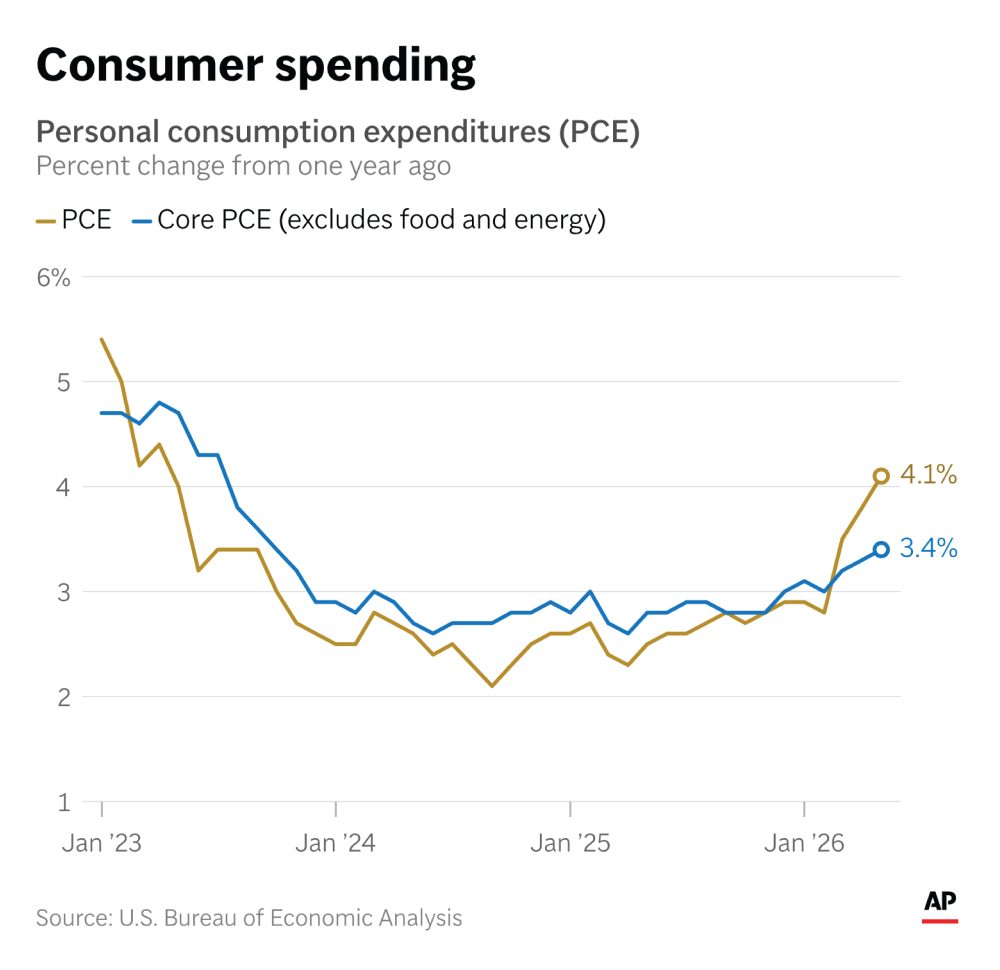
The Federal Reserve’s go-to measure of inflation jumped to a three-year high in May, fueled in part by a spike in gas prices. The development could create political headaches for President Donald Trump and his party as midterm elections approach.
According to the Commerce Department, consumer prices in May were 4.1% higher than the same month a year ago — the steepest annual jump since April 2023. Month-over-month, prices rose 0.4%, matching April’s pace but lower than the 0.7% increase seen in March.
Much of the increase came from pricier gasoline, along with higher costs for semiconductors and computer hardware driven by surging demand related to the artificial intelligence boom.
Apple announced it is raising prices on its Mac computers and iPad tablets, pointing to a shortage of memory chips caused by that same AI-driven demand surge. The company described the situation as an “unprecedented challenge” for the consumer electronics sector.
“We have never seen a component price increase this much, this quickly,” Apple said in a written statement.
The new entry-level MacBook Neo now carries a price tag of $699, up from $599. The 512-gigabyte MacBook Air has risen to $1,299 from $1,099. The one-terabyte MacBook Pro now costs $1,999, compared to its previous price of $1,699. On the iPad side, the 128-gigabyte iPad Air is now $749, up from $599, and the 256-gigabyte iPad Pro Wi-Fi model has climbed to $1,199 from $999.
In a separate report, the Commerce Department said the U.S. economy grew at a stronger-than-anticipated annual rate of 2.1% during the first three months of the year — a final estimate that topped an earlier projection of 1.6% growth. That marked a significant rebound from the sluggish 0.5% pace recorded in the final quarter of 2025, a period weighed down by a 43-day federal government shutdown.
Business investment climbed sharply, likely tied to the AI investment wave, but consumer spending — which makes up roughly 70% of all U.S. economic activity — declined notably from the previous quarter. Analysts believe higher gasoline prices stemming from the war with Iran are prompting consumers to pull back.
Home borrowing costs edged up slightly this week. The benchmark 30-year fixed mortgage rate rose to 6.49% from 6.47% the prior week, according to mortgage buyer Freddie Mac. That rate has hovered near 6.5% for the past six weeks. A year ago at this time, the rate stood at 6.77%.
When mortgage rates increase, monthly payments for homebuyers can rise by hundreds of dollars, cutting into how much house they can afford.
The 15-year fixed mortgage rate, commonly used by homeowners looking to refinance, also ticked upward — moving to 5.84% from 5.81% last week. One year ago, that rate was 5.89%, Freddie Mac reported.
On the employment front, fewer Americans filed for unemployment benefits last week, a sign that layoffs are staying low even as economic uncertainty lingers. For the week ending June 20, jobless claims fell by 12,000 to 215,000, the Labor Department reported. That came in well below the 225,000 applications that analysts surveyed by data firm FactSet had predicted.
Weekly unemployment filings are widely viewed as a close-to-real-time indicator of how healthy the job market is.
U.S. stock markets finished the final trading session of the week on a positive note after oil prices retreated to pre-war levels, though a pullback in artificial intelligence-related stocks limited the gains. The S&P 500 recorded its second losing week out of the past 13, largely due to a retreat in the technology sector — particularly among AI companies and related tech firms.