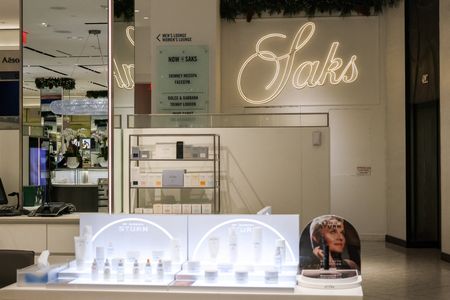

Saks Global stepped out of bankruptcy last week with a smaller footprint and a clear pivot toward upscale luxury — hoping to turn the page on one of the most turbulent stretches in the company’s long history.
But the American department store giant now faces a far more difficult challenge: recapturing the loyalty of luxury shoppers and steering clear of another courtroom, a fate that has befallen many brick-and-mortar retailers after bankruptcy.
Saks Global was formed through a heavily leveraged merger in 2024, bringing together Saks Fifth Avenue, Neiman Marcus, and Bergdorf Goodman — three pillars of American luxury fashion that have served shoppers for well over a century. The original Saks Fifth Avenue was founded by retail pioneer Andrew Saks back in 1867.
The company, now operating under the name Exemplar Luxury Group, sought Chapter 11 bankruptcy protection in January following delays in paying vendors and months of withheld inventory that strained its supplier relationships.
According to the company, it now stands on more solid financial ground after cutting its store count by more than half, concentrating on its top-performing premium locations while largely walking away from its discount-oriented outlets.
The leaner approach, Saks says, positions it to hit ambitious targets — including compound annual revenue growth of 7% between fiscal years 2027 and 2030.
Achieving that, however, requires bringing customers back through the door.
Whether that happens remains to be seen, according to Mark Cohen, former director of retail studies at Columbia Business School. He noted that major luxury labels — from Chanel to Louis Vuitton — have increasingly directed their most coveted products to their own brand-owned stores, a trend that accelerated during Saks’ difficulties.
At the same time, competitors Bloomingdale’s and Nordstrom have moved to capitalize on Saks’ struggles to attract new business.
“The Saks-Neiman network has to start demonstrating positive sales,” Cohen said. “Their forecasts for recovery are highly optimistic.”
The bankruptcy restructuring also reduced Saks’ overall debt by 75%, bringing it down to roughly $1.2 billion. Existing shareholders — including Amazon — were wiped out, and senior lenders took over control of the company.
Throughout the bankruptcy process, Saks’ largest luxury vendors held a distinct advantage, receiving exclusive payouts on claims from before the bankruptcy filing. Meanwhile, many smaller brands were largely left without meaningful recourse, according to four people with direct knowledge of the payment arrangements.
This dynamic highlights the ongoing influence that top-tier luxury brands will have as Saks narrows its retail focus. The company also severed its e-commerce partnership with Amazon during the proceedings as part of a broader retreat from mass-market retail.
High-end designer and luxury goods represent “the space that they understand best,” said Gary Wassner, CEO of Hilldun, a factoring firm that backs orders for approximately 180 Saks vendors.
Jonathan Saven, CEO of luxury women’s fashion label L’Agence, expressed confidence in Saks’ new leadership team to run the business effectively going forward.
Smaller luxury brands, however, appear to be getting a raw deal. One vendor owed at least $20,000 in unpaid invoices said he has not recovered any of his pre-bankruptcy claims and has abandoned hope of ever seeing that money.
The company noted that nearly half of the vendors offered any recovery on pre-bankruptcy claims were small and independent designers or brands.
On the inventory side, fashion brands are pushing for greater control over their products to protect themselves from future financial shocks. Saks is maintaining hundreds of agreements that allow vendors to either lease space within its stores or hold ownership of their goods until a sale is made, according to court records. Some brands that don’t yet have these so-called concession and consignment agreements are now seeking to enter into them, three sources familiar with vendor plans said.
That could spark a new conflict. A company spokesperson said wholesale accounts for 75% of Saks’ business — a model the company says “will account for an even larger share of our revenue going forward.” The company added that it “regularly” collaborates with brands on shared strategies but intends to keep wholesale as its priority.
Concession and consignment arrangements could also squeeze out smaller and up-and-coming brands even further.
“It’s not a fair system,” said Thomai Serdari, a luxury brand strategist and marketing professor at New York University’s Stern School of Business. “It favors brands that have more capital available.”