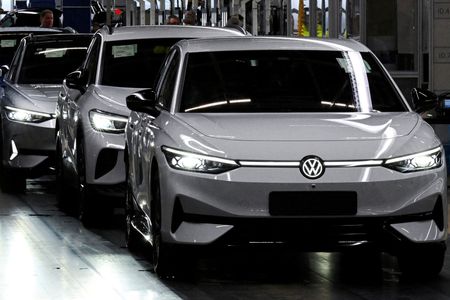

Volkswagen chief executive Oliver Blume is spearheading what could be the most significant transformation in the German automaker’s history, as the company struggles to adapt to a rapidly changing global car market. Mounting pressure from Chinese competitors, international tariffs, and sluggish European demand have fundamentally disrupted the company’s business model.
The ongoing crisis has put Europe’s largest automaker under intense scrutiny. Analysts and investors have long pointed to the company’s complicated organizational structure, poor stock performance, and resistance from certain stakeholders to the kind of sweeping cost reductions now seen as necessary.
PARALYZED BY COMPLEXITY
Volkswagen’s ownership and governance structure is unlike anything else in the global auto industry. It combines the influence of powerful labor unions with the billionaire Porsche and Piech families, who control the majority of the company’s voting rights but hold less than half of its total equity. The 89-year-old company, which employs more than 657,000 people worldwide, operates a sprawling network of divisions, joint ventures, and other investments — a conglomerate structure that some investors argue is dragging down its overall valuation.
CHINA TROUBLES DEEPEN
The most glaring sign of Volkswagen’s struggles can be found in China, the world’s largest automobile market and a region that for years served as one of the company’s most important profit engines. That era has come to an end. Profits in China have collapsed by more than 80% over the past decade, shifting pressure to Europe — where car demand is not expected to recover to pre-COVID levels — and to the United States, where tariffs are costing the company billions of euros.
Competition within China has grown dramatically more intense. Volkswagen, which once held the top spot as China’s leading automaker, has now fallen to third place as homegrown rivals offering technologically advanced vehicles at competitive prices have taken significant market share.
Porsche, which Volkswagen took public in a landmark IPO four years ago, has been one of the most severely affected brands. The luxury automaker’s profit margins collapsed from 18% in the year of its stock listing to just 1.1% last year.
PROFITS SQUEEZED
Across the broader Volkswagen group, profit margins more than halved between 2021 and 2025. The decline reflects a combination of fiercer global competition, higher labor and energy costs, weak demand across Europe, and growing trade barriers in key markets. Despite remaining the world’s second-largest automaker by vehicles sold — behind Japan’s Toyota — Volkswagen now ranks among the weakest-performing mass-market manufacturers in terms of profitability.
STOCK AT ROCK BOTTOM
The turmoil has taken a heavy toll on Volkswagen’s share price, which has fallen to its lowest level since July 2010. The stock is now trading below where it stood during the Dieselgate scandal — widely regarded as the worst corporate crisis in the company’s history — raising fresh concerns about the road ahead for one of the world’s most recognized automotive brands.