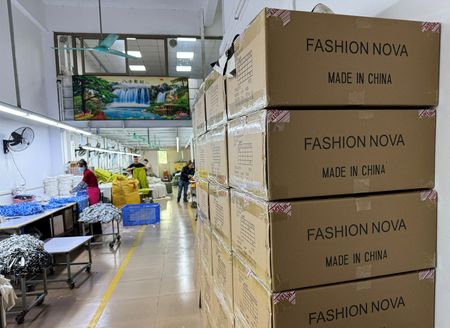

American retailers are racing to lock in their holiday season inventories by pulling forward orders from China by four to six weeks, according to shipping industry executives. The goal is to get goods on shelves before anticipated tariff increases hit later this year.
A 10% universal tariff that Washington put in place in February — after the Supreme Court struck down some earlier tariffs as illegal — is set to expire on July 24. While U.S. President Donald Trump’s visit to China last month helped maintain a fragile peace between the two economic powers, uncertainty about what comes next remains elevated.
The U.S. Trade Representative has proposed a 12.5% tariff on goods imported from China and other countries, following an investigation into forced labor practices that Beijing denies. A final decision on those levies is expected in the coming months.
Tony Meng, a China-based senior sales manager at shipping company XPD Global, described the current rush this way: “There is an expectation that tariffs could be raised again, or restored to previous levels, so everyone is rushing to get goods in before that happens.”
Typically, shipping volumes from China to the U.S. peak between July and September. But shipping firms say May and June have already seen stronger-than-expected activity, which has contributed to a spike in freight prices.
The early ordering surge helped fuel a 35% jump in U.S. imports from China in May — a significant leap compared to April’s 11% growth and March’s contraction. That pace may continue into June but is expected to taper off as summer progresses.
China’s leading export items to the U.S. by value in May included smartphones, lithium-ion batteries, solid-state drives, toys, kitchenware, and holiday-related products. June trade figures are scheduled for release on July 14.
Shipping giant Maersk confirmed in a statement that container space on the China-to-U.S. route has been tightening since mid-May due to “stronger customer demand and earlier seasonal bookings.”
A China-based shipping executive, who spoke on condition of anonymity because he was not authorized to talk to reporters, said back-to-school products like stationery and clothing were part of the May-June rush. He also noted that early Christmas stockpiling played a role, along with soccer World Cup-related merchandise — including jerseys, flags, souvenirs, and large-screen televisions. The U.S. is co-hosting the tournament alongside Canada and Mexico.
The surge in demand has driven up shipping costs considerably. According to maritime consultancy Drewry’s World Container Index, spot rates from Shanghai to New York stood at $7,149 per 40-foot container as of June 25 — up 6% from the prior week and 25% higher than a year ago. The Shanghai-to-Los Angeles route cost $5,750 per container, a 12% weekly increase and 54% above year-ago levels.
“Importers continue frontloading shipments ahead of potential tariff changes and higher bunker-related costs,” Drewry noted in a recent report.
Outdoor furniture manufacturer Jin Chaofeng said passing the full weight of rising shipping costs on to customers would be difficult, highlighting the slim profit margins facing Chinese manufacturers in less technology-driven sectors.
Kyle Henderson, CEO and co-founder of container-tracking software company Vizion, offered a note of caution. He said tariffs are still weighing on overall U.S. demand, which remains below its three-year average and should only be characterized as “normal-to-soft.” Henderson attributed the higher shipping costs more to capacity management by carriers — including some cancelled sailings — than to a genuine surge in U.S. consumer demand.
Henderson also projected that shipping volumes will decline after July and into the third quarter, citing “a combination of inventory already landed and a tariff environment that structurally raises the cost of China-origin goods.”